
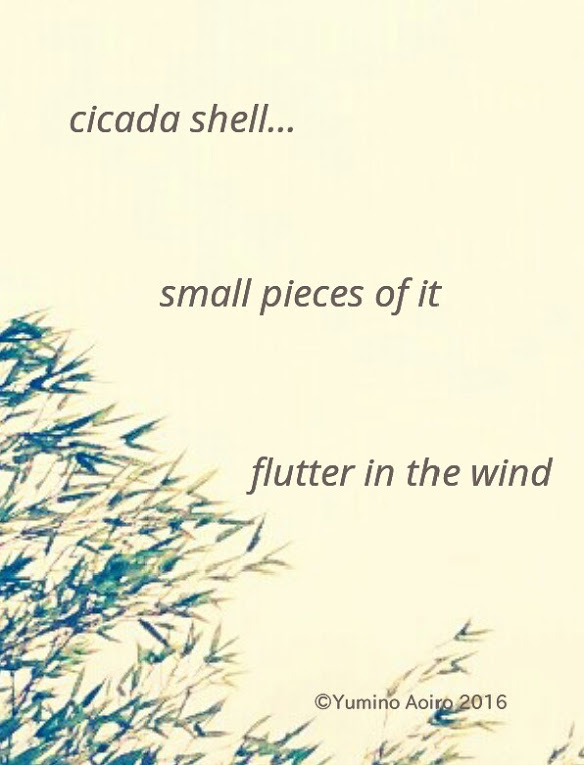
In this haiku, we have a classic aesthetic showcased: continuance. With the first line, we understand that the cicada has moved out of its larva shell, but what happens after…
Its shell flutters in the wind, almost like its real self, now flying through the air–only for a short time though. The short-lived nature of both the fluttering shell and the cicada itself is poignantly shown in one’s imagination. Though the shell is living a new, “full” life of a cicada by flying in the air (even fluttering like wings), that life will end too soon.
The ellipses is used well to show the continuation of the shell and to make the two parts in the haiku clear. The lines are short and the words are not complicated, which is important in haiku. Also, both parts are easy to understand.
This haiku is a sketch from life, of which master haiku poet Shiki championed. Something simple, objective, and in the moment is celebrated and focused on with a sense of awe.
The alliteration of “shell” and “small” emphasize the importance of these words, and the “i” sound carried through the poem in “cicada” “pieces” “it” “in” and “wind” gives this haiku a sense of sharpness.
The art, what I presume to be bamboo leaves, resemble the shape of the fluttering wings of a cicada well and create a definite mood. How the lines are laid out on the page show a continuation as well.
Yumino seemed to put a lot of thought behind the words and image of this haiku. A great haiku with much to think about and to feel.
– Nicholas Klacsanzky (Ukraine)
 Haiku Commentary