Rika Inami’s End

when the end
comes upon me ―
sirens blowing
through the darkness
rushes to the fire
© Rika Inami (Japan)
IMG_7618

This self-eulogy is evocative in its simplicity and pacing. There is nothing difficult to understand in this tanka, but the subtle meaning behind it might be.

The end of the tanka is not about her, but about fire, an all-consuming element. I think Rika is expressing that in the end, she will become one with her surroundings, or maybe  she or her life was an illusion all along.

It also seems the author is saying that when her end comes, there will be no use in trying to pity her or get involved in feelings. But rather, the author could be pointing to the problem that made her die in the first place. “Fire” has a lot of symbolism attached to it, such as passion, anger, inspiration, and so on.

With the em dash in the second line, we feel more of her end, as she gives us time to take it in. The em dash might seem unnatural, but for poetry, it totally makes sense to have there. In tanka, we sometimes use punctuation to show two parts more clearly. So, Rika is also demarcating the parts in the tanka.

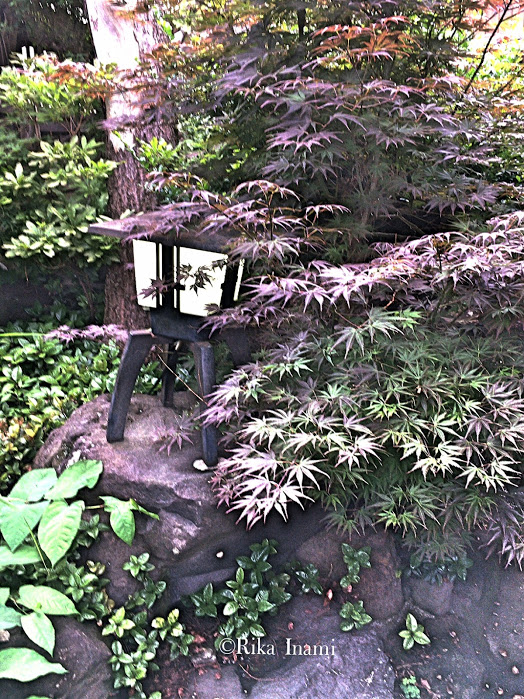
The photo connects indirectly to the tanka wonderfully. The red of the maple leaves shows the fire and the latern is similar to a siren light.

The most prominent sound to me in this tanka is the “o” sound in “comes,” “upon,” “blowing,” “through” and “to.” It gives an effect of a suspension of time and makes us read the poem slower.

A humble poem about one’s death, written in a simple style. But that is just the surface. I think this tanka brings up a lot of symbolism and thoughts about the reality/illusion of life, where we go when we die, and what we are meant for in the end.

– Nicholas Klacsanzky (Ukraine)

Lucky Triana’s Last Time

16_-_1 (1)

Sometimes we need to poke humor at ourselves just to stay sane.
Lucky Triana’s “beauty parlour” tanka does this effectively.
a puss caterpillar
passes by
i can’t remember
the last time i went
to a beauty parlour

words and image
© Lucky Triana (Indonesia)

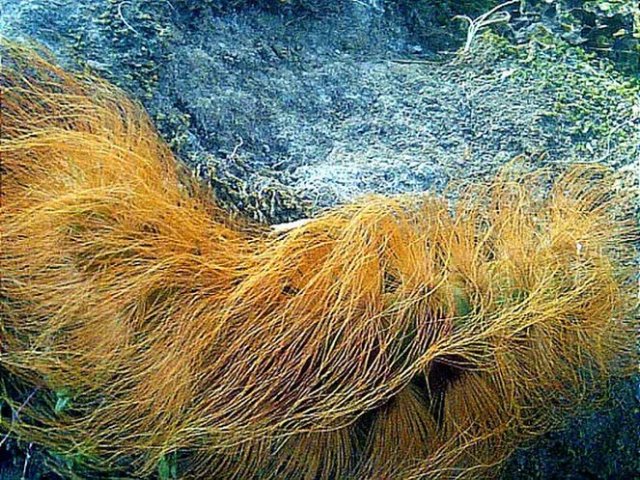
This tanka captures the need for self-image and a little vanity, but builds it all from a cuddly “puss caterpillar” that the poet sees passing by.

Maybe she forgot that her hair is important or maybe she is evolving into a more beautiful night being. If she looks disheveled like the caterpillar does in its latter stages, then perhaps she is going to need that beauty parlor.

I love the touch of mystery that the venomous puss caterpillar image gives us. But touch is something you want to avoid. Perhaps she is too dangerous to touch, but the hair stylist will have to deal with it and that adds another layer of humor.This tanka might be leaning more to kyoka but for now, I’d say, spruce up and go out clubbing this weekend. Soon the night will be all yours as a moth.

Thanks for sharing with us.

– Edwin Lomere (USA)

Martha Magenta’s Last Goodbye

last_goodbye

Words and image by Martha Magenta (UK)

This tanka is packed with emotion and is centered around a stark image.

Last goodbyes are something almost anyone can identify with and the emotions it brings. Sometimes, we never forget these moments, and they linger in our memories each day.

The abruptness of the rain filling the footprints, before the ocean tide could, is poignant. It magnifies the sadness the poet feels and represents a lack of mercy.

But on the other hand , you can see it as a blessing. Looking at the footprints of a loved one who has left can be agonizing and the rain filling the footprints up so quickly show the spontaneous compassion of nature.

So, we have a sad and compassionate view of this tanka, simultaneously.

The language is simple, to the point, and well-paced. It is hard to imagine adding or taking out a word. That is a sign of a strong tanka. Plus, the tanka hits the correct emotional chord and tone that touches readers. If a tanka sounds metallic, it is hard to say that it is a tanka.

The sound of the tanka is important as well. The “o” sound is represented in “our” “goodbye” “on” “how” “your” and “footprints.” This gives the sense of length of yearning–the sense of time being too long. Another thing to note is the alliteration of “footprints filled” which adds emphasis.

The art associated with the tanka (I think it is a photo with painted-over rain) is moody and adds to the atmosphere that the tanka creates.

– Nicholas Klacsanzky (Ukraine)