Edwin Lomere’s Moonlight

cat

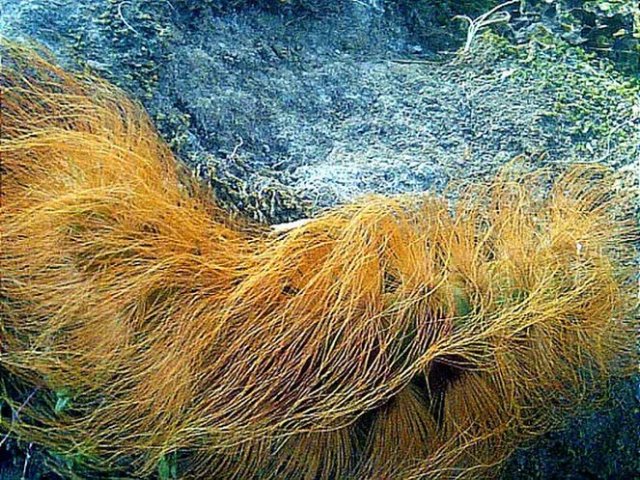
I enjoy the pacing of the tanka, the images “rock fence” “moonlight” “road” and of course the image of the cat! This is called shahai, which combines a haiku/tanka and an image. The image usually does not directly correspond to the haiku/tanka, but connects to it subtly. And Elomere did this wonderfully.

There is a connection between the rock fences and moonlight in color, and both seem timeless. Though both seem rustic, they are still majestic and stark. The connection between the two parts, however, seems more intuitive than intellectual.

The sense of sound in the tanka is wonderful, with connecting “r” sounds and “i” sounds, which separates the two parts even further. The last line comes as a surprise and makes us want to read the tanka a few times.

The ending image can mean many things. Moonlight in Zen philosophy can mean enlightenment or oneness or the self. Moonlight in other circumstances can mean sadness or contemplation.

The connection between the two parts or two statements is subtle and a bit of a puzzle. This is something that marks a fine tanka and/or haiku.

– Nicholas Klacsanzky (Ukraine)

Yumino Aoiro’s Wisteria

12+-+1


Firstly, I would like to note that this is a shahai, or a haiku accompanied by an image, or within an image. Yumino made an abstract representation of wisteria with the image, to my mind. But getting to the haiku itself, I like how each word is needed and works well. The first line begins simply with “wisteria-” which is a beautiful plant that blooms in late spring. So, the kigo, or seasonal reference points to it being about late spring. In late spring, animals are in a busy mood. And here comes the second line:

“the carpenter bee bounces”

And carpenter bees are certainly busy dudes in late spring. A bee bouncing is quite an interesting image. A nice alliteration is made with “bee bouncing.”

Bounces on what? “on a dusty parasol.” Why is the parasol dusty? Could be that the parasol has been left behind for some time, or that the dust is actually pollen (maybe wisteria pollen).

Yumino skillfully does not tell us, but shows how the pollen or dust lifts into the air from the bounce of the bee on the parasol, and how it is quite like the shape of wisteria blossoms. So, this haiku is a comparison haiku: it compares how wisteria pollen or dust looks in mid air when bounced off a parasol by a bee with how the wisteria blossom is shaped and hangs.

So, maybe Yumino is implying that wisteria blossom and pollen is one and the same. Whatever philosophical implications this means to you, you can introspect on it.

Note:

Check out how the third line is indented, giving us the space to imagine the bounce.

Also, take note of how Yumino used articles. “the” was used for the bee to give it is more importance, and “a” was used for the parasol to not steal the show from the bee.

– Nicholas Klacsanzky (Ukraine)

Edwin Lomere’s Sunrise

2robins1

Words and image © Edwin Lomere (USA)

It is so simple, only one word per line, but it is pregnant with meaning and implication. The photo is taken after sunrise, and appears to be the aftermath of the sunrise. The photo shows two sides of a river or pond, which coincides with “two robins.” As with most shahai, or photo haiku, the photo does not directly reflect the haiku, but adds to it or creates more implications.

The red breast of the robin compliments the red of the sunrise. Also, the song of robin is at once majestic and cheerful, like a sunrise. But with the two robins, the haiku could be implying the sunrise has not happened yet, but the sunrise has been represented twice in the robin’s look and song.

Another reading of it is “two robins twice/the sunrise” which is saying that the sunrise is like seeing or hearing two robins twice. It brings in an aesthetic of fullness that is dear to haiku.

I think this is a spring haiku, not only from the view of the photo, but from the cheerful atmosphere created by the poet.

The sound of the haiku is quite pleasant, with the “o” sound running through “robins” and “two,” and “two” and “twice” having a play with the “t” sound. The “i” sound is in “twice” “robin” and “sunrise, all of which gives a musical quality to the haiku–maybe imitating the song of the robin.

I think the poet slowing the poem down to one word per line makes us not only appreciate each word more, but saves us from having it like:

two robins
twice
the sunrise

…which would afford us less chances to read it differently.

– Nicholas Klacsanzky (Ukraine)

Lucky Triana’s Hat

a triangle hat
i search
my third side

16+-1

words and image
© Lucky Triana (Indonesia)

A witty and introspective haiku.

Wordplay in haiku has a long tradition, and when it was the hokku as a part of renga (a long linked poem), it used much more wordplay. So, you could say this haiku tapped into an ancient tradition.

We have a literal interpretation, but the metaphorical one is more interesting to me. Usually, people say they have two sides, but what about a third side? I think the haiku reminds people about who they are beyond the flesh. People often forget their spiritual, metaphysical sides, getting lost in material life.

It’s nice when a haiku can draw us towards our true selves.

– Nicholas Klacsanzky (Ukraine)

Martha Magenta’s Willow

the willow

Though simple, this haiku has a lot of weight to it. We don’t know who has gone, but the photo accompanying it might give us a clue. The weight of the loss is shown through the willow, which often symbolizes melancholy. Over the years, the willow has grown, and this might imply that the grief of the author has grown over the years as well.

I like how the haiku seems so natural, like it could be written in a matter of seconds. However, I am sure Martha took longer than that to write the poem. But this shows how a haiku should be: simple and effortless to read. Just the right words in the right place.

In addition, there is a continuation of the “o” sound that adds to the sense of sadness and continuation.

A fine example of an emotionally-weighted haiku.

– Nicholas Klacsanzky (Ukraine)

Marilyn Ward’s Glacier

2016+1

At first sight, you might read this haiku and say, “so what?” However, I believe through its statement, it helps us realize how the landscapes around us have been shaped: through a long process. This observation can apply metaphorical to our lives as well, in that what we keep frozen inside us cuts us slowly.

With the word “cutting” it is inferred that it is painful. We might even garner some compassion for the granite through its suffering, though we know in the back of our mind that granite does not feel suffering. That is one of the powers of haiku: giving us compassion for every form of life, even inanimate things.

Without punctuation, the poet makes the two parts clearly separate. The sound works well, with “I” sounds running through it, possibility showing the sound of cutting.

This haiku has a classic feel to it, with it being an observation made into a great insight.

– Nicholas Klacsanzky (Ukraine)

Marilyn Ward’s Shelter

 2016+-+1

Haiku is a lot about being objective, accurate, specific, and describing our senses. This is a good example of these qualities. Alan Summers, who is taking a break as a mentor, has often told others about being specific in haiku and how it can add layers and additional meaning to haiku. Marilyn is a true student of Alan. “granite fissures” and “coltsfoot” is right on the mark in terms of being specific.

She could have written:

sheltered from wind
in a hole in a rock
small leafy plant

…but as we see, not only does this lessen the beauty of the sound, it makes it harder for the reader to experience the moment that the haiku portrays. By saying it is granite, fissures, and coltsfoot, the poet gives a vivid picture of the haiku moment and allows us to immerse in the experience.

About the actual feeling of the haiku, I like how the haiku implies that nature has compassion in its seemingly random existence. The haiku is concise, well-paced, and focused.

– Nicholas Klacsanzky (Ukraine)

Martha Magenta’s Summer Silence

summer+silence

This is in line with classical haiku. We got a strong kigo or seasonal reference with “summer,” the passive voice of “the dunk” which expresses a sense of egolessness, and a short line-longer line-short line format.

Summer is usually associated with fun, holidays, love, among other things. But in this haiku, Martha examines the serenity of summer.

Reminiscent of the famous haiku by Basho:

old pond
a frog jumps in
the sound of water

Martha concentrates more on the surface of the water, though it is still sound oriented through the reader’s imagination.

The haiku suggests our actions are not their own and we don’t own our actions. This is especially poignant with the use of an animal, who does not have self consciousness. Through the otter, we can realize that we are the witnesses of our actions and existence, rather than being what we do.

The photo compliments the haiku by adding to the atmosphere and image of the haiku. The lily pads and variety of trees are stunning. A meditative photo.

– Nicholas Klacsanzky (Ukraine)

Marina Balmaceda Paredes’ Altar

16+-+

Just the right pacing and the right words. We begin with “altar dusk,” suggesting that this haiku is about a religious or spiritual activity. With dusk, that activity is ending, but we have the ellipses (…) telling us something else might happen, or that the dusk is slowly carrying on.

The second line comes as a pleasant surprise. It suggests that there was music during the religious or spiritual event, but now another form of music is being played. But where?

The third line gives us the answer. The music is coming from outside. In a sense, the poet is implying that the religious or spiritual music is being playing on through street music. This concept bridges the spiritual world with the human world, and makes it one, though the poet skillfully does not say this directly. Oneness is an often-used concept in haiku–usually from surprising counterparts.

I like the sound of the haiku as well. “altar” and “another” have a nice tune, and “dusk” and “tune” make good use of the “u” sound, which sounds musical.

The photo adds to the imagery already in our mind. We see a street lamp, which can be seen as an extension of the alter lamp, but in a suburban setting.

I enjoy how the haiku and accompanying image portrays the thought that spiritual and religious activity need not be stuffed in a box, but can be expressed in many different forms, even street music.

– Nicholas Klacsanzky (Ukraine)