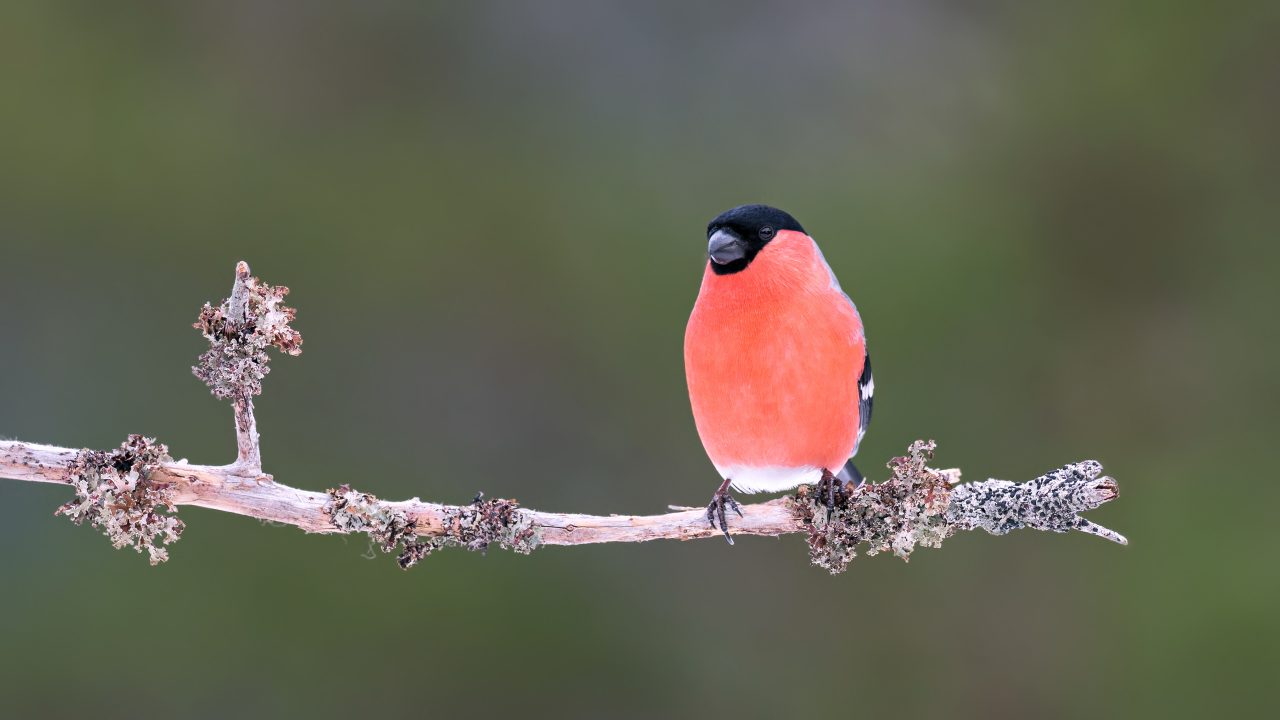
Hattori Ransetsu’s Plum Tree

on the plum tree
one blossom, one blossom worth
of warmth

– Hattori Ransetsu (Japan) (1654-1707)

Before I delve into the haiku, let me mention a bit about Ransetsu’s life. Born in 1654, his name first appeared in literary circles with the 1680 publication of two anthologies under Basho’s name, which included works by both Ransetsu and Kikaku. Obviously Basho thought highly of his student’s writing if he collaborated in a joint production when Ransetsu was only twenty-six.

In the winter of 1702, Ransetsu was obviously well established as a poet because he circulated a New Year Haikai Ichimazuri—the sort of poem that was not offered for sale but distributed on a single sheet of quality paper among fellow haijins (poets).

When Basho died, Ransetsu shaved his head and became a Buddhist monk, perhaps an indication that he closely shared Basho’s later life preoccupation with Buddhism and inclination towards monastic life. Certainly, retirement to a monastery ruled out any possibility of a Ransetsu school and of disciples in whose interests it would be to promote his life and works.

Nothing seems to be known of his death other than the year of its occurrence, 1707, just five years after his New Year Haikai’s circulation, when he was fifty-three. Like his contemporaries, Ransetsu was concerned with time passing, with the transience of beauty, with capturing the unity of humankind and the natural order in the experience of natural phenomena and universal processes.

A hallmark of Ransetsu’s work is his compassion for all living things and their condition. [adapted from the World Kigo Database]

Now onto looking at the haiku. Plum blossoms are an indication of early spring in Japan, and widely loved among Japanese people. They are a symbol of refinement, purity, nobility, and also a reminder of past love. In addition, Japanese tradition holds that the plum blossom functions as a protective charm against evil. The plum tree is traditionally planted in the northeast of a garden, the direction from which evil is believed to come. Also, the eating of its pickled fruit for breakfast is supposed to stave off misfortune.

So, there is a lot behind the reference to a plum tree and its blossoms, especially in Japan. But more importantly, even in translation, this haiku carries strong emotion. It is a special feeling that is difficult to describe, but the best I can do is say it gives an emotion of the beauty of the moment and preciousness of life.

Warmth is such a wide word, especially in the context of this haiku (Ransetsu was known to be quite an austere person as well). Warmth could mean a shielding from the winds of winter, could mean feeling warm from the beauty of the blossom, or the warmth of blossom against one’s nose when smelling it, or it touching the skin, and so on. But after reading this haiku, the reader may get the impression, intuitively, that though it is one blossom, its impact is more than it looks. Its impact is as strong on a viewer as a whole plum tree full of blossoms, and maybe more.

This play of the singular and plural makes up a classic haiku aesthetic. It is kind of like blurring the lines between quantity, and possibly the lines between infinity and emptiness.

In this sense, the single plum blossom is priceless and fathomless, and can only be understood in awe. This may correlate to Ransetsu’s Zen affiliation, where infinity and emptiness eventually lose meaning, and only the moment matters. Enlightenment, suffering, mere concepts compared to the awareness of the moment.

– Nicholas Klacsanzky (Ukraine)

Gabriel Bates’ Clouds

a lone   seagull dipping into the clouds

© Gabriel Bates (USA)

This is a monoku, or a one-line haiku. Though traditionally haiku are written as one vertical line in Japanese, in the English language we usually use a three-line format to show the different parts and to have a western pacing. However, sometimes haiku in English are written into one line for various reasons:

1) The lines don’t look good as three or two lines.

2) There only a few words and it would feel and look better as one line.

3) Having a haiku in one line can make phrases bleed more together and thus create more layers and meaning.

4) And some personal reasons of the poet….

The three-line version might look like this:

dipping
into the clouds
a lone seagull

… with the syntax switched to create two clear parts. But it is my belief that the writer wanted to create more of an effect with the word “lone” and to make readers read each word with a stronger emphasis.

In monoku, punctuation is not usually used. But we see that the writer has left a space after “lone” to create a more poignant effect of the feeling of “lone.” In a sense, it is a type of punctuation, but just more creative.

Reflections in haiku are common, but this reflection gets an added boost with color. The seagull is white (commonly) and clouds are white (usually). The act of the seagull dipping into the reflection of the cloud, in a sea or ocean, creates an effect of something philosophical.

It could be a sign of losing one’s identity, or becoming one with something greater (the “heavens”). Making an emphasis on “lone” could be signifying that an individual has to eventually go alone in his or her journey to become one with a higher power or to lose one’s identity. A seagull is sometimes referred to as an autumn kigo, or seasonal reference. Shedding one’s ego correlates well with autumn.

Also of note is the continuity of the word “dipping.” I think the writer chose this instead of “dips” to show a continuous happening, and to make the haiku more meditative.

I enjoy the use of singularity and plurality, e.g. the lone seagull and the many clouds. Using the plural “clouds” creates an image of something massive and epic… kind of like a part becoming the whole. Many haiku operate on contrasting different elements: time, size, age, and so on.

In terms of sound, the “o” and “l” sounds run strongly through it. To me, the “o” sound adds to the awe of the imagery, and the “l” sound adds to the elegance of the happening.

Though this monoku seems simple on the first reading, it is creative in its format, has spiritual symbolism, and brings us into the starkness of the moment described.

– Nicholas Klacsanzky (Ukraine)

Yosano Akiko’s Look

Not speaking of the way,
Not thinking of what comes after,
Not questioning name or fame,
Here, loving love,
You and I look at each other.

– Yosano Akiko (Japan) (1878–1942)

[translation by Kenneth Rexroth]

Before I comment on this tanka, Yasano Akiko should be properly introduced. Yosano Akiko is one of the most famous, and most controversial, post-classical woman poets of Japan and is best remembered for her innovative and controversial use of the tanka verse form. From an early age, she demonstrated an avid interest in literature, which she pursued after her formal schooling ended. As a young woman, Akiko attended meetings of the literary societies in Sakai. Her first published works were traditional poems that imitated classic Japanese literature. The growing influence in Japan of European Romanticism led to the development of “new poetry,” which condoned the expression of personal feelings and expanded the vocabulary of poetic diction. In their search to define a modern Japanese poetic voice, modern poets and dramatists have both revived old forms and created new means of expression.  It was in this literary milieu that Akiko wrote the passionate poetry for which she became best known. Her poetry openly expresses personal experience, especially romantic love, in language that was perceived as highly emotional to readers in early twentieth-century Japan. In 1901, Akiko moved to Tokyo to be with Yosano Hiroshi, a writer and editor whom she married later that year, shortly after the publication of her first book of poems Midaregami (Tangled Hair).

Hiroshi was a central figure in the Japanese Romantic movement and founder of the Shinshi Sha, (“New Poetry Society”) which published the “new poetry” journal Myōjō (“Bright Star”). After Myōjō ceased publication in 1908, Akiko wrote prolifically to help support her family. She gave birth to 13 children, 11 of whom survived to adulthood. Akiko wrote over 20 volumes of poetry and social commentary; essays ranged from feminist tracts to criticism of Japan’s foreign aggression, and her poetry reflects some of these concerns as well; also broke social taboos with poems about experiencing labor pains and the birth of her stillborn baby; published translations into modern Japanese of Murasaki Shikibu’s classic Genji monogatari (The Tale of Genji, 1912 and 1939) and Shinyaku Eiga Monogatari (“Newly Translated Tale of Flowering Fortunes”); also published a monumental compilation of 26,783 poems (including haiku, tanka, and etc.) written by 6,675 poets in modern times. A prominent pacifist and feminist, Yosano Akiko spoke out against the Sino-Japanese war and the growing nationalistic fervor of the times. She later founded a woman’s college, the Bunka Gakuin, in 1921 and made constructive statements on problems of women and education. [Adapted from the Living Haiku Anthology]

And now on to the tanka. To me, this tanka expresses the ultimate form of engrossed love. And as tradition in tanka, the “beloved” is not named, and sometimes not even hinted at. This universality lends itself to be read in multiple ways, and allows readers to see the experience of the poet in one’s own life without restrictions.

“Not speaking of the way,” is convex. She could be referring to the way she and her beloved love each other, or “The Way” in a spiritual sense in accordance with Zen and/or Taoism.

“Not thinking of what comes after,
Not questioning name or fame,”

These two lines cancel out what lovers usually worry about when trying to express themselves. Instead of thinking of long-time commitments or what the future might hold… instead of thinking of what benefits or drawbacks she can get receive from her expressed love, she is simply loving her beloved without a thought. Just the awareness of love is left.

“Here, loving love,”

This part seems to show a cyclical happening: the poet is in the bliss of love and gets further bliss simply by feeling it. The word “here” also brings the focus into the present moment and shows the importance of being in the now.

“You and I look at each other.”

We imagine the look as readers. Our imagination goes into the depth of what love is to us. Akiko doesn’t describe the look, but infers it instead. Japanese poetry in general seeks to let the reader have a large part in the poetic process. A lack of heavy-handedness is respected in Japanese poetry.

Though tanka was originally court poetry written by elite individuals in Japanese society, Yosano Akiko showed to a greater extent that tanka can be written without inhibition at the highest poetic level.

– Nicholas Klacsanzky (Ukraine)