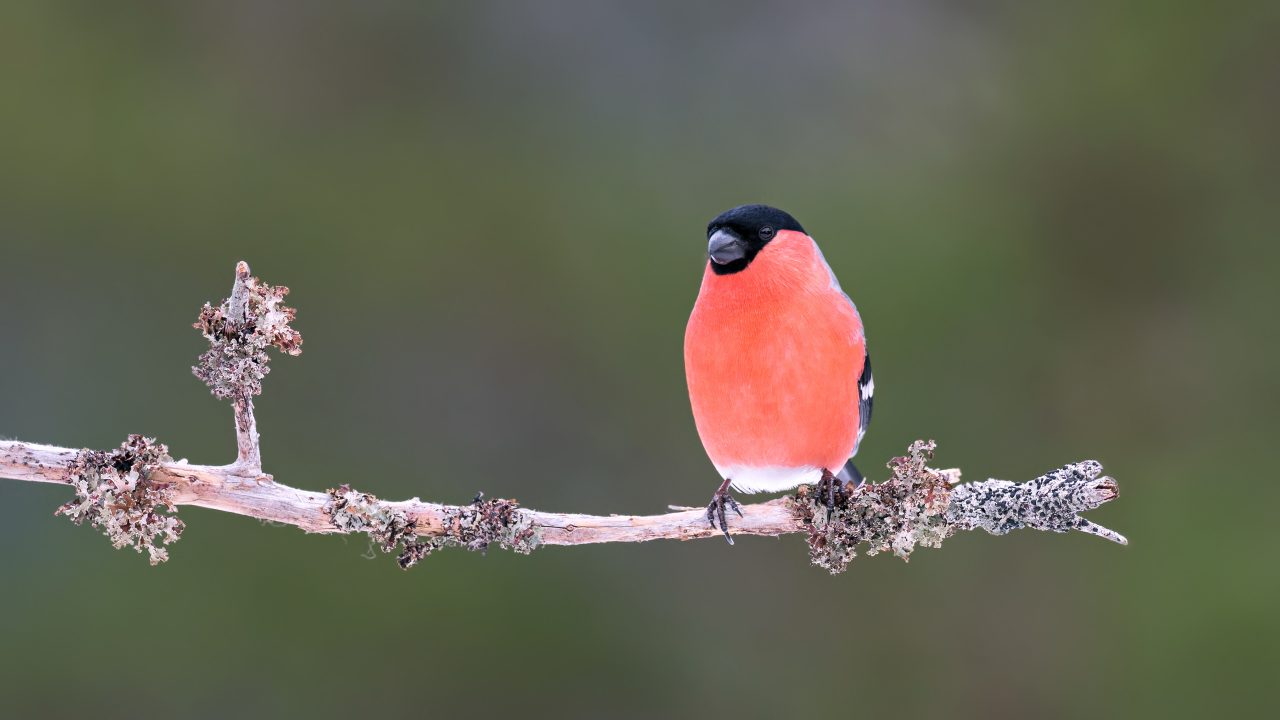
Michael Smeer’s Anniversary Dinner

anniversary dinner
i tie together
dad’s shoelaces

AHS Winter Solstice Haiku String 2018
© Michael Smeer (Netherlands)

This week’s poet is the creator of both the “My Haiku Pond” blog and the “My Haiku Pond Academy” group. We recommend these sites as great places of learning and feedback.

Now, let’s get to the commentary:

This heartfelt senryu has two elements due to the choice of words, which provides curiosity to readers.

An anniversary dinner here may be the celebration of a parents’ wedding. So, here I can see this as a matter of deep pain where one spouse is being missed (due to death, separation, or illness). The child may have tried to make this event a special one for the father, who seems to be very old. With a deep emotional state of mind, the son couldn’t figure out how to tie dad’s shoelaces. Shoelaces here symbolize the relationship that is quite messy due to different reasons, and could be a metaphor for the child’s wish to see his parents in a perfect relationship again. Shoelaces tied together indicate confusion, ambiguity, and/or remorseful feelings that may result in a perplexed state of mind and actions.

The other side of this senryu could be full of life, where parents and children are together to enjoy the celebration of an anniversary and play pranks on each other—like shoelaces being tied together in this case.

Hifsa Ashraf (Pakistan)

In response to Hifsa:

I also interpreted like you, except that I thought (in a lighter vein) that the son tied up both the laces in order to stop his father from running faster.

Arun Sharma (India)

Hifsa nailed this and I can’t seem to add more to what she saidespecially about the possibility of a prank. “I tie together dad’s shoelaces” says it all. If the word “together” was omitted in the phrase, then it would be more open for interpretation. For example, perhaps his dad was too old to tie his own shoelaces and his son did a good deed. Again, it’s still open to the interpretation of a prank as well.

Fractled (USA)

What I see here is the naughtiness of the subject… tying “together dad’s shoelaces” could be construed as tying the laces of the two shoes together.

Perhaps the subject sneaked under the dining table. I see him as specially dressed because of the memorable occasion of an anniversary. And having that devilish grin of a naughty child, proceeded to tie the laces of his father’s two shoes as others enjoyed in partaking in the bounty of an anniversary dinner, perhaps with a huge turkey at the middle of the table and champagne on the side… a special casserole, some cake, and what have you.

Willie Bongcaron (Philippines)

Much has been said about the content, but I would like to touch upon the technical aspects of this senryu.

Senryu commonly don’t have kireji (cutting word), which are represented by punctuation in English. The poet rightly did not insert punctuation due to this.

Also, notice the economy of this poem. It only has seven words, but it has a significant impact on the reader and provides a potent mood.

The format of the lines are not the “traditional” English senryu structure of a short first line, longer second line, and a short third line. However, not only are senryu more free in structure, but it does not matter so much—especially since the economy of the writing is high.

In terms of sound, a musicality is brought into the haiku with a string of “i” letters and may even portray the stress of tying the shoes together. There is a bit of rhyme in the first and second line with “r” sounds, but the strong “r” in the first line and the soft “r” in second line do not make it a heavy rhyme. We generally avoid rhyming in haiku and senryu, but sometimes if it does not push too hard against the reader, it is fine.

An efficient senryu that exudes a strong mood and a keen sense of musicality.

Nicholas Klacsanzky (Ukraine)

Did you enjoy the senryu and commentary? Please let us know in the comment section.
Afrânio Peixoto’s Wind

Original in Portuguese:

Sem pedir, o vento
Derruba as flores do chão . . .
Eu nunca ousei.

English version:

without asking, the wind
sheds the flowers on the ground . . .
I never dared

© Afrânio Peixoto (1876 – 1947) (Brazil)

This poem shares the attitude that nature is bold and unpredictable. The wind may relate to mood swings as well, as sometimes rage may take us to a level where we do mistakes and blunders, shedding what we have earned. I think this also shows a specific type of wind that may be manifested as cold, dust storms, heat waves, and toxic material. I also see the helplessness of human beings when it comes to catastrophes where nature ruins its own beauty. “I never dared” is showing the alternative choice that we have being human beings—empathy, compassion, and kindness that influences certain decisions we make in haste.

Hifsa Ashraf (Pakistan)

This haiku has an anthropomorphic nature. The wind, as an individual, and—without asking—sheds flowers as if it were an action so strong as to need a sort of permission before “rudely” being done … It is rare but not impossible to find this kind of humanization in a ku. When the author says “I never dared,” he shows us more than a shy temperament. He affirms to be not able to stop a flower’s life in an instant, as the wind can do it. He shows a feeling of humility and kindness for Earth’s creatures …

On the other hand, this compassionate poem could be also read as a romantic one, in which I can imagine him strolling with the woman he would like to express his love to and wishing nature to be like Cupid for him in that moment: we usually spread petals or flowers in romantic moments, in relation to a marriage or when there is a genuine, passionate, and true love to celebrate …

Anyways, it has evoked in me more possibilities and, even if it’s quite a long haiku, I personally would rewrite it as 4 lines:

without asking,
the wind sheds the flowers
on the ground . . .
I’ve never dared

It has a good appeal when we let it enter into our thoughts and emotions… It works at the level of the fourth chakra: love, bravery, and compassion are involved here, and we can see how the author gives the wind the task (hard for him) to make the flowers fall to the ground to talk of love to the lady with him….

Lucia Fontana (Italy)

This was written a long time ago, when haiku was barely known to the West. Nonetheless, this particular haiku is similar to what modern haiku poets are writing now in English and in other languages. The majority of Peixoto‘s work could be said to be more haiku-like than haiku, however.

Anyways, I think this poem does what haiku commonly do best: show a connection between humanity and nature. In this case, the poet expresses the power of mother nature, and also its indifference. It could be about admiring nature for its willingness to go through difficult processes, but also at the same be shocked at its ruthlessness. Since nature does not have a mind or emotions, it acts according to the circumstances provided. Humans may hesitate to perform the inevitable, but the natural world has no such pretension.

I don’t speak Portuguese, but I can see a fine sense of sound in the original. With the numerous “r” and “o” letters, the poem is not only musical, but also sounds like the wind. On the side of punctuation, it seems the poet used more than the usual amount that we employ nowadays. Nonetheless, the poet strove for the modern notion of a short first line, a longer second line, and a short third line.

With this haiku and others, Peixoto introduced haiku to Brazil and the West in an auspicious way.

Nicholas Klacsanzky (Ukraine)

Did you like the commentary and haiku? If so, please leave us a comment.

paint-2421585_960_720

Art by Silke Lemcke

Jacob Salzer’s Cracked Pillars

cracked pillars
no longer stand
between us . . .
admitting all the times
I’ve been wrong

Ribbons, Spring/Summer, 2018

© Jacob Salzer (USA)

This week, we have a treat, as we have the poet himself giving commentary:

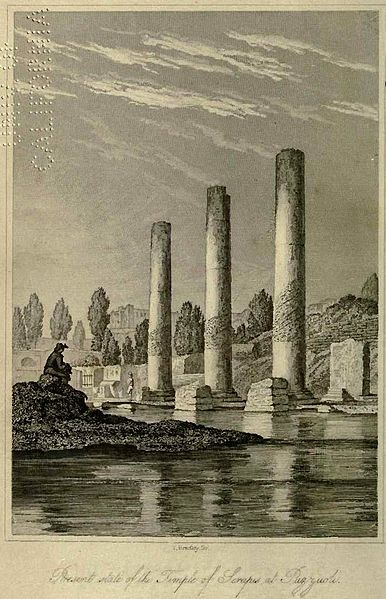
I envisioned cracked pillars from ancient Greece. As you know, a lot of the structures are now in ruins, broken down over time. Some of the pillars that once held heavy tops now stand alone, often cracked—but even those often break down, leaving only a slab of marble or perhaps a pile of stones. The pillars are actually metaphors for the sense of “I” which visually resembles a pillar. The vision was remnants of pillars in a row, and two people standing on each side of them. Basically, all that’s left of the pillars in the tanka are small piles of marble. By admitting my faults, my pillar, or sense of “I,” breaks down and I’m able to fully connect with someone else.

If you enjoyed this poem and commentary, please let us know in the comment section.
386px-Charles_Lyell_-_Pillars_of_Pozzuoli

Art by Charles Lyell