
morning stroll–
unshared thoughts float off
with the withered leaves
(The Heron’s Nest, Volume II, Number 10: October, 2000 – Heron´s Nest Award)
© H. F. Noyes (1918 – 2010) (USA)
I have a soft spot for the word “stroll.” It seems perfect for haiku and the leisurely way we write in this genre. Morning strolls are usually done on the weekend, when we have rested well and are relaxed.
However, with “unshared thoughts,” we get a look into the psychological condition of the poet. It implies, in a way, that the poet has thoughts he would either not want to share, or deems not important enough to communicate. Or, it could be that the poet simply did not share them, without any preconceived notion.
When I read “float off,” I resonated with it, in that I often have something similar happen. A thought comes, and soon appears to drift away. Thoughts sometimes are like satellite signals, beeping in and out of existence.
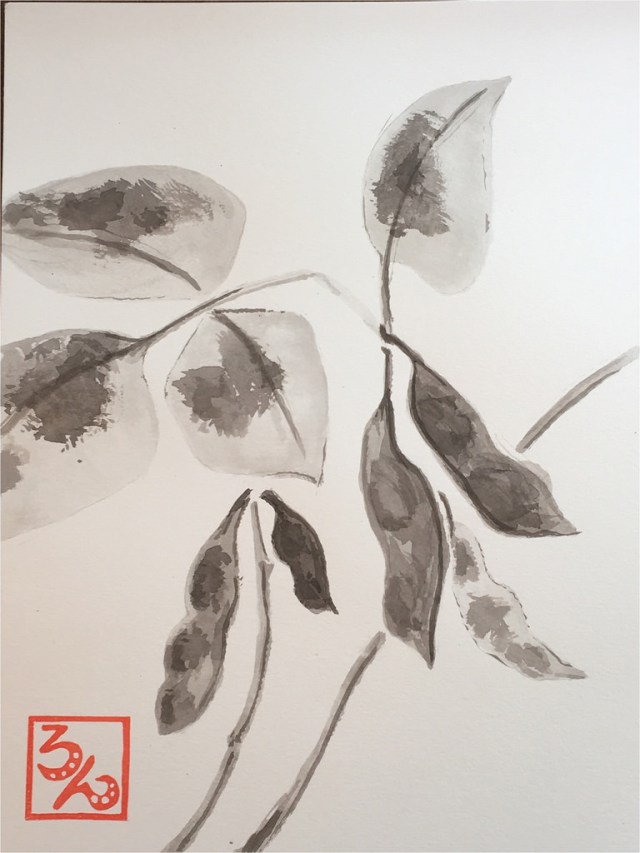
This state where thoughts are more loose can be entered when viewing nature. Seeing nature in its splendor and grandeur can often still our minds. In this instance, the poet connects his thoughts with the withering leaves that are also floating away. “withered leaves” refers to autumn, and this link may imply that the poet believes his thoughts are as useful or important as autumn leaves. The beauty of autumn is not captured here, but rather its deterioration. Additionally, maybe he is inferring that unless and until we share our thoughts, they are as substantial as withered leaves.
In terms of its technical aspects, the punctuation, sound, and layout can be considered. I think the ellipsis is fine as a way to make the reader pause and imagine a morning stroll, but it seems an ellipsis would have been more suitable to fit the mood and action of floating. When looking at the sound of the haiku, we can notice the usage of “o” sounds to slow down our reading, reflecting the sense of a stroll. The “r”s also keep the pace of the poem leisurely. Speaking of the layout, we have a typical structure for English-language haiku, with a short first line, a longer second line, and a third line.
I like how casual the first line is, and how it is contrasted by the evocative last two lines. A striking haiku in its simplicity and imagery.
– Nicholas Klacsanzky (Ukraine)
This haiku is either about yearning for certain dreams, or things that bother one the most. The opening line indicates that the person seeks solitude that this autumn morning provides fully. But, certain unshared thoughts still annoy in a way, as there is no one to share them with. It shows the introverted personality of a person who tries to live in solitude, and still enjoys it the most.
Withered leaves in this context symbolises death/ irrelevant thoughts that are still unshared and a mystery. I can also see an element of meditation here, as a morning stroll and withered leaves indicate the deep silence of autumn, departure, solitude, and hibernation. So, the person finds it the best ambiance for pondering deeply and filtering those unshared thoughts—eventually, finding those thoughts more like withered leaves: irrational. Mindfulness is the key here, where the poet cleverly related his ongoing thoughts with the season and finally achieved his goal: inner peace and serenity.
– Hifsa Ashraf (Pakistan)
Did you enjoy the poem and commentary? If so, leave us a comment below.
 Haiku Commentary