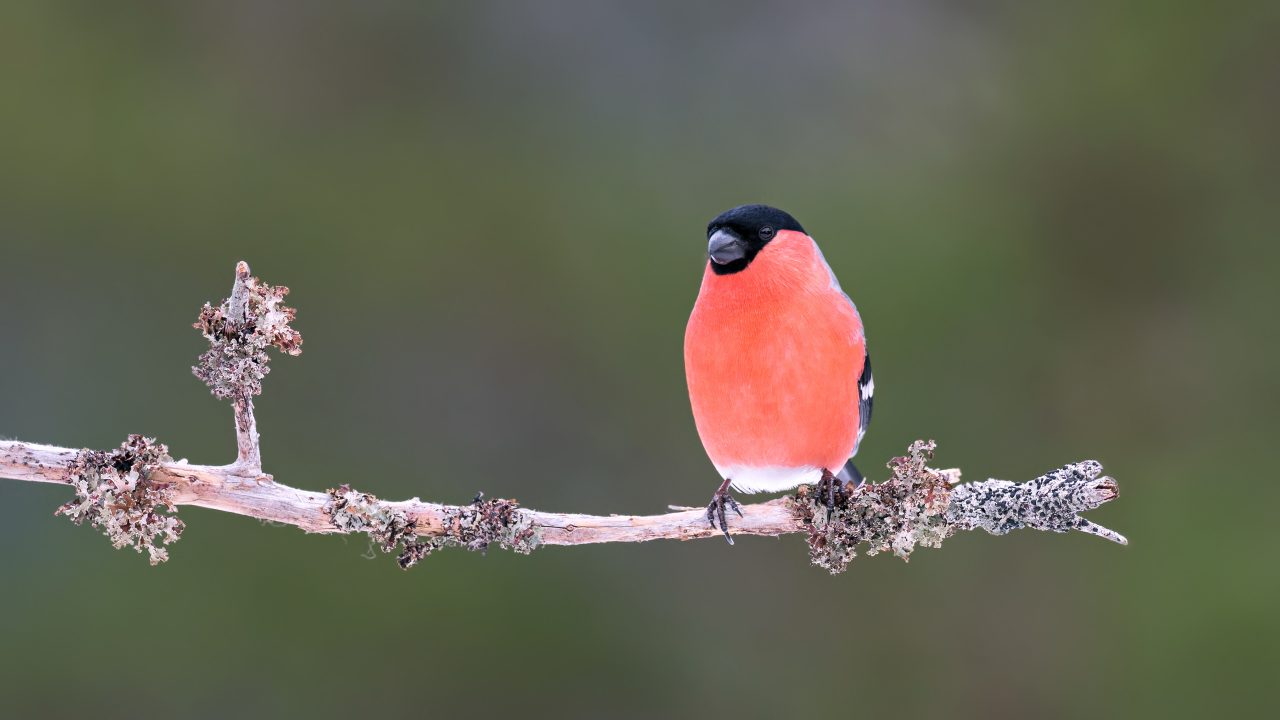
winter dusk
the robin’s last chirp
before hiding into a tree
– Muskaan Ahuja (India)
Winter dusk is a time of converging all the thoughts of the day where one focuses on the inner state of mind—in other words, the locus of control is one’s own self. The mysterious magic of the forces at dusk creates a great impact on the psyche of a person where they are attracted by the invisible pull of the inner self.
The last chirp of a robin may indicate the departure or annihilation of life that comes before one has possibly enjoyed life fully and then ends up in deep silence.
The hiding into a tree is more like an occultation where there is no more left to say or do. A life full of mysteries and chaos let us go through experiences where we enjoy positivity, happiness, and blessings but when all is over, we have nothing except silence and loneliness.
Another aspect of this haiku can be a deep understanding of life after passing through various experiences that enrich our intellect and bring maturity. This is the stage where people enjoy their solitude and silence more than words.
It’s the focus of life from outside where worldly life builds up a dwelling for our end, which is annihilation and mortality.
From chirp to deep silence, from dawn to dusk, from interaction to solitude, all these stages of life show a momentum towards our ultimate destiny, which is nothingness.
– Hifsa Ashraf (Pakistan)
We have the kigo, or the seasonal reference, right in the first line. As you probably know, haiku are traditionally seasonal poems, and starting a haiku with a kigo is a safe bet and a fine idea.
With “winter dusk,” we can get the picture of cold solitude and maybe melancholy. This tinge of the solitary is continued on the second line with a robin’s last chirp of the day (or perhaps of its life, for any number of circumstances).
Haiku often focus on one thing at a time to allow readers to dive into that moment more readily and to gain a sense of mindfulness. You can say it’s a tradition to focus on one thing at a time in the spirit of Zen, which is popular in Japan (ichigyo-zammai). Haiku is not a Zen art, but its history is intertwined with it. So, having this philosophy on display in the craft of this haiku is well-founded.
In the last line, we see the robin taking refuge within a tree cavity or deep within the labyrinth of its branches. The robin is essentially going through the process of its own dusk. Its chirp is colorful like the sunset and then recedes like the dying colors of the sky. In this way, you can say dusk and the robin are both manifestations of each other.
Looking at the haiku in a technical sense, we might first notice the unusually long last line. It’s common practice to have a shorter last line than the middle line. However, it’s not only difficult to format the lines differently without creating an issue but also it’s not long enough to be of concern. Like most great arts, haiku writing doesn’t have strict rules and allows for plenty of exceptions.
I think the first line could have benefited from a dash to add to the serious mood of the haiku. But, the poem is fine without it and no problem is created with the absence of punctuation in this haiku. For the sound, I felt the letter “r” was particularly important. It gave the haiku more weight.
This haiku captured the mood of winter dusk through a strong visual and sensory sense and brings readers to stillness and introspection.
– Nicholas Klacsanzky (USA)
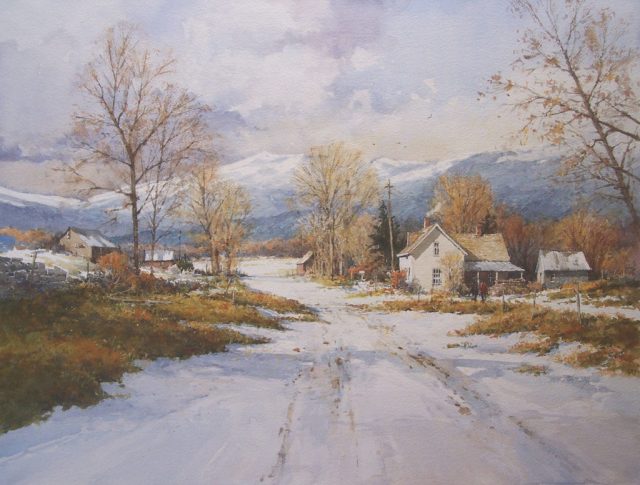
– “Winter Road” by Ian Ramsey
 Haiku Commentary