Haiku by Joshua St. Claire, Kelly Sargent, and Daniela Rodi

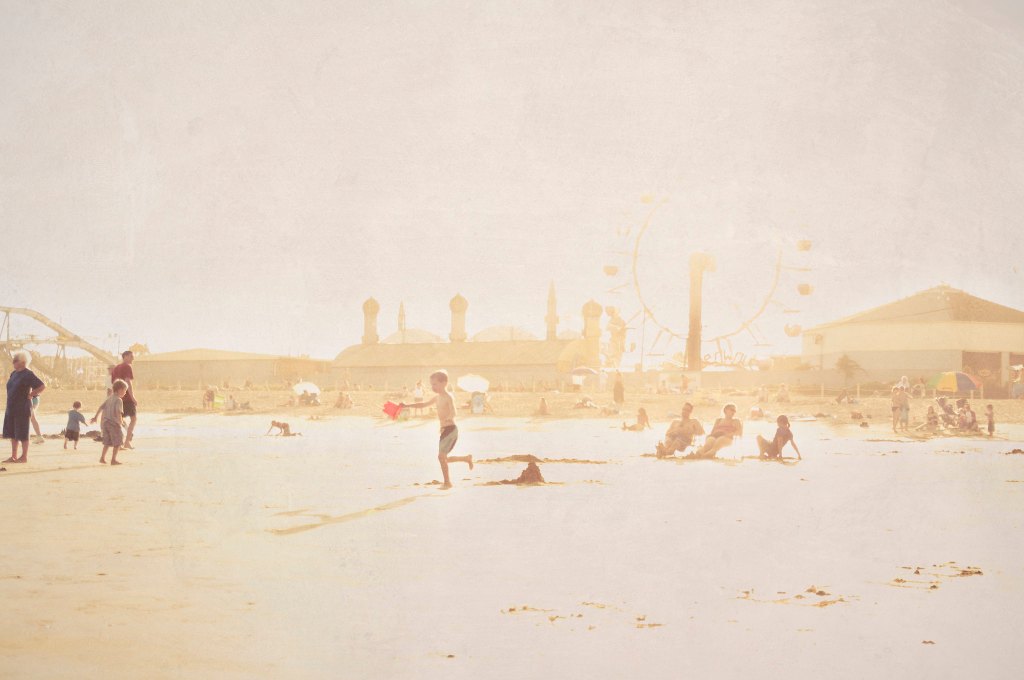
hot sand
my son asks me
about sin

Joshua St. Claire (USA)
The Heron’s Nest, Volume XXV, Number 3: September 2023

Commentary from Nicholas Klacsanzky:

Living by beaches most of my life, I instantly resonated with the first line. I’ve even seen shoes being melted by hot sand. Anyway, the concept of “sin” is extremely complex and nuanced. I suppose the son is a young boy who has recently taken an interest in either church studies or philosophy. Many times, parents don’t have succinct or clear answers to children’s questions, as they are still trying to work out the answers themselves.

I can feel the humor in this haiku as well, as perhaps the father has been dealing with some “sin” and doesn’t want to teach something he doesn’t subscribe to himself. In some faiths, it is taught that everyone is a sinner, and the hot sand is a fine representation of that.

Looking at the technicalities, I enjoy the “o” sounds that mark exasperation and the “s” sounds that mimic the hiss of hot sand. I also admire the pace of the poem and the twist in the third line. Finally, it has a clear kigo or seasonal reference for summer, which contrasts poetically and humorously with the topic.

mud season again —
the crow’s feet
a little deeper 

Kelly Sargent (USA)
Modern Haiku, Issue 54.2, Summer 2023

Commentary from Jacob D. Salzer:

Slight differences in the season and climate have a significant impact on the health of plants, birds, insects, and animals. Mud season is the period between winter and spring, and is marked by melting snow, rain, and mud. In this haiku, the mud is even deeper than the year before, which could be due to climate change. This haiku conjures up compassion for the crow who is or was stuck in the mud. This haiku could be in the setting of someone’s yard in a suburban environment or somewhere in Nature. While the haiku focuses on the crow’s feet or footprints, I simultaneously envisioned the crow’s strength as he or she flies away. In this haiku, I also think of Indigenous legends that involve a crow. In short, this haiku has vivid imagery and makes us think about our impact on the Earth and many other species. May we choose to live more mindfully with more awareness and compassion.

the longest journey…
a falling leaf
returns to dust

Daniela Rodi (Finland)
Selected, 10 winning works, The 5th Basho — an International English Haiku Competition 2023

Commentary from Hifsa Ashraf:

It’s a concise poem with a clear meaning of death, annihilation, or transformation. “The longest journey” may be specific to death or a spiritual/inner journey. In both cases, the person reaches an eternal or purposeful destination. The falling leaf in the second line tells us about the annihilation, end of life, or transformation. A leaf can reflect life stages where one passes through rigorous experiences and eventually reaches the end where existence has become nothing or loses its superficial meaning.

A falling leaf depicts transformation, as according to nature’s rules, one stage of life transforms into another in a set period. ‘Returns to dust’ is about our origin which means no matter what, all of us have to meet our genesis one day in the form of death or the true recognition of who we are. The latter can translate to understanding the ultimate purpose of our lives.
 
This poem shows how selflessly a person continues their life after fading away, or after having deep experiences, where a materialistic life or possessions mean nothing and humility become one’s true virtue. 
Painting by Sean McGrath

Haiku from Susan Yavaniski, Anthony Lusardi, and Jahnavi Gogoi

bitter cold
a streetlight shining
on his pillow

Susan Yavaniski (USA)
Polish International Haiku Competition 2022 Commendation 

Commentary from Jacob D. Salzer:

I appreciate the mystery (yugen) in this haiku. The pillow could belong to a homeless person who lives on the street. However, I think the streetlight is shining through the window onto his pillow. In the latter interpretation, the word “bitter” leads me to think the husband or the poet’s son is absent or has passed away. I appreciate how there is room for interpretation left to the reader. The coldness of this haiku comes through strongly with vivid imagery. This is a powerful haiku that I think many people can relate to.

for the next hiker
at the trail’s entrance
a walking stick

Anthony Lusardi (USA)
Acorn, Issue #49, Fall 2022

Commentary from Hifsa Ashraf:

I see here a deep and inevitable connection between humans and nature. “For the next hiker” may or may not indicate every hiker. I see it like every hiker needs some assistance when they explore nature, whether they have special needs or not. As the path to explore nature is not easy, one’s needs assistance to hike and climb difficult peaks and terrains. A walking stick may be from a tree which plays a supporting role for hikers. So, it’s more like a give and take relationship between humans and nature. 

I see another aspect of this haiku which is life itself. It may reflect old age where when you enter that path, you depend on others or things to support you. I see a walking stick as a support or assistance that one needs as a senior. The word “hiker” may indicate the difficult path one has to face due to the constraints or limitations of an advanced age. The use of articles in this haiku leaves some space for the readers to relate it to their own life experiences. 

under the aurora borealis 
each whisper 
a cloud

Jahnavi Gogoi (Canada)

Commentary from Nicholas Klacsanzky:

This haiku captures the wonder of the aurora borealis well. Haiku often promotes the sense of awe that keeps us childlike and enjoying life—even its smallest moments. In the scene of the poem, above is the spectacle of the aurora borealis, and below is the remarkable observation of each whisper of the witnesses of the aurora borealis becoming a cloud. It provides me with gratitude for each happening, as everything that unfolds can convey beauty in its own way. There is also the image of tiny clouds blanketing the view of the aurora borealis for a second, inferring that even a tiny action can have a potent effect.

Looking at the haiku more technically, the shortness of the third line manifests the quietness of the moment. The “r” sounds in the first two lines of the haiku also add to the quietude of the scene, in my opinion. The soft “o” in the last line continues this feeling. The season for this haiku is somewhat clear, as the aurora borealis appears usually in spring or autumn. However, with the breath clouds, I would suppose the season is autumn. In autumn, each living and non-living being is more noticeable and precious due to the sparseness of the environment. In this spirit, I think the poet made the observation about the breath clouds, which could be said to connect to the aesthetic of wabi-sabi. In turn, we witness as readers spectacles above and below, remembering that our world is indeed a wonderful place.

By Sephiroth

Haiku by Robert Hirschfield, John Zheng, Patrick Sweeney

heavy snow—
in the window
my buried name

Robert Hirschfield (USA)
Autumn Moon Haiku Journal, autumn/winter, 2024 

Commentary: I appreciate the psychological and philosophical depth of this haiku. The first line alone carries emotional weight as well in the word “heavy.” I think the dash puts more emphasis on the snow and also creates a long silence in the poem, which resonates with the deep snow. I also appreciate the window in this haiku that seemingly separates the “inside” from the “outside.” I see the window as the lens through which we see the world. As a meditation, this haiku reflects on human mortality and encourages us to reflect on our Earthly lives and life after death. I also appreciate how this haiku shifts the focus back to the beauty and power of Mother Earth who survives long after we are physically gone. I think the poet is writing from a place of genuine humility, as his name is literally and visually buried in this haiku in the last line. In turn, it seems our names are not as permanent as they seem to be. This haiku conjures up a few questions for us to consider: 1) What do we want to leave behind after our last breath on Earth? 2) Who are we without our names? 3) What are our thoughts on life after death? 4) Are we open to the Great Mystery? I think this haiku expands our perspective and asks us to consider how important our seemingly separate sense of individuality is in relation to life itself and the cosmos. I would argue that no one is ever truly alone in this world (or in the afterlife). It seems our unique individual selves are, in the end, expressions of one universal energy, just as each snowflake is uniquely different but made of the same substance. It also seems that all of life is connected in infinitely complex and mysterious ways that we can never fully comprehend with our limited minds. In short, this is a powerful and humbling haiku that encourages us to meditate on our identity, our Earthly lives, Mother Earth spirituality, and life after death.

Jacob D. Salzer

John Zheng (USA)

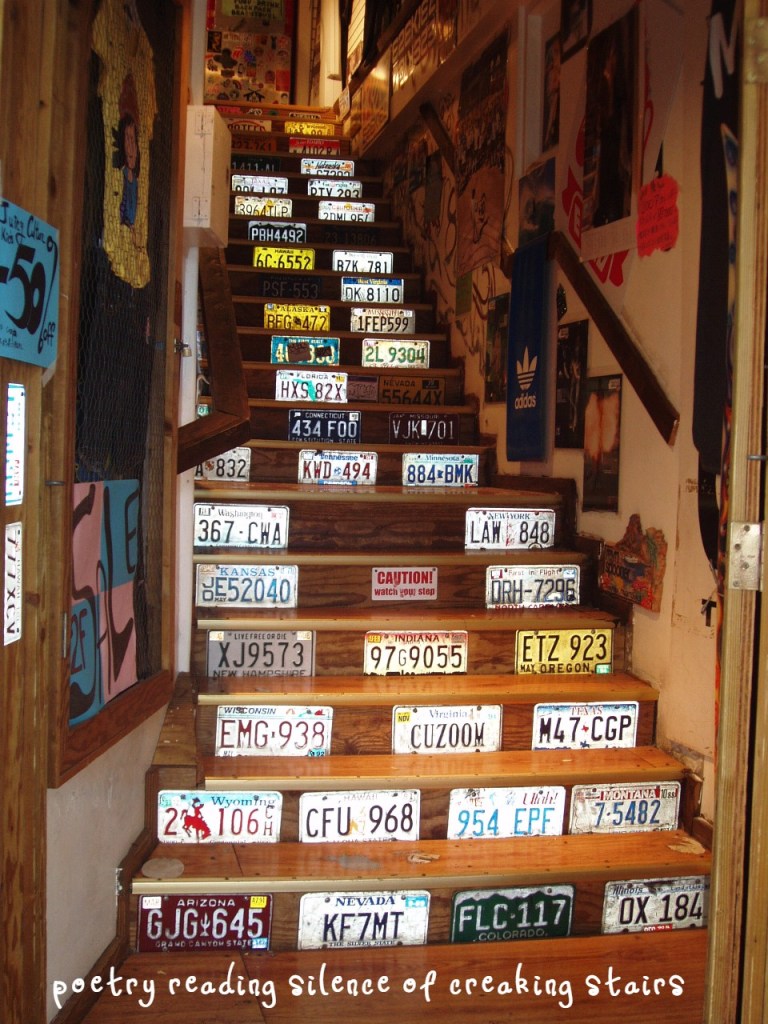
Commentary: When I looked at this photo haiku for the first time, it reminded me of a summer vacation in my childhood in my village. My grandmother used to tell us a story in an old-fashioned room in our family house where there was a wooden ceiling, creaky stairs, a charpai, and an ancient wooden door. We used to sit on the stairs listening to our late evening stories from her and there was complete silence in the room except for the wind that would pass through the gaps in the wooden ceiling. I can relate to this haiku very well. It seems like a meditative session where everyone is mesmerised by profound poetry that has enchanting effects on listeners. Reading poetry is an art that can bring all the senses to one point and make them not only listen to it but also absorb the vivid imagery or storyline. It suddenly stops the world around us and lets us relate it to our feelings and thoughts. 

I see another aspect to this photo haiku as well. It may depict the cessation of past routines of storytelling or reading. It may suggest that the poet is all alone and there is no one to listen to their poetry. The silence of creaking stairs could mean no one from the upper part of the house comes down. Maybe, once there were children or other household members who used to gather for poetry readings and now they have gone. It’s a simple yet deep photo haiku that depicts the irony of today’s fast-paced life where no one has time for such creative activities. 

Hifsa Ashraf

curvature of spacetime at the early bird special

Patrick Sweeney (USA)
Wales Haiku Journal, Spring 2023

Commentary: I’m a fan of reading about physics, and haiku about spacetime are always interesting to me. In this haiku, there is an unexpected pairing with “early bird special.” For those not acquainted with this, it is a business strategy to offer discounted prices for those who buy an item early. So, the relation between the two parts is that the early bird special is akin to a curvature in spacetime in that it is sort of a bending of time. The early bird could also be referring to an actual bird or a person. Either way, it is a unique combination of elements that makes a connection between the lofty and the practical. I feel that is one of main missions of haiku: to make a web of connections between innumerable beings to demonstrate that we are all in this together somehow.

Looking at the more technical aspects, the kigo or seasonal reference is not clear—though early bird specials are often offered at the start of seasons. The flow of the poem could be seen as two parts or as one phrase, which works to its benefit. The use of sound in the haiku is subtle but powerful with a fantastic run of “r,” “t,” and “l” sounds. The “r” sounds are more favorite as they make me feel as if the sound is curving like spacetime. Overall, this is a beautiful-sounding haiku with a fine twist that is at once relatable and abstract.

Nicholas Klacsanzky

Haiku from Deborah A. Bennett, Samo Kreutz, and Randy Brooks

first snow
caught in the willow branches
my mother’s white hair

Deborah A. Bennett (USA)
Under the Basho, November 2022

Commentary: I can feel the problems of ageing in this haiku, especially since the colour ‘white’ is projected in this haiku by adding snow and white hair. First snow as used in many haiku is a symbol of yearning, grief, stillness, contemplation, ageing, and deep feelings. In this haiku, first snow seems to project ageing and its issues related to either hardship, loss, and/or grief.  “Caught in the willow branches” seems to mean a tangled story of when life becomes more complicated with age. I also see white hair as nerves/neurotransmitters that are linked with memory. It appears the person has lost her memory or already suffers from it i.e. Alzheimer’s, dementia, etc. I liked the mystery and subtlety of this haiku which conveys many meanings in the most decent and precise way.

Hifsa Ashraf

neighbour dispute
the loudest of us all
a cricket

Samo Kreutz (Slovenia)
Modern Haiku, Issue 54.2, Summer 2023

Commentary: I greatly appreciate the perspective, meaning, and humor in this haiku. It reminds us that Nature speaks louder than a dispute with our neighbor. In general, I think a good question to ask is: during disputes or conflicts, can we take a step back and listen to the voices of Mother Earth? What does the Earth have to say? Indeed, human beings are only small threads in the infinite web of life. With a greater point of view, our lives and circumstances are put into perspective. An excellent haiku.

Jacob D. Salzer 

the wren’s garden
chattering in case
you forgot

Randy Brooks (USA)
haikuNetra 1.3, 2023

Commentary: What drew me to this haiku was the ownership the wren has over the garden. The wren most likely does not see the garden as human-made or cultivated, but rather as another part of nature. I feel the haiku makes us ponder about our relationship to the natural world and its beings. It also makes me contemplate about how something so small can be powerful and take up space. The “c” sounds in the second line bring alive the chattering, and the “e” and “n” sounds in the first line emit a sense of dignity. In terms of season, I would place this haiku in spring, as you see wrens the most during that time; the haiku as a whole has a spring aesthetic, in my opinion. Additionally, I enjoy the simplicity and phrasing in the poem, with “chattering” connected either to the wren or the garden itself. Overall, this haiku is charming, humorous, and concisely profound.

Nicholas Klacsanzky

Art by Ľudovít Čordák