Randy Brooks’ row

digging potatoes
her story reaches the end
of the row

Randy Brooks (USA)

Commentary

I appreciate how this haiku transports me to a farm, where digging potatoes is both a source of sustenance and a way to earn a living. I also appreciate how this haiku transports me back in time before we had cellphones and were more connected with the Earth. While this haiku may seem simple at first, I see deep implications. 

This haiku reminds me that words travel fast, but not always accurately. If the original story is heard by someone who tries to retell the story to someone else, the story can change subtly or more drastically from person to person. As a result, this haiku shows us the dangers of mistranslations and misunderstandings when stories are told and retold, especially by word of mouth. By the end of the row, the person may have heard a story that is much different from the original version. If this happens, there can be dissonance and profound consequences.

On the other hand, this haiku could have a positive connotation if her story is passed down accurately from person to person. Sharing stories was (and still is) a way to bond with each other and can help make the day more enjoyable too.

In Indigenous families, they have a remarkable way of preserving ancient stories by word of mouth from generation to generation. Storytelling is a deep and integral part of their culture and has continued over thousands of years. Many of their stories have also been recorded in English through books and transcripts. A good example is a book titled Indian Legends of the Pacific Northwest compiled by Ella E. Clark. I admire how Indigenous myths and legends contain important lessons that can be applied today, even though they are very old. 

I want to thank Randy Brooks for writing and sharing this haiku with us. This is an important philosophical and social haiku with depth and meaning.

 — Jacob D. Salzer 

It’s the ambience that makes this haiku concrete, digging into one’s life and seeing its harvest. This haiku also shows the hardship of a farmer’s life who expects something good in the end. Digging potatoes can relate to garnering a reward after the toil of work—a prize in the form of energy, taste, sustenance, and memories.

‘her story’ is a turning point in this haiku. It may tell us about the life of a farmer, a housewife, a worker, or a mother who has to feed her family. Digging potatoes may be correlated to planting dreams, wishes, or memories, and waiting for the harvest season for fruitful results. In this metaphorical harvesting, support (tools) aid her in gathering what she has worked towards.

This haiku is crafted very well. The words that are used let us wander through the various stories of her life. Her story reaching the end may reflect her ageing, fatigue, departure, failure, or success. The word ‘row’ in this haiku is carefully employed. From it, we can see the multi folds of this story that may indicate a poor family relationship, hardship without reward or encouragement, certain expectations from others of the harvest, or a dispute. The other side may be the row as a path that has taken her to her destiny, which may be both good and bad. I see here the chances we are given when we work hard. It depends on the path we have taken, the decisions or choices we have made, and the resilience or patience we have shown.

With no well-defined kigo, no punctuation, and an interesting line break in the second line, this haiku is worth reading again and again. It gives much for the reader to ponder.

Hifsa Ashraf

As Hifsa mentioned, there is no particular kigo, or seasonal reference, implied in this haiku. However, with the best times to harvest potatoes being in August to September in Illinois (where the poet lives), we could place the poem in those months. With the melancholy mood of this haiku, I feel it could be September.

There is no kireji or cut marker, but there is a grammatical shift starting in the second line. In the interaction between the two parts of the haiku, it seems the potatoes could be a metaphor for the story of the person being referenced. Perhaps, her history is hearty and rich, yet relatable.

The use of the word “row” and “end” intrigues me. I see different levels for each word to be read into. The person in question could be narrating a story until she reaches the end of the row of potatoes. Or, it could be that the woman or girl could have planted the potatoes and they are her story. This could imply her passing. While digging out the potatoes, the poet could be taking out her story, one by one.

In terms of sound, the letter “o” attracts me the most. The elongated syllables make the haiku more plaintive, matching the mood. I feel the letter “r” accentuates the seriousness of the imagery,

Looking at the pacing, the lines follow the standard for English-language haiku of a short first line, a longer second line, and a short third line. This approximates the rhythm of traditional Japanese haiku.

Ultimately, it seems the most potent quality of this haiku is its white space and double meanings in its imagery. With these, the haiku resonates in unexpected ways.
Nicholas Klacsanzky

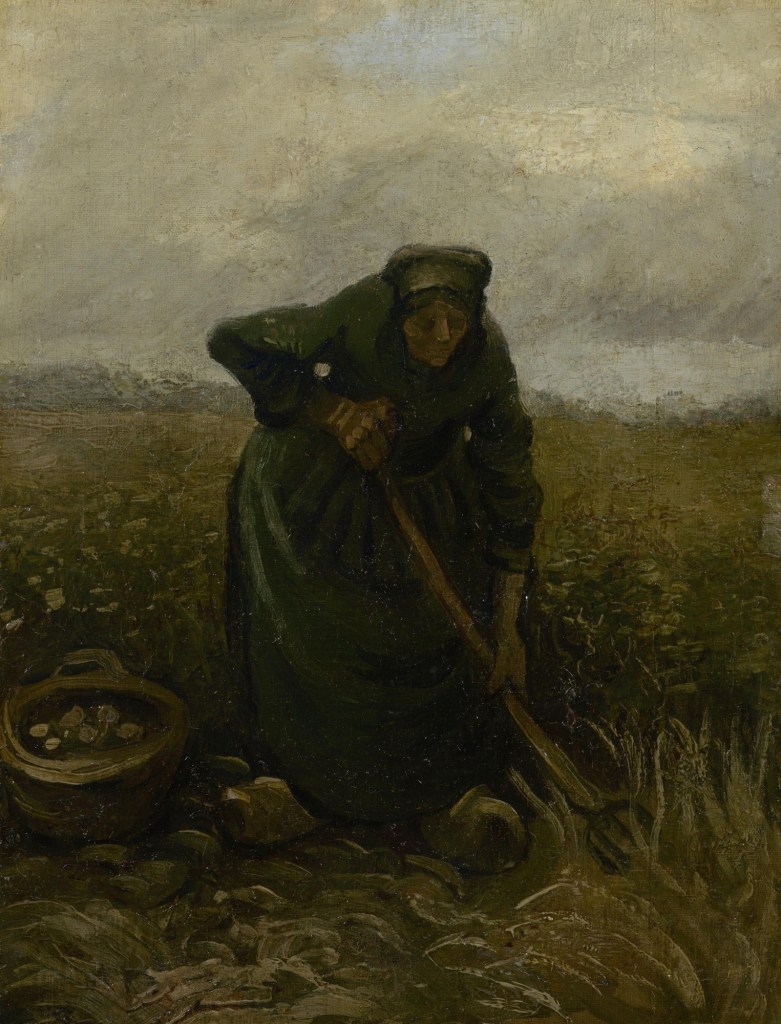
“Woman Digging Up Potatoes,” Vincent van Gogh
Kelly Sargent’s campfire sparks

campfire sparks 
teenagers
slip away

Kelly Sargent (USA)

(published previously in Frogpond, 45:1, 2022; Touchstone Award for Individual Poems nominee 2022)

Commentary

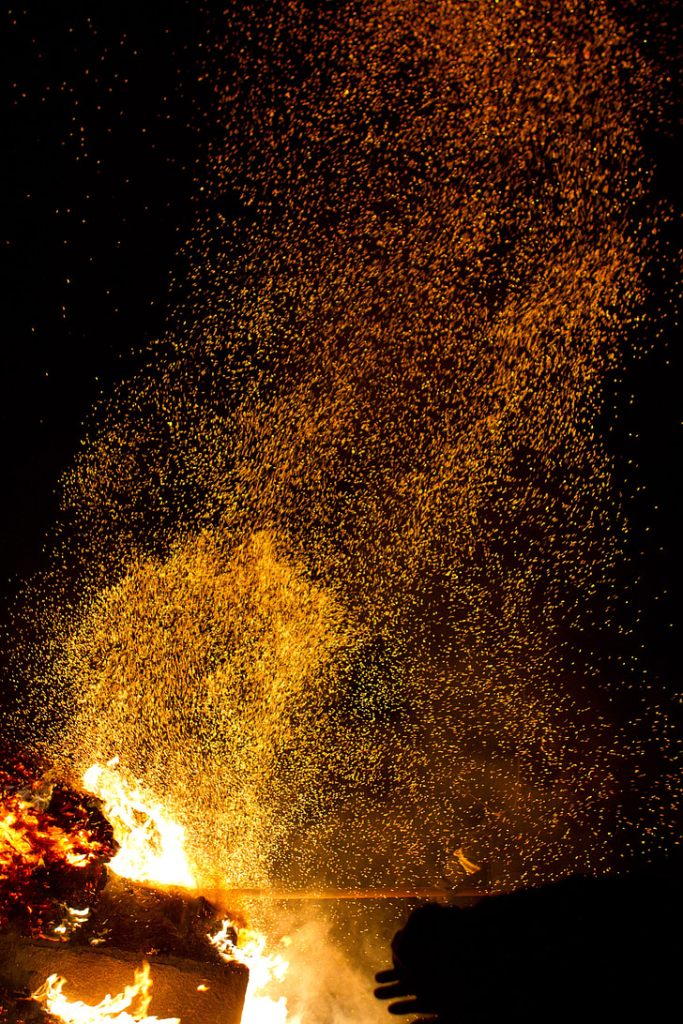
“Campfire sparks” is a vivid image. It lets us pause and imagine the scene, which is realistic yet imaginative and subtle in several ways. One can wonder about the setting, which can be either a recreational camp or a refugee camp. It connects us with both sides of the story (visible/tangible and invisible/intangible) where one can see not only the mundane but also the spiritual side.

In addition, campfire sparks show transience but it also reflects how beautifully they are transformed from the ashes of wood into something that carves the darkness with their unique structure. However, they also demonstrate how our existence can become fragile over time, especially when it passes through hardship like the wood in a fire.

Teenage is a period where an individual’s personality is developing and reshaping. This is a stage of life when the focus can be more on heroism and risks that may end up in thrills and joy. Teenagers may concentrate less on lessons that nature displays than adults. Teenagers usually can’t see the subtlety or delicacy of life and its realities that spark off and on. This is shown in the closing line where the poet takes us from a vivid image to something that disappears either as part of the subconscious or as a memory.

With no punctuation and soft sounds in this haiku, the poem is more open for interpretation. I liked the way sparks are highlighted and well connected with perhaps the most significant part of life.

Hifsa Ashraf

Campfire sparks are a powerful visual to start with. The sparks can speak to our primeval life and spirituality. The word “campfire” could be referring to a student camp or a fire made while camping—both are relatable for readers.

The focus on teenagers is interesting. It is a peculiar age to be, as one is in the middle of being a child and an adult. It is easy to be unsure of oneself at that age. With “slip away,” I feel there are several dimensions to it in the context of teenagers. The teens could simply be bored and want to go away to do other things instead of being around a campfire. Or, “slip away” could be more metaphoric in that teens often seem distant from parents and loved ones. It could also have a more somber meaning in that many teenagers commit suicide or follow a path that leads to an early death.

This kind of haiku is difficult to write in terms of the subject matter, but I believe the poet did well in keeping it simple and concise.

Nicholas Klacsanzky

As a spark proceeds from the fire, it has been said jivas (individual souls) with their respective karma emanate from Shiva (universal Divinity). 

I feel the campfire could be a summer kigo, though I like that this haiku could apply to any season or time of year.

I feel the campfire resembles the emotions of teenagers (which are often difficult to self-manage) and passion. The teenagers slipping away could imply impatience and wanting to express love, away from society and its conditioning. I also see the fire as a symbol of the transience of a human lifetime, though I do believe in life after death. 

There is a balance of concrete imagery and mystery in this haiku, allowing us as readers to enter the experience in our own way. Teenage years are a challenging time. A powerful haiku.

Jacob D. Salzer

Photo Credit: Public Domain

Agnieszka Filipek’s maidenhair fern

old church wall
maidenhair fern
climbing to heaven

Agnieszka Filipek (Ireland)
(previously published in The Remembered Arts Journal)

Commentary

In the first line, we get an image that communicates limitations and history. The word “old” in relation to the church wall is relative, given the structure stands on Mother Earth, who is much older. But of course, the old church also carries many years and memories within its walls. 

The focus on the church wall itself could be an image of old church ruins, though not necessarily. This interpretation could bring a sense of loss for people who once identified with the old church as part of their identity. Now all that remains could be fragments of its walls.

In the second and third lines, I feel a spiritual liberation, outside the confined physical and psychological walls of the church. I am reminded that Mother Earth Herself is the original cathedral, in which wisdom is not found in words, but in spiritual energies and silences. I am also reminded that stone structures will not stand the test of time, but Mother Earth has and prevails.

This is an important haiku that offers a portal into the limitations of certain organized religions and their architecture, juxtaposed with the ancient and mysterious power & silences of Mother Earth and the afterlife. A powerful haiku.

Jacob D. Salzer

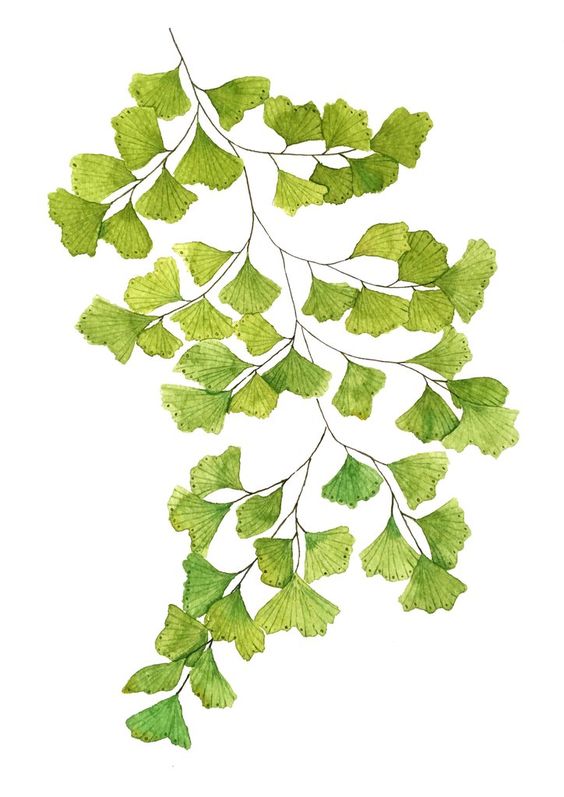
What drew me to this haiku was the image of the maidenhair fern climbing to “heaven.” There are a few things to unpack here. The lovely shape of maidenhair fern leaves is a sight of beauty, charm, and sweetness. This in contrast with the old church wall makes for a striking image. Also, maidenhair ferns have religious and/or spiritual significance, as noted by the website The Joy of Plants

“The scientific name Adiantum derives from the Greek and means roughly ‘does not get wet’. When it rains the stems droop and the water rapidly slides off the leaves, so that the plant itself does not appear to become wet. In the symbolism of plants the maidenhair fern therefore represents purity and innocence, meanings that also recur in the ancient legend that said that someone is still a virgin if they can hold a branch of maidenhair fern without the leaves moving.”

The mention of a virgin should direct you to the Virgin Mary, with various interpretations. But, it seems what is of more importance is that the fern is a symbol of purity and innocence in a place such as an old church. It gives me a thought of paganism versus organized religion and how the elemental world may once again reclaim power over our lives in the current international decline of religious fervor. This haiku also makes me contemplate how the natural world reclaims human-made structures with grace and quiet. 

The word “heaven” can relate to a religious heaven or the physical heavens or cosmos. There could also be a painting of heaven in the old church that the fern is climbing towards. 

In terms of kigo, or a seasonal reference, the maidenhair fern is found in Ireland from June to September. So, maybe it is a summer-to-early-autumn kigo. This haiku does not have punctuation or any other approximation to kireji (cutting word), but there is a clear grammatical break after the first line. Looking at the pacing, the lines do not follow the usual English-language haiku lengths of a short first line, a longer second line, and a short third line. However, I find making the last line longer as if the climb to heaven is arduous is suiting. Finally, the soft sounds of the letters “o” and “l” provide sensitivity to the reading. 

This is a haiku with judicious use of imagery and symbolism. It drives us to contemplate religion, the natural world, and original innocence. 

Nicholas Klacsanzky

This is one of the best examples of metaphoric haiku where the opening line ‘old church wall’ makes it significant as it sets the direction. I wonder whether it is about a physical wall or used as an analogy where something protects or sets limits for certain beliefs. I take it as a traditional practice of religion or something/someone that holds their beliefs firm no matter how difficult the path is.

The maidenhair fern is quite delicate, though it can survive in a moderate environment. I see it as how balanced thoughts and beliefs help someone to achieve eternal blessings that may be referred to as ‘heaven’ in this case. The simple message behind this haiku may seem religious but it represents something universal: a way to live life by following the moderate path. This path can be rewarding here as well in the hereafter and brings happiness and satisfaction which one seeks as the most significant purpose of life.

Hifsa Ashraf


Painting by Joni Murphy