Maria Chiara Miduri’s Wings

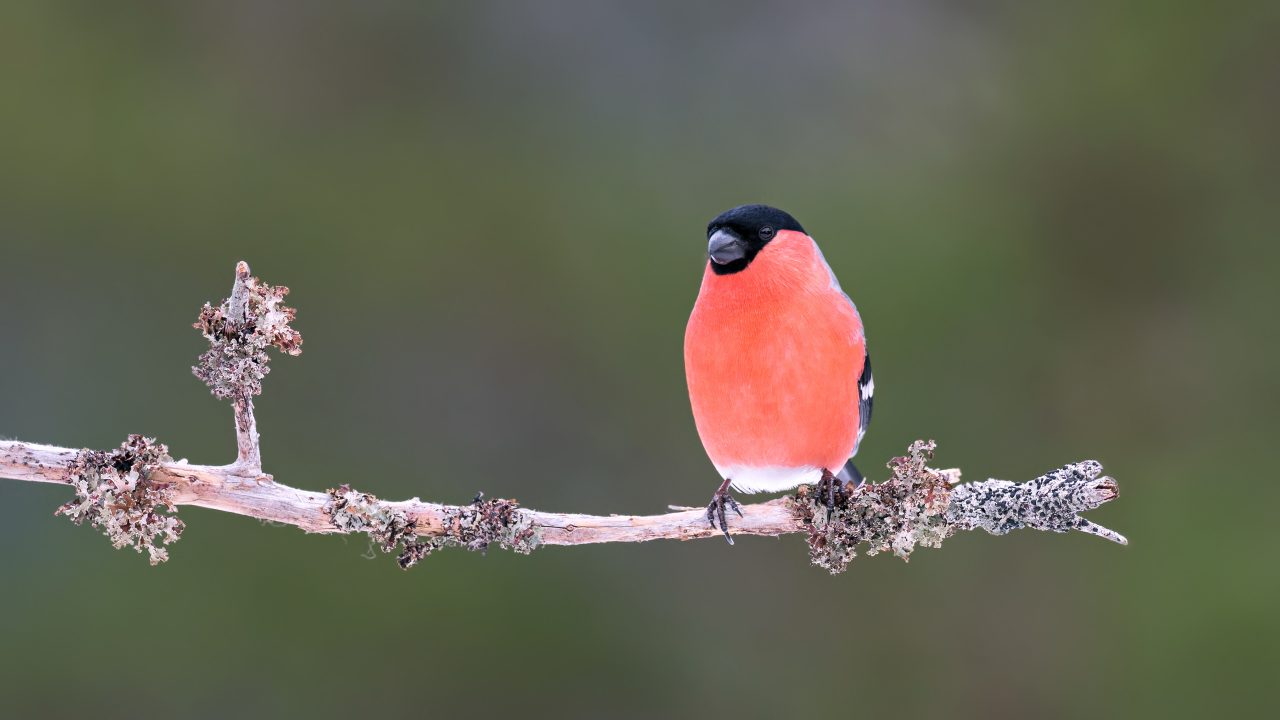
a crow feeds
tiny wings
while the bough floats

Maria Chiara Miduri (Italy)
Wales Haiku Journal, Spring Issue, 2019

Haiku about crows always brings mystery to me. I start relating them to certain deep realities of life. A crow can symbolize intelligence, flexibility, and destiny in certain cultures, whilst bad luck and death in others. For me, a crow is a symbol of wisdom and survival that keeps on knocking on the doors of our mind and heart to awaken and understand the depth of life.

The tiny wings, as I understand, is the beginning of new life that needs energy and enthusiasm to keep going and to face the harsh realities of life.

In terms of the bough that floats on the water, I think it signifies the survival of the fittest in the tidal waves of life, but it is the crow that leads us to overcome our weaknesses and to handle it with strength and wisdom.

This haiku is the combination of nature and nurture where wisdom, realities, and trials are beautifully described with the help of the elements of nature.

Hifsa Ashraf (Pakistan)

The first thing that struck me about this haiku is that it is written essentially as one part. Haiku often do not work well as one part, but there is a whole history of masterful haiku that do. In Japanese, these type of haiku are called “ichibutsu jitate” (物仕立て).

Because the imagery is so stark, the poem is carried by it and the resonance is strong. The care the mother crow is giving her chicks (“tiny wings”), while the wind or water tosses the bough that they are on, is extraordinary. It is a lesson in focus and concern. It also lends to the image of life’s precariousness and that at any moment, something can go wrong. But in the face of this, the mother crow supplies nourishment to her chicks.

Despite the haiku being one phrase, the line breaks allow readers to take in the image well. Also, the sound of the poem is rich with the letters w and o. I would say the “w” sounds supply a sense of lightness that is inherent in the imagery, whereas the “o” sounds slow down the scene for us and reflects being in awe of the moment that is captured in the haiku.

Overall, with a unique structure, stark imagery, and a fine sense of sound, this haiku conveys showing care through the obstacles of our lives.

Nicholas Klacsanzky (USA)

If you enjoyed this commentary and haiku, please leave us a message.

koson-ohara-crow-with-kaki-fruit-japanese-vintage-ukiyo-e-woodblock-painting-prints

– Painting by Koson Ohara

Martha Magenta’s mountain spring

mountain spring
the bottomless cup
of my hands

Martha Magenta (UK)
Stardust Haiku, issue 30, June 2019

This post is a tribute to Martha Magenta, who has recently passed away this year. She was an award-winning poet, an integral member of the haiku community, and a person that mentored many aspiring poets. Please read her collected works on her blog.

The opening line of this brilliant haiku takes us to the refreshing sound of water that is flowing freely. The mountain spring creates mystical feelings of selflessness and focus. The bottomless cup is a bit of a twist in the story where both words are used to take the readers from the mountain spring to the self with empty hands. So, it’s all about giving not gathering, praying not begging, saying not asking.

I could relate this haiku to Sufi practices where cupped hands are supposed to be saying a prayer and connect with the almighty at the level where there is no desire for worldly needs. The subtle feelings of flowing water, mystical conditions, and the self make this haiku more profound with deeply personal experiences of meditation and self-discovery.

Hifsa Ashraf (Pakistan)

Both the mountain spring and the poet’s hands seem infinite in their capacity. But, one is giving and one is receiving. However, it seems Martha felt the connection between her hands and the mountain spring while quenching her thirst. Maybe she felt that, like the flowing water, her hands could be a conduit for nourishment.

In terms of the season, I feel this is either spring or summer, when drinking from a mountain spring would be most satisfying.

Looking through a technical lens, the lines are paced in the traditional way English-language haiku are written: a short line, a long(ish) line, and then a short line again. No punctuation is given but I think none is needed in this poem. Martha also leaned towards a style of less punctuation.

Sound plays a significant part, as the “o”s, “n”s, “i”s, and “m”s all create a musical reading. In particular, the “n”s supply this haiku with a sense of dignity and eloquence.

This is one of many great haiku by Martha Magenta. I hope this post inspires readers to dive more into her work.

Nicholas Klacsanzky (USA)

mountain spring

Tia Nicole Haynes’ Promises

another pear
rots in our fruit bowl
the promises
we choose
not to keep

Tia Nicole Haynes (USA)
Published in Frameless Sky, 11

The pear could be symbolizing comfort and inner peace which one gets through the sweetness of life. This tanka perhaps revolves around the choices we make to get that inner peace.

So, another pear rotting in the fruit bowl means the circumstances and choices are not appropriate for gaining inner peace and comfort in life. We make certain promises in life to do things that bring happiness and peace in our lives–especially the ones where the focus of control is our inner self. But, due to certain circumstances, we are not able to carry out those promises we make with ourselves. That makes life so uncertain in many ways that we forget to taste the inner peace, as it gets spoiled and rotten by limited choices.

There is a continuous process of striving for inner peace, which is the ultimate goal of our lives and we really wish to keep things in line with our ultimate goal and make promises every year for it. But, life in certain ways puts us through trials and we forget that ultimate goal.

In terms of sound, the letter ‘o’ could indicate the life cycle that makes us deal with different matters of life but also forgetting the ultimate goal.

Hifsa Ashraf (Pakistan)

This tanka contains a comparison: the promises we choose not to keep are like another pear rotting in our fruit bowl. They are visible, the stench is clear, yet we decide not to abide by our word. This is a part of human nature. Though promises that are left behind stare us in the face, we somehow have the will to let them go sometimes.

The degradation of a pear is an apt symbol: they are sweet but easily bruise and go rotten, just like promises.

Like Hifsa, I enjoyed the “o” sounds in this tanka. I also thought the “r” sounds lend to a serious tone. Additionally in the technical vein, the poet is highly efficient with her words and allows each line to breath in its simplicity and power.

Nicholas Klacsanzky (USA)

If you enjoyed this tanka and commentary, please leave a comment.

Terry-Wise-2018-Pear-on-Handmade-Bowl-24-x-28-orig-web

Painting by Terry Wise