Hemapriya Chellappan’s Monsoon Yoga

monsoon yoga
here and there
a housefly

Hemapriya Chellappan (India)
Failed Haiku, journal of senryu, issue 45, Sept 2019

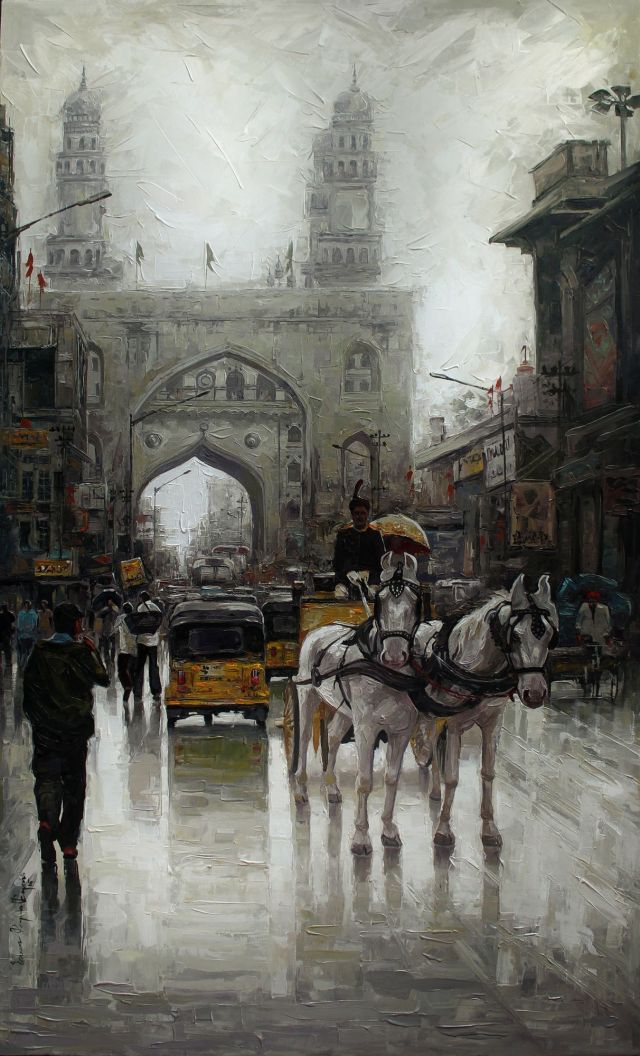
I’ve been in India during the monsoon season, and I can say how exciting and intense it is to see the rain crash down on the streets. All the commotion is compared to a housefly buzzing around here and there. Something epic and something small in aesthetic unison. Also, it contrasts the calmness of doing yoga. So, you can say we got a strong juxtaposition in this senryu/haiku–and a touch of humor.

Technically, it’s easy to spot the string of “o”s in the poem. It stretches the pace of the reading, slowing us down like yoga. Plus, we got some “r”s and “h”s to make it more musical. In terms of the structure and wording, it’s an efficient senryu/haiku–not wasting a word.

Great imagery, a fine juxtaposition, and a keen sense of sound make this poem an enjoyable read.

Nicholas Klacsanzky  (USA)

The monsoon season is a time of yearning and transformation where many views outside and inside get refreshed and soil absorbs a lot of stories of the mourning sky. The sound of rain, petrichor, and new views bring original perspectives to life–and if we shift our focus from our world to the inner world, as in yoga and meditation, we find it very soothing, as there is a direct and deep connection between a monsoon and yoga. The spirit of this haiku revolves around the aspects that make our lives toxic due to a lot of reasons and activities that affect us mentally, spiritually, physically, and emotionally.

In terms of the housefly, I believe it is a metaphor that describes the dirt and filth around us. So, when it comes to a monsoon, all that filth comes to the surface and makes the environment more chaotic and toxic. A housefly can also represent the disturbing thoughts that keep us restless and dissatisfied daily. So, it is a monsoon that makes things obvious for us so that we can concentrate on our inner world and find out the best possible solutions to the chaos around and inside us.

Hifsa Ashraf (Pakistan)

If you enjoyed the haiku and commentary, please leave us a comment. 
1e09dd3b6f20ab333c17b671873ccaf6
Painting by Iruvan Karunakaran called Charminar Wet
Agnieszka Filipek’s Willow

willow
writing a message
on the lake

Agnieszka Filipek (Ireland)
First published in The Cicada’s Cry

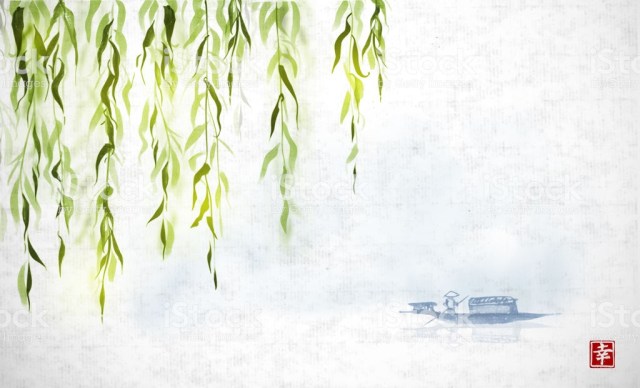
The willow tree represents strength, stability, growth, and knowledge or learning. This simple but profound haiku represents the shades of all these characteristics that nature presents through its different elements.

Writing a message on the lake shows the imagination of a person who is in sync with nature and beautifully shares her feelings about it. So, nature gives a lot of inspiration through its elements that we need to understand deeply.

The lake depicts calmness and the writing of a message on it means the person has faced many seasons and now she is ready to face life’s experiences.

The letter ‘w’ in this haiku sounds like waves of the past that strike the mind to recollect memories and to scribble them down when one is in a peaceful state.

Hifsa Ashraf  (Pakistan)

The willow in Japan is a kigo, or a seasonal reference, for late spring. This reflects the magical and fantastical event that is written about in this haiku. Though the willow is not consciously writing a message, it appears so and or could be mistaken as doing so. These tricks of perception often show up in classical haiku.
What is the message about? If we use our imagination, all sorts of ideas could come to mind: the tree is getting too hot and fears the coming of summer, so it is writing a cry for help; it is writing a diary entry about its day; it’s writing what the wind wants to say through its brances; doggerel poetry; and many more ideas.
It’s important that haiku allow the reader to imagine and this is a good example of that principle.
If you enjoyed this haiku and commentary, please leave us a comment. 
istockphoto-1177871054-1024x1024
– Art by Elinalee

Antonietta Losito’s Autumn Walk

autumn walk
trying to exchange my breath
with trees

Antonietta Losito (Italy)

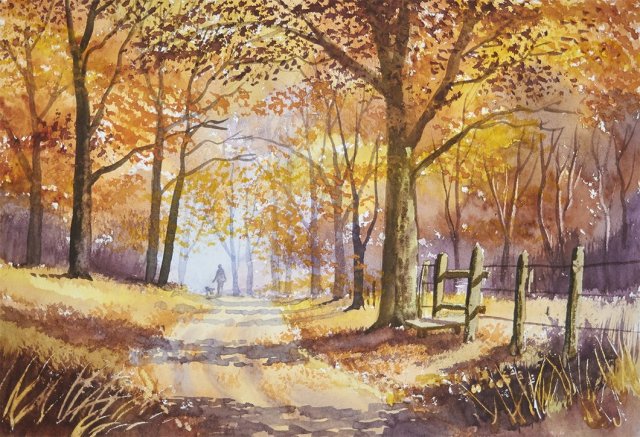
An autumn walk is one of my favourite activities. It’s not simply a walk but a therapeutic process where I feel relieved by being a tiny part of this universe. Autumn is a shifting point where one season transforms into another, leaving profound memories behind.

In this haiku, I can feel the depth of those feelings where a person exchanges their breath with trees in a symbiotic way. It’s a win-win situation–everyone gains benefits from each other. I can see how one can be beneficial for others in order to bring peace and prosperity, as it’s a universal phenomenon that one cannot exist without interacting with others.

So, this beautiful haiku shows the long-term purpose of life or the ultimate goal of life: to bring peace within and around as well.

As a side note, I personally liked the ‘t’ sound that resonates in every line of this haiku.

Hifsa Ashraf (Pakistan)

Autumn is a time when nature is deterioating. I believe the poet felt for the plight of the trees at this time. She wanted to exchange breath, or life, with the being that brings her fresh oxygen and materials for her home.

You can also see this act as kinship. At a time when things are falling apart, the poet wanted to bring nature and humanity together.

The elongated syllables in the haiku and its pacing reminds of an autumn walk. I think the two verbs work fine, as “trying” creates a stronger scene.

Overall, this haiku displays compassion, communion, and the link between nature and humanity.

Nicholas Klacsanzky (USA)

If you enjoyed this haiku and commentary, please leave us a comment.

AUTUMN_WALK_PAINTING_Thumb_copy_530x@2xPainting by Terry Harrison