Panagiotis Kentikelenis’ First Snow

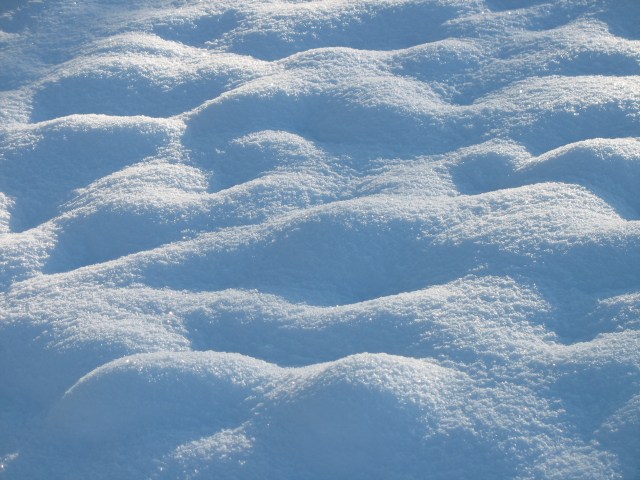
first snow—
homeless with two left-handed
baseball gloves

© Panagiotis Kentikelenis (Greece)

This haiku reminds me of the time when I used to visit a welfare organisation in my city where I found homeless children seeking for the best reward, which was anything they could wear. I personally handed over warm clothes to many children, including gloves.

“first snow” brings a lot of surprises with it besides transformation. It gives us a deeper chill, where we feel more close to our inner self. For me, the first snow is the best part of the year, which helps us to yearn for new dreams and express ourselves deeply. But, for deprived people as mentioned in this haiku, the first snow is a bit alarming due to the harshness of the season.

I see ‘homeless’ as a metaphor here where a person is deprived of a deep understanding of life and wandering with a wish to settle. The two left-handed gloves may indicate the helplessness of the person who cannot use his or her skills because of not having good choices or two equally bad choices—especially the word ‘baseball’ here reflects the sportsman spirit that is missing due to the choices that person made.

Overall, the theme of this haiku is pessimistic in nature, where a person, due to his or her personal choice (both left-handed gloves), and luck (snow), is unable to cope with different issues of life.

Hifsa Ashraf (Pakistan)

I would say that both the first snow of the year and having two left-handed gloves comes as a surprise. The first snow seems to come out “left field,” as they say, or out of nowhere. In comparison, becoming homeless is commonly not an intentional choice (though I have met people who have made the choice to be homeless). In general, becoming homeless is like having two left-handed gloves. You get stuck in a state that is undesirable and that seems so off from what you deemed to be reality. In addition, “first snow” can be a symbol of purity, whereas being homeless and receiving two left-handed baseball gloves shows that something is “off.” This link between the human experience and nature is poignant, whether through comparison or contrast.

I like the use of the em dash to make a clear cut between the two parts and to give the haiku more weight. The poet also keeps the rhythm of “short line/longer line/short line.” In terms of sound, the main focus is on “o” with “snow,” “homeless,” “two,” and “gloves.” It slows down the pace of the poem, which allows the reader to take in the haiku in greater depth.

Nicholas Klacsanzky (Ukraine)

If you enjoyed this haiku and commentary, please let us know in the comments.
fresh snow

Goran Gatalica’s Pilgrimage

spring pilgrimage —
first cherry blossoms
in mother’s sandals

© Goran Gatalica (Croatia)

Autumn Moon Haiku Journal, Spring/Summer 2018, Haiku Moment Award

This is a beautiful haiku with a spiritual touch that makes it refreshing and intriguing. The first line starts with spring, which corresponds to a new beginning, a renewal of life, and a season of positivity and rebirth. “Spring pilgrimage” is a sort of transformation from the cold winter to warm spring in general and the transformation of the self from one level to the next that is more deeper and profound.

Cherry blossoms also symbolize renewal and a refreshed nature, so these can add more positivity and a sense of growth in one’s spiritual journey. “First cherry blossoms” may indicate early spring that brings deep feelings to initiate this deeper journey. The mother’s sandals indicate submission to the creator who bestows us with the blessings of self awareness. It also illustrates humility and reverence that a spiritual journey brings us and we feel more close to our creator.

Overall, this haiku depicts the profoundness and subtlety of spiritual experiences that not only bring us close to our inner self but also gives us a knowledge of the creator by feeling divine powers deep within.

Hifsa Ashraf (Pakistan)

“Spring pilgrimage” relates, in my opinion, to both a return to family and a spiritual journey. One’s mother is at once a comforting, worldly person, and on the other hand, an individual who has given you birth and raised you. I think the word “pilgrimage” connects to both of these aspects.

The image in the last two lines implies a lot. My gut reaction is that it describes a mother who has passed away, and now fallen cherry blossoms in all their beauty rest on her sandals. It may be that the cherry blossoms were put there as an offering, as in many countries the feet and shoes of people are seen as holy. Or, the blossoms fell naturally from a nearby tree.

The sandals are also indicative of traveling and it relates to a pilgrimage. This connection could be implying that the poet’s mother is on her own journey now in the afterlife. But, by cherry blossoms coming to the sandals, there is a certain link between the mundane and otherworldly realm.

With the haiku having only eight words, it embodies the aesthetic of brevity. Also, with the em dash acting as a kireji, the two parts of the haiku are clearly separated and juxtaposed (toriawase). The sound of the “r”s running through the haiku give a sense of the rush of wind and the spiritual pull of a pilgrimage.

Through observation, juxtaposition, and sound, the poet has created a deep and elevated poem.

Nicholas Klacsanzky (Ukraine)

cherry blossoms

Did you enjoy this poem and commentary? Please let us know in the comments.

Rachel Sutcliffe’s Leafless Sky

RachelSutcliffe-1559
autumn sunset
the last swallow splits
a leafless sky

© Rachel Sutcliffe (1977 – 2019) (UK)
Chanokeburi blog, Selected Poems, November 15th, 2017

This haiku brings about a feeling of wabi-sabi to me. The sky is clear to view through a leafless vantage point. However, there is one swallow—a swift, small bird, seemingly splitting the sky with the sharp edges of its structure. The word “last” is interesting here, as it could refer to an autumn migration, and this being a swallow that lagged behind. It could also mean that there were a bunch of swallows in the sky, yet now there is only one, and as its final act, it splits the sky (metaphorically, but seemingly real in the poet’s perception).

At first, I thought “leafless” was not necessary, as “autumn” was mentioned. However, without “leafless” we could not know if it was deep or late autumn and could not visualize the scene as well without it. The “swallow” is connected to many seasons, and in autumn, swallows migrate, as mentioned before. So, there is also no conflict with “swallow.”

If I was writing this haiku, I might have added a dash after line one but not adding it does not hurt it. In fact, a dash or any punctuation is not called for in this haiku. In terms of sound, this is a melodious poem. The first line exploits the “t” letter judiciously, giving a sense of quietness and solemnness. The last two lines’ use of “l” expresses the circling and diving movements of swallows to me, and the many “s” letters throughout the haiku brings about a feeling of starkness.

Ultimately, since Rachel had an incurable immune disorder, and often she used her poetry as a form of therapy, I believe she employed symbolism to refer to herself in her poems. Perhaps this haiku is about her impending death (autumn sunset), there not being much of life left within her, (leafless sky), and her making a final act (splitting the sky). It denotes a sadness but also a power from something seemingly small and delicate.

– Nicholas Klacsanzky (Ukraine)

Everything in this ku recalls the idea of an end, as Nicholas wonderfully has explained in his keen analysis. A late autumn, with a leafless sky, and the last swallow, which makes us definitely think about a forthcoming winter, is pointing to a motionless future.

The swallow, in its loneliness, is belated in leaving, although all the signs of winter are clearly pushing the bird to do it… As if something didn’t let the cute bird follow the others who have already gone…

The invisible line traced by the bird seems to separate who stays from who goes. As in physics, space and time are variables of the same function. It seams also that time is drawn by the swallow’s flight while crossing the space of the sky, and telling on Earth of an ended time for who has to go away, forever.

But, surprisingly, not confirming all this, the poet, who has written this haiku just one year before leaving this world so early, still can fly in the space of the sky inside our hearts and never leave us with her poetry, in a never ending time to tell…

Rest in peace, dear Rachel, and thank you for your poems, for what you have been and still are for us.

Lucia Fontana (Italy)

If you enjoyed this post, please let us know.