
Original in Portuguese:
Sem pedir, o vento
Derruba as flores do chão . . .
Eu nunca ousei.
English version:
without asking, the wind
sheds the flowers on the ground . . .
I never dared
© Afrânio Peixoto (1876 – 1947) (Brazil)
This poem shares the attitude that nature is bold and unpredictable. The wind may relate to mood swings as well, as sometimes rage may take us to a level where we do mistakes and blunders, shedding what we have earned. I think this also shows a specific type of wind that may be manifested as cold, dust storms, heat waves, and toxic material. I also see the helplessness of human beings when it comes to catastrophes where nature ruins its own beauty. “I never dared” is showing the alternative choice that we have being human beings—empathy, compassion, and kindness that influences certain decisions we make in haste.
– Hifsa Ashraf (Pakistan)
This haiku has an anthropomorphic nature. The wind, as an individual, and—without asking—sheds flowers as if it were an action so strong as to need a sort of permission before “rudely” being done … It is rare but not impossible to find this kind of humanization in a ku. When the author says “I never dared,” he shows us more than a shy temperament. He affirms to be not able to stop a flower’s life in an instant, as the wind can do it. He shows a feeling of humility and kindness for Earth’s creatures …
On the other hand, this compassionate poem could be also read as a romantic one, in which I can imagine him strolling with the woman he would like to express his love to and wishing nature to be like Cupid for him in that moment: we usually spread petals or flowers in romantic moments, in relation to a marriage or when there is a genuine, passionate, and true love to celebrate …
Anyways, it has evoked in me more possibilities and, even if it’s quite a long haiku, I personally would rewrite it as 4 lines:
without asking,
the wind sheds the flowers
on the ground . . .
I’ve never dared
It has a good appeal when we let it enter into our thoughts and emotions… It works at the level of the fourth chakra: love, bravery, and compassion are involved here, and we can see how the author gives the wind the task (hard for him) to make the flowers fall to the ground to talk of love to the lady with him….
– Lucia Fontana (Italy)
This was written a long time ago, when haiku was barely known to the West. Nonetheless, this particular haiku is similar to what modern haiku poets are writing now in English and in other languages. The majority of Peixoto‘s work could be said to be more haiku-like than haiku, however.
Anyways, I think this poem does what haiku commonly do best: show a connection between humanity and nature. In this case, the poet expresses the power of mother nature, and also its indifference. It could be about admiring nature for its willingness to go through difficult processes, but also at the same be shocked at its ruthlessness. Since nature does not have a mind or emotions, it acts according to the circumstances provided. Humans may hesitate to perform the inevitable, but the natural world has no such pretension.
I don’t speak Portuguese, but I can see a fine sense of sound in the original. With the numerous “r” and “o” letters, the poem is not only musical, but also sounds like the wind. On the side of punctuation, it seems the poet used more than the usual amount that we employ nowadays. Nonetheless, the poet strove for the modern notion of a short first line, a longer second line, and a short third line.
With this haiku and others, Peixoto introduced haiku to Brazil and the West in an auspicious way.
– Nicholas Klacsanzky (Ukraine)
Did you like the commentary and haiku? If so, please leave us a comment.
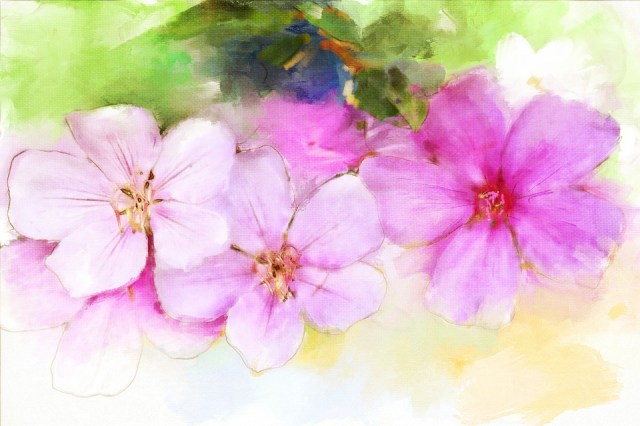
Art by Silke Lemcke
 Haiku Commentary