Haiku by Thomas L. Vaultonburg, Tuyet Van Do, and Alexander Groth

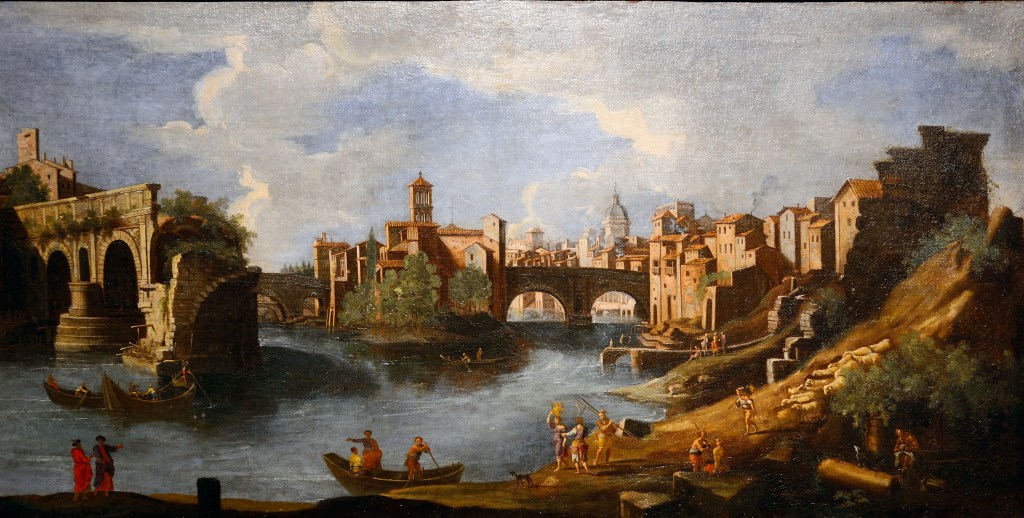
broken bridge—
the river teaches me
its alphabet

Thomas L. Vaultonburg (USA)

Commentary from Hifsa Ashraf:

This haiku reflects wreckage, destruction, and loss—possibly due to war, natural erosion, or catastrophe. The opening line, “broken bridge,” immediately conveys a sense of disruption—be it in relationships, communication, or continuity. A bridge often symbolizes connection, transition, or passage from one state to another. Here, its brokenness suggests a severed link, a collapse in understanding or unity. The em dash after the first line pauses the reader, allowing them to fully absorb the scene and connect with it in their own personal way.

The second line shows how, in the absence of that constructed path, the observer begins to engage directly with the river. The destruction of the bridge uncovers a hidden relationship with the river—something previously ignored as people simply crossed over it, never truly noticing its flow, sound, or resilience. Now, with nothing in between, the river demands presence. It becomes a metaphor for uninterrupted thought—fluid, spontaneous, and reflective—offering insight and wisdom in the aftermath of loss.

The final line, “its alphabet,” is especially evocative. It suggests the river has its own language—one that the observer is now learning to read. This could represent poetry, expression, or a deeper understanding of the self and nature. The word “alphabet” also points to musicality, rhythm, and perhaps even healing, as if the river’s sounds become a kind of song or meditation.

Overall, it is a haiku that displays humility, and that when the human-made world breaks down, nature is there with its voice and language.

vacation at grandma’s
cicada’s symphony
singing me to sleep


Tuyet Van Do (Australia)
Haiku Girl Summer, 25 August 2025

Commentary from Nicholas Klacsanzky:

“Cicada” is a classic summer kigo (seasonal reference) in the Japanese haiku tradition, and in most countries. The poet could be implying that she was on summer vacation while visiting her grandma’s house. I got the feeling, though, that perhaps her grandma was no longer there, and the cicadas were a substitute for the lullabies that her grandma used to sing. The loudness and fullness of cicada song fill the gap left behind by a loved one to some degree.

In the second line, there is a shift to the natural world, connecting humanity with the cicadas. Oftentimes, cicadas are thought to have harsh calls, but the word “symphony” characterizes their sound as pleasant and even awe-inspiring. Perhaps at a place as so nostalgia-infused as grandma’s house, even cicadas can sound melodious and sweet.

The third line returns to the human, showing the effect of nature on the poet. It displays a clear juxtaposition of human experience and nature. Additionally, it also manifests the connection between sound and the memory of an emotion. Music, or certain sonics of nature, can often open the floodgates of memory.

Looking at the sense of sound within the words themselves, the repetition of the soft s sounds mimics the hiss and hum of the cicadas in the first line. In the last line, the s dominates again, this time softened by ng and sl, creating a lulling effect.

It is a simple haiku at first glance, but with a second look or more, one can easily see and feel layers of meaning that are poignant and resonant.

school bathroom—
the scent of fresh deodorizer
lingers in my hair

Alexander Groth (Germany)

Commentary from Jacob D. Salzer:

Many activities can happen in school bathrooms. They can be a kind of hiding place for some students, where they talk and share secrets, though more unfortunate things can happen in school bathrooms as well. The scent of the fresh deodorizer could be covering up another scent, though this is left open to the reader. In a broader sense, this haiku makes me think about the psychological, physical, and emotional effect that various scents have in our daily lives. It also makes me think about the chemicals in various deodorizers/deodorants that some people are exposed to on a daily basis. In college, I learned certain deodorants have harmful chemicals that can enter the lymph nodes and can cause various medical problems over time, including cancer. In short, this is an important haiku that sparks conversations about school safety, the sense of smell, chemicals, and the social lives of students. 

Panorama of the Tiber with a broken bridge. Caspar van Wittel (1653–1736) 

Haiku by Robert Witmer, Mona Bedi, and Vaishnavi Pusapati

summer
the millstone
grinding
the donkey

Robert Witmer (Japan)
Acorn, 2012

Commentary from Nicholas Klacsanzky:

The word “summer” serves as the kigo, or seasonal reference. With summer linked to heat and exhaustion, the donkey, laboring under the sun, embodies the season’s oppression. There is also a contrast between the carefree time of the season for many and the hardship of the donkey. The poem is in line with the haiku tradition of showcasing animals as mirrors for the human experience.

The line break after “grinding” sets the haiku up for suspense. On the literal level, the millstone grinds grain, powered by the donkey. Yet, the syntax suggests another possibility: the millstone is grinding “the donkey.” This ambiguity shifts the focus of agricultural labor to an existential meditation. The donkey is not only the driver of the millstone but also its victim, ground down by endless work. The brevity of the poem creates the opportunity for two interpretations in one phrase.

The opening word “summer” creates a pause much like a kireji (cutting word) in Japanese haiku. That initial fragment provides a sense of heat and the monotony in the donkey’s circling. The lack of punctuation allows the lines to blur a bit as if there is a heatwave. Also, the way the haiku is set to four lines to slow down the reading, instead of the usual three in English-language haiku, illustrates the trudging of the donkey.

The donkey itself evokes the burden of living and the servitude we all must endure. In this haiku, however, the animal is emblematic of exploitation and fatigue. The millstone, traditionally associated with providing food, here becomes an instrument of slavery or torture. Therefore, the poem shows a contrast between the cycle of food production and the cycle of suffering. In this sense, this haiku may have Buddhist or Hindu overtones—specifically, with impermanence (mujo) and suffering (dukkha).

Looking at the sound, the s hisses like the heat of summer, and the m is heavy, creating a sense of weight that links with the donkey’s toil. Additionally, “grinding” is an onomatopoeia that mimics the action of the millstone and the servitude of the donkey.

As a person concerned about animal welfare, this haiku is touching. It made me consider more deeply the amount of labor and forced suffering we inflict upon our fellow creatures. The slow pacing, sound, and pivot line all work well to convey the feelings and ideas the poet wanted us to consider.

the deep blue 
of my hometown sky
summer’s end

Mona Bedi (India)
Wales Haiku Journal, Summer 2025

Commentary from Jacob D. Salzer:

Colors in haiku can add psychological, emotional, and sometimes spiritual dimensions. In this haiku, the deep blue could imply a kind of melancholy or a sense of calmness and mystery. Perhaps the poet’s hometown has significantly changed over the years, yet a certain nostalgia seems to remain. This resonates with the turning of the seasons as well. As summer ends, in certain parts of the world, there is a noticeable shift to the cooler air of autumn. Perhaps the end of summer also signifies that the poet is letting go of something and starting a new chapter in their life.

I appreciate how, even though this is a personal haiku, it transports readers into their own hometowns, acting as a kind of portal into the past and perhaps the future. There is a strong sense of place in this poem that connects us with the land, yet also with our family, friends, and the people we grew up with. A well-written haiku.

cloud hills—
between sips of tea
the smell of petrichor


Vaishnavi Pusapati (India)
Under the Bashō, March 13 2025

Commentary from Hifsa Ashraf:

A meditative verse, steeped in stillness, sensory richness, and inward calm with deeply evocative undertones. It makes me think of the times when I used to enjoy tea and pakoras during the rain in our village haveli. The main reason behind that joy was the smell of petrichor, which always captivated my senses and allowed me to thoroughly enjoy the scene.

‘Cloud hills’ could be either a kigo (seasonal reference) or a place intentionally chosen by the poet to preserve certain past memories or simply to enjoy a moment of peace with nature. I find it more surreal and dreamy when I imagine places like this—where one can witness the beauty of different seasonal changes all at once. I see clouds as dreams, and hills as passion and emotion—elements the observer is trying to connect with. The em dash in the first line makes the image feel more intimate and personal, hinting at a deeper emotional association with the place.

The second line, ‘between sips of tea,’ feels especially meditative and thought-provoking. It reminds me of a tea ceremony, where one is fully present and mindful, experiencing the ‘here and now.’ The sips seem to help the person unwind and appreciate the moment through all their senses. The use of the word ‘between’ invites readers to pause and take in the scene—whether that moment is brief or lingering. It reflects an aesthetic appreciation of drinking, where tea becomes more than a beverage—it becomes a profound experience for the body, senses, and mind.

The final line presents a beautiful blend: the aroma of tea merging with the smell of petrichor. It’s one of the most powerful combinations—evoking refreshed emotions and thoughts. It feels as though the poet is in perfect harmony with nature, immersed in a moment that is spiritual, nostalgic, and even a little mysterious. Both aromas—the tea and the petrichor—engage the sense of smell, which often requires deep attention and presence to truly notice.

Finally, the repeated ‘e’ sounds throughout the haiku add a soft rhythm, making it feel more musical and sensual.

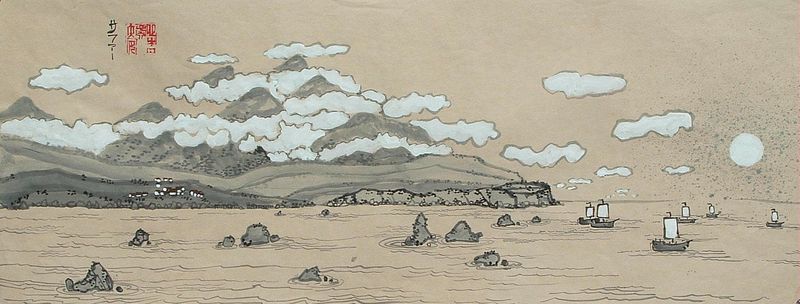
“Wind and Sea” by HM Saffer

Jacob D. Salzer’s long journey

a long journey . . .
in mother’s clothing
the scent of snow

Jacob D. Salzer (USA)
(published in Autumn Moon Haiku Journal 7:1, Autumn/Winter 2023)

Commentary by the poet

In this haiku, I primarily wanted to honor my mother and her long Earth journey (and her soul’s journey, if readers are open-minded to past lives and reincarnation). I am also writing about my mother going for a long walk in the snow and carrying the “outside” into the house. The scent of snow in her coat lingers. I’m also recognizing the long journey of falling snow, as snow falls from miles above us to reach the Earth. I hope this haiku can act as a portal for the reader to reflect on their own mother and her unique journey.

Commentary by the other editors

This haiku sounds simple but carries many stories of life’s journey. A long journey describes a period that may last more than a year or a lifetime. But, it signifies the essence of a trip that has ups and downs, and deep personal experiences. The ellipses stop us for a while and let us ponder the various aspects or types of journeys. I see it as a life’s journey that has myriad phases and stages where the person continuously passes through experiences within the self and with other people.

The second line tells us about the traveller but it still doesn’t show whether she is the one who carries the clothing or is having a long journey. It may have two interpretations. One is that she passes through rigorous experiences i.e. departure, separation, illness, loneliness, etc. The second interpretation would be that someone close to her carries her clothes as a possession.

The last line depicts deep feelings, as the smell of snow can mean something went as cold as snow and leaves painful memories. Another aspect can be the smell of a person that comes from the clothes and the poet may take it as the smell of snow, akin to the lingering memories of a loved one. In both cases, the person remains discreet in expressing their feelings and tries to relate those emotions with the scent of snow, which does not make a sound.

Hifsa Ashraf

Thinking about the seasonal reference in this haiku, “the scent of snow” is clearly directed at winter. However, a residue of snow could mean that winter has passed and that spring has come. So, the poet could be reexperiencing winter in the time of spring. This could symbolize how the poet feels about his mother’s life or even his life reflected by the one that brought him existence.

The two parts of the haiku combine well in that duration is present in each section. “Long” and “scent” both work to illustrate time passing by. “Journey” relates well to the implied cycle of seasons. With our phases as personalities, they can be representative of seasons—though one season can carry remnants of another season in it. The poet could be referring to how memory sticks to our personalities and in direct connection to his mother, it could mean that his mother has memories “too cold” to burn away.

With the punctuation, which delineates the two-part structure of the haiku, the ellipsis illustrates the duration of the journey. It also makes certain that the reader does not inadvertently read the second line as flowing from the first line.

The pacing emulates the traditional rhythm of Japanese haiku without the restriction of the syllabic count, which is often cited as an erroneous method of matching the format of Japanese haiku. The short/long/short practice is closer to the original haiku rhythm.

Looking at the sound, the letter that jumps out at the reader is “o.” Strewn throughout the poem, it gives a sense of elongation with the long syllables. In my opinion, it also heightens the emotional resonance of the subject of the haiku.

The way human life intermixes with nature in this haiku makes it special. It creates pathos and perhaps something verging on the surreal. A relatable, yet transcendent haiku.

Nicholas Klacsanzky

Winter Scene by Louis Remy Mignot, 1856

Jacob D. Salzer’s river mist

river mist…
the faint whispers
of a lost prophet

Jacob D. Salzer (USA)
Published in The Heron’s Nest, Volume XXIV, Number 3: September 2022

Commentary

The haiku begins with a mystery of belief or religious life. The poet may have diluted thoughts or beliefs. I see ‘river mist’ as a sign of a lack of clarity or less understanding of one’s beliefs where one’s thoughts may be covered in a mist—the discontinuity of a spiritual or religious lesson. I also see it as how directionless a person is if they have no spiritual or religious leader who can show them the path and live a modest and peaceful life. The ellipses after ‘mist’ let us pause and ponder more on things that are not clear to us, which may be misguided or misleading in many ways.

After ‘mist’, ‘faint whispers’ add more to the modification of religious practices that used to be followed by people to get inspiration and guidance for a righteous path. With time, certain voices have lost their strength, positive influence, and power which may be the cause of some worldly chaos.

I see ‘lost prophet’ here as a spiritual leader who helps us heal wounds of our soul and who inspires us as a role model to live an exemplary life full of compassion, kindness, and peace. In other words, this haiku might be implying that we don’t have much of a platform to explore and understand our spirituality currently. 

Hifsa Ashraf

The haiku begins with perhaps a spring kigo in “river mist.” Coupled with the second part of the haiku, I feel the season is early spring with the word “whispers.”

The word “mist” connects well to “whispers” and even to “lost.” It’s a strongly visual haiku in that respect. You can see the mist move about the river, like the whispers of a lost prophet. The juxtaposition shows a comparison between nature and spirituality. It could be that the mist is the whispers themselves, or that the whispers are simply present in the river mist.

The idea of a lost prophet is intriguing. It could be that a prophet has passed away, is physically lost, or that the people have stopped listening to them.

Looking at the punctuation, the ellipses act as a kireji or cutting word that as Hifsa noted, allows us to pause and imagine the mist floating over the river. The haiku is stronger because of this effect.

The sense of sound in this haiku is something to pay keen attention to as well. The letter “r” struck me as the most important. It gave me the feeling of a moving river. Overall, the haiku has a soft reading to it that is reminiscent of whispers.

In terms of pacing, the haiku follows the standard English-language format of a short first line, a longer second line, and a short third line to approximate the original rhythm of Japanese haiku.

Salzer has done a fine job to combine spirituality, nature, and human limitations.

Nicholas Klacsanzky

The first interpretation I was going for is the lost prophet signifies he or she has physically passed away. As the prophet takes their last breath, all that’s left of his/her life are faint whispers, Mother Earth, the endless river, and the mist. The mist could symbolize their spirit passing away/slowly evaporating into sunlight as the river of life flows on. When I saw the river mist in my mind’s eye, I felt an ethereal quality right away, and this led to writing about faint whispers. I also saw the evaporating mist as a kind of transfiguration. I appreciate how mist is water in a more subtle form that becomes nameless and formless. 

I also wrote ‘a lost prophet’ to describe how the prophet may feel lost in human civilization, i.e.  he or she doesn’t truly feel like they belong in human society. As a result, he or she retreats to Nature and finds their true home there, to such an extent that even their own words and teachings have become indiscernible and are only heard now as faint whispers. In other words, their life and teachings could now be Silence itself. It could be that the person has lost all labels, including the word ‘prophet.’ The sound of the river and his or her voice is all that remains instead of words. But the whispers are so faint, we and maybe even the prophet cannot know what they are saying. I intentionally left that open for the reader to hear maybe faint words in his or her whispers, maybe to hear their final words, but in a very gentle way; but the real message I’m going for is not found in words at all, but in the silences and in the sound of the river, and the Great Mystery and a deep wordless Love. 

In short, I wanted to describe a transition from someone being mentally pinned as ‘a prophet’ to the essence of the prophet’s Real teaching that is not found in words but in Nature and Silence. Now, the river’s mist is the whispers of the prophet, calling people back to Nature, to Real Spirit and Love. There is a mergence of identity when the prophet loses their mental labels. They are now unified with Mother Earth and the Divine Spirit as there are no longer any mental barriers. I was deeply inspired to show a wordless Love found in Nature in this haiku. 

I also wrote ‘a lost prophet’ to possibly mean the person has become physically lost in Nature. The person perhaps has left behind city life for good, but they were maybe not really prepared, and got lost in Nature, leading to their physical death. This circles back to the first interpretation. As the prophet takes their last breath and says their last faint whispers with hardly any physical strength left, what survives is Mother Earth and Spirit. I wanted to show perspective too, that the founding of religions is actually not very old compared to the history of Mother Earth Herself, and that the human race and human history is actually not very old either. But the prophet also may not necessarily be religious at all. I was actually leaning more towards a spiritual prophet outside of religion whose teachings revolve around Mother Earth.

There is another darker interpretation I thought about when writing this. I saw “a lost prophet” as someone who is mentally lost, who has gotten so caught up in the ‘prophet’ label and has a kind of ‘cult’ following. Some people may follow this prophet into Nature and suffer the consequences. When this lost prophet finally dies, the hollowness of their life is revealed in the mist, and their faint whispers and corrupt words have disappeared for good.

In this haiku, I also wanted to show how all verbal words are transient. Words appear and disappear, just like the mist.

In the end, I feel Nature will endure, and the Great Spirit. The Great Mystery will last. And Silence and Love.

Jacob D. Salzer

Painting by M. Martin Vicente

Jacob Salzer’s green tea

scent of green tea
in my travel mug
the forest’s darkness

Jacob Salzer (USA)
(published in The Heron’s Nest, December 2021)

Commentary

Commentary is first by the poet himself, and then others

Green tea is my favorite beverage. According to my college studies, green tea polyphenols have more neuroprotective benefits than any other kind of tea, among many other health benefits. It is an integral part of my life, and I take it with me at times.

Last year, I spent some quality time hiking forests in the Pacific Northwest, particularly on the Columbia Gorge in Washington state and the Wildwood Trail in Portland, Oregon. The Wildwood Trail is the largest urban forested trail in the United States, running over 30 miles long. On this trail, I started to contemplate the soil’s rich darkness that provides nutrients and a safe haven for tree roots and plants. I contemplated geological history and the layers of the Earth. I also thought about the balance of darkness and light that is necessary for trees and plants to grow and thrive, as well as the cycles of life, our ancestors, and the womb of Mother Earth. But the forest’s darkness in this haiku is not limited to the soil alone. I wanted to express the depth, resilience, and mysteries of a forest and how we are connected to the Earth in both obvious and much more subtle ways.

For me, green tea is a bridge in this haiku. It constantly reminds me that I’m a part of something much larger than myself. It reminds me to step outside of my small ego, to remain conscious of my connections with Mother Earth, and to be grateful. Perhaps more subtly, the scent of green tea could resemble transience and my mortality. Simultaneously, if we envision tea steam, it could signify the human spirit evaporating into what Indigenous people call the Great Spirit or the Great Mystery. Additionally, the forest’s darkness might conjure up all the damage we have done collectively to forests, and points to the dangers in a forest, especially at night.

In short, this haiku reminds me to walk in the forest with respect, reverence, and compassion.

 — Jacob Salzer (USA)

A meditative state of mind that travels from here and now to an unknown time. I can feel a sense of transformation that isn’t limited to the scent of green tea, as it highlights how the sense of smell takes us to a special situation, memory, thoughts, or simply daydreaming that can be related to the scent of green tea. It is a deep, therapeutic process where the poet is transformed while holding a travel mug, and travels from the present to the past, or from the present to the future, or from the outer world to the inner world.

I see a sense of realization and awareness here, where ‘the forest’s darkness’ can be interpreted as his inner world/inner self that is revealed to him during this ‘tea meditation’ where each sip is clearing his mind and thoughts—a sort of crystallization of thoughts. The journey to the inner self is being bridged by the traveling that usually brings a person close to their true self especially when they are alone.

Overall, I liked the mystery of this traveling without ‘time & space’ from a cup of tea to the forest’s darkness. There is also an element of healing where one can confront the dark side of one’s life, and to gradually overcome it through patience, self-awareness, and spending quality of time with oneself.

When Nick shared this haiku with me, I felt as if I am the one who is on this journey of transformation. So, an idea came across my mind about this haiku where I read it like this:

green tea dregs
in my travel mug
the forest’s darkness

HIfsa Ashraf (Pakistan)

Looking at the technical side of this haiku, it is hard to identify a direct kigo, or seasonal reference. “the forest’s darkness” might refer to autumn or winter, though.

In terms of Japanese aesthetics, this haiku may present yugen and/or zoka. Yugen is the subtle profundity of things that are only vaguely suggested, while zoka is the ongoing, continuous self-transforming creativity of the natural world. I think this haiku subtly suggests many deep meanings through its juxtaposition, as Jacob and Hifsa have espoused. The idea of nature’s movement to a travel mug in the form of green tea reminds me of zoka.

For the pacing, the length of the lines are a bit different than the standard English-language haiku. Usually, it is a short first line, a longer second, and a short third. There is nothing wrong in deviating from this, however. There is an elongated syllable in the second line in “travel” that makes it a longer read than shown. What is also cool about the second line is that it acts as a pivot line where the forest’s darkness could be in the travel mug, or the scent of green tea could be in the travel mug—or both.

There are significant things to mention about the sound, too. “e” is the most prominent letter in this haiku, with it being in almost every word. It is a lilting letter that adds positivity to a haiku that has a sense of mystery. The letter “t” is also a major player, where most of the instances of it introduce a softness to the reading.

This is a haiku with many interpretations possible, written in a light way with profound resonance.

Nicholas Klacsanzky (USA)

Painting by Lilith Lucratea

Jacob Salzer’s dream catcher

dream catcher
a new hole
in the spider’s web 

Jacob Salzer (USA) 
(published previously in Mare Liberum: Haiku & Tanka)

Commentary by the poet:

This haiku came from observation. I saw a spider’s web with a missing spider and a new hole in the web as if a large bug had managed to fly through it (or perhaps the hole was from an insect that the spider had devoured). However, this has been left open for interpretation. Because a spider’s web inherently has many holes in it, “a new hole” could simply mean the spider is creating a larger web and a new hole or an opening has been made through newly connected threads. The spider itself is not explicitly mentioned in this haiku. Therefore, it could be a part of this haiku or it could be missing altogether.

Metaphorically, in this haiku, the spider’s web is the world and the spider is the mind. Just as the spider spins a web out of itself and then lives in it, so it seems the mind spins a web of thoughts out of itself and lives in its own creation. This brings to mind a quote from my favorite movie Waking Life: “They say dreams are real only as long as they last. Couldn’t you say the same thing about life?

Ultimately, the “new hole” in the spider’s web, devoid of a spider, could be a symbol for piercing through the illusion of separation and leaving behind a hole of silence to allow light to shine through clearly, devoid of thoughts. Thus, the mind, even the “I” thought, has seemingly disappeared in the light.

I juxtaposed the spider’s web with a dream catcher (also sometimes spelled dreamcatcher) because they look similar to me.

Here is a note I received from the St. Joseph’s Indian School:

“Native Americans of the Great Plains believe the air is filled with both good and bad dreams. According to legend, the good dreams pass through the center hole to the sleeping person. The bad dreams are trapped in the web, where they perish in the light of dawn. Historically, dreamcatchers were hung in the tipi or lodge and on a baby’s cradleboard. Learn more about the Lakota (Sioux) culture at stjo.org/culture.”

I believe I left room for different interpretations in this haiku. It seems a spider’s web and dream catchers could mean various things to people. Perhaps this haiku could conjure up different dreams you’ve had. Of course, your commentary and interpretations are most welcome.

Commentary by others:

I loved the connection between a ‘dream catcher’ and the ‘spider’s web’ as both yearn to fulfill their dreams. Like the spider’s web, every dream needs consistency, determination, and hard work in order to be achieved. ‘A new hole’ indicates that the spider’s web is already broken or destroyed by both internal or external factors. The hole may be distorted thoughts, distractions, illusions, or delusions that block our view of the world whilst pursuing our dreams. More than one hole indicates drastic life changes that destroy the scheme of a dream or a spider’s web.

On the contrary, the dream may be either unrealistic or abstract, making it impossible to achieve. In that case, a new hole may symbolize the realities or awareness/conscious understanding of the dream that again and again destroy the complicated web of a dream and sensitize the person to live in reality. 

Hifsa Ashraf (Pakistan)

Jacob and Hifsa have explored the interpretations and meanings behind this haiku in depth. I want to add that besides the clear association between a spider web and a dream catcher, I see the spiritual significance of the word “dream.” To me, it inspires thoughts of Buddha’s teaching about the end of suffering being the giving up of desires. This haiku could represent that as we seek to fulfill our desires, we cause a disruption in nature. On the flip side, it could mean that to escape being a seeker of fulfillment, we need to pass through the web of this mundane life.

I like the run of “e” sounds in almost every word in this haiku. It gives me a sense of wonder. The pacing and format of the haiku look effortlessly composed. Punctuation and line length are not as important as the feel of the haiku.

A wonderful haiku that bubbles with interpretations and contemplations.

Nicholas Klacsanzky (USA)

Jacob Salzer’s intruder

THE INTRUDER

You stole her computer, her jewelry, and her credit cards, and bought things from companies around the world.

Yes, they cleaned up the shattered glass you left behind. And they have a new alarm system now, with a fence that nobody can climb.

You too are bound by the laws of karma. I just hope the seeds of karma will soon be destroyed before they grow into a vast, criminal tree.

morning mist . . .
the prisoner’s breath lingers
above barbed-wire

Jacob Salzer (USA)
(previously published Contemporary Haibun OnlineJanuary 2020)

This haibun (prose and haiku) starts with the worldly possessions of a person whom he loves. The computer, jewelry, and credit cards all show the signs of luxuries that a person possesses. The word ‘stole’ means that a person has either taken away all these luxuries or made her deprived of worldly comfort.

Having only shattered glass left behind indicates the mark of a broken relationship where there is nothing left. So, when someone enjoys worldly possessions by destroying others, their own life becomes more barren and destroyed as the analogy of seeds and trees in this haibun beautifully explains.

The morning mist reflects the confusion and chaos where there is no clear picture of what is right and what is wrong, and what is beyond the thick layer of mist that becomes a barrier. The prisoner’s breath could signify the efforts of an enslaved person who is so lost in worldly possessions and mundane life that they forget the consequences and put their life at stake. The barbed wire is another way of making a person conscious of their deeds whilst committing criminal activities.

Overall, the morning mist is like a ‘pleasure’, the prisoner’s breath is like their ego, and the barbed wire is their superego. The overall imagery of this haibun revolves around seeking pleasure by wrongdoings and eventually being caught up in the web of karma, where things that come around, go around. The pleasure principle takes a person to the verge of destruction where they lose their values, principles, and ethics, which destroys everything just to gain worldly wealth and temporary comfort. But when they get caught, they find themselves merely a sign of destruction.

The title of this haibun is quite intriguing as ‘intruder’ is any foreign or outer attraction that takes our focus away from the self, and we get lost into the luxuries of life until we achieve nothing.

Hifsa Ashraf (Pakistan)

I like how this haibun is laid out into short paragraphs that are no longer than two sentences each. It makes the content easily digestible and stark. 

It is interesting how Salzer creates a narrative with the wrongdoing being demonstrated in the prose and the result of that action in the haiku. A lot of times, haibun make a leap of subjects and do not necessarily create a plot. Both methods are viable and in the case of this haibun, it creates pathos. 

The morning mist is free and travels where it wills. But with the prisoner, even their breath “lingers above the barbed-wire.” So, this could signify that the criminal in this story is locked away within and without. 

With an eye of sound, it is intriguing to note that each paragraph of the prose begins with the letter “y.” Also, in the haiku, we have the alliteration of “m” and a strong string of “r” sounds. The letter “r” is hard and brings about the roughness of life in prison to the reader’s mind. 

The meter of the haiku is also punchy and seems to reflect the violence of the criminal’s situation. Take the second line for example: the Prisoner’s Breath Lingers.

I feel that overall, Salzer conveyed a sense of remorse for both of the parties: the victim and the thief. An essential principle of haiku is to covey compassion, and this haibun is a fine example of this idea. 

Nicholas Klacsanzky (USA)

Morning-Mist

– Painting by Ria Hills

Jacob Salzer’s Hook

forgetting my name
the hook disappears
beneath the water

 
A Hundred Gourds 9/20/15
 
© Jacob Salzer (USA)
 
This haiku is about being immersed in something so completely, that the mind becomes quiet. In this haiku, it was an experience I had fishing with a family friend and my sister. As I fished with him and my sister, my own name disappeared, along with the hook beneath the water.
 
Sometimes, it seems our analytical minds get in the way of experiencing life itself. Analysis and describing things has its place, but it seems we can also get paralysis by analysis. This haiku is about letting go of describing life sometimes, and allowing ourselves to simply be and to experience something completely, without any words, judgments, or concepts. 
 
It seems we are mentally conditioned to continuously think and act in certain ways. But is our true identity limited to a transient mental concept? Is our own name as permanent as it seems? Who are we without our names? To experience the continuous now without thought (even for a moment) allows us to experience the beauty of being, and thereby allows us to dis-identify with all thoughts. 
 
Perhaps this is why some people enjoy extreme sports like rock climbing; the activity is so intense that it requires your complete attention. You can’t be thinking about other things, otherwise, one wrong move could result in serious injury or even death. 
 
Fortunately, we don’t have to be rock climbers to quiet the mind. Any activity, when done fully, is a key to unlock moments of silence, and the great doorways of the unknown.
 
– Jacob Salzer (USA)

Jacob Salzer’s Sound

how many
become one
sound of rain

Frogpond 38:3, and VerseWrights 2016

© Jacob Salzer (USA)

Though this haiku has only seven words, there are at least three readings of it.

One is the haiku acting as a question. It can be read as two different questions: “how many become one sound of rain?” or “how many become one? sound of rain.” They have a drastically different meaning, but lead us to introspection and imagination.

Another reading involves metaphor. Jacob is saying, “this is how many becomes one: the sound of rain.”

In these readings, it is important to note that the poet says the sound of rain instead of rain itself. It is the aftereffect of the rain that is the focus. What is the aftereffect of our actions? Do we become one as a humanity through the aftereffect of our actions?

Now let’s turn to the sound. The “o” sound is the most prominent sound in the haiku, imitating, I believe, the song of far-off rain. The “a” sound of “many” and “rain” emphasize these two words, bringing more importance to them.

Though there are many readings of this haiku, I believe by the mood it conveys, it is a sober message of paying attention to the wonder of how many can become one, even though each individual has his or her own trajectory. What we leave behind with our actions can create unity in a fragmented world.

– Nicholas Klacsanzky (Ukraine)