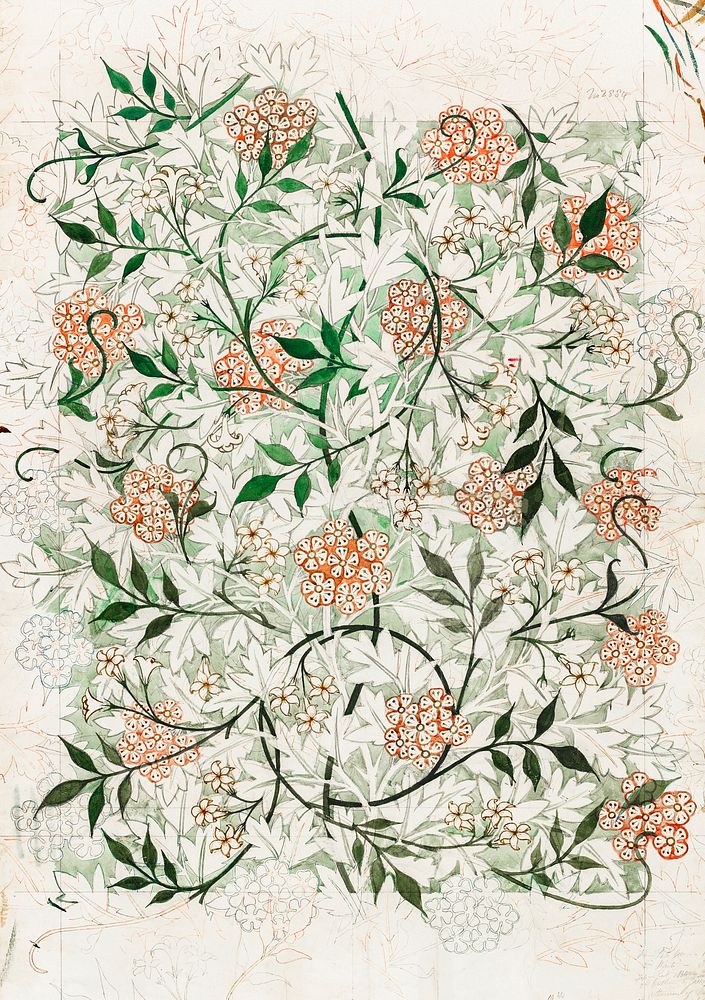
plucked jasmine
a funeral
on my hands
— Kala Ramesh (India)
The Heron’s Nest: Volume XXIV, Number 1: March 2022
Commentary from Nicholas Klacsanzky:
Jasmine not only has a powerful scent but also has far-reaching symbolism in rites and rituals. In India, jasmine is a common flower used as garlands for the deceased. The scent of the flower is so strong that it often can linger on the hands of the person handling it. In this haiku, the poet creates emotional resonance with the contrast of death and the continuance of scent (or life) after an offering. Interestingly, due to the phrasing, the funeral mentioned could refer to a person or the flower itself.
The word “plucked” connects well to the theme of death, as after a flower is plucked, it eventually withers. The poet may be saying that like plucked jasmine, when people die, our scent is left behind in the form of memories, passed on wisdom, and life work. The phrase “on my hands” has a dual meaning of physically being on one’s hands and also a sense of responsibility. With added space in the third line, I believe Kala is illustrating the weight the funeral is having on her and the responsibility she feels in taking care of this rite. It is also a unique concept to see one’s hands as a funeral, which leads readers much to mull over.
Traditionally, jasmine is a kigo or seasonal reference for spring. In India, jasmine can blossom from spring to autumn. Overall, I propose that in the context of this haiku, Kala may have been increasing the resonating contrast of spring with the end of life.
The poem is quite efficient with only seven words. This effectiveness doubles with the usage of multiple meanings with “plucked” and “on my hands,” plus the employment of physical space in the third line. In terms of sound, the most outstanding letter is “l,” where the reader can almost feel the action of being plucked.
There are many ways for readers to imagine the haiku in existence and that is one of the strengths of this poem. Kala allows the “white space” in the haiku to speak and the result is a multi-layered poem that connects to the deeper recesses of our spiritual self.
chaffinch call
a brief burst
of sunshine
— Joanna Ashwell (UK)
Autumn Moon Haiku Journal, issue 3:2, Spring/Summer 2020
Commentary from Hifsa Ashraf:
Chaffinches call for many reasons, i.e. rain, warnings, mating, or interactions with each other. The chaffinch, a little bird, is a symbol of positivity, happiness, and good tidings. The call of a chaffinch is being heard by the poet or a keen observer, which shows how nature attracts our senses in different ways. Chaffinches have a soft tune when they chirp. When a person hears their call, it is in a calm and quiet place i.e. park, forest/jungle, garden, meadow, etc. The word ‘call’ instead of ‘chirp’ indicates that it is for a purpose. Having no ellipses at the end of line one allows us to interpret it in our own way.
The rest of the haiku defines or specifies the chaffinch’s call which may be related to a pre-rain or post-rain situation. “A brief burst” is purely a seasonal expression here with some great analogies, i.e. a brief burst of joy, hope, laughter, or related feelings after a hopeless, cloudy, hazy day, or feelings. I see it as a sudden change in weather where the sun is playing hide and seek with clouds akin to the ups and downs in life where we need a call or news that can break gloomy feelings or thoughts.
The third line of this haiku implies positive energy and life hidden in the sunshine which soothes our senses and changes our feelings/thoughts and ultimately our mood. If it is a pre-rain or post-rain circumstance, then ‘sunshine’ could mean brightness and light that makes us calm and positive after a rough patch or harsh weather.
I love this haiku because of its simplicity and expression. It shows how deeply our lives are connected with nature and how much we depend on it both internally and externally.
Also, the sounds of ‘ch’, ‘s’, and ‘b’ make this haiku rhythmic and allow us to enjoy reading it while imagining the chaffinch’s call.
empty bowl
so many thoughts
singing in my heart
— Manasa Reddy Chichili (India)
Autumn Moon Haiku Journal, Volume 8:1 Autumn/Winter 2024
Commentary from Jacob D. Salzer:
I appreciate this haiku because, in the empty bowl, the poet’s heart and mind are full and overflowing with thoughts and images. The notion of “so many thoughts singing in my heart” gives me clear feelings of gratitude, harmony, and abundance. I appreciate how the value of the empty bowl becomes apparent in this haiku without explaining it. When each of us looks into the empty bowl, what do we see?
This haiku could also involve a lack of food. I can see the poet holding the empty bowl, perhaps asking for food on a street. Even in this interpretation, the poet seems to be fulfilled in their spirit, even if food is scarce. In turn, I think of how food is sacred and not something to be wasted. The poet (and perhaps others) could have also just finished eating a meal and all that remains are so many thoughts of loved ones who are living and those who have passed.
I can also see a singing bowl in this haiku. This special bowl sings precisely because it is empty.
This haiku also resonates with the well-known Buddhist saying from the Heart Sutra, “All form is emptiness. All emptiness is form.” Thoughts rise and fall, but only in what could be called a sacred silence. In a way, we could be seen as images of the invisible.
What songs can we sing to those we love in this lifetime?
This is a moving haiku we can contemplate and experience without overly analyzing it. It is personal yet universal at the same time and accessible. We can each experience the poem in our own way. A beautiful haiku.
 Haiku Commentary