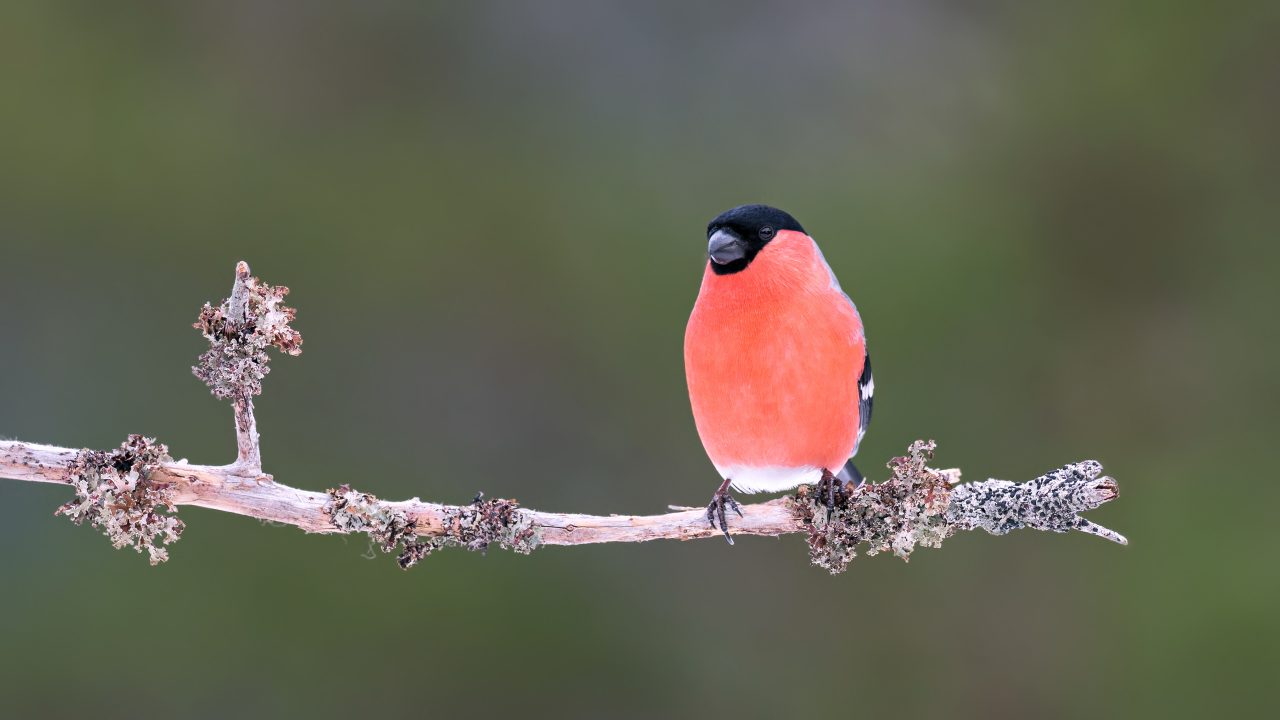
my epitaph
again and again
the weeds
— Kashiana Singh (USA)
Commentary by Nicholas Klacsanzky:
Writing one’s epitaph has various connotations. It could mean the poet is near death or was near death at some point. Another reason is that the poet is already reflecting on her life and writing an epitaph, even though she is not close to passing away. Epitaphs are usually short and compact, and comprising a whole life in one statement is difficult.
The second line acts as a pivot, which could add content for either the first or third line. It is also a contrast of the finality of the first line. “again and again” could be pointing towards reincarnation or revising an epitaph over and over. There is another reading that suggests that the weeds keep coming up over the epitaph not matter how many times you get rid of them. Both ways of looking at the poem are interesting and make readers ponder. Overall, the poem makes me introspect about our insignificance and how nature cannot be truly disrupted, despite our push to control our environment. In addition, I think of how difficult it is to encapsulate a life in one sentence, as each of us is a multitude.
When I read “weeds,” I feel the weeds might be us. Also, the poet might be hinting that the weeds might be the true epitaph of the poet, and perhaps of us all. A weed also flowers and is often misunderstood. We label them as “weeds” when they are simply following their essential nature.
Peering at the more formal elements, the language mirrors the minimalism of an epitaph. Yet, the final image expands outward, suggesting seasons, neglect, and time passing after the poet is gone. It is difficult to pin down a kigo or seasonal reference here, as different types of weeds are more prominent at certain times of the year. In traditional Japanese haiku, common examples are ukikusa (duckweed) for summer, mugura (cleavers/creepers) for spring, dandelion for early spring, and tsuwabuki (rock butterbur) in winter. In this haiku, though, I don’t feel the poet is putting emphasis on the season. Rather, the poet is focusing on the link between permanence and impermanence.
In terms of sound, it seems the lightness of the e and a letters contrasts well with the heaviness of the g letters. This brings transience and mortality into focus again.
It’s quite a simple haiku at first glance, but the more you look at it, the more layers you discover.
starry night—
the generations of women
who did needlework
— Goran Gatalica (Croatia)
Awarded First Place in the 3rd John Bird Dreaming Award for Haiku, Australia, 2025
Commentary by Jacob D. Salzer:
This is a beautiful haiku that honors generations of women, giving them the respect and reverence they deserve. The relationships that women made with each other and with others resonate powerfully with the invisible constellations that connect the stars. I believe these relationships continue, spiritually, and also form new relationships when women continue the craft. When someone engages in an age-old tradition, I feel they are inherently connecting with their ancestors.
On that note, this haiku also makes me think of Indigenous culture. I’ve read that Indigenous Peoples believe each person’s spirit travels across the Milky Way at the end of their human life to meet their ancestors and the Great Mystery. Indigenous Peoples understand that everything is connected, which leads to reciprocity and community, as our lives are interwoven in a myriad of ways. This view shows that our lives are woven with our ancestors as well, which comes through this haiku.
In a broad sense, needlework is a crafting technique that often involves yarn, thread, and fabric to create clothing and other works of art. There are actually at least 14 different kinds of needlework: (1) embroidery, (2) appliqué, (3) knitting, (4) crocheting, (5) quilting, (6) sewing, (7) bead weaving, (8) cross-stitch, (9) ribbon embroidery, (10), crewel embroidery, (11) needlepoint, (12) needle lace, (13) tapestry, and (14) patchwork. These needlework approaches can result in delicate and textured works of art, quilts, clothing, home décor, scarves, intricate lace, blankets, toys, bags, and curtains. For more information on needlework, I recommend this article: 14 Types of Needlework. This article includes this quote: “These 14 needlework crafts, each with its distinctive techniques and histories, offer not just a means to create but also a way to connect with traditions, communities, and our creative selves.”
In summary, this is a powerful haiku that honors our ancestors, the women who did needlework, and the women who continue needlework today. It also shows the power of relationships. This haiku is spiritually charged with love and reverence, and tangibly shows how the threads of our lives are interwoven with each other and other forms of life in both obvious and mysterious ways.
busker’s song
coins rattle
in a minor key
— David Josephsohn (USA)
Winner, the Haiku International Association 2023 Contest
Commentary by Hifsa Ashraf:
The opening line, “busker’s song,” recalls for me a performance I once heard along the River Thames in London. The phrase does not specify the melody, but the kind of songs buskers often choose i.e. sentimental, powerful, or quietly melancholic pieces that stir emotions. The apostrophe in the opening line suggests that it’s something very personal and emotional.
The second line, “coins rattle,” introduces a sharp, sudden sound. The quick succession of coins in a bowl makes it a parallel rhythmic music that echoes a bit loud and also gets the attention of the audience. To me, it gives me a sense of sadness as personal feelings are being transformed into something materialistic. The rattling coins suggest that the song has touched many listeners, yet there is a subtle irony here: while the audience may feel deeply moved, their response is reduced to the simple gesture of tossing a coin. The sound becomes both appreciation and limitation in terms of a public token for private feelings that perhaps cannot be openly expressed.
The concluding line, “in a minor key,” gives an emotional touch to the poem. A minor key implies sadness, depth, and introspection. It’s a minor key with the strongest impact. The melancholy of the melody leaves some reflection where listeners can feel their profound emotions. Whether deliberate or instinctive, the busker’s choice of tone draws out a collective response that makes the minor key more significant.
The absence of punctuation encourages the readers to experience the moment freely. The repetition of the r sound (busker’s, rattle, minor) adds a subtle rhythm to the ears by integrating all the elements together: music, metal, and deep feelings.

 Haiku Commentary