Haiku by Anthony Lusardi, Douglas J. Lanzo, and Minh-Triêt Pham 

soft orange leaves—
how weightless she feels
in my arms

Anthony Lusardi (USA)
Dedicated to Remi June
Presence, issue #79, July 2024

Commentary from Hifsa Ashraf:

The open line allows me to pause for a while as it reflects a unique yet subtle side of autumn. Soft orange leaves make me think of not only the texture of leaves but also the time as well which raises some questions i.e. are the leaves soft because they are wet either due to dewdrops or raindrops? Are they on the ground or half-buried? Are they still hanging from the tree or stuck in the branches? What orange colour is it? The em dash makes the leaves significant in this poem but there is still a mystery about the details. 

The second line is a shift from nature to personal sentiments, where the poet creates a unique bond between the transformation of nature and personal thoughts and feelings. ‘How weightless she feels’ could reflect weakness, withdrawal, hopelessness, prolonged illness, near-death experiences, or a lack of interest. It seems the person is not feeling well and is ready to depart like soft orange leaves that are open to be annihilated or buried. The word ‘feels’ perhaps alludes to the poet not being sure about their feelings or the real state of mind of the person. The poet is sharing emotions or anticipating the future of this relationship that may be guessed from nature where orange leaves are destined to die. It is sheer hopelessness and readiness to accept the bitter reality of detachment and departure of a loved one. 

The last line shows the significance of the poet’s association with the person being mentioned where he tries to be protective and supportive, providing comfort to the person at this stage. 

This haiku is a beautiful example of a strong and subtle bond between nature and humanity. I liked the way the poet used a specific colour of leaf to project his thoughts and feelings and also left room for others to relate their life experiences with such examples from nature. 

call to prayers
the vastness
of domed desert

Douglas J. Lanzo (USA)

Commentary from Jacob D. Salzer:

An interesting juxtaposition between sound and silence, and between the limited body & mind and the vast desert. This haiku could perhaps have a kind of haunting quality. How many of our prayers are answered? Perhaps the deep silence of meditation is the highest form of prayer. From one editor’s view, my only suggestion would be to consider adding “a” before “domed.” An interesting haiku that leads us into contemplation and a deeper silence.

frosty dawn —
the metallic taste
of her lipstick

Minh-Triêt Pham (France)

Commentary from Nicholas Klacsanzky:

The first line sets the kigo in either winter or late autumn. Frost commonly looks lovely at dawn, with the sun slightly touching it and making it glitter in soft light. Yet, it can also be a reminder of a harsh reality.

This dual tone in the first line is juxtaposed with the irony of lipstick having a metallic taste. Though the last two lines are romantically inclined, there is also a touch of alarm. A lipstick with a metallic taste could indicate the presence of metal-based pigments that might not be healthy. The metallic taste could also be a sign of myriad medical issues, such as diabetes, liver issues, cancer, and more. So, the juxtaposition could be saying that a frosty dawn could be the same or similar to kissing your partner and having a metallic taste to something usually regarded as romantic. All this makes for an intriguing toriawase.

Looking at the more technical side of this haiku, the poet uses a dash as an approximation of a kireji. For me, it solidifies the seriousness and starkness of the moment. The euphony of this haiku is also important, in my opinion, with the letter “t” making a crackling sound and the letter “l” projecting strength. The haiku is also written in a rhythm corresponding to traditional Japanese standards with its short/long/short structure. Finally, the simplicity of language and brevity displayed matches the tradition of the genre.

Overall, I enjoy how the poet takes two “ordinary” events and compares them to create a “third part” of the haiku, where our imagination conjures myriad meanings that are personal yet connected to nature.
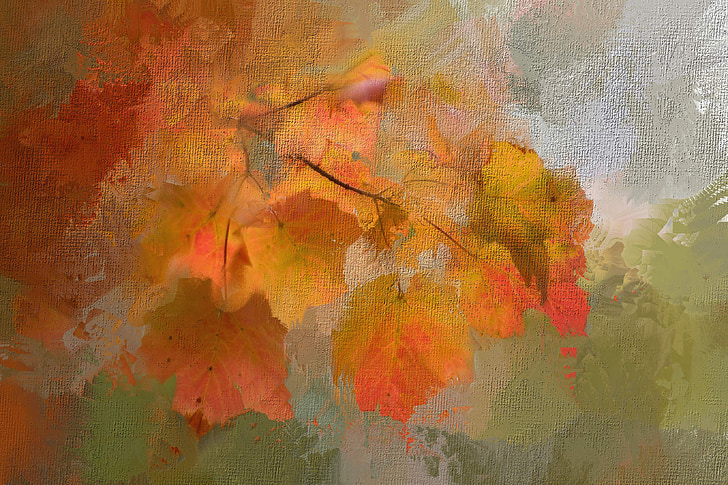
Royalty-free art without artist name
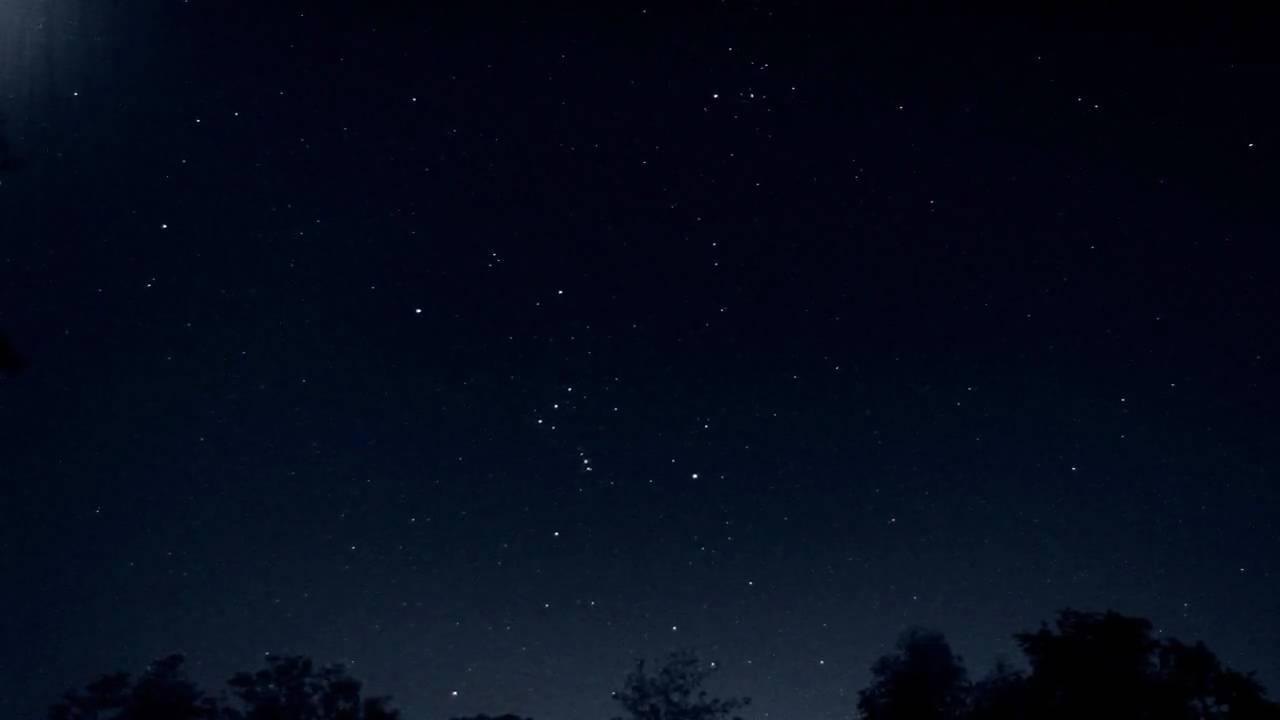


Minh-Triêt Pham’s Shooting Stars

shooting stars —
in the canal’s waters
fish jumps

© Minh-Triêt Pham (France)

The Mainichi, Aug. 18, 2018

If the em dash at the end of the first line is deleted, the haiku would clearly benefit from the pivot and revolving interpretations: shooting stars reflected in the canal’s waters and the fish jumping in the canal’s waters. There is also the theme of two worlds separated and connected by water. The movement in line 1 and line 2 against the second line makes the haiku a visual delight. Though there is no explicit mention of kigo, the haiku evokes a summer-time feeling. The merging of two worlds is completely in line with the Zen aesthetic of onism, which has been alluded by many great Japanese writers, artists, and filmmakers. All in all, a memorable haiku.

Pragya Vishnoi (India)

As to the phrasal structure of the poem, I would consider the article “a” in front of “fish” for better flow—no pun intended.

Dennis Gobou (USA)

A great sense of serene unity emanates from this haiku (which I would see much better as a monoku) where for a moment the earth seems to blend into the sky. The fact that a kigo is not present, in my opinion, enhances the sense of universality that permeates it, making it a timeless moment. Once the boundaries of space and time are overcome, this haiku would be a small masterpiece if rightly there was an article in front of “fish.”

Margherita Petriccione (Italy)

This particular haiku to me has a few flaws but it’s interesting as well. About the errors, the first thing I asked myself was why is there an em dash on line 1 when it reads as a phrase with line 2. Because of the conjunction word “in,” the em dash should have been on line 2 after the word “waters.” Then, I wondered why the author repeated what is already said, which is between the words “canal’s” and “waters.” The author could have dropped the word “waters” or drop “canal’s for even more space, but there’s another problem, which is the plural on water which indicates to me that the author had superpowers to be at multiple places at once to see this particular moment. Also, I believe the word “waters” was added so that the author could keep the short/long/short form of a haiku, therefore forcing something that isn’t necessary in the poem.

Maybe the author should have written:

fish jumps
in the canal—
shooting stars

Or better yet to use the “technique of narrowing focus”:

shooting stars
lights the canal—
jumping fish

While I’m cringing with the use of two “ing” words, for now it’s the only way I could keep technique intact with a wide lens “shooting stars” to the medium “the canal” and finally a small lens focusing on the jumping fish.

That’s just my opinion on a published haiku that needs some surgery.

Fractled (USA)

I too would omit the em dash to achieve a pivot. “waters” I feel is redundant. Line 3 is not grammatically correct: “a fish jumps” or “fish jump”. Thus, I would suggest: shooting stars / in the canal / fish jump – with matching plurals. A pleasing poem with striking imagery but it has a “dodgy” final line.

Susan King (UK)

This presents an interesting juxtaposition: the movement of objects across the sky above and across the water below. From that one similarity, the images open up and veer off from one another. A shooting star is a dying object of dust and rock falling into the earth’s atmosphere that burns up. Fish jump out of the water for various reasons, including perceiving a threat from a predator, or acting as prey. This haiku makes me wonder if, like the shooting star that’s dying, the fish is on a hook and is about to be caught? Or is the fish’s jump temporary—a momentary arc where, unlike the star, it will go back to its habitat and continue its life in the water. Either way, I feel that the poem speaks to the impermanence of nature, or the nature of impermanence.

Michael Morell  (USA)

I like the ‘startle’ effect against the sky and the canal… the movement of a shooting star, the movement of a fish. It brings together, for this moment, the heavens and the earth.

Carole MacRury (USA)

There is an element of amusement in this haiku that makes it interesting in many ways. Shooting stars may indicate a sign of luck, happiness, and celebrations (fireworks) as well. One wishes upon shooting stars to get desired things in life. I see a shooting star as a kind of celebration where someone is enjoying the vastness of the universe, and taking it as the fulfillment of all wishes.

Canal water is usually used for irrigation, so there may be celebrations for having a good crop.

The third part of this haiku is the most interesting one, as fish jumps may again indicate prosperity, happiness, and the abundance of resources. Overall, the haiku shows the blessings and bounties of life, where a person is experiencing different elements as a whole and which are interrelated. In short, stars show luck, water shows a flow of life (prosperity), and fish jumps show happiness/celebrations. So, who would not want to have all this in life?

In addition, the letter ‘s’ at the end of each line may symbolize the twist and turns in life that bring great surprises for us.

Hifsa Ashraf (Pakistan)

If you enjoyed the poem and commentary, please let us know in the comments section.

night-sky