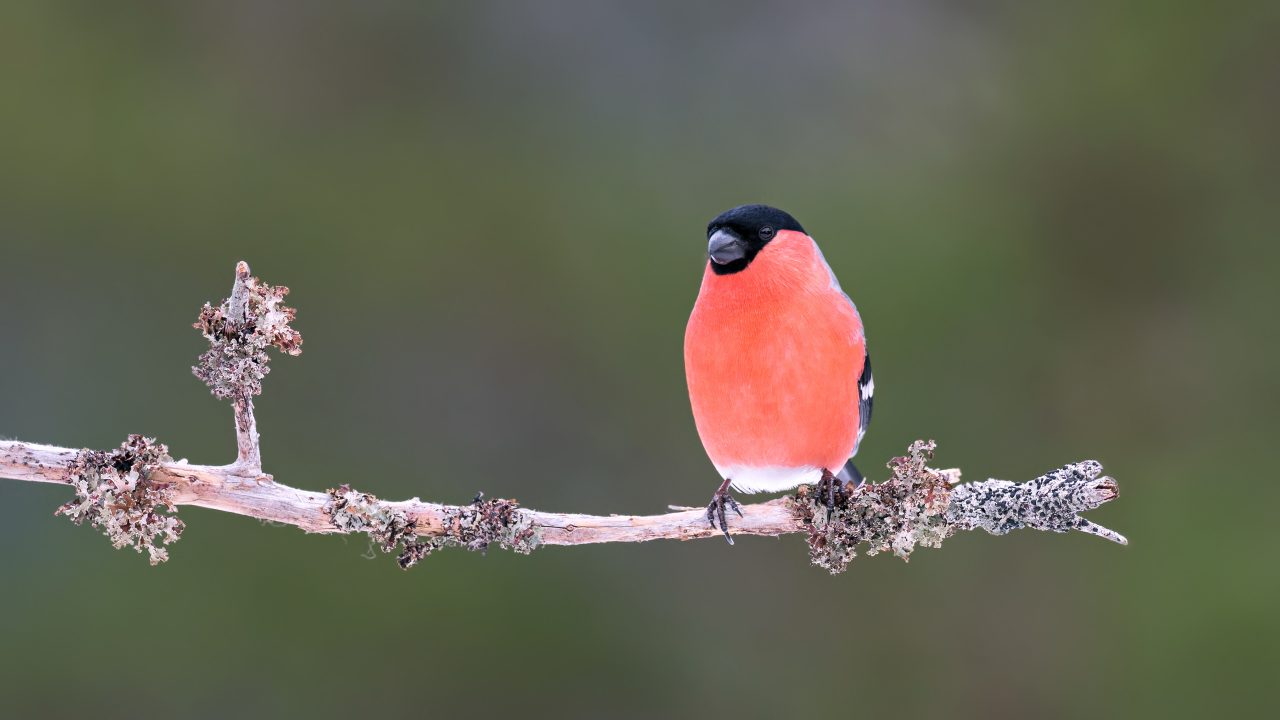
Haiku by Neena Singh, Anne Kulou, and Sheikha A. 

border outpost—
the sandbag wall
sprouts weeds 

Neena Singh (India)
hedgerow, #150, October 2025

Commentary from Hifsa Ashraf:

War and conflict-related haiku often resonate deeply with me, as the theme aligns with one of my core areas of interest. This particular poem instantly takes me to a tense border outpost, where I can almost sense the presence of surveillance and patrolling troops. It evokes not just conflict but the psychological barrier that accompanies division and hostility. Symbolically, it’s not the border itself that divides people but the mindset behind it. The em dash after line one adds a subtle pause, creating a link that suggests a deeper association with the border, both physically and ideologically.

The sandbag wall can be seen as a symbol of protection, whether from natural disasters or human threats. It creates a barrier not just to movement but to differing narratives or perspectives. Yet, sand itself represents adaptability as it adjusts itself according to the environment. In this way, the wall becomes a sign of both hurdles and resilience.

The final line, ‘sprouts weeds,’ brings in a hope in a tough element that cannot be stopped, even in a rigid and controlled environment. Weeds may be seen as unwelcome, but they are also symbols of persistence and continuity. Their presence suggests that even in the most restricted areas, life finds a way. It may also hint at the unresolved histories that cannot be buried or walled off entirely and may continue to resurface despite the suppressed and difficult conditions.

Finally, the soft ‘s’ and ‘w’ sounds add to the haiku’s depth, echoing wind, whispering secrets, hushed tension, and quiet movements.  

the faint hum
of the hallway light—
still breathing


Anne Kulou (Germany)

Commentary from Nicholas Klacsanzky:

This haiku explores a quiet moment in which the hum of artificial light becomes a mirror to the poet’s sense of aliveness. The crux of this poem lies in this interaction between the environment and inner self, which is often employed in the best haiku, as seen in poets like Basho, Santoka, Chiyo-ni, and Tohta.

The poem lacks a kigo or seasonal reference, but it definitely has a mood. In my opinion, the atmosphere of the haiku leans towards winter or late autumn, when nights are long, and people stay indoors. The absence of a kigo is not a weakness, as many haiku are traditionally written as non-seasonal, named muki haiku. As more people live in urban environments, non-seasonal haiku is likely to become more prevalent.

With the em dash in the first line, the poet creates a cut, or kireji, that separates the two parts of the haiku. It also brings about a sense of immediacy, whereas with an ellipsis, the reader would think it is more of a continuous scene. The choice of an em dash makes the haiku more raw and present.

In looking at the toriawase, or harmony/combination of parts, the monotonous hum of a hallway light mixes with the continuity of breathing. It demonstrates a synthesis between the human-made world and humanity itself. The word “hum” even suggests that the light is breathing, too. Also, the word “faint” is most likely a reflection of how the poet is feeling in comparison to the light fixture. In this sense, the poet and the light fixture become connected, and fraternity grows between them.

Exploring the haiku on a sonic level, the letter “h” stands out the most. “hum” and “hallway” hit a punctuated, yet light rhythm. Other soft consonants like f, m, l, th, and br help to make the haiku “hum” like the scene in the poem.

The pacing of the haiku is traditional in terms of Japanese haiku rhythm, with a short first line, a longer second line, and a short last line. This pacing lends to the content well, as it gives the haiku an introspective air. The diction is also casual and direct, which is aligned with haiku tradition.

This haiku seamlessly blends past and present aesthetics. With foundational elements of haiku, the poet explores a non-seasonal, urban environment that turns towards self-reflection with artistic precision.

autumn rose 
on his car’s dashboard
—blind date night 

Sheikha A. (Dubai, United Arab Emirates)

Commentary from Jacob D. Salzer:

An intriguing haiku that explores the psychological complexity of a blind date.

The autumn rose as the first line is intriguing by itself, as roses are typically associated with spring. It seems the autumn rose signifies that something or someone has passed away, and there is an unfolding or rebirth of some kind. The man’s previous partner may have passed away, or they may have separated, and now the poet is open to dating again.

A blind date can have a wide range of outcomes, as both people rely on their intuition and questions to get to know each other better, though first impressions can be deceiving. Leaving a rose on the dashboard could show that the man has a hopeful mindset, or it could be a sign that he may be trying too hard to make a first impression. In the dating world, for many people, it is a competition. Who is going to find a true and lasting partner? Perhaps the rose is a way to try to stand out from the crowd. In this haiku, the blind date could have been going to a drive-in movie, or the poet could be saying goodbye and noticed the rose while walking past his car in the parking lot. Was the rose meant for the poet, and he decided not to give it to her? Did he give her the rose, and she didn’t accept it? Or was the rose meant for someone else and was left behind from a previous date? There is some mystery. The autumn rose signifies how so much of our communication is non-verbal. The transient beauty of the rose also comes with thorns, which seem to signify danger and/or protection. Indeed, all relationships have a degree of risk as trust is gradually established. The autumn rose could also relate to how a blind date doesn’t last long but can have its own beauty, even if the blind date doesn’t find rich soil that blossoms into a romantic relationship.

The term “blind date” also has room for more than one meaning. Aside from not knowing the person, what are we blind to within our own self? Sometimes, the person on the blind date can be a kind of mirror that reflects something within ourselves that we didn’t notice or pay attention to.

In summary, this is an interesting haiku that explores the psychological depth and complexity of relationships and dating.

Designed by DMoSan
Haiku by Elliot Diamond, Neena Singh, and Jennifer Gurney

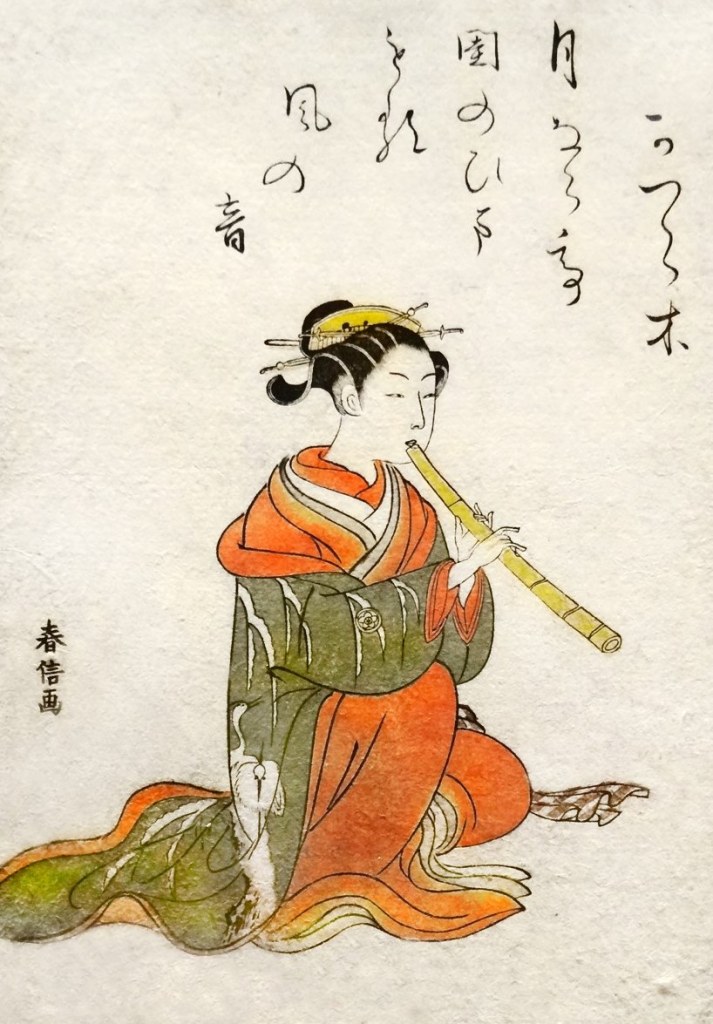
the first hole of a shakuhachi dawn 

Elliot Diamond (USA)
Modern Haiku 55.2, 2024

Commentary from Nicholas Klacsanzky:

This haiku succeeds in seamlessly layering sound and imagery to create a spiritual atmosphere. It juxtaposes the shakuhachi—an ancient Japanese bamboo flute—with the unfolding of dawn. The “first hole” can be read both literally, as the finger-hole that allows the first note to emerge, and metaphorically, as an aperture through which the first light of day enters the world. It also could be a symbol of a threshold between silence and sound, darkness and light. The shakuhachi’s connection with Zen practice further shades the image with spiritual awakening: dawn not only as a time of day, but also as a symbol of enlightenment.

The haiku, being one line, creates a representation of the shakuhachi. It could have been written as three lines, such as “dawn/the first hole/of a shakuhachi.” However, I feel the haiku is more organic and interesting as one line.

The diction is minimal, yet the resonance is wide: the reader can hear the first note, feel the cool breeze of dawn, and perhaps see the bamboo hollowed into an instrument. In addition, the phrasing enjoyably blurs instrument and environment. What we’re left with is not just an instrument or a sunrise but a moment of initiation, where time seems to exhale through the flute.

Though there is no kigo or seasonal reference, the time is evident. There is also no kireji or marker for a break, though there can be a natural pause after “shakuhachi.”

Finally, the sound of the haiku works well with the letter “h” being the most prominent. The breathiness of the letter “h” in “hole and “shakuhachi” illustrates blowing into a flute.

Despite the minimalist aesthetic of this haiku, the poet leaves a lot for the reader to ponder and feel through inner vision.

summer solstice
the busker plays
a tune from home


Neena Singh (India)
2nd Prize, Japan Fair Haiku Contest 2025

Commentary from Hifsa Ashraf:

The haiku’s imagery, anchored by the summer solstice kigo, evokes solitude and introspection through a busker’s tune played from home. The solstice’s long daylight amplifies the sense of isolation, yet the music serves as a cathartic bridge to an unseen audience, blending self-fulfillment with a subtle yearning for connection. The summer solstice, with its prolonged daylight, casts a spotlight on the busker’s solitary performance, evoking and highlighting both isolation and self-awareness.  I see the poem as a catharsis and self-awareness where an artist thoroughly enjoys their talent without having an audience or the audience is unseen.

The haiku conveys the busker’s enjoyment of solitude, longing, or melancholy in the deepest way. The poem balances solitude and loneliness, suggesting the busker finds fulfillment in their music while possibly yearning for the connection typically found in public performance. If rooted in a Japanese context, the busker’s solitary tune might reflect a Zen-inspired embrace of the present moment, deepening the poem’s meditative quality. In any case, it is irrelevant to the person who may be in a meditative state of selflessness or enjoying being alone, only with what they enjoy the most. It also makes me wonder: does the poem suggest the busker imagines an audience, or is the music itself a bridge to an abstract sense of connection?
A “tune from home” could imply the busker is playing from within their home, possibly for an unseen audience. However, buskers traditionally perform in public spaces for passersby, so the shift to a private setting might be a deliberate contrast in the poem, symbolizing introspection or a lack of external validation.

Looking at the technical details, the lack of punctuation and the rhythmic ‘m’ sounds mirror the tune’s fluidity, creating a meditative tone that resonates with both the busker’s inner world and the listener’s sense of belonging.

the branches
of my family tree
together

Jennifer Gurney (USA)
Cold Moon Journal, 6/19/25

Commentary from Jacob D. Salzer:

I appreciate how this haiku offers at least a few different interpretations. After the first read, I saw many lives joined through her family heritage. This seems to be a relatively simple metaphor, but it can act as a portal into the details of many family members and their stories. After reading a second time, I saw the branches as fallen and now physically gathered together. This leads to an interesting metaphorical interpretation that perhaps the souls of her family ancestors could be together in a different dimension. After a third reading, I saw the poet viewing a historical family album and/or a historical document/book about her ancestors.

As a creative writing exercise, I recently wrote a letter to my first great-grandfather, who settled in the U.S. I tried my best to transport myself back in time and asked many questions about his life. In addition, my father shared historical records of our ancestors. This has deepened my understanding of our family tree and makes me realize how much has changed in a relatively short amount of time. All this being said, I appreciate how this haiku encourages us to study our genealogy and history to see what we can learn about our ancestors and ourselves.

Suzuki Harunobu (circa 1725-1770). Courtesan playing Shakuhachi. Page from: Ehon Seiro Bijin Awase (Picture Book of comparative beauties of teahouses).

Haiku by Sandip Chauhan, Lisa Reynolds, and Neena Singh

grandpa’s coat
a loose button dangling
from a thread

Sandip Chauhan (USA)
Published in haikuKATHA, issue 36, October 2024

Commentary from Hifsa Ashraf:

This haiku reflects miseries, the carefree life in old age, or memories of a deceased person. Grandpa’s coat symbolizes the protection of the body but it’s not clear that the coat is hanging somewhere, in the closet, or the person is wearing it. In any case, it looks like a close association with the person and the coat. 

The loose button dangling from a thread describes the vulnerability in old age, where a person gets weak and powerless in many ways. Life becomes more predictable as the person is close to annihilation. There may be two aspects: one is a carefree life as a person doesn’t bother to take care of himself or be attentive to self-grooming and another is loneliness where no one is around to take care of the person or his belongings. In any case, the poet beautifully depicted old age which may be the same for many around us. 

separating strands
from gum —
first grade crush

Lisa Reynolds (Canada)
First Frost, issue #7, 2024

Commentary from Jacob D. Salzer:

This poem is relatable to many people who had a crush at such an early age. For this poet, it may even be her first crush. The first two lines depict the emotional and psychological tension the poet is wrestling with, especially in the words “separating strands.” The sticky qualities of gum could also lead readers to think about emotional and psychological attachments in general. What exactly is a crush? Who do we attach to, and why? What are the consequences of our emotional and/or romantic attachments? This haiku is a portal into these questions and into the mind of a first-grade child who is innocent and vulnerable. It’s also interesting to observe how a single object (in this case, gum) can conjure up memories from long ago and transport readers back in time. An interesting haiku that focuses on child psychology and emotions.

cherry blossoms…
a war refugee
empties his pockets


Neena Singh (India)
Sakura Award, Vancouver Cherry Blossom Contest 2024

Commentary from Nicholas Klacsanzky:

Cherry blossoms are a traditional Japanese kigo or seasonal reference to spring. They are often seen as a symbol of the elegance, splendor, and fleetingness of things. Because of the commonplace usage of this kigo, it isn’t easy to write an original haiku when mentioning cherry blossoms. However, I think the poet here rendered a new image, and one with energy and feeling.

The imagery could be interpreted in multiple ways. The blossoms could be falling from the refugee’s pockets, or the refugee emptied his pockets so that the blossoms could fit into pockets either by falling into them or by picking them up and putting them there. Either way, the imagery is poignant and points to the beauty of transience. Furthermore, the haiku beautifully contrasts the season of spring with being a war refugee.

I enjoy the ellipsis as it not only slows down the reader to take in the scene of cherry blossoms but also directs us to imagine the cherry blossoms floating in the wind. In addition, it delineates the haiku into a two-part structure so there is no confusion and the association between the parts of the haiku is clearer.

Though the haiku does not follow the English-language standard of a short line/longer line/short line rhythm (optional anyway), it does focus on the principle of brevity with only eight words. Also, the poet employed clear and simple language, which aligns with haiku tradition. There is also euphony with the weight of the “r” sounds and the lightness of the “o” sounds. This brings a contrast and balance to the reading of the haiku.

All the above-mentioned attributes of this haiku demonstrate why it won a Sakura Award at the Vancouver Cherry Blossom Contest. More than that, war refugees have been prevalent throughout history—especially now. This haiku can speak to readers through the ages up to the present time.

Japanese woodblock print (nishiki-e); ink and color on paper. Public Domain. Unknown artist.