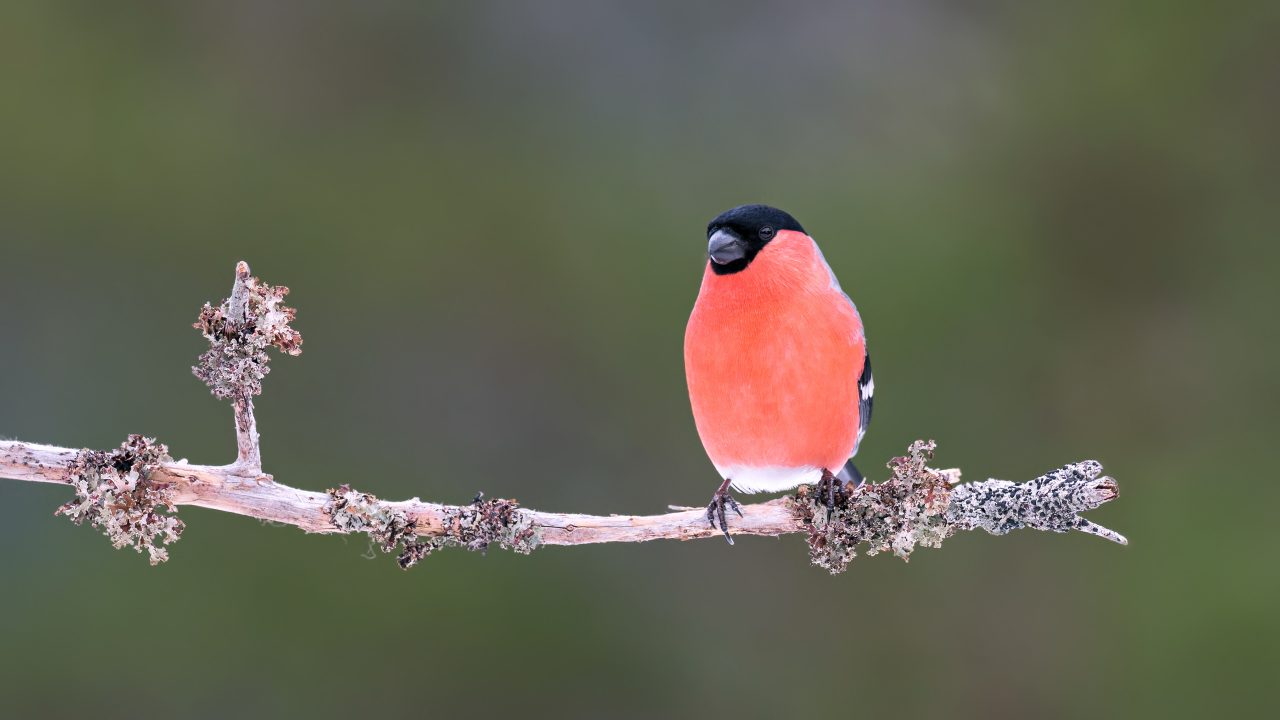
dusty teddy bear
brushing off
my childhood
— Martina Matijević (Croatia)
Commentary from Hifsa Ashraf:
This haiku evokes a tender yet bittersweet moment of reconnection with the past. The “dusty teddy bear” serves as a symbol of childhood, once cherished, now forgotten, or stored away. Dust here is not just physical but metaphorical, suggesting the passage of time and emotional distance where one may have fading memories of childhood.
The middle line, “brushing off,” is beautifully ambiguous, yet letting the person find some clarity into their childhood. It implies a physical act where cleaning the toy hints at revisiting or even confronting long-buried memories. There’s a subtle emotional movement in this line: care, nostalgia, and perhaps a trace of reluctance. This is how one reverts back to their past life with a little bit of effort and time.
The final line, “my childhood,” brings a sense of closure. The teddy bear becomes a gateway to personal history, and the speaker, by brushing it off, also dusts off a part of themselves. The haiku captures a universal experience, how a small object can unlock an entire era of feeling. It’s delicate, reflective, and deeply human.
Lastly, the sound of consonants b and d in this haiku strikes deep yet strong feelings that might have brought back some vivid memories of childhood.
blind date
a wildflower
my app can’t identify
— Anthony Lusardi (USA)
Prune Juice, August issue, 2025
Commentary from Nicholas Klacsanzky:
The senryu opens with “blind date,” situating the poem in the modern social world. It’s also a circumstance that many of us can identify with. Usually, “blind date” senryu have elements of humor. So, as a reader, I immediately expected a comical twist.
The second line introduces “a wildflower”—a counterpoint to the digital world referred to in the third line. The wildflower symbolizes something growing outside expected boundaries and a sense of freedom. In traditional haiku aesthetics, a wildflower often embodies sabi (rustic beauty), yet here in this senryu, it is employed in a playful way where the poet’s date is implied to be a “wildflower,” and notes how romance or love is often indescribable.
The closing line captures the tension between technology’s attempt to categorize the world and the irreducible mystery of human connection. There’s an irony in our dependence on apps to “know” what’s what—even as what truly matters (the person on the blind date) resists such identification.
Overall, the humor is understated—a hallmark of senryu—but carries emotional resonance. Beneath the joke about the app’s failure is a quiet longing for authenticity, for something not optimized or labeled.
Checking in on the sense of sound, the w and f sounds give both emphasis and a wispy feeling to the poem. With the format, the last line is long, yet it is not an issue since not only is this a senryu (which doesn’t focus on format much), but the line breaks seem natural.
Ultimately, I chose to comment on this senryu because of its mixing of technology, romance, and playful use of nature. I was happy to see it appear in the prestigious journal, Prune Juice.
monsoon rain
over the paddy fields
a flight of dragonflies
— Paul Callus (Malta)
Commentary from Jacob D. Salzer:
This is an interesting haiku that shows the after-effects of a monsoon in the paddy fields where rice is grown. According to the National Environmental Satellite, Data, and Information Service: “A monsoon is a shift in winds that often causes a very rainy season or a very dry season. Although monsoons are usually associated with parts of Asia, they can happen in many tropical and subtropical regions – including several locations in the United States. Monsoons are caused by a change in the direction of the wind that happens when the seasons change. In fact, even the word monsoon comes from the Arabic word mausim, which means ‘season.’ At the beginning of summer, the land warms up faster than bodies of water. Monsoon winds always blow from cold to warm. In the summer, warm air rising off the land creates conditions that reverse the direction of the wind.”
In this haiku, the extreme weather of heavy monsoon rains is contrasted with the silent and delicate flight of dragonflies. Traditionally, dragonflies are an autumn kigo (seasonal reference). The flight of dragonflies could symbolize a human migration, i.e., perhaps the farmers in the paddy fields are also temporarily migrating due to the heavy rains, as summer fades into autumn.
On the other hand, according to the World Population Review: “The most common method of cultivating rice involves flooding the field, a practice typically carried out in what’s known as a rice paddy. This helps water and protect the plant from vermin and disease.” Therefore, the monsoon rains can help cultivate rice, though it’s more difficult to work in the paddy fields during the downpour.
Despite the potential melancholy interpretation relating to the autumn kigo, I can’t help but feel hope, courage, and resilience in this haiku: even in the heavy monsoon rains, the dragonflies are flying together. I think the plural form of “dragonflies” is special because I normally only see one dragonfly at any given moment. While there are likely two dragonflies in this haiku, it could also be enjoyable to imagine several dragonflies flying together.
In short, this is a significant haiku that shows resilience, a seasonal shift, and offers a portal into the lives of farmers who work tirelessly in the paddy fields to grow and cultivate rice. More interesting facts about rice can be found on the World Population Review website.
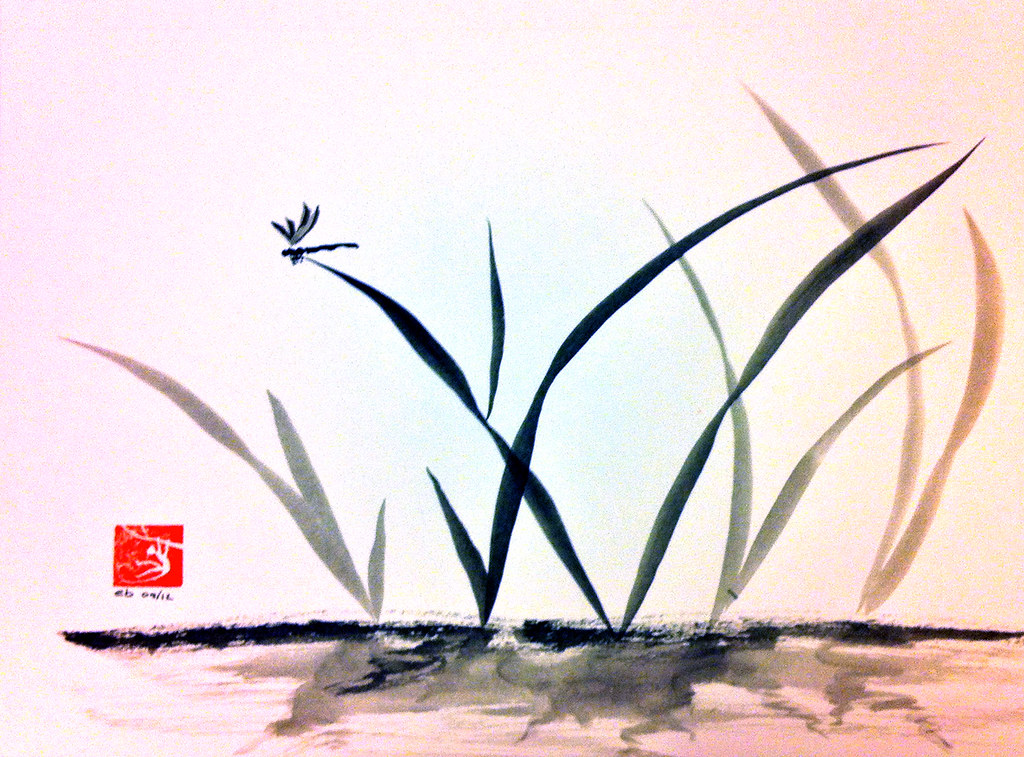
Painting by Ernest Barbaric


 Haiku Commentary