Haiku by Sandip Chauhan, Lisa Reynolds, and Neena Singh

grandpa’s coat
a loose button dangling
from a thread

Sandip Chauhan (USA)
Published in haikuKATHA, issue 36, October 2024

Commentary from Hifsa Ashraf:

This haiku reflects miseries, the carefree life in old age, or memories of a deceased person. Grandpa’s coat symbolizes the protection of the body but it’s not clear that the coat is hanging somewhere, in the closet, or the person is wearing it. In any case, it looks like a close association with the person and the coat. 

The loose button dangling from a thread describes the vulnerability in old age, where a person gets weak and powerless in many ways. Life becomes more predictable as the person is close to annihilation. There may be two aspects: one is a carefree life as a person doesn’t bother to take care of himself or be attentive to self-grooming and another is loneliness where no one is around to take care of the person or his belongings. In any case, the poet beautifully depicted old age which may be the same for many around us. 

separating strands
from gum —
first grade crush

Lisa Reynolds (Canada)
First Frost, issue #7, 2024

Commentary from Jacob D. Salzer:

This poem is relatable to many people who had a crush at such an early age. For this poet, it may even be her first crush. The first two lines depict the emotional and psychological tension the poet is wrestling with, especially in the words “separating strands.” The sticky qualities of gum could also lead readers to think about emotional and psychological attachments in general. What exactly is a crush? Who do we attach to, and why? What are the consequences of our emotional and/or romantic attachments? This haiku is a portal into these questions and into the mind of a first-grade child who is innocent and vulnerable. It’s also interesting to observe how a single object (in this case, gum) can conjure up memories from long ago and transport readers back in time. An interesting haiku that focuses on child psychology and emotions.

cherry blossoms…
a war refugee
empties his pockets


Neena Singh (India)
Sakura Award, Vancouver Cherry Blossom Contest 2024

Commentary from Nicholas Klacsanzky:

Cherry blossoms are a traditional Japanese kigo or seasonal reference to spring. They are often seen as a symbol of the elegance, splendor, and fleetingness of things. Because of the commonplace usage of this kigo, it isn’t easy to write an original haiku when mentioning cherry blossoms. However, I think the poet here rendered a new image, and one with energy and feeling.

The imagery could be interpreted in multiple ways. The blossoms could be falling from the refugee’s pockets, or the refugee emptied his pockets so that the blossoms could fit into pockets either by falling into them or by picking them up and putting them there. Either way, the imagery is poignant and points to the beauty of transience. Furthermore, the haiku beautifully contrasts the season of spring with being a war refugee.

I enjoy the ellipsis as it not only slows down the reader to take in the scene of cherry blossoms but also directs us to imagine the cherry blossoms floating in the wind. In addition, it delineates the haiku into a two-part structure so there is no confusion and the association between the parts of the haiku is clearer.

Though the haiku does not follow the English-language standard of a short line/longer line/short line rhythm (optional anyway), it does focus on the principle of brevity with only eight words. Also, the poet employed clear and simple language, which aligns with haiku tradition. There is also euphony with the weight of the “r” sounds and the lightness of the “o” sounds. This brings a contrast and balance to the reading of the haiku.

All the above-mentioned attributes of this haiku demonstrate why it won a Sakura Award at the Vancouver Cherry Blossom Contest. More than that, war refugees have been prevalent throughout history—especially now. This haiku can speak to readers through the ages up to the present time.

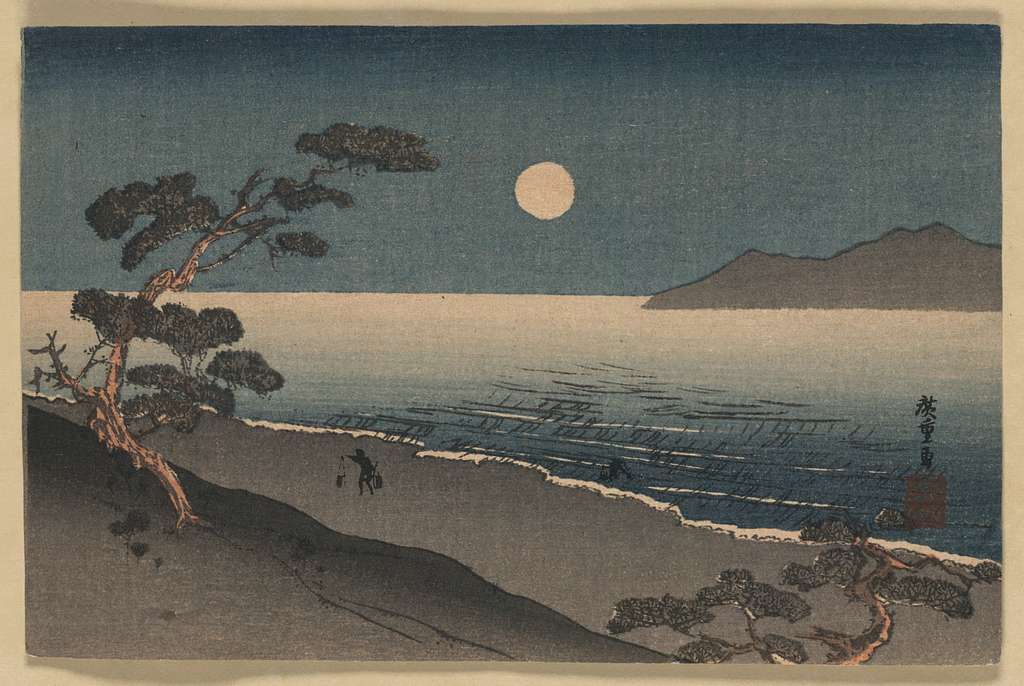
Japanese woodblock print (nishiki-e); ink and color on paper. Public Domain. Unknown artist.

Haiku by Pat Davis, Anthony Lusardi, and Martina Matijević

beach stone
some of the worry
already gone

Pat Davis (USA)
The Heron’s Nest, #44, December 2024

Commentary from Jacob D. Salzer: 

I appreciate how the image of a beach stone can be a metaphor for letting go. In this haiku, we don’t know what the poet is worried about, but the beach is a place where worries seem to disappear and fade into the background. I can feel the weight of the beach stone and hear the pulse of ocean waves. Along these lines, the beach and the vast ocean can create a relaxing atmosphere where we can embrace the space between thoughts. At the same time, the ocean can allow us to see “the big picture” where our worries can be seen from a deeper and different perspective. I think this is very important to do because we can step outside our small sense of ego and see our place on Earth and within the larger cosmos. I also appreciate how this haiku is relatable from reader to reader. It seems most people have their own worries that come and go. I deeply appreciate how the Earth herself can calm the mind and help us reflect. This haiku shows us this power. 

In short, this haiku shows the inherent healing power of Nature without overly explaining it. It includes a balance between concrete imagery and mystery. While this haiku is personal, it is also relatable to many readers with different backgrounds and circumstances. In the end, I think we can all benefit from learning how to let go. A powerful haiku.

dry summer
a spider web full                   
of fireweed seeds

Anthony Lusardi (USA)
Frogpond, 48:1, winter 2025

Commentary from Hifsa Ashraf:

The haiku speaks for itself in terms of its theme and imagery. Climate change is a topic that should be highlighted time and again through any platform or medium as a reminder to the world that it is a serious issue.
 
The kigo in the first line ‘dry summer’ gives a vivid image of both time and season. I see it as if there is a drought with a drastic impact on nature. It seems the poet talks about a rainless time when the rain is needed the most. But, it still doesn’t give us a clue of the time period i.e. is it rainless for long or short? But, I like the way the poet uses an aesthetic sense to observe the beauty of nature even in hard times. 

A spider web can represent mystery, confusion, hopelessness, or abandonment where probably no access is given to any being. I wonder if the spider web is inside or outside a building, in an open field, or in a garden/farm, etc. There is no such clue of the location which makes this haiku open for interpretation. 

Fireweed seeds in the last line add to the interest in this haiku as seeds may stick to the spider web as a result of pollination, wind, storm, or any other source. But, in any case, these seeds have no chance to germinate as they may not be on the ground or in a favourable condition. At first look, the spider web full of fireweed seeds may sound like a period of hopelessness, drought, or lifelessness. However, fireweed can symbolize rebirth, resilience, and hope. But, the word ‘full’ instead of ‘stuck’ or ‘cling’ gives me some hope that maybe, one day these seeds may survive and fall on the ground or a suitable place to grow. The article ‘a’ and the word ‘full’ make it simple to interpret without digging more into the various aspects of this imagery. So, I see both hopelessness and hopefulness in this haiku. I see the resilience of nature in extreme or unfavourable seasons. I see life in a lifeless situation. I see the impact of climate change on nature and the way nature responds to it by trying to survive and preserve its elements. 

grandma’s old vineyard 
amid dense branches 
an abandoned chick

Martina Matijević (Croatia)

Commentary from Nicholas Klacsanzky:

The contrast between the chick and the old vineyard is striking. The word “abandoned,” though, can pertain to both the vineyard and the chick. From the first line, I assume the poet’s grandma has passed away and has essentially been abandoned. Looking at the second line, it is a pivot which connects to the first and third lines. If the first two lines are read as one whole, it could be saying that the grandma’s old vineyard is “hiding” or obscured amid dense branches. If the last two lines are read as one part, the chick appears amidst the branches. It’s always a plus when you can read a haiku in multiple ways.

A kigo or seasonal reference is not quite apparent. However, the mood of the haiku is at once bleak and hopeful. There is sadness in the deserted nature of the vineyard but an optimism in the new life that has inhabited a derelict space. It feels like the baby bird is a reincarnation of the grandma or a continuation of her life.

Looking at the format, it is interesting that each line is an equal five syllables each. I am not usually a syllable counter in haiku, but I noticed how each line was about the same length. Commonly, the haiku rhythm in English is a short line, a long line, and a short line. There is nothing wrong with changing up that rhythm, though. Each haiku is organic and requires a different pacing.

Sonically, the strongest letter in this haiku is perhaps “d.” In my opinion, it provides weight to the poem and the scene itself. The other letter that interests me in this haiku is “b,” which also creates accents of strength or gravity

To wrap up, this haiku connects the poet’s experience to the animal/natural world seamlessly. The haiku also features a fine sense of sound, a unique rhythm, and multilayered imagery.

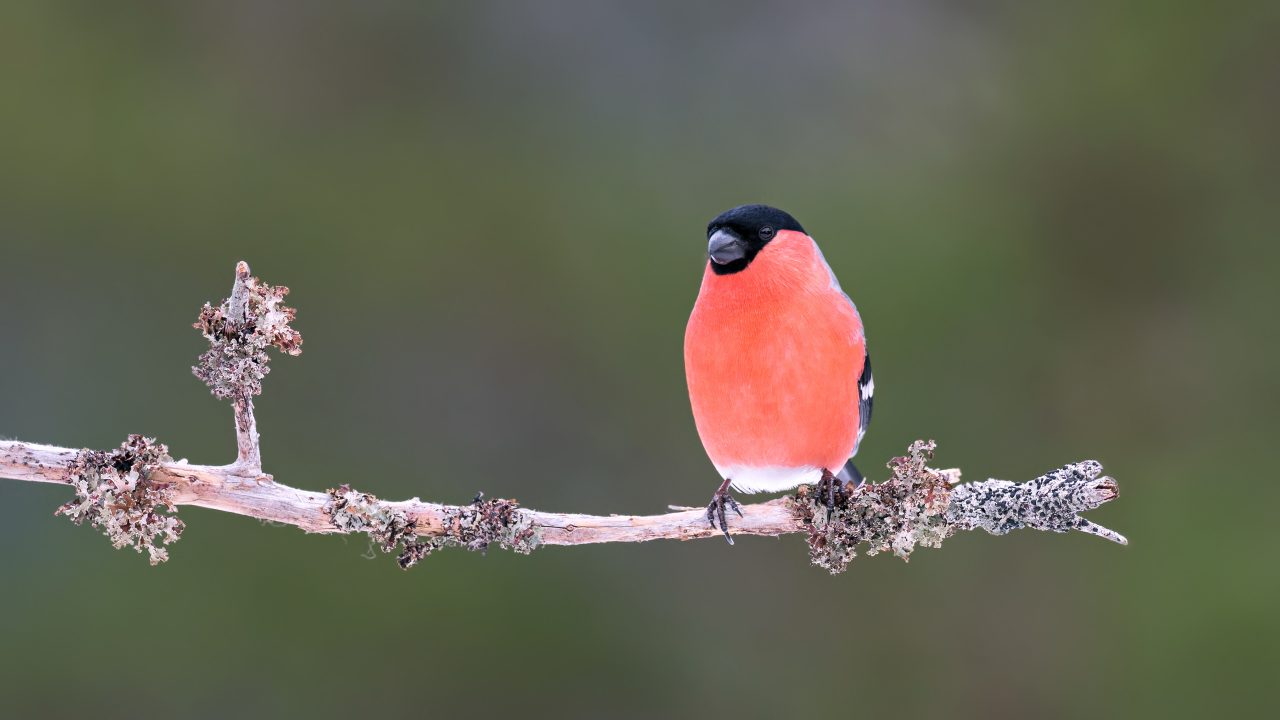
Photo credit: Martina Matijević

Haiku and Haiga by Lanka Siriwardana, Bonnie J Scherer, and Maire Morrissey Cummins

grandfather’s trembling feet
searching for the slippers
in this cold night

Lanka Siriwardana (Sri Lanka)
Honorable Mention, 76th Basho Memorial English Haiku Contest, 2022

Commentary from Jacob D. Salzer:

Like many well-written haiku, there is a balance in this haiku between concrete imagery and mystery. In the first reading of this haiku, we could see “trembling feet” relating to the cold temperature. However, the trembling could also be due to a medical condition and/or old age, in addition to the cold night. The words “searching for the slippers” show a kind of struggle, partly because it’s evening, but the poet’s grandfather also might have dementia or some form of memory loss.

The overall tone of this poem inspires compassion because we get a real glimpse of the grandfather’s life in a cold atmosphere. As a reader, I wonder if the grandfather lives in a home or shelter that isn’t heated well. This haiku also reminds us that a simple task many people take for granted (such as finding their slippers) can be a significant challenge for others. I am reminded of my late grandmother who had dementia. Even walking to the front door and putting on her shoes was a significant task that took quite some time. Indeed, psychologically, there seems to be a slower pace to this haiku, in stark contrast to the busy, daily lives in modern cities. This is a haiku that inspires sensitivity and compassion. 

Bonnie J Scherer (USA)
Daily Haiga, 9/30/2024 

Commentary from Hifsa Ashraf:

The opening line of this haiku suggests the time of departure—probably afternoon or early evening. Migrating geese move in a flock with a specific formation, making their flight unique. 

‘Swallowed by blue sky’ makes the scene more dramatic and mysterious. It is an unusual time of depature which may be due to unfavourable circumstances i.e. climate change, war, etc. The word ‘swallowed’ indicates a critical or unfavourable situation where the geese disappeared either due to smog or smoke or in a symbolic way. 

The missing article before ‘blue sky’ perhaps points to a regular situation where geese disappear normally. We may be getting less sensitive to what is happening in nature, where birds do not feel secure in blue sky—not having the freedom of enjoying seasonal flights. It also indicates that such beautiful scenes are missing where bird lovers can enjoy bird watching. 

Overall, the vivid imagery of birds is quite sad and stark for those who love nature. 

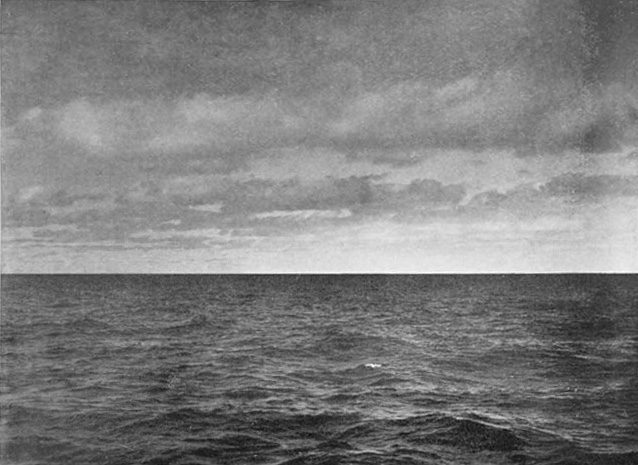
night ferry
pitching its way
through starlight 

Maire Morrissey Cummins (Ireland)

Commentary from Nicholas Klacsanzky:

I grew up near a ferry dock, so I can easily relate to this haiku. The lights from night ferries are majestic to witness. In conjunction with “starlight,” it would be truly a spectacle. The casual speed of a ferry also makes this image more beautiful, with the ferry pitching i.e. an up-or-down movement of the bow and stern of the ship. The combination of artificial and natural light, as well as the earth and the cosmos, add to the meaning of the haiku.

Looking at the more technical aspects of this haiku, one can easily say that it follows the tradition of brevity, with only seven words used. Each word is employed well, especially “pitching,” which gives the poem more motion. Also, the “i” sounds perhaps make the starlight imagined more stark, and the “r” sounds provide more weight.

Like many fine haiku, on first read, it seems simple. Yet after looking a bit deeper, we can see layers of resonance and fantastic imagery that connect the human-made world with the cosmos.