Martha Magenta’s mountain spring

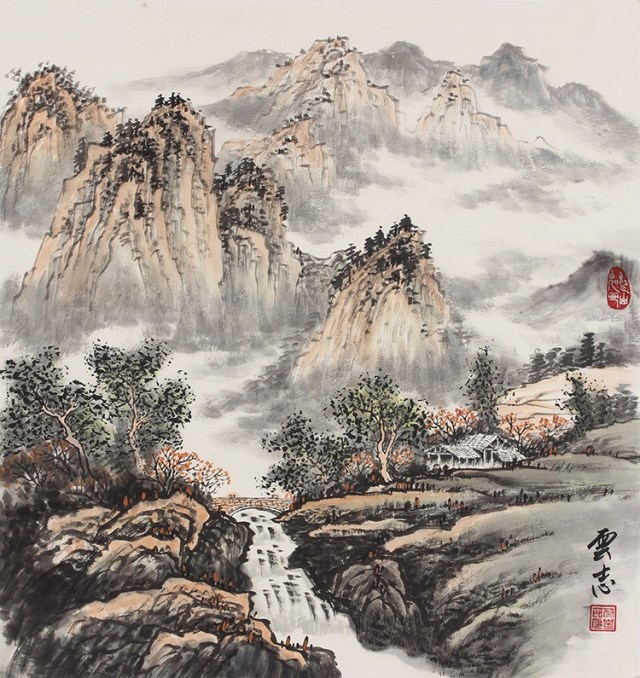
mountain spring
the bottomless cup
of my hands

Martha Magenta (UK)
Stardust Haiku, issue 30, June 2019

This post is a tribute to Martha Magenta, who has recently passed away this year. She was an award-winning poet, an integral member of the haiku community, and a person that mentored many aspiring poets. Please read her collected works on her blog.

The opening line of this brilliant haiku takes us to the refreshing sound of water that is flowing freely. The mountain spring creates mystical feelings of selflessness and focus. The bottomless cup is a bit of a twist in the story where both words are used to take the readers from the mountain spring to the self with empty hands. So, it’s all about giving not gathering, praying not begging, saying not asking.

I could relate this haiku to Sufi practices where cupped hands are supposed to be saying a prayer and connect with the almighty at the level where there is no desire for worldly needs. The subtle feelings of flowing water, mystical conditions, and the self make this haiku more profound with deeply personal experiences of meditation and self-discovery.

Hifsa Ashraf (Pakistan)

Both the mountain spring and the poet’s hands seem infinite in their capacity. But, one is giving and one is receiving. However, it seems Martha felt the connection between her hands and the mountain spring while quenching her thirst. Maybe she felt that, like the flowing water, her hands could be a conduit for nourishment.

In terms of the season, I feel this is either spring or summer, when drinking from a mountain spring would be most satisfying.

Looking through a technical lens, the lines are paced in the traditional way English-language haiku are written: a short line, a long(ish) line, and then a short line again. No punctuation is given but I think none is needed in this poem. Martha also leaned towards a style of less punctuation.

Sound plays a significant part, as the “o”s, “n”s, “i”s, and “m”s all create a musical reading. In particular, the “n”s supply this haiku with a sense of dignity and eloquence.

This is one of many great haiku by Martha Magenta. I hope this post inspires readers to dive more into her work.

Nicholas Klacsanzky (USA)

mountain spring

Tia Nicole Haynes’ Promises

another pear
rots in our fruit bowl
the promises
we choose
not to keep

Tia Nicole Haynes (USA)
Published in Frameless Sky, 11

The pear could be symbolizing comfort and inner peace which one gets through the sweetness of life. This tanka perhaps revolves around the choices we make to get that inner peace.

So, another pear rotting in the fruit bowl means the circumstances and choices are not appropriate for gaining inner peace and comfort in life. We make certain promises in life to do things that bring happiness and peace in our lives–especially the ones where the focus of control is our inner self. But, due to certain circumstances, we are not able to carry out those promises we make with ourselves. That makes life so uncertain in many ways that we forget to taste the inner peace, as it gets spoiled and rotten by limited choices.

There is a continuous process of striving for inner peace, which is the ultimate goal of our lives and we really wish to keep things in line with our ultimate goal and make promises every year for it. But, life in certain ways puts us through trials and we forget that ultimate goal.

In terms of sound, the letter ‘o’ could indicate the life cycle that makes us deal with different matters of life but also forgetting the ultimate goal.

Hifsa Ashraf (Pakistan)

This tanka contains a comparison: the promises we choose not to keep are like another pear rotting in our fruit bowl. They are visible, the stench is clear, yet we decide not to abide by our word. This is a part of human nature. Though promises that are left behind stare us in the face, we somehow have the will to let them go sometimes.

The degradation of a pear is an apt symbol: they are sweet but easily bruise and go rotten, just like promises.

Like Hifsa, I enjoyed the “o” sounds in this tanka. I also thought the “r” sounds lend to a serious tone. Additionally in the technical vein, the poet is highly efficient with her words and allows each line to breath in its simplicity and power.

Nicholas Klacsanzky (USA)

If you enjoyed this tanka and commentary, please leave a comment.

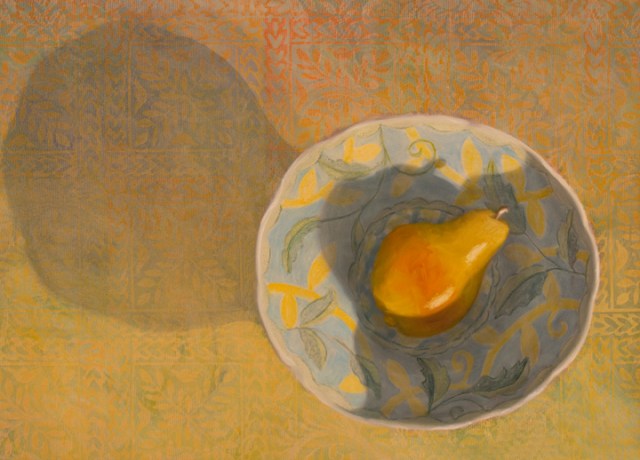
Terry-Wise-2018-Pear-on-Handmade-Bowl-24-x-28-orig-web

Painting by Terry Wise

Carmela Marino’s Closed Eyes

closed eyes . . .
a star has fallen
somewhere

Carmela Marino (Italy)
Published on Haikuniverse

I wish I could see a whole image like this with closed eyes. Closed eyes mean to see the world through the third eye and to feel it deeply. Also, a falling star is a kind of hope and a bond with the universe that anyone can feel anywhere with a specific state of mind.

So, this is connectivity through imagination, meditation, and deep thinking to wish, pray, and ask for what we really want in our lives.

The word ‘somewhere’ depicts the concept of wholeness, where the poet, as a tiny part of this universe, wishes to see that falling star through her third eye. In a way, this is beyond wishes, where someone wants to get connected with celestial bodies by creating a harmonious and deep understanding of this world.

Words like closed, fallen, and somewhere are abstract in this haiku yet leave great room for a deep understanding of this unlimited universe and our unexplored inner world.

Hifsa Ashraf (Pakistan)

I believe this can be taken in at least two ways: a) it notes how each second, something magical or majestic happens in our universe b) when we are not looking, many amazing things happen. In the context of the second option, the poet might have missed a chance to make a wish upon a shooting star. However, the poet realized that stars could be falling at any moment throughout the universe and that one can make a sacred wish at any time.

Sonically, the most prominent sound comes from the string of “s.” One can imagine the hissing sound of a falling star by the reading of this haiku. Also, the “l”s work to make this poem more musical and pleasing.

I enjoy the use of the ellipsis to show how long the poet or the narrator closed their eyes. It also gives the reader time to let this action sink in.

This is a haiku that is at once imaginative and realistic.

Nicholas Klacsanzky (USA)

If you enjoyed this haiku and commentary, please leave us a comment.

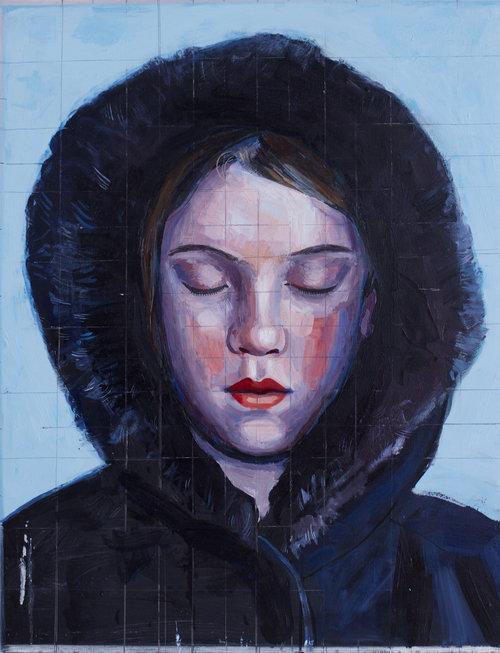
IMG_9856

Painting by Rick Beerhorst

Hemapriya Chellappan’s Monsoon Yoga

monsoon yoga
here and there
a housefly

Hemapriya Chellappan (India)
Failed Haiku, journal of senryu, issue 45, Sept 2019

I’ve been in India during the monsoon season, and I can say how exciting and intense it is to see the rain crash down on the streets. All the commotion is compared to a housefly buzzing around here and there. Something epic and something small in aesthetic unison. Also, it contrasts the calmness of doing yoga. So, you can say we got a strong juxtaposition in this senryu/haiku–and a touch of humor.

Technically, it’s easy to spot the string of “o”s in the poem. It stretches the pace of the reading, slowing us down like yoga. Plus, we got some “r”s and “h”s to make it more musical. In terms of the structure and wording, it’s an efficient senryu/haiku–not wasting a word.

Great imagery, a fine juxtaposition, and a keen sense of sound make this poem an enjoyable read.

Nicholas Klacsanzky  (USA)

The monsoon season is a time of yearning and transformation where many views outside and inside get refreshed and soil absorbs a lot of stories of the mourning sky. The sound of rain, petrichor, and new views bring original perspectives to life–and if we shift our focus from our world to the inner world, as in yoga and meditation, we find it very soothing, as there is a direct and deep connection between a monsoon and yoga. The spirit of this haiku revolves around the aspects that make our lives toxic due to a lot of reasons and activities that affect us mentally, spiritually, physically, and emotionally.

In terms of the housefly, I believe it is a metaphor that describes the dirt and filth around us. So, when it comes to a monsoon, all that filth comes to the surface and makes the environment more chaotic and toxic. A housefly can also represent the disturbing thoughts that keep us restless and dissatisfied daily. So, it is a monsoon that makes things obvious for us so that we can concentrate on our inner world and find out the best possible solutions to the chaos around and inside us.

Hifsa Ashraf (Pakistan)

If you enjoyed the haiku and commentary, please leave us a comment. 

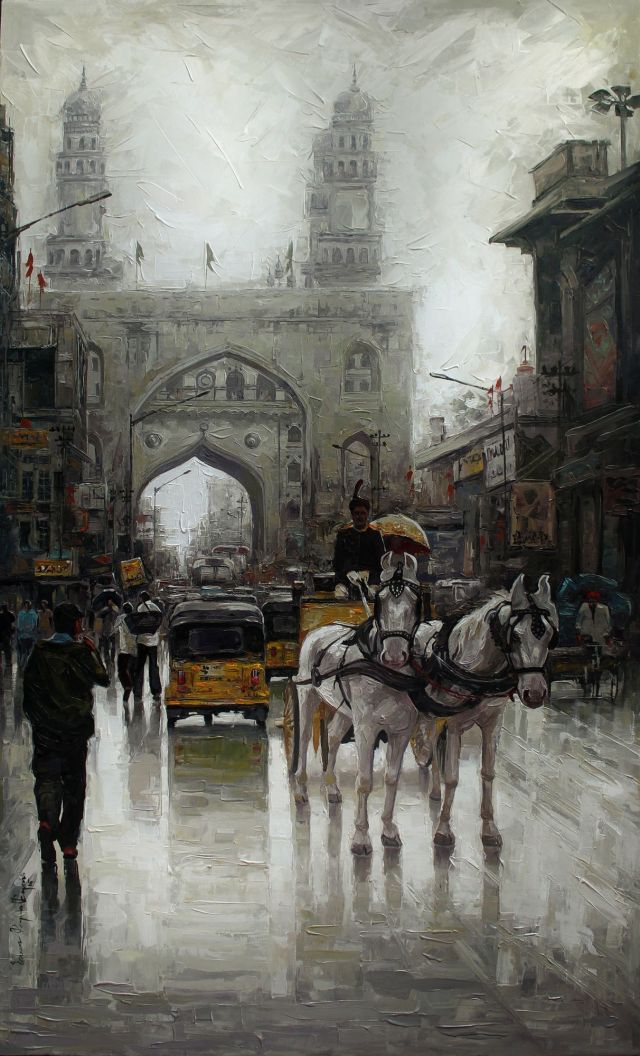
1e09dd3b6f20ab333c17b671873ccaf6
Painting by Iruvan Karunakaran called Charminar Wet

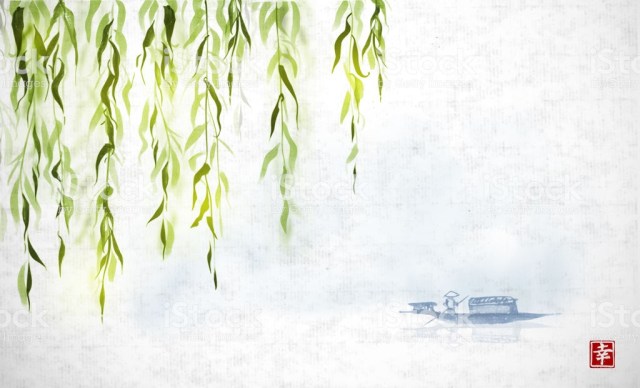
Agnieszka Filipek’s Willow

willow
writing a message
on the lake

Agnieszka Filipek (Ireland)
First published in The Cicada’s Cry

The willow tree represents strength, stability, growth, and knowledge or learning. This simple but profound haiku represents the shades of all these characteristics that nature presents through its different elements.

Writing a message on the lake shows the imagination of a person who is in sync with nature and beautifully shares her feelings about it. So, nature gives a lot of inspiration through its elements that we need to understand deeply.

The lake depicts calmness and the writing of a message on it means the person has faced many seasons and now she is ready to face life’s experiences.

The letter ‘w’ in this haiku sounds like waves of the past that strike the mind to recollect memories and to scribble them down when one is in a peaceful state.

Hifsa Ashraf  (Pakistan)

The willow in Japan is a kigo, or a seasonal reference, for late spring. This reflects the magical and fantastical event that is written about in this haiku. Though the willow is not consciously writing a message, it appears so and or could be mistaken as doing so. These tricks of perception often show up in classical haiku.
What is the message about? If we use our imagination, all sorts of ideas could come to mind: the tree is getting too hot and fears the coming of summer, so it is writing a cry for help; it is writing a diary entry about its day; it’s writing what the wind wants to say through its brances; doggerel poetry; and many more ideas.
It’s important that haiku allow the reader to imagine and this is a good example of that principle.
If you enjoyed this haiku and commentary, please leave us a comment. 
istockphoto-1177871054-1024x1024
– Art by Elinalee

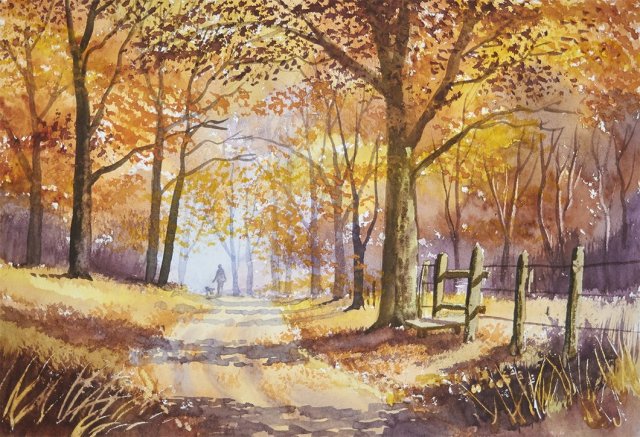
Antonietta Losito’s Autumn Walk

autumn walk
trying to exchange my breath
with trees

Antonietta Losito (Italy)

An autumn walk is one of my favourite activities. It’s not simply a walk but a therapeutic process where I feel relieved by being a tiny part of this universe. Autumn is a shifting point where one season transforms into another, leaving profound memories behind.

In this haiku, I can feel the depth of those feelings where a person exchanges their breath with trees in a symbiotic way. It’s a win-win situation–everyone gains benefits from each other. I can see how one can be beneficial for others in order to bring peace and prosperity, as it’s a universal phenomenon that one cannot exist without interacting with others.

So, this beautiful haiku shows the long-term purpose of life or the ultimate goal of life: to bring peace within and around as well.

As a side note, I personally liked the ‘t’ sound that resonates in every line of this haiku.

Hifsa Ashraf (Pakistan)

Autumn is a time when nature is deterioating. I believe the poet felt for the plight of the trees at this time. She wanted to exchange breath, or life, with the being that brings her fresh oxygen and materials for her home.

You can also see this act as kinship. At a time when things are falling apart, the poet wanted to bring nature and humanity together.

The elongated syllables in the haiku and its pacing reminds of an autumn walk. I think the two verbs work fine, as “trying” creates a stronger scene.

Overall, this haiku displays compassion, communion, and the link between nature and humanity.

Nicholas Klacsanzky (USA)

If you enjoyed this haiku and commentary, please leave us a comment.

AUTUMN_WALK_PAINTING_Thumb_copy_530x@2xPainting by Terry Harrison

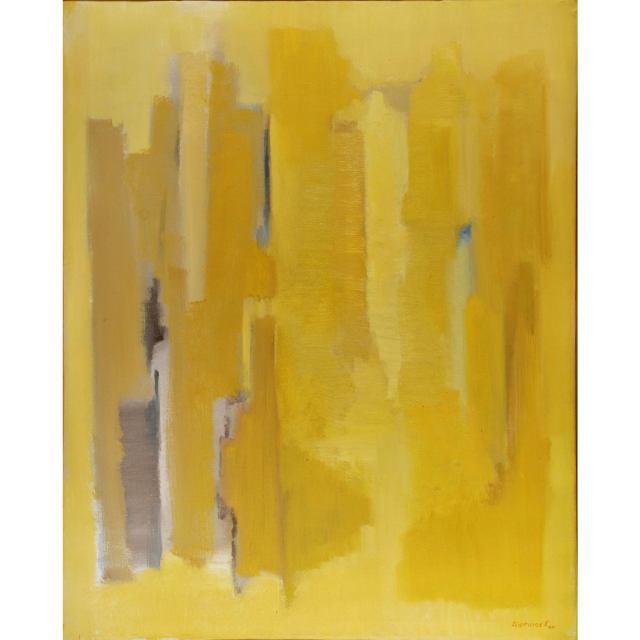
Robert Kingston’s Afternoon Sun

afternoon sun
a fly ends the sentence
in the crime book

Robert Kingston (UK)
Bones Journal, 13, 2017

We got an interesting comparison (or contrast?). The fly, so intense and looming on the page of the crime book… and the afternoon sun, blazing and overwhelming. It could be a contrast with the black fly and the bright afternoon sun.

I don’t know if a “crime book” refers to a novel, a non-fiction book about crime, or something that the police use. But that’s part of the fun while reading this poem.

Back to the content: a fly usually comes to dead things, so a fly landing on the page is bringing something tangible to the reading experience of this book. It’s like the fictional and the real world collided at that moment. I think that is the “aha” moment the poet felt. The word “sentence” also has a double meaning: the literal one and the one referring to sentencing in courts.

Breaking down the sound, the long “oo” sounds give a leisurely pace and the “s” letters supply a sharp resonance–a good contrast.

The structure of the haiku/senryu is standard and does fine without any punctuation.

An overall playful and enjoyable haiku/senryu that has a deeper layer if you look close enough.

Nicholas Klacsanzky (USA)

This haiku takes me back to my teenage world where I used to read suspense novels and digests. I liked the way the writer conceived the idea of this haiku about a crime scene but also intrigues me to know more about the whole story.

“afternoon sun” is the time when our thoughts and feelings slow down due to the daytime activities and we want something that can make us relaxed and can rejuvenate our energies. I can feel the sense of getting involved in an activity that engages a person’s mind into something more complex and sophisticated like a crime story.

The fly could be a metaphor for something that bothers us or takes our attention away from what we are trying to focus on. It could be the thoughts of a person or any news or any distraction in the environment that lead us to reveal the mystery on our own or let our experience predict the next part of the story. It may be a point of haste where we don’t indulge in the step-wise process of mystery that is written in the crime book. It is the success of a crime book writer who plotted the story in a way where the curiosity of a person is distracted by the environment or surroundings, and it frequently happens these days.

I miss the reading environment these days where all my senses fully enjoy the book that I am holding in my hands.

Hifsa Ashraf (Pakistan)

If you enjoyed this haiku and commentary, please leave us a comment.

1980-abstract-painting-afternoon-sun-40x50-r-baranet-6740

– painting by Robert Baranet called “Afternoon Sun”

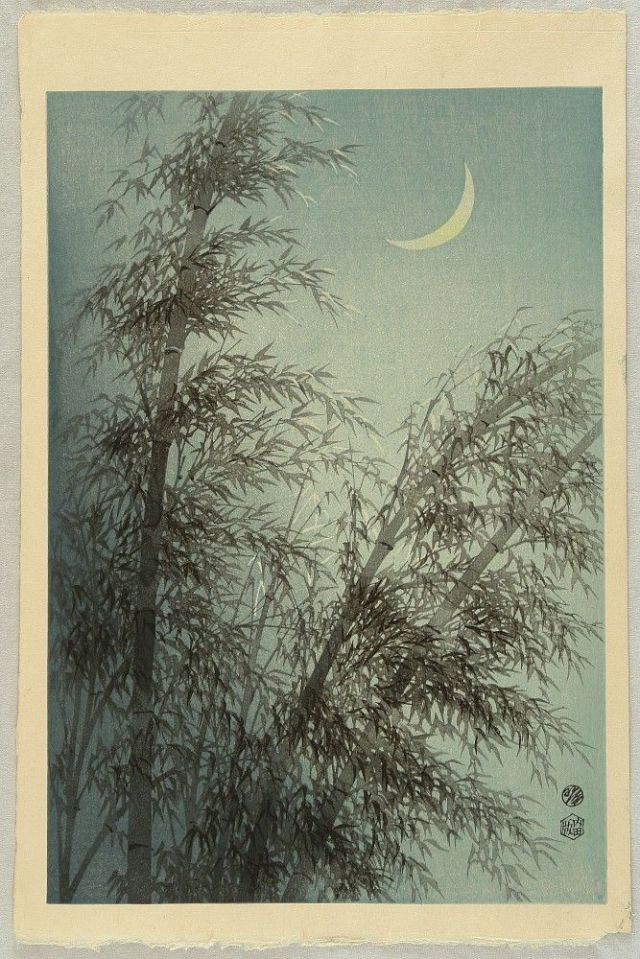
Elaine Wilburt’s Shadow

crescent moon —
enough shadow
to imagine

Elaine Wilburt (USA)
Published originally in Chrysanthemum 26, 2019

A crescent moon or a new moon is the start of a new month, which brings hope and energy with it. I take the crescent moon as a source of yearning for new dreams and plans.

“enough shadow” metaphorically has two meanings here: the dark side of the moon that goes into the light with lunar phases and becomes visible to the eyes, and the shadow of a person, which can be called a persona. In both cases, shadows reflect our desires that need time to get fulfilled. I could see a close connection to life’s stages and lunar phases, where a person grows physically, spiritually, emotionally, and mentally over a period of time. But before that, every aspect of life remains a mystery, like a shadow, and becomes visible once it gets enlightened by time and reflects our true self and/or potential.

Hifsa Ashraf (Pakistan)

I feel this haiku represents a “glass half full” perspective. It makes me think about how something negative, depressing, or solemn can be seen in a positive light. Also, as Hifsa noted, a crescent moon represents a fresh beginning. With that, I believe the poet is expressing optimism for the path ahead on a new journey.

You can say, in addition, that when we look at a crescent moon, we sometimes to fill in the dark space with light through our imagination. We try to view the moon as full, even though it is crescent. So, the haiku could be speaking to our desire to fill in the holes in our perception.

The word “enough” is strong in this poem. It paints the scene perfectly, as it refers to dusk and the shadows that creep in at that time. It demonstrates the level of awareness the poet had when she wrote this haiku.

There is a potent sense of sound in the poem as well. With strings of “o”s, the pace slows down, reminiscent of dusk. With the ample “n”s it has, a feeling of dignity is given to its reading.

Lovely phrasing, imagery, and sound make this haiku impressive.

Nicholas Klacsanzky (USA)

If you enjoyed this haiku and commentary, please leave us a comment.

f26763ca0bec1bb194185f083953fa73
Painting by Kotozuka Eiichi(琴塚 英一 Japanese, 1906-1976)


Goran Gatalica’s Tadpoles

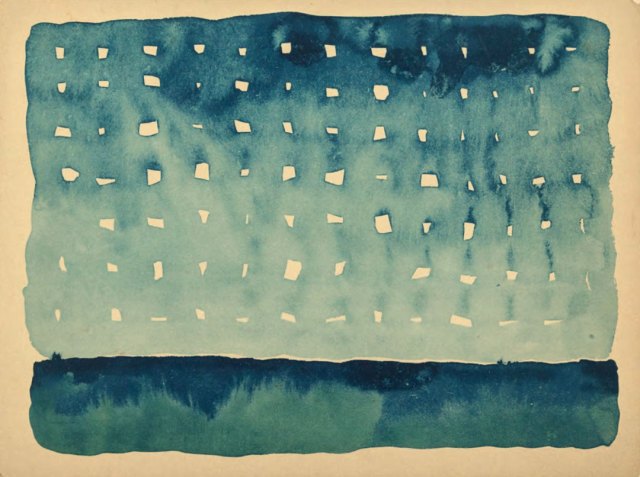
starlight —
the tadpoles vanish
in a blurry pond

Goran Gatalica (Croatia)

Under the Basho, (modern haiku), March 2019

This haiku resonates with the things that don’t get a lot of importance in our lives. The opening line ‘starlight’ symbolizes two aspects in the context of this poem.

– It glows but remains unnoticed, especially when the stars are far away from the earth.

– A light dot that is mysterious in many ways.

The tadpoles depict the initial stages of life when things remain insignificant and mysterious, like the tiny stars that are in fact huge.

The blurry pond may symbolize our limited vision and perception of not seeing things beyond their looks. We don’t go into the depth of things that look small in shape and size.

The starlight and tadpoles in a blurry pond lose their impact and significance once they lose their reflection.

Hifsa Ashraf (Pakistan)

This is one of those haiku that takes us by surprise with its juxtaposition. At first, we might be puzzled by the comparison or contrast being made.

Starlight can take many light years to travel into our view. Also, if we look directly at a distant star, due to it being so far and surrounded by darkness, it can escape our vision after a while.

This all might relate to tadpoles vanishing in a blurry pond. Tadpoles are very small and are hard to spot in a body of water, like stars in the sky. We can easily lose track of them. Plus, the next time we see the tadpoles that we saw before, they might have grown up as a frog or toad. This length of time connects to the duration it takes starlight to travel into our perception.

In another way, the haiku could be presenting a contrast. Tadpoles are larvae and new to life, whereas starlight may be luminescence from a star that has already died. Yet, the shape of a tadpole and starlight are very similar. So, the aesthetic of “as above, so below” in Japanese poetry is demonstrated.

There is a lot of sound in this poem to notice, though it is small. Check out how each line has “l” sounds. There is also a prevalence of “r”s and “p”s. Not only does this make the haiku more musical and a joy to read, but these consonants give the reading more weight.

The format works well, which has the standard pacing of English-language haiku. The dash in the first line gives a clear cut between the two parts of the poem, allowing the reader to easily see a juxtaposition is being made.

Overall, this is a subtle haiku that can swing from being a comparison to contrast in imagery, which can bring about the feeling of connection between mundane life and the cosmos.

Nicholas Klacsanzky (USA)

If you enjoyed this haiku and commentary, let us know in the comments.

gieorgia-night-sky

– “Starlight Night” by Georgia O’Keeffe

Christina Sng’s Hospital

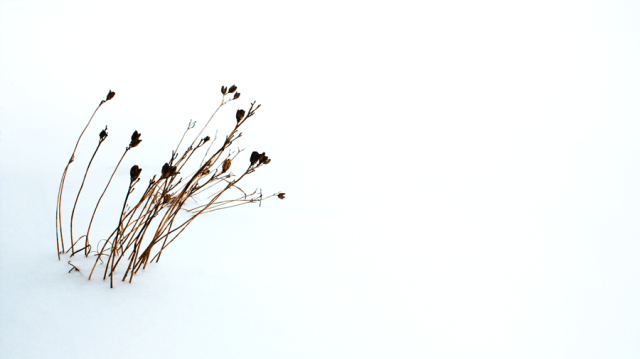
pale against
the hospital pillow
winter snow

Christina Sng (Singapore)

There are times when we are down due to an illness or disease, where everything around us looks dysfunctional and depressing. We try to relate to our feelings with our surroundings, especially the weather. We strive to console ourselves by finding out our shortcomings in the outer world.

This haiku depicts exactly that situation, where the illness of a person can be connected to winter snow as both bringing depressing thoughts and feelings.

The word ‘pale’ indicates dullness and the fragile condition of a person who is seriously ill and depressed due to his or her illness. This colour also indicates autumn, where leaves change their colours and fall down—ultimately looking pale. Here, paleness also suggests a departure or farewell due to a serious illness. A person in this state might feel as if he or she is close to death. So, the feelings of departure itself bring a lot of pain, melancholy, and depression.

Metaphorically, paleness also depicts negative emotions, where a person feels lonely and stressed out, which further suggests the poor mental health of a person.

The hospital pillow could be a metaphor for the cause of depressing and broken thoughts. Paleness against the pillow is the expression of those thoughts that a person has during a time of illness.

Winter snow, especially when someone projects his or her feelings on it, becomes a source of annihilation, a passive mindset, or negativity. It brings life to an end by slowing down the system of both the inner and outer worlds. It gives deep silence and melancholy where a person feels more close to his or her self and cannot avoid all the memories and traumatic events that have happened in his or her life. It brings coldness that turns down positive energies, especially will power.

Overall, it’s all about the deterioration of life’s processes, whether it’s nature or our body.

Hifsa Ashraf  (Pakistan)

The image in this haiku is intriguing. We are not told if the pillow is outside and snow is falling on it, or that the reflection of snow from a window or elsewhere is shown on the pillow. Or, the poet is watching snow tumble down outside from within a hospital room. Leaving that kind of space in haiku is important. In fact, it’s an unspoken rule to try to leave out something when composing haiku.

As Hifsa pointed out, “pale” has many connotations. In a way, it personifies the snow and tricks us into thinking that maybe even the snow is sick. It also gives a sense that the snow is partaking in the experience of the poet or narrator.

There is an idea of purity being implied here as well. Snow is usually bright white, especially winter snow. The haiku could be conveying that the hospital pillow, though artificial, shines in its whiteness more than the snow. This provides the feeling of coldness and of perhaps death. The imagery also suggests that we have made a world where human-made things are now more “pure looking” than nature itself.

In terms of sound, the two “p”s pop out and so do the “l”s and “o”s. Christina’s work is commonly extraordinarily musical. The “p” sounds perhaps emphasize the stark nature of the scene, whereas the “o” sounds slow down the pace and mirror the solemn tone of the poem. The “l”s just make the haiku sound better, in my eyes.

For the format, we have the usual short line/long line/short line form. That tried and true pacing works great for the content.

A haiku with notions of purity, artificiality versus nature, and life and death intermixed. Another strong haiku from a contemporary master of the form.

Nicholas Klacsanzky (USA)

Did you enjoy this poem and commentary? Please leave us a comment if you did.

dissnowsumi

Photograph by © David Hutchison