Poems by Kelly Sargent, Marc Brimble, and Anthony Lusardi

fallen acorn renewing our vows

Kelly Sargent (USA) 
Frogpond, issue 47:1, winter 2024

Commentary from Nicholas Klacsanzky:

The way the word “renewing” works as a pivot to create different readings is spectacular. I think the monoku could be read in at least three ways: “fallen/acorn renewing our vows”; “fallen acorn/renewing our vows”; “fallen acorn renewing/our vows.”

The contrast between “fallen” and “renewing” creates a powerful link. Acorns are also often used as symbols of rebirth, and the monoku could be personifying it. In addition, I enjoy how the kind of vows that are being expressed is left up to the reader.

Finally, the train of “n,” “o,” and “w” sounds makes this haiku sonically pleasant. The poem begins with harder sounds and ends with softer tones. With only five words, the poem has much euphony and meaning.

waiting for confession
I notice
The Virgin’s thigh

Marc Brimble (Spain)

Commentary from Hifsa Ashraf:

The opening line of this haiku is personal and well thought out. It seems the person is going through the process of reflecting on what went wrong in their life. The mistakes bother the person but at the same time, there is no sort of hesitation, conflict, or confusion in obtaining a confession. The question is: “Is it a big confession?” “Is it someone’s first confession?” “Is it a self-motivated confession?” “Is it a forced confession?” In any case, the one who will confess is taking time to think about it.

In the second part of the poem, there is a surprising element of moving from spiritual to worldly desires. It may imply that the person will confess something about yearnings or an intimate relationship. Nonetheless, their thought process is oscillating between what is seen and what is not, what is more significant and what is less, what is right and what is wrong. It seems the person is being distracted from a symbolic meaning of life by worldly desires and is not yet ready for a deeply felt confession. 

within its web
within a hollow stump
a grass spider                      
feels the earth
and all its vibrations

Anthony Lusardi (USA)
Ribbons, Spring/Summer issue, 2022

Commentary from Jacob D. Salzer

The clear imagery and the perspective from the spider’s point of view make this a strong tanka. The web could be seen as a symbol for the web of life. I appreciate how this tanka reminds us of the interconnectedness of life and the impact we have on Earth and her creatures. The last line also opens up many possibilities as we imagine the different vibrations. When I read this tanka, I feel compassion for the spider. There could also be metaphorical interpretations in the first two lines. Ultimately, I think this tanka reminds us to be more mindful of our actions. I believe this is an important, ecologically-based tanka that inspires compassion.
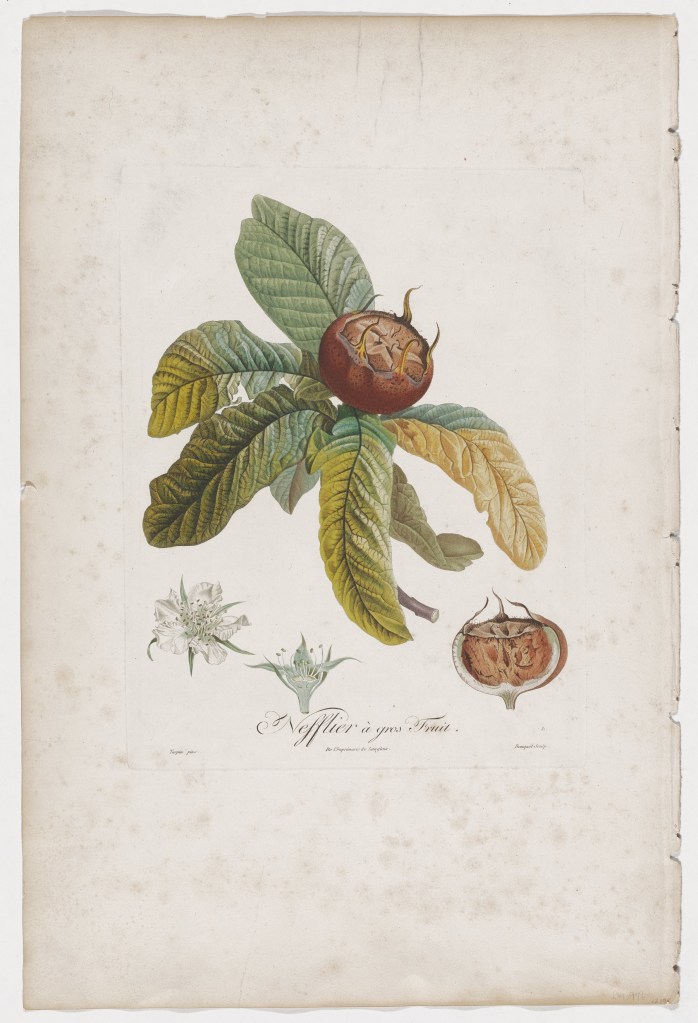
Nefflier a gros Fruit. Original from the Minneapolis Institute of Art. Dated: 19th century ; Artist: Michel Bouquet ; Nationality: French ; Artist Life: 1807-1890.

Elliot Nicely’s comb

hospice care
the way she quietly combs
sunlight
into his hair
with her fingers

Elliot Nicely (USA)
(previously published in Eucalypt #25)

This tanka gives me a real sense of peace and acceptance, specifically in: “she quietly combs sunlight into his hair.” I feel a gentleness in the verb “combs,” which reminds me of slow-rolling ocean waves, or a soft breeze in a field of grass. It also brings me a sentiment that the person lived a fulfilling life, regardless of their age. I first envisioned the man is in hospice and his wife is combing his hair, though I like how the tanka leaves this open for interpretation. It could very well be the woman who is in hospice and she’s combing the hair of her husband, her son, or someone else she’s close to. Hospice relates to a person who is physically ill and has 6 months or less to live. Love and compassion don’t always require words and can be expressed through silence, in gentle, wordless action. I feel this tanka expresses one of those moments. A beautiful poem. 

Jacob Salzer (USA)

The opening line of this tanka takes us to hospice care as an expression of a place that everyone knows. The tanka precisely describes the story of a woman who may be a nurse, a mother, a spouse, or a grandmother. In each case, she is caring and may be missing her motherhood memories in the past. The scene describes a carefree moment where she may be sitting in the sunlight with a child/boy/man and enjoying combing his hair with her fingers. It also shows the personal touch of a person with someone who is close to her and where there are no materialistic things needed to enjoy mundane activities.

This also demonstrates how both persons are pondering about life, maybe reminiscing their past. I can see the furrows in the hair resultant from combing with fingers, which depicts how fruitful life becomes when someone sows the seeds of love, care, and sincerity. I loved the imagery of this tanka, which portrays the story of life in hospice care—full of memories, love, compassion, kindness, and personal touch.

Hifsa Ashraf (Pakistan)

This is a moment of quiet yet powerful symbolic actions—whether intended or not. The person being cared for is ill or dying, and sunlight, the power of the sun, is being combed into the patient’s hair. In a way, it is giving life to a person on the edge of death. It could also be a sign of someone who has lived their life fully and is now returning to the realm of the natural world.

The sense of sound in this tanka is wonderful as well. The soft “o”s in hospice, combs, and into, and stark “i”s in hospice, quietly, sunlight, into, his, hair, with, and fingers make for a sonorous feel that adds emotion to the poem. The tanka is sparse in words, but each word seems carefully selected and paced. It’s a tanka with depth that can be clearly seen.

Nicholas Klacsanzky (USA)

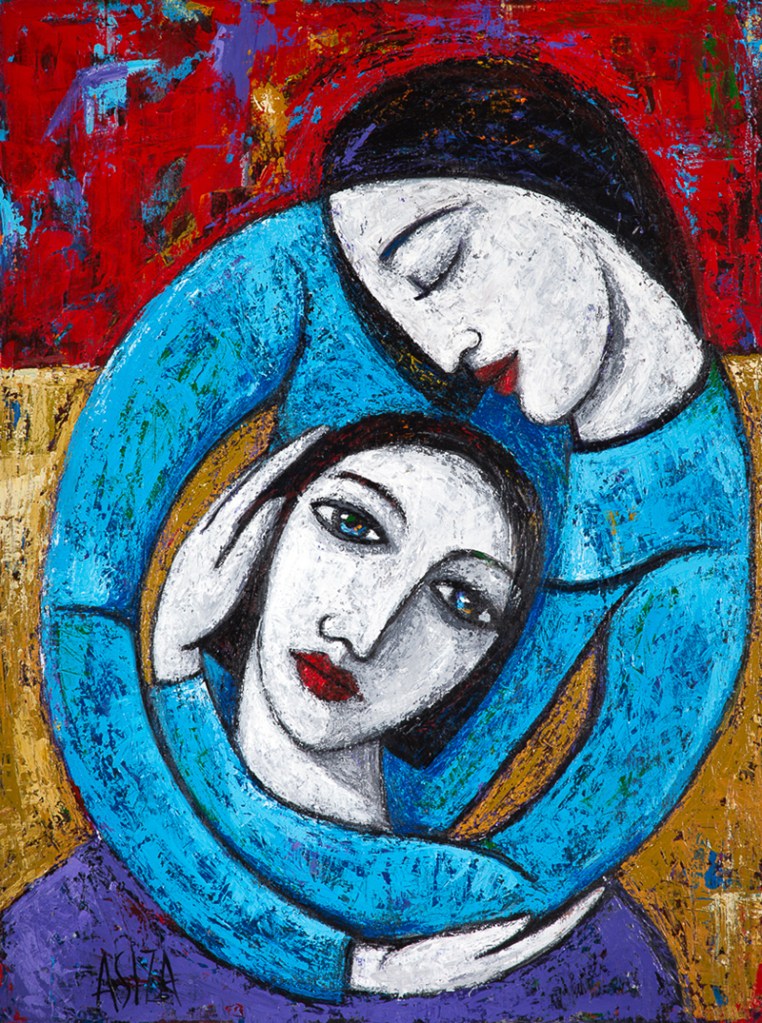
“Endearment” by Asiza.

Robin Anna Smith’s Alchemy

dusk gathers
with the alchemy
of ravens . . .
alone, in a clearing
my heart picked clean

Robin Anna Smith (USA)
UHTS Fleeting Words Tanka Contest 2019, First Place

There are a few short poems that inspire me deeply due to their brevity and brilliance. The beauty and the dimensions of our imagination are endless as one can grasp the attention of anyone through its majestic power and subtlety. This poem is one of them.

I loved the opening line of this wonderful tanka that pauses my thoughts and lets me feel the colours and the hues of dusk that tickle my slumberous senses to fully grasp the overall picture of that dusk.

The second and third lines, ‘with the alchemy/of ravens . . .’, is beautifully embedded in this dynamic poem and this may be the crux of the whole theme of this tanka. The word ‘alchemy’ depicts the magical power of the dark that purifies our thoughts and heart through contemplation and maybe through meditation. Ravens here depict the sign of intellect that pass through the trials of time before getting into proper shape. This is the experience of wholeness where a person walks alone in this journey as it varies from individual to individual. This highest level of personal experience also touches the spiritual boundaries where a person wants peace at heart, which is the ultimate goal of life. This only comes through the self-awareness that is reflecting very clearly in this tanka and brings one’s thoughts and feelings together to enjoy the subtle experience of wholeness.

Looking at the technicalities, the ellipsis placed after the word ‘ravens’ makes it significant to ponder in our day-to-day experiences before we finally get to the path of our ultimate destiny. By uniting the first and the last lines, one can understand the ultimate purpose of life.

Hifsa Ashraf (Pakistan)

The power behind this tanka lies in its imagery and the connection between its two parts. Also, the poem packs in a lot of substance within five lines, while allowing the reader to imagine and fill in blanks.

I like that Robin embraces the more metaphorical and free approach to tanka that many western poets don’t delve into. Some western adherents of tanka practice it as a longer haiku and don’t utilize its more abstract and imaginative side.

Let’s break this tanka down line by line. “dusk gathers” sets the time and scene. We can feel that this poem will contemplative.

“with the alchemy” is a surprising line and makes the reader excited to see what will happen next in the tanka.

“of ravens . . .” is highly symbolic. In Native American culture, the raven is sacred and in some tribes, was the creator of the world. This could be the connection to alchemy. Also, in many cultures, ravens are seen as mystical creatures that are either seers, magical beings, or harbingers of something to come. The ellipsis makes the clear sign of this part of the tanka ending and shows that this process of alchemy and dusk gathering is gradual.

“alone, in a clearing” is concise but delivers substantial symbolism with the clearing being like the poet’s sense of being alone. The comma puts more emphasis on the word “alone” and allows the reader to feel it more.

With “my heart picked clean”, Robin does not say, but as a reader, I can imagine the ravens picking the poet’s heart clean. Maybe this could be part of the alchemy mentioned earlier. Alchemy is about transformation, and the process of cleaning one’s heart can be said to be a type of metamorphosis.

In terms of the format, this tanka follows the traditional Japanese rhythm faithfully. Looking at its sound, the letter “c” is most prominent. It reminds me of the clicking of beaks. In this case, ravens’ beaks.

A tanka packed with imagery, symbolism, and feeling, it’s clear why this poem won first place in the UHTS Fleeting Words Tanka Contest.

Nicholas Klacsanzky (USA)

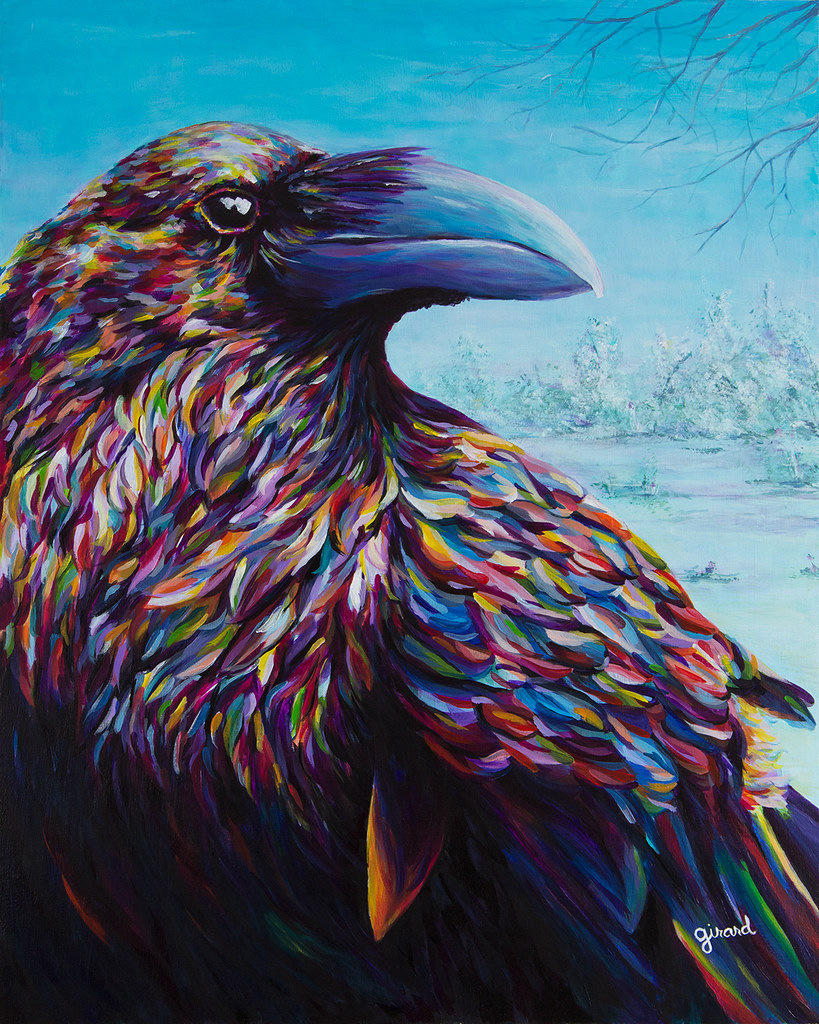
Raven painting– Painting by Claudelle Girard