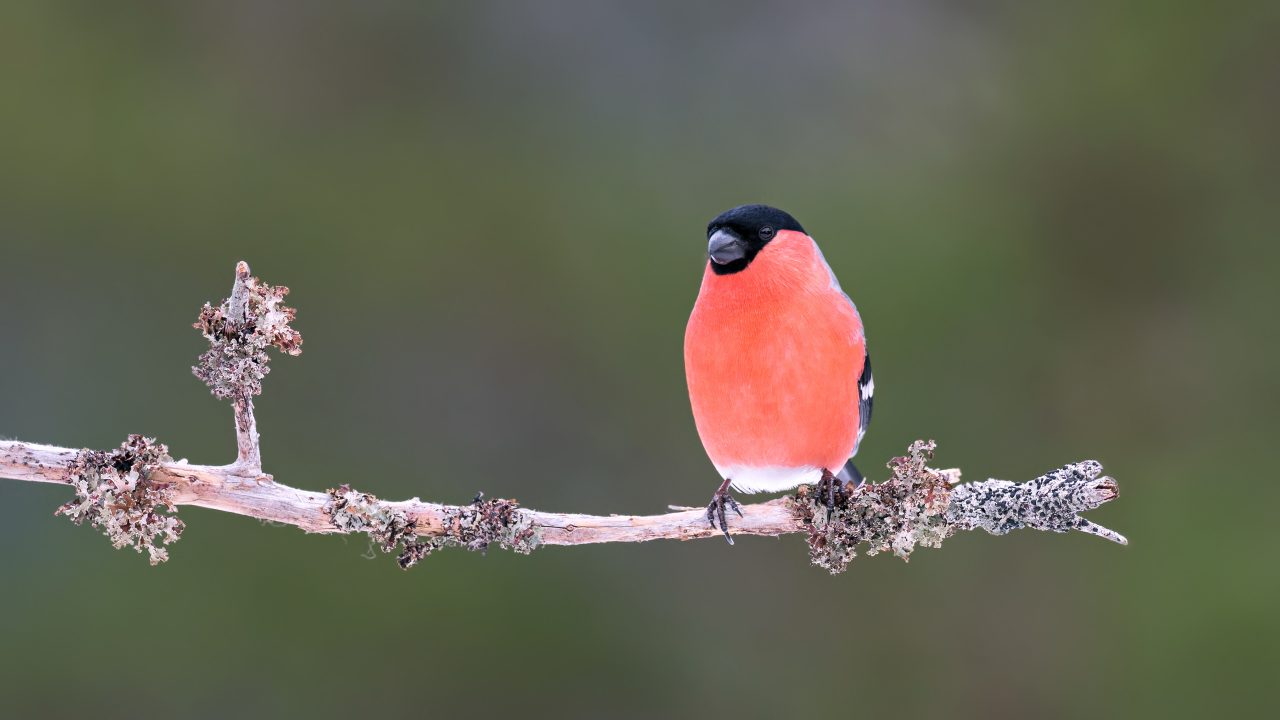
Haiku by Martina Matijević, Anthony Lusardi, and Paul Callus

dusty teddy bear   
brushing off   
my childhood 


Martina Matijević (Croatia)  

Commentary from Hifsa Ashraf:

This haiku evokes a tender yet bittersweet moment of reconnection with the past. The “dusty teddy bear” serves as a symbol of childhood, once cherished, now forgotten, or stored away. Dust here is not just physical but metaphorical, suggesting the passage of time and emotional distance where one may have fading memories of childhood.

The middle line, “brushing off,” is beautifully ambiguous, yet letting the person find some clarity into their childhood. It implies a physical act where cleaning the toy hints at revisiting or even confronting long-buried memories. There’s a subtle emotional movement in this line: care, nostalgia, and perhaps a trace of reluctance. This is how one reverts back to their past life with a little bit of effort and time.

The final line, “my childhood,” brings a sense of closure. The teddy bear becomes a gateway to personal history, and the speaker, by brushing it off, also dusts off a part of themselves. The haiku captures a universal experience, how a small object can unlock an entire era of feeling. It’s delicate, reflective, and deeply human.

Lastly, the sound of consonants b and d in this haiku strikes deep yet strong feelings that might have brought back some vivid memories of childhood.

blind date
a wildflower                           
my app can’t identify

Anthony Lusardi (USA)
Prune Juice, August issue, 2025

Commentary from Nicholas Klacsanzky:

The senryu opens with “blind date,” situating the poem in the modern social world. It’s also a circumstance that many of us can identify with. Usually, “blind date” senryu have elements of humor. So, as a reader, I immediately expected a comical twist.

The second line introduces “a wildflower”—a counterpoint to the digital world referred to in the third line. The wildflower symbolizes something growing outside expected boundaries and a sense of freedom. In traditional haiku aesthetics, a wildflower often embodies sabi (rustic beauty), yet here in this senryu, it is employed in a playful way where the poet’s date is implied to be a “wildflower,” and notes how romance or love is often indescribable.

The closing line captures the tension between technology’s attempt to categorize the world and the irreducible mystery of human connection. There’s an irony in our dependence on apps to “know” what’s what—even as what truly matters (the person on the blind date) resists such identification.

Overall, the humor is understated—a hallmark of senryu—but carries emotional resonance. Beneath the joke about the app’s failure is a quiet longing for authenticity, for something not optimized or labeled.

Checking in on the sense of sound, the w and f sounds give both emphasis and a wispy feeling to the poem. With the format, the last line is long, yet it is not an issue since not only is this a senryu (which doesn’t focus on format much), but the line breaks seem natural.

Ultimately, I chose to comment on this senryu because of its mixing of technology, romance, and playful use of nature. I was happy to see it appear in the prestigious journal, Prune Juice.

monsoon rain
over the paddy fields
a flight of dragonflies


Paul Callus (Malta)

Commentary from Jacob D. Salzer:

This is an interesting haiku that shows the after-effects of a monsoon in the paddy fields where rice is grown. According to the National Environmental Satellite, Data, and Information Service: “A monsoon is a shift in winds that often causes a very rainy season or a very dry season. Although monsoons are usually associated with parts of Asia, they can happen in many tropical and subtropical regions – including several locations in the United States. Monsoons are caused by a change in the direction of the wind that happens when the seasons change. In fact, even the word monsoon comes from the Arabic word mausim, which means ‘season.’ At the beginning of summer, the land warms up faster than bodies of water. Monsoon winds always blow from cold to warm. In the summer, warm air rising off the land creates conditions that reverse the direction of the wind.”

In this haiku, the extreme weather of heavy monsoon rains is contrasted with the silent and delicate flight of dragonflies. Traditionally, dragonflies are an autumn kigo (seasonal reference). The flight of dragonflies could symbolize a human migration, i.e., perhaps the farmers in the paddy fields are also temporarily migrating due to the heavy rains, as summer fades into autumn.

On the other hand, according to the World Population Review: “The most common method of cultivating rice involves flooding the field, a practice typically carried out in what’s known as a rice paddy. This helps water and protect the plant from vermin and disease.” Therefore, the monsoon rains can help cultivate rice, though it’s more difficult to work in the paddy fields during the downpour.

Despite the potential melancholy interpretation relating to the autumn kigo, I can’t help but feel hope, courage, and resilience in this haiku: even in the heavy monsoon rains, the dragonflies are flying together. I think the plural form of “dragonflies” is special because I normally only see one dragonfly at any given moment. While there are likely two dragonflies in this haiku, it could also be enjoyable to imagine several dragonflies flying together.

In short, this is a significant haiku that shows resilience, a seasonal shift, and offers a portal into the lives of farmers who work tirelessly in the paddy fields to grow and cultivate rice. More interesting facts about rice can be found on the World Population Review website.
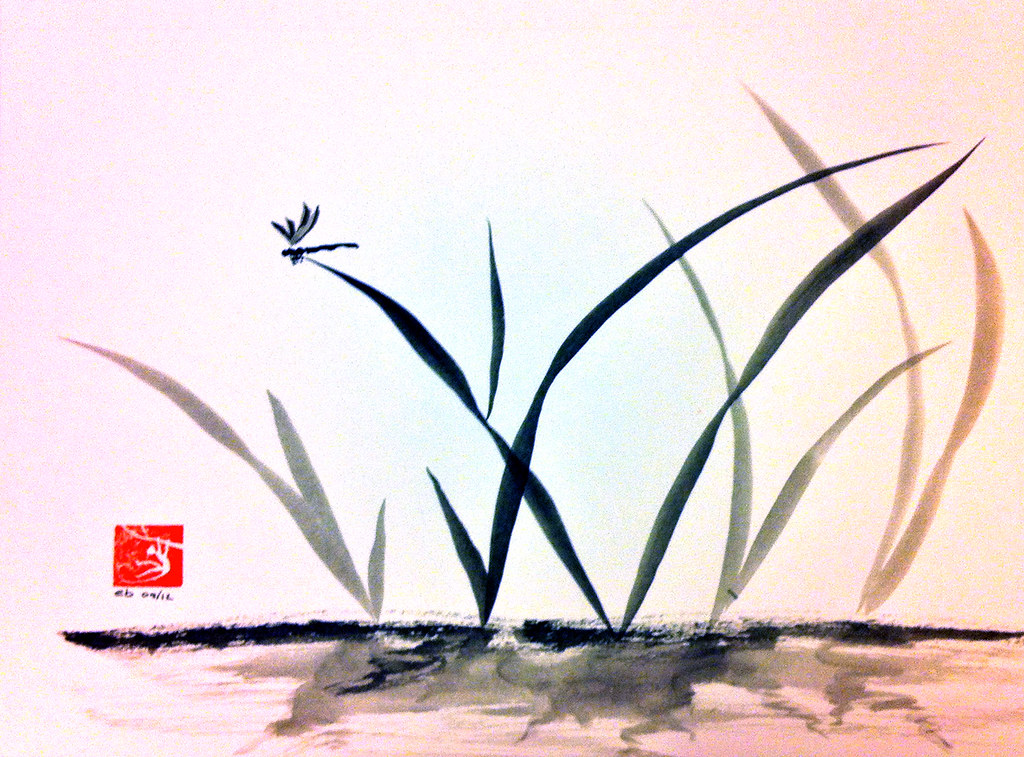
Painting by Ernest Barbaric
Haiku by Thomas L. Vaultonburg, Tuyet Van Do, and Alexander Groth

broken bridge—
the river teaches me
its alphabet

Thomas L. Vaultonburg (USA)

Commentary from Hifsa Ashraf:

This haiku reflects wreckage, destruction, and loss—possibly due to war, natural erosion, or catastrophe. The opening line, “broken bridge,” immediately conveys a sense of disruption—be it in relationships, communication, or continuity. A bridge often symbolizes connection, transition, or passage from one state to another. Here, its brokenness suggests a severed link, a collapse in understanding or unity. The em dash after the first line pauses the reader, allowing them to fully absorb the scene and connect with it in their own personal way.

The second line shows how, in the absence of that constructed path, the observer begins to engage directly with the river. The destruction of the bridge uncovers a hidden relationship with the river—something previously ignored as people simply crossed over it, never truly noticing its flow, sound, or resilience. Now, with nothing in between, the river demands presence. It becomes a metaphor for uninterrupted thought—fluid, spontaneous, and reflective—offering insight and wisdom in the aftermath of loss.

The final line, “its alphabet,” is especially evocative. It suggests the river has its own language—one that the observer is now learning to read. This could represent poetry, expression, or a deeper understanding of the self and nature. The word “alphabet” also points to musicality, rhythm, and perhaps even healing, as if the river’s sounds become a kind of song or meditation.

Overall, it is a haiku that displays humility, and that when the human-made world breaks down, nature is there with its voice and language.

vacation at grandma’s
cicada’s symphony
singing me to sleep


Tuyet Van Do (Australia)
Haiku Girl Summer, 25 August 2025

Commentary from Nicholas Klacsanzky:

“Cicada” is a classic summer kigo (seasonal reference) in the Japanese haiku tradition, and in most countries. The poet could be implying that she was on summer vacation while visiting her grandma’s house. I got the feeling, though, that perhaps her grandma was no longer there, and the cicadas were a substitute for the lullabies that her grandma used to sing. The loudness and fullness of cicada song fill the gap left behind by a loved one to some degree.

In the second line, there is a shift to the natural world, connecting humanity with the cicadas. Oftentimes, cicadas are thought to have harsh calls, but the word “symphony” characterizes their sound as pleasant and even awe-inspiring. Perhaps at a place as so nostalgia-infused as grandma’s house, even cicadas can sound melodious and sweet.

The third line returns to the human, showing the effect of nature on the poet. It displays a clear juxtaposition of human experience and nature. Additionally, it also manifests the connection between sound and the memory of an emotion. Music, or certain sonics of nature, can often open the floodgates of memory.

Looking at the sense of sound within the words themselves, the repetition of the soft s sounds mimics the hiss and hum of the cicadas in the first line. In the last line, the s dominates again, this time softened by ng and sl, creating a lulling effect.

It is a simple haiku at first glance, but with a second look or more, one can easily see and feel layers of meaning that are poignant and resonant.

school bathroom—
the scent of fresh deodorizer
lingers in my hair

Alexander Groth (Germany)

Commentary from Jacob D. Salzer:

Many activities can happen in school bathrooms. They can be a kind of hiding place for some students, where they talk and share secrets, though more unfortunate things can happen in school bathrooms as well. The scent of the fresh deodorizer could be covering up another scent, though this is left open to the reader. In a broader sense, this haiku makes me think about the psychological, physical, and emotional effect that various scents have in our daily lives. It also makes me think about the chemicals in various deodorizers/deodorants that some people are exposed to on a daily basis. In college, I learned certain deodorants have harmful chemicals that can enter the lymph nodes and can cause various medical problems over time, including cancer. In short, this is an important haiku that sparks conversations about school safety, the sense of smell, chemicals, and the social lives of students. 

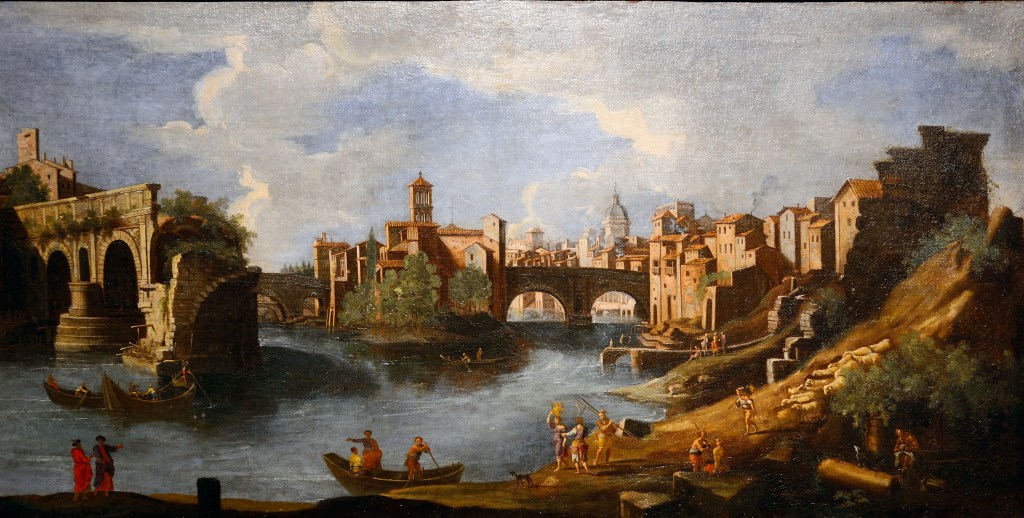
Panorama of the Tiber with a broken bridge. Caspar van Wittel (1653–1736) 

Haiku by Robert Witmer, Mona Bedi, and Vaishnavi Pusapati

summer
the millstone
grinding
the donkey

Robert Witmer (Japan)
Acorn, 2012

Commentary from Nicholas Klacsanzky:

The word “summer” serves as the kigo, or seasonal reference. With summer linked to heat and exhaustion, the donkey, laboring under the sun, embodies the season’s oppression. There is also a contrast between the carefree time of the season for many and the hardship of the donkey. The poem is in line with the haiku tradition of showcasing animals as mirrors for the human experience.

The line break after “grinding” sets the haiku up for suspense. On the literal level, the millstone grinds grain, powered by the donkey. Yet, the syntax suggests another possibility: the millstone is grinding “the donkey.” This ambiguity shifts the focus of agricultural labor to an existential meditation. The donkey is not only the driver of the millstone but also its victim, ground down by endless work. The brevity of the poem creates the opportunity for two interpretations in one phrase.

The opening word “summer” creates a pause much like a kireji (cutting word) in Japanese haiku. That initial fragment provides a sense of heat and the monotony in the donkey’s circling. The lack of punctuation allows the lines to blur a bit as if there is a heatwave. Also, the way the haiku is set to four lines to slow down the reading, instead of the usual three in English-language haiku, illustrates the trudging of the donkey.

The donkey itself evokes the burden of living and the servitude we all must endure. In this haiku, however, the animal is emblematic of exploitation and fatigue. The millstone, traditionally associated with providing food, here becomes an instrument of slavery or torture. Therefore, the poem shows a contrast between the cycle of food production and the cycle of suffering. In this sense, this haiku may have Buddhist or Hindu overtones—specifically, with impermanence (mujo) and suffering (dukkha).

Looking at the sound, the s hisses like the heat of summer, and the m is heavy, creating a sense of weight that links with the donkey’s toil. Additionally, “grinding” is an onomatopoeia that mimics the action of the millstone and the servitude of the donkey.

As a person concerned about animal welfare, this haiku is touching. It made me consider more deeply the amount of labor and forced suffering we inflict upon our fellow creatures. The slow pacing, sound, and pivot line all work well to convey the feelings and ideas the poet wanted us to consider.

the deep blue 
of my hometown sky
summer’s end

Mona Bedi (India)
Wales Haiku Journal, Summer 2025

Commentary from Jacob D. Salzer:

Colors in haiku can add psychological, emotional, and sometimes spiritual dimensions. In this haiku, the deep blue could imply a kind of melancholy or a sense of calmness and mystery. Perhaps the poet’s hometown has significantly changed over the years, yet a certain nostalgia seems to remain. This resonates with the turning of the seasons as well. As summer ends, in certain parts of the world, there is a noticeable shift to the cooler air of autumn. Perhaps the end of summer also signifies that the poet is letting go of something and starting a new chapter in their life.

I appreciate how, even though this is a personal haiku, it transports readers into their own hometowns, acting as a kind of portal into the past and perhaps the future. There is a strong sense of place in this poem that connects us with the land, yet also with our family, friends, and the people we grew up with. A well-written haiku.

cloud hills—
between sips of tea
the smell of petrichor


Vaishnavi Pusapati (India)
Under the Bashō, March 13 2025

Commentary from Hifsa Ashraf:

A meditative verse, steeped in stillness, sensory richness, and inward calm with deeply evocative undertones. It makes me think of the times when I used to enjoy tea and pakoras during the rain in our village haveli. The main reason behind that joy was the smell of petrichor, which always captivated my senses and allowed me to thoroughly enjoy the scene.

‘Cloud hills’ could be either a kigo (seasonal reference) or a place intentionally chosen by the poet to preserve certain past memories or simply to enjoy a moment of peace with nature. I find it more surreal and dreamy when I imagine places like this—where one can witness the beauty of different seasonal changes all at once. I see clouds as dreams, and hills as passion and emotion—elements the observer is trying to connect with. The em dash in the first line makes the image feel more intimate and personal, hinting at a deeper emotional association with the place.

The second line, ‘between sips of tea,’ feels especially meditative and thought-provoking. It reminds me of a tea ceremony, where one is fully present and mindful, experiencing the ‘here and now.’ The sips seem to help the person unwind and appreciate the moment through all their senses. The use of the word ‘between’ invites readers to pause and take in the scene—whether that moment is brief or lingering. It reflects an aesthetic appreciation of drinking, where tea becomes more than a beverage—it becomes a profound experience for the body, senses, and mind.

The final line presents a beautiful blend: the aroma of tea merging with the smell of petrichor. It’s one of the most powerful combinations—evoking refreshed emotions and thoughts. It feels as though the poet is in perfect harmony with nature, immersed in a moment that is spiritual, nostalgic, and even a little mysterious. Both aromas—the tea and the petrichor—engage the sense of smell, which often requires deep attention and presence to truly notice.

Finally, the repeated ‘e’ sounds throughout the haiku add a soft rhythm, making it feel more musical and sensual.

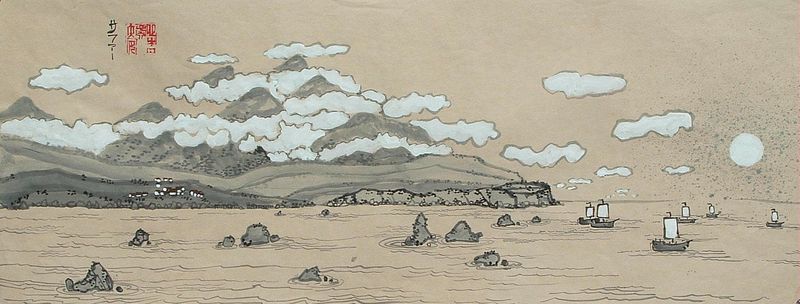
“Wind and Sea” by HM Saffer