monsoon yoga
here and there
a housefly
Hemapriya Chellappan (India)
Failed Haiku, journal of senryu, issue 45, Sept 2019
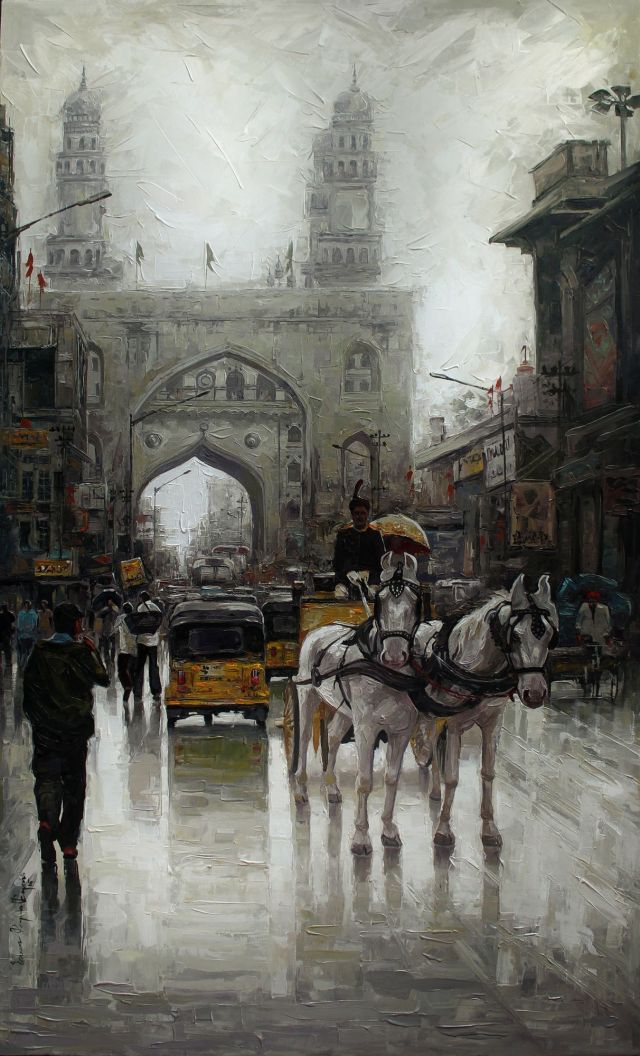
I’ve been in India during the monsoon season, and I can say how exciting and intense it is to see the rain crash down on the streets. All the commotion is compared to a housefly buzzing around here and there. Something epic and something small in aesthetic unison. Also, it contrasts the calmness of doing yoga. So, you can say we got a strong juxtaposition in this senryu/haiku–and a touch of humor.
Technically, it’s easy to spot the string of “o”s in the poem. It stretches the pace of the reading, slowing us down like yoga. Plus, we got some “r”s and “h”s to make it more musical. In terms of the structure and wording, it’s an efficient senryu/haiku–not wasting a word.
Great imagery, a fine juxtaposition, and a keen sense of sound make this poem an enjoyable read.
– Nicholas Klacsanzky (USA)
The monsoon season is a time of yearning and transformation where many views outside and inside get refreshed and soil absorbs a lot of stories of the mourning sky. The sound of rain, petrichor, and new views bring original perspectives to life–and if we shift our focus from our world to the inner world, as in yoga and meditation, we find it very soothing, as there is a direct and deep connection between a monsoon and yoga. The spirit of this haiku revolves around the aspects that make our lives toxic due to a lot of reasons and activities that affect us mentally, spiritually, physically, and emotionally.
In terms of the housefly, I believe it is a metaphor that describes the dirt and filth around us. So, when it comes to a monsoon, all that filth comes to the surface and makes the environment more chaotic and toxic. A housefly can also represent the disturbing thoughts that keep us restless and dissatisfied daily. So, it is a monsoon that makes things obvious for us so that we can concentrate on our inner world and find out the best possible solutions to the chaos around and inside us.
– Hifsa Ashraf (Pakistan)
If you enjoyed the haiku and commentary, please leave us a comment.
Painting by Iruvan Karunakaran called Charminar Wet


Which part of India did you visit? It’s a beautiful description 🙂
LikeLiked by 1 person
I have been to India six times, so it is a bit blurry, but I remember being in Maharashtra in the monsoon :)
LikeLiked by 1 person
Yes Maharashtra is beautiful green!
LikeLiked by 1 person
Indeed, Maharashtra is so beautiful during the monsoons. 💜
LikeLiked by 1 person
Thank you soooo much, Nicholas and Hifsa for your beautiful commentaries on my senryu. Thoroughly enjoyed reading it. Great work, guys. ❤️
LikeLiked by 1 person
You’re very welcome :)
LikeLike
Fascinating haiku, with expert analysis. The only dissenting comment I would make is that I don’t really see this as a juxtaposition, because surely there are not two but three entities in this haiku. I agree that there are elegant juxtapositions between each pair but there is clearly – to me, anyway – also a relationship between the three – the way they all work together contributes to the depth and complexity. But unless there are just two “objects” I don’t see how “it” can be called a juxtaposition. I know this is heresy within the haiku world, but I don’t see anything wrong with this at all – I see juxtaposition as just one way of constructing a haiku.
LikeLiked by 1 person
Indeed, not every haiku has to have a juxtaposition. It is more of an aesthetic and mood.
LikeLike
I like the attempt to like spirituality with nature and congratulate the poet on this effort. The yogi in his or effort to find inner peace has to contend with inner and outer distractions here is where we find the juxtaposition positions the monsoon without and the house fly within besides the state of peace
the yogi seek to achieve and the disquiet in the environment.
Monsoons are likely to cause floods would the thought of the disturb the yogi meditation in a similar manner as the house fly is moving around in the house.
LikeLiked by 1 person