Haiku by Elliot Diamond, Hifsa Ashraf, and R.C. Thomas

oil spill fish blowing bazooka bubbles

Elliot Diamond
Failed Haiku, issue 98.1, 2024

Commentary from Jacob D. Salzer:

I appreciate this one-line haiku for revealing one of the severe consequences of oil spills. In a broader sense, this haiku is also showing the inherent economical and environmental dangers of oil dependency in modern civilization.

The word “bazooka” can refer to chewing Bazooka gum. The bazooka bubbles could visually resemble the bubbles created by fish. However, a bazooka is also a military weapon. In this monoku, the bazooka seems to signify not only a war between humans, but a war between humans and the Earth. More specifically, limited human viewpoints and ideologies (that see Nature as only resources to be extracted) leads to harm and war, which also harms ourselves, in many ways. If we want to lead healthier lives, I think we need to protect the Earth and call on Indigenous wisdom.

The strong “b” sound echoes in this monoku with the sonic impact of the oil spill and the bazooka. Even so, because sound is muffled underwater, I also feel a kind of deathly quiet in this poem.

In short, this is an important monoku that shows the dangers of oil. However, it is more than a poem as it can also inspire a social call to action.

old snow
unfolding mom’s
bridal gown


Hifsa Ashraf (Pakistan)
ESUJ-H, September, 2025

Commentary from Nicholas Klacsanzky:

The contrast between “old snow” and “bridal gown” jumped out at me. Both are white, but with “old” and “mom’s,” we understand that both the bridal gown and snow are tainted in some way. From the poem, I get the feeling that either the poet’s mother has passed away, or is simply passing on her bridal gown as a form of heritage. Both images point to transience and create a sense of harmony between nature and human life (toriawase).

With the mention of “old snow,” I feel the seasonal reference, or kigo, is late winter. With the time being on the cusp of spring, it relates to a new beginning, such as a wedding—especially with the reference to being “mom’s bridal gown,” showing the passage of time leading to a new future.

The act of unfolding suggests a form of reverence. It also makes readers ponder questions about the haiku: why is the gown being unfolded now? Is this an act of remembrance or preparation? Finally, “unfolding” also mirrors the melting of now.

Though there is no punctuation in this haiku besides the possessive marker, the kireji, or cut, is felt in the line break in line one. However, with the lack of punctuation, the haiku can be read either as two parts or as one flowing part. Both readings are valid, and perhaps the poet wanted to leave more interpretations open for the reader through the lack of punctuation.

The pacing, however, is quite traditional. With a short first line, longer second line, and shorter third line, this haiku aligns with the traditional Japanese haiku rhythm of 5-7-5 sound units (not syllables). Following this rhythm usually allows the poet to make the haiku brief and colloquial in language.

Overall, this haiku embodies the qualities of seasons, subtle emotion, and the revelation that arises from an unforced contrast/comparison that lends to multi-layered reading.

hard-boiled summer
a busboy’s smile
begins to crack


R.C. Thomas (UK)
Frogpond, 46.1, Winter 2023

Commentary from Hifsa Ashraf:

The opening line, “hard-boiled summer,” presents a rich, multi-layered metaphor. At one level, it conveys the intensity of extreme heat—affecting both mind and body. On another level, it could be describing a person who is emotionally hardened or indifferent. There is also a clever allusion to hard-boiled eggs—thoroughly cooked, contained, and under pressure—suggesting both physical heat and psychological tension. The poet skillfully invites the reader to navigate these interpretations without losing the poem’s emotional depth.

The second line, “a busboy’s smile,” operates both literally and symbolically. It may express a fleeting moment of joy, perhaps the result of brisk business during the summer heat, or act as a mask worn over exhaustion. Extending the egg metaphor, the smile becomes the uncracked surface of a hard-boiled egg—calm, polished, but under pressure. One might also associate egg yolk with the golden light of summer.

The concluding line, “begins to crack,” conveys a subtle shift. It suggests the gradual collapse of composure, whether the smile breaking under heat and fatigue, or the beginning of an emotional unraveling. The metaphor completes itself with the image of an egg’s shell cracking, revealing vulnerability beneath the surface.

This haiku masterfully intertwines climate, emotion, hardship, and human resilience, using layered imagery to reflect on the strain of daily labor in harsh conditions. Finally, the repetition of the letter ‘b’ in this haiku evokes a gentle, calming rhythm, subtly reflecting the sense of ease that follows the unfolding of a mystery.
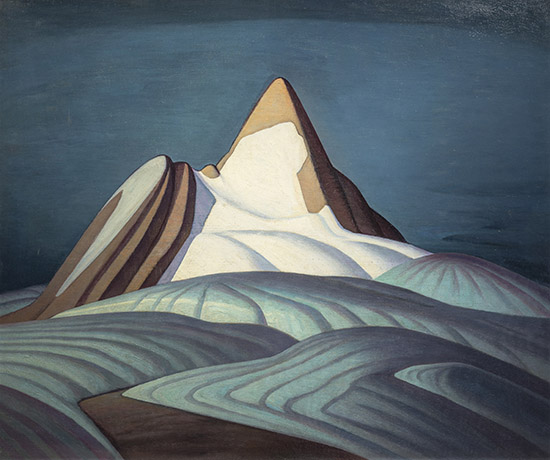
Isolation Peak, Lawren Harris (Canadian, 1885–1970), oil on canvas, © Family of Lawren S. Harris

Haiku and senryu by Srini, Danny Blackwell, and Tuyet Van Do

starlit pond…
a paper boat floats
for light years


Srini (India)
Tinywords, 25:2, October 3, 2025

Commentary from Hifsa Ashraf:

This haiku transports us into a quiet, enclosed space—perhaps a park, a backyard, or a secluded garden. The opening image is enchanting and dreamy: a starlit pond blurs the line between sky and earth, mirroring the cosmos in its still waters. The ellipsis at the end of the first line invites a pause, allowing the reader to absorb the magic of the moment. I can almost see a tapestry of stars delicately reflected on the pond’s surface.

The second line introduces a subtle shift: a paper boat floats on the water. It acts as both an interruption and an anchor—drawing us back from reverie into something tangible and innocent. The boat may symbolize a small dream, a fleeting hope, or a playful childhood memory. Its fragility contrasts with the vastness of the sky, evoking a sense of childlike wonder and gentle yearning.

The closing line, “for light years,” broadens the scale dramatically, allowing us to feel the vastness of our universe. This simple phrase goes beyond time and space, suggesting a desire for an unending journey or an unreachable dream, sort of imaginative, but still holds some meaning. It transforms the scene into something meditative—where a single paper boat becomes a bridge between the earth and the cosmos, a bridge that also connects a dream with reality. It seems one is thoroughly enjoying the surreal environment that inspires them to see beyond limited vision and express one’s longing in the most beautiful and innocent way.

the mosquito mesh
pixelating
the night


Danny Blackwell (Spain)
NHK TV program Haiku Masters, July 31, 2017. Reprinted in tiny words 17:2

Commentary from Nicholas Klacsanzky:

With the mention of “mosquito,” we could be receiving a kigo (seasonal reference), as they are most active during the warmer months—especially in June and July. Summer, as it relates to pixelation, can be likened to something overwhelming.

There is no explicit kireji (marker for the cut between parts in a haiku), but the line breaks act as a quasi one. The flow of the haiku can be read as one part, yet it is broken down as a pixelated mesh would be. This brings the reader more into the “space” of the poem.

The mosquito mesh is dual-acting: keeping out mosquitoes but also a catalyst for altered perception. As a person who used to work in information technology, I have often thought about the poetic implications of mesh and it being like pixelation. It is a visual metaphor drawn from the digital realm that plays with mundane texture. The mesh breaks the darkness of night into fragments, perhaps making it more manageable and less oppressive. This toriawase (combination of elements to create harmony) of the analog and digital invites multiple readings, with the word “night” having physical and metaphysical implications. “Night” could be indicative of a sadness, a horror, or a malaise.

The mesh could also be illustrative of the distance between intimacy and separation. The poet is close enough to notice the effect of the mesh, yet the mesh itself signifies a boundary between inside and outside, human and nature, the safe and the wild. It is a contemplative image that captures the modern condition: the world increasingly filtered, fragmented, and mediated through invisible grids.

With the repetition of t and i sounds, I can almost hear the tick of mosquitoes against the net and their whining. Overall, it is a haiku that expresses succinctly and poignantly a bridge between technology and the natural world, and the false divide we put up between nature and humanity.

emergency room
an elderly patient
rocking back and forth


Tuyet Van Do (Australia) 
Pulse, 19th September 2025

Commentary from Jacob D. Salzer

The emergency room (ER) is a tough place to be, for a variety of reasons. While there is a triage process that’s designed for providers to first see patients with the most severe injuries and diseases, a lot of people end up in the waiting room for anywhere between 2 to 3 hours (or sometimes more) before being seen by a provider. The ER can be a crowded place. I’m personally a strong advocate for preventing diseases and injuries, though some things are hard or impossible to avoid. In this senryu, I first saw the ER waiting room full of people, and then noticed the elderly patient rocking back and forth. This movement could help create a soothing rhythm in the midst of what is often chaos and uncertainty. The elderly person could be rocking back and forth as they wait for the doctor or test results. While the ER can be a very difficult place to be, it’s also often a place of healing, recovery, and discovering what’s gone wrong.

We don’t know what the patient is going through in this senryu, but when I read this poem, I immediately feel compassion and empathy for the elderly person and for the human condition. It’s never easy being human, and it gets increasingly more common for things to go wrong in the body and mind as we age.

While this poem may seem simple on the surface, there are layers of psychological and medical complexity that I appreciate. A well-written senryu that offers a portal into another world.

Painting by Hisae Shouse

Haiku by Martina Matijević, Anthony Lusardi, and Paul Callus

dusty teddy bear   
brushing off   
my childhood 


Martina Matijević (Croatia)  

Commentary from Hifsa Ashraf:

This haiku evokes a tender yet bittersweet moment of reconnection with the past. The “dusty teddy bear” serves as a symbol of childhood, once cherished, now forgotten, or stored away. Dust here is not just physical but metaphorical, suggesting the passage of time and emotional distance where one may have fading memories of childhood.

The middle line, “brushing off,” is beautifully ambiguous, yet letting the person find some clarity into their childhood. It implies a physical act where cleaning the toy hints at revisiting or even confronting long-buried memories. There’s a subtle emotional movement in this line: care, nostalgia, and perhaps a trace of reluctance. This is how one reverts back to their past life with a little bit of effort and time.

The final line, “my childhood,” brings a sense of closure. The teddy bear becomes a gateway to personal history, and the speaker, by brushing it off, also dusts off a part of themselves. The haiku captures a universal experience, how a small object can unlock an entire era of feeling. It’s delicate, reflective, and deeply human.

Lastly, the sound of consonants b and d in this haiku strikes deep yet strong feelings that might have brought back some vivid memories of childhood.

blind date
a wildflower                           
my app can’t identify

Anthony Lusardi (USA)
Prune Juice, August issue, 2025

Commentary from Nicholas Klacsanzky:

The senryu opens with “blind date,” situating the poem in the modern social world. It’s also a circumstance that many of us can identify with. Usually, “blind date” senryu have elements of humor. So, as a reader, I immediately expected a comical twist.

The second line introduces “a wildflower”—a counterpoint to the digital world referred to in the third line. The wildflower symbolizes something growing outside expected boundaries and a sense of freedom. In traditional haiku aesthetics, a wildflower often embodies sabi (rustic beauty), yet here in this senryu, it is employed in a playful way where the poet’s date is implied to be a “wildflower,” and notes how romance or love is often indescribable.

The closing line captures the tension between technology’s attempt to categorize the world and the irreducible mystery of human connection. There’s an irony in our dependence on apps to “know” what’s what—even as what truly matters (the person on the blind date) resists such identification.

Overall, the humor is understated—a hallmark of senryu—but carries emotional resonance. Beneath the joke about the app’s failure is a quiet longing for authenticity, for something not optimized or labeled.

Checking in on the sense of sound, the w and f sounds give both emphasis and a wispy feeling to the poem. With the format, the last line is long, yet it is not an issue since not only is this a senryu (which doesn’t focus on format much), but the line breaks seem natural.

Ultimately, I chose to comment on this senryu because of its mixing of technology, romance, and playful use of nature. I was happy to see it appear in the prestigious journal, Prune Juice.

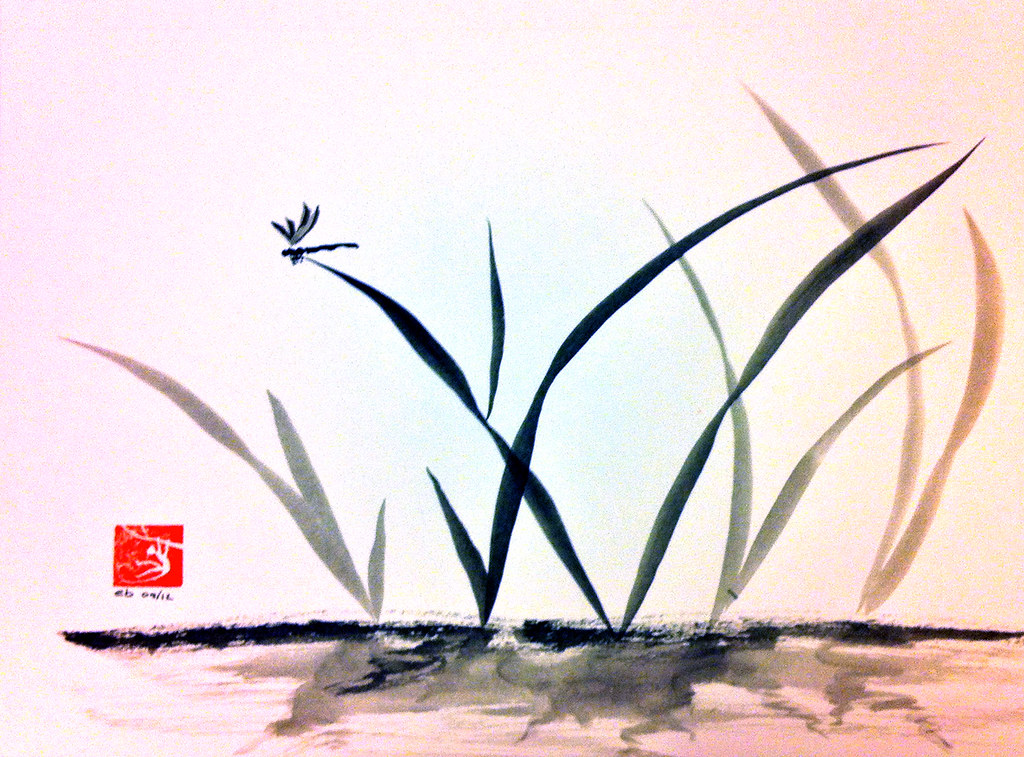
monsoon rain
over the paddy fields
a flight of dragonflies


Paul Callus (Malta)

Commentary from Jacob D. Salzer:

This is an interesting haiku that shows the after-effects of a monsoon in the paddy fields where rice is grown. According to the National Environmental Satellite, Data, and Information Service: “A monsoon is a shift in winds that often causes a very rainy season or a very dry season. Although monsoons are usually associated with parts of Asia, they can happen in many tropical and subtropical regions – including several locations in the United States. Monsoons are caused by a change in the direction of the wind that happens when the seasons change. In fact, even the word monsoon comes from the Arabic word mausim, which means ‘season.’ At the beginning of summer, the land warms up faster than bodies of water. Monsoon winds always blow from cold to warm. In the summer, warm air rising off the land creates conditions that reverse the direction of the wind.”

In this haiku, the extreme weather of heavy monsoon rains is contrasted with the silent and delicate flight of dragonflies. Traditionally, dragonflies are an autumn kigo (seasonal reference). The flight of dragonflies could symbolize a human migration, i.e., perhaps the farmers in the paddy fields are also temporarily migrating due to the heavy rains, as summer fades into autumn.

On the other hand, according to the World Population Review: “The most common method of cultivating rice involves flooding the field, a practice typically carried out in what’s known as a rice paddy. This helps water and protect the plant from vermin and disease.” Therefore, the monsoon rains can help cultivate rice, though it’s more difficult to work in the paddy fields during the downpour.

Despite the potential melancholy interpretation relating to the autumn kigo, I can’t help but feel hope, courage, and resilience in this haiku: even in the heavy monsoon rains, the dragonflies are flying together. I think the plural form of “dragonflies” is special because I normally only see one dragonfly at any given moment. While there are likely two dragonflies in this haiku, it could also be enjoyable to imagine several dragonflies flying together.

In short, this is a significant haiku that shows resilience, a seasonal shift, and offers a portal into the lives of farmers who work tirelessly in the paddy fields to grow and cultivate rice. More interesting facts about rice can be found on the World Population Review website.

Painting by Ernest Barbaric