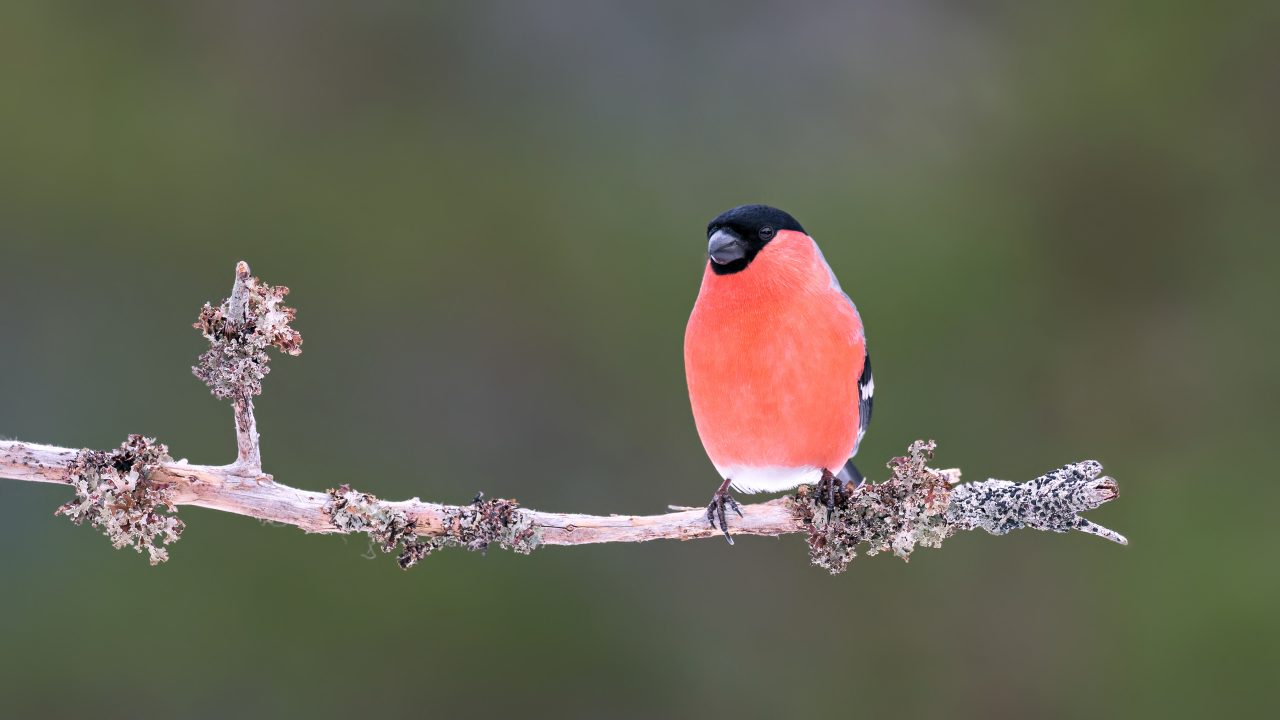
Haiku by Urszula Marciniak, Tuyet Van Do, and Elliot Nicely

plans for the New Year
my list is turning into 
origami


— Urszula Marciniak (Poland)
published in ESUJ-H: English Haiku, December, 2025

Commentary by Nicholas Klacsanzky:

This haiku opens with the common New Year’s ritual of making a list of resolutions. The seasonal reference (kigo) of New Year is extremely traditional in Japanese haiku. Each Japanese haiku master of old has written perhaps hundreds, and even thousands, of New Year haiku. So, the poet leans into this tradition.

The word plans carries weight, as wishes is usually used. This seriousness is undermined or transformed in the second line, though. Turning suggests a shift, and origami being used on its own allows the reader to imagine the infinite possibilities of this artform.

The enjambment in the second line is uncommon in haiku, especially traditional haiku, but it holds readers in suspension. It is difficult to expect origami to be the third line, and the surprise helps the haiku become more endearing. Also, this haiku does not have punctuation but most likely does not need it. If there were a punctuation mark in the first line, it would make that line super long. There is a clear line break between the first and second lines.

The final image in this haiku suggests a mixture of things. It could be showing frustration at the act of creating a list to adhere to. It could also be a sense of whimsy, viewing resolutions as play rather than concrete, business-like aspirations. In another way, it could be suggesting that time is relative and New Year’s rituals are not as important as people think.

Looking at the sound, the opening pl cluster gives a brisk, purposeful feel, while the long vowels in new and year give the first line a sense of expansiveness, befitting new beginnings. Frustration is felt in the short vowels in the second line with list, is, and in. In the third line, every syllable is open and soft, which is a complete contrast to the clipped sounds of line two.

Ultimately, this haiku folds meaning into itself, just as its imagery suggests. It transforms a ritual and tradition into a playful act, which I feel is needed in these harsh days.

await discharge papers 
outside the ward window 
a fleeting bird
 

— Tuyet Van Do (Australia)
published in FreeXpresSion, issue 2, February 2026

Commentary by Jacob D. Salzer: 

This haiku has considerable psychological weight and significance. According to vocabulary.com, “A ward is a group of rooms or a section in a hospital or prison; in a hospital, different wards deal with different needs, like the psychiatric ward or maternity ward.” The discharge papers signify that the person was in the hospital or prison ward for a number of days, weeks, or even months or years, but we don’t know why.

In this haiku, we are standing at an important threshold between worlds, evident in the transition of being discharged back into society, and noticing the bird glimpsed outside the window. The last line, “a fleeting bird,” could be interpreted as a symbol of hope, that the spirit of the person will have a new kind of freedom and a better life. On the other hand, the word “fleeting” could contain connotations that this hospital or prison stay may happen again in the future. Ultimately, this haiku sparks important conversations about hospitals, prisons, and larger conversations about society in general. For example, in the U.S., there are more people in prisons than in any other country in the world. (Source: https://www.sentencingproject.org/reports/mass-incarceration-trends/)

Why is this the case? How can we prevent more crime to begin with? How can we prevent more illnesses and also give people a better chance at a better life when they are discharged from hospitals and prisons? My hope is that this haiku will encourage more people to take a closer look at healthcare systems and prisons, and take proactive steps to make life better for more people. This is an important and vulnerable haiku that shows deep wounds in society and in people, and, hopefully, also shows signs of true healing, transformation, and a better life.

memory care unit
this rippling twilight
beneath cypress trees


— Elliot Nicely (USA)
published in Modern Haiku, 57.1, 2026

Commentary by Hifsa Ashraf:

The opening phrase, ‘memory care unit,’ establishes a setting most likely associated with aging, dementia, and the fragility of memory. It is a place where care, healing, and support take time, and where hope often persists despite uncertainty. The absence of punctuation leaves the phrase open, inviting readers to read it from different perspectives.

The second line, ‘this rippling twilight,’ introduces a transient and shifting moment of the day. The use of ‘this’ points to a particular twilight, making the experience immediate. The word ‘rippling’ suggests movement and transformation, whether real or imagined. It may refer to light filtering through the trees, reflections on a window, water, or another reflective surface. The poem naturally raises questions: What are the colours of this twilight? What causes the rippling effect? Is there water, a puddle, glass, or the play of light and shadow?

Cypress trees often carry associations with remembrance, longevity, and mortality. Their presence deepens the poem’s emotional and probably psychological resonance. There is a sense of yūgen here, as the poem leaves much unseen. What kind of cypress trees are these? Do they stand in a row, or do they form a canopy through which the fading light filters? The observer’s position also remains uncertain. Are they looking through a window? Standing beneath the trees? Or, is the scene partly imagined?

This uncertainty leads to another important question: Who is the observer? A resident, a caregiver, a visitor, or perhaps the poet? The haiku does not tell us, and that openness enriches the reading.

In any case, I appreciate how the poem connects imagination and nature within the setting of a memory care unit. Amid concerns about memory and aging, the natural world continues to offer moments of beauty, mystery, and reflection.
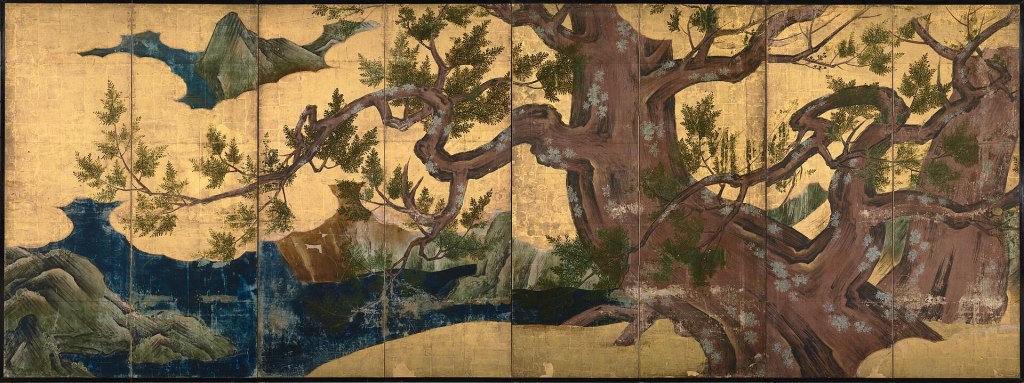
Kanō Eitoku, Cypress Trees, Tokyo National Museum 
Update on the George Klacsanzky Memorial Haiku Contest

We have closed our submission form for the George Klacsanzky Memorial Haiku Contest. Michael Dylan Welch, the judge for our contest, has begun the anonymous judging process. Please be patient with the announcement of the results, as our judge needs to select the winners from 492 submissions, which equals around 1470 haiku.

We are honored that so many poets submitted to our inaugural contest, celebrating Haiku Commentary‘s 10th anniversary and the life of George Klacsanzky, a pioneer and leader in the haiku community.

Best wishes to all of you!

Haiku by Jeff Streeby, Richa Sharma, and Luke Levi

On the Jefferson River
one swallow’s perch song
making a summer


— Jeff Streeby (USA)
Part of a haibun titled “A Brindle Bull.” Published in Bacopa Literary Review, September 2019; won Bacopa Literary Review’s Mixed Form Prize in 2019; nominated for a Pushcart Prize; reprinted in January 2020 by Contemporary Haibun Online.

Commentary by Nicholas Klacsanzky:

The Jefferson River grounds the poem in a historically significant place. It was named by the Lewis and Clark expedition in 1805 in honor of President Thomas Jefferson because it carried the largest volume of water at the time compared to the nearby Madison and Gallatin rivers. The river also carves through the dramatic Jefferson Canyon near Cardwell, which is also home to the famous Lewis and Clark Caverns State Park.

In juxtaposition to this important river is a swallow perched and singing, bringing the present into focus. The poet’s choice of one swallow instead of many makes the haiku more centered in the moment. Swallows are birds of motion, being aerial acrobats and migratory. To witness one perched and singing is to recognize a pause in perpetual movement. This corresponds to the river, which is constantly flowing. The swallow, unlike the river, takes a moment to provide a song that could be perceived as a celebration or initiation of summer. It is almost as if the swallow is saying, “River, I know you will not stop, so I will stop for you and sing your glories.”

The final line makes the seasonal reference or kigo clear. “making a summer” is where the poem diverges from simple observation. A single swallow, as perceived by the poet, creates an embodiment of summer with its song. It echoes the Zen notion that perception and reality arise together. Summer is often a time of joy, and I feel the poet is comparing this season’s emotions to the history of the Jefferson River, embodied in the swallow’s song.

Though the haiku lacks a cut marker (kireji) to separate its two parts, a comma is intuitively felt after the first line. There is no real need for punctuation to be added.

The pacing is in the traditional English-language haiku format of short/long/short lines, which approximates the rhythm of Japanese haiku. The brevity and minimalistic language of the poem matches haiku tradition. The poet could easily make this haiku verbose but rightly did not.

Looking at the sound, the contrast between the soft “o” sounds and the harder “r” sounds brings musicality to the haiku. Swallows have a “twitter-warble” song during courtship and egg-laying, with a series of continuous warbling sounds followed by rapid, mechanical-sounding whirrs. These sounds could be reflected in the letter “r” used throughout the haiku.

This is a haiku that merges the past and the present, flow and pause, and the miniscule and grandiose with great effectiveness.

bird by bird
I dismantle
the birdcage


— Richa Sharma (India)
published in folk ku journal, issue 3, 2024

Commentary by Jacob D. Salzer: 

I appreciate this haiku for its metaphorical value. What is the birdcage? The limited thoughts/beliefs we have on a myriad of subjects seem to create a mental birdcage. The birdcage could also represent a limited worldview or mental prison that is self-created and/or imposed by others. What would happen if the mental birdcage was dismantled? Would our inner birds then truly begin to sing and fly?

This haiku reminds me of the four questions that Byron Katie offers regarding any thought or belief that someone is struggling with: 1) Is that thought true? 2) Can you absolutely know that the thought is true? 3) How do you react when you believe that thought? 4) Who would you be without the thought? Byron Katie then asks her clients to explore “turnarounds” or what are potential opposites of the thought that we believed was true. This process of inquiry can be highly enlightening as we learn to see and experience life without limited thoughts/beliefs that may not even be true to begin with. I highly recommend her book Loving What Is.

In terms of sound, the “b” sound is predominant throughout this haiku, which seems to make the word “dismantle” stand out even more. I think dismantle is a powerful word. I had not seen this word in a haiku before, until now. I think it works great in this poem. What else can we dismantle to live more loving and joyful lives? What can we let go of to walk lighter and with more ease and less suffering?

Aside from the metaphorical power of this haiku, it can also be read literally (i.e., the poet saw birds and heard the beauty of birdsongs, to such an extent that he physically took apart his birdcage). This haiku might also spark conversations about animals and birds in the zoo. In addition, this haiku brings to mind a famous poem by Maya Angelou, “Caged Bird.”

This is a powerful haiku that borders on surrealism (and perhaps folklore) but is also accessible with deep psychological meaning and modern-day relevance.

river rope
swinging into
no thoughts 


— Luke Levi (USA)
published in Frogpond, 48:2, 2025 

Commentary by Hifsa Ashraf:

The phrase “river rope” immediately draws attention with its unusual pairing and the soft repetition of the ‘r’ sound. Without punctuation, the opening remains open-ended, inviting readers to imagine the river and the rope in their own way. Is the river calm or rushing? What kind of rope is it? What time of day is it? The poet leaves space for multiple interpretations.

“swinging into” introduces a gentle rhythmic movement—the pull, sway, and faint sound of the rope in the air.

The final line, “no thoughts,” turns the poem inward. Rather than presenting a concrete image, it leaves us in a meditative stillness, suggesting a mind emptied by the simple act of watching the rope swing. Everything else in the scene seems on hold around that quiet or subtle motion.

The absence of punctuation and a clear kigo further deepens the haiku’s openness and mystery.

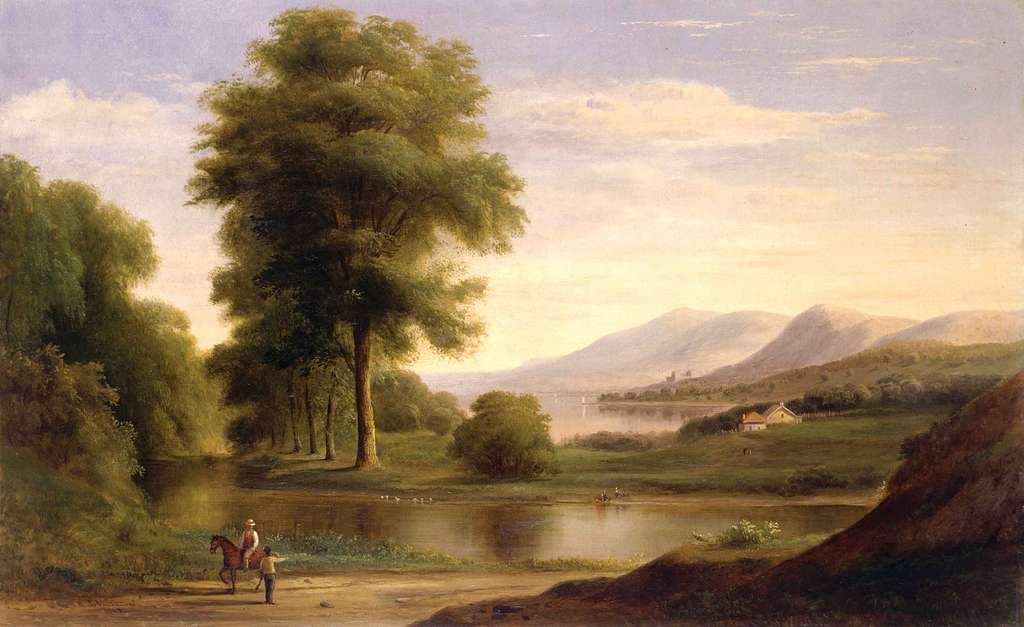
Robert S. Duncanson – Meeting by the River (1864)