Haiku by Martina Matijević, Anthony Lusardi, and Paul Callus

dusty teddy bear   
brushing off   
my childhood 


Martina Matijević (Croatia)  

Commentary from Hifsa Ashraf:

This haiku evokes a tender yet bittersweet moment of reconnection with the past. The “dusty teddy bear” serves as a symbol of childhood, once cherished, now forgotten, or stored away. Dust here is not just physical but metaphorical, suggesting the passage of time and emotional distance where one may have fading memories of childhood.

The middle line, “brushing off,” is beautifully ambiguous, yet letting the person find some clarity into their childhood. It implies a physical act where cleaning the toy hints at revisiting or even confronting long-buried memories. There’s a subtle emotional movement in this line: care, nostalgia, and perhaps a trace of reluctance. This is how one reverts back to their past life with a little bit of effort and time.

The final line, “my childhood,” brings a sense of closure. The teddy bear becomes a gateway to personal history, and the speaker, by brushing it off, also dusts off a part of themselves. The haiku captures a universal experience, how a small object can unlock an entire era of feeling. It’s delicate, reflective, and deeply human.

Lastly, the sound of consonants b and d in this haiku strikes deep yet strong feelings that might have brought back some vivid memories of childhood.

blind date
a wildflower                           
my app can’t identify

Anthony Lusardi (USA)
Prune Juice, August issue, 2025

Commentary from Nicholas Klacsanzky:

The senryu opens with “blind date,” situating the poem in the modern social world. It’s also a circumstance that many of us can identify with. Usually, “blind date” senryu have elements of humor. So, as a reader, I immediately expected a comical twist.

The second line introduces “a wildflower”—a counterpoint to the digital world referred to in the third line. The wildflower symbolizes something growing outside expected boundaries and a sense of freedom. In traditional haiku aesthetics, a wildflower often embodies sabi (rustic beauty), yet here in this senryu, it is employed in a playful way where the poet’s date is implied to be a “wildflower,” and notes how romance or love is often indescribable.

The closing line captures the tension between technology’s attempt to categorize the world and the irreducible mystery of human connection. There’s an irony in our dependence on apps to “know” what’s what—even as what truly matters (the person on the blind date) resists such identification.

Overall, the humor is understated—a hallmark of senryu—but carries emotional resonance. Beneath the joke about the app’s failure is a quiet longing for authenticity, for something not optimized or labeled.

Checking in on the sense of sound, the w and f sounds give both emphasis and a wispy feeling to the poem. With the format, the last line is long, yet it is not an issue since not only is this a senryu (which doesn’t focus on format much), but the line breaks seem natural.

Ultimately, I chose to comment on this senryu because of its mixing of technology, romance, and playful use of nature. I was happy to see it appear in the prestigious journal, Prune Juice.

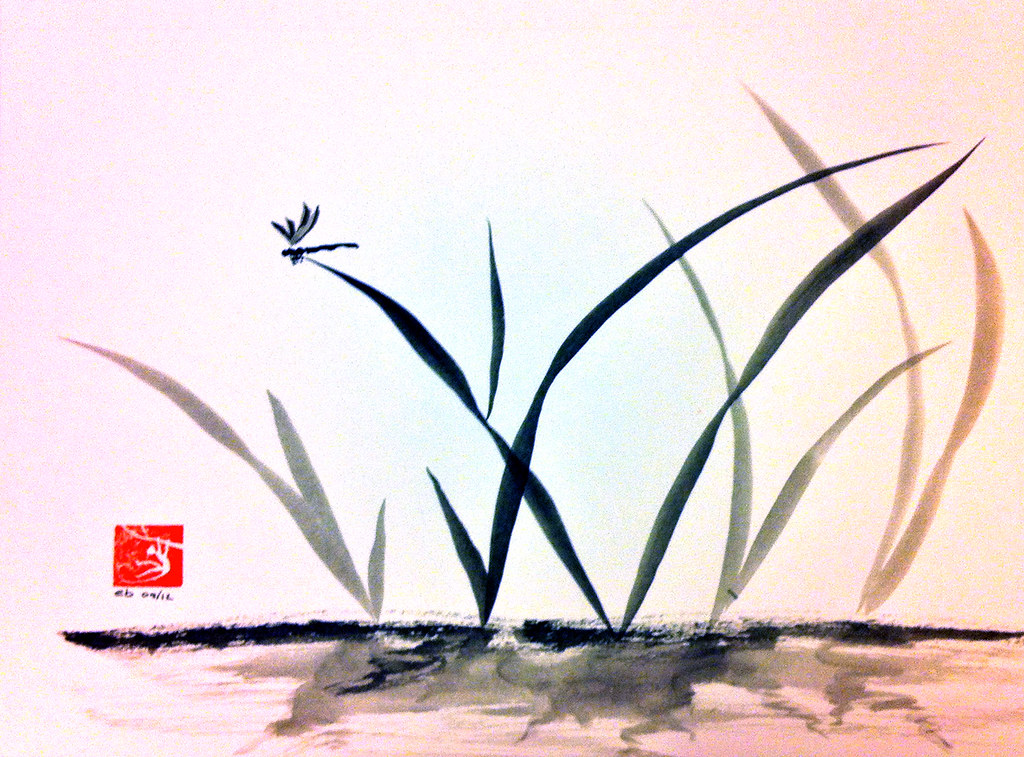
monsoon rain
over the paddy fields
a flight of dragonflies


Paul Callus (Malta)

Commentary from Jacob D. Salzer:

This is an interesting haiku that shows the after-effects of a monsoon in the paddy fields where rice is grown. According to the National Environmental Satellite, Data, and Information Service: “A monsoon is a shift in winds that often causes a very rainy season or a very dry season. Although monsoons are usually associated with parts of Asia, they can happen in many tropical and subtropical regions – including several locations in the United States. Monsoons are caused by a change in the direction of the wind that happens when the seasons change. In fact, even the word monsoon comes from the Arabic word mausim, which means ‘season.’ At the beginning of summer, the land warms up faster than bodies of water. Monsoon winds always blow from cold to warm. In the summer, warm air rising off the land creates conditions that reverse the direction of the wind.”

In this haiku, the extreme weather of heavy monsoon rains is contrasted with the silent and delicate flight of dragonflies. Traditionally, dragonflies are an autumn kigo (seasonal reference). The flight of dragonflies could symbolize a human migration, i.e., perhaps the farmers in the paddy fields are also temporarily migrating due to the heavy rains, as summer fades into autumn.

On the other hand, according to the World Population Review: “The most common method of cultivating rice involves flooding the field, a practice typically carried out in what’s known as a rice paddy. This helps water and protect the plant from vermin and disease.” Therefore, the monsoon rains can help cultivate rice, though it’s more difficult to work in the paddy fields during the downpour.

Despite the potential melancholy interpretation relating to the autumn kigo, I can’t help but feel hope, courage, and resilience in this haiku: even in the heavy monsoon rains, the dragonflies are flying together. I think the plural form of “dragonflies” is special because I normally only see one dragonfly at any given moment. While there are likely two dragonflies in this haiku, it could also be enjoyable to imagine several dragonflies flying together.

In short, this is a significant haiku that shows resilience, a seasonal shift, and offers a portal into the lives of farmers who work tirelessly in the paddy fields to grow and cultivate rice. More interesting facts about rice can be found on the World Population Review website.

Painting by Ernest Barbaric

Haiku by Pat Davis, Anthony Lusardi, and Martina Matijević

beach stone
some of the worry
already gone

Pat Davis (USA)
The Heron’s Nest, #44, December 2024

Commentary from Jacob D. Salzer: 

I appreciate how the image of a beach stone can be a metaphor for letting go. In this haiku, we don’t know what the poet is worried about, but the beach is a place where worries seem to disappear and fade into the background. I can feel the weight of the beach stone and hear the pulse of ocean waves. Along these lines, the beach and the vast ocean can create a relaxing atmosphere where we can embrace the space between thoughts. At the same time, the ocean can allow us to see “the big picture” where our worries can be seen from a deeper and different perspective. I think this is very important to do because we can step outside our small sense of ego and see our place on Earth and within the larger cosmos. I also appreciate how this haiku is relatable from reader to reader. It seems most people have their own worries that come and go. I deeply appreciate how the Earth herself can calm the mind and help us reflect. This haiku shows us this power. 

In short, this haiku shows the inherent healing power of Nature without overly explaining it. It includes a balance between concrete imagery and mystery. While this haiku is personal, it is also relatable to many readers with different backgrounds and circumstances. In the end, I think we can all benefit from learning how to let go. A powerful haiku.

dry summer
a spider web full                   
of fireweed seeds

Anthony Lusardi (USA)
Frogpond, 48:1, winter 2025

Commentary from Hifsa Ashraf:

The haiku speaks for itself in terms of its theme and imagery. Climate change is a topic that should be highlighted time and again through any platform or medium as a reminder to the world that it is a serious issue.
 
The kigo in the first line ‘dry summer’ gives a vivid image of both time and season. I see it as if there is a drought with a drastic impact on nature. It seems the poet talks about a rainless time when the rain is needed the most. But, it still doesn’t give us a clue of the time period i.e. is it rainless for long or short? But, I like the way the poet uses an aesthetic sense to observe the beauty of nature even in hard times. 

A spider web can represent mystery, confusion, hopelessness, or abandonment where probably no access is given to any being. I wonder if the spider web is inside or outside a building, in an open field, or in a garden/farm, etc. There is no such clue of the location which makes this haiku open for interpretation. 

Fireweed seeds in the last line add to the interest in this haiku as seeds may stick to the spider web as a result of pollination, wind, storm, or any other source. But, in any case, these seeds have no chance to germinate as they may not be on the ground or in a favourable condition. At first look, the spider web full of fireweed seeds may sound like a period of hopelessness, drought, or lifelessness. However, fireweed can symbolize rebirth, resilience, and hope. But, the word ‘full’ instead of ‘stuck’ or ‘cling’ gives me some hope that maybe, one day these seeds may survive and fall on the ground or a suitable place to grow. The article ‘a’ and the word ‘full’ make it simple to interpret without digging more into the various aspects of this imagery. So, I see both hopelessness and hopefulness in this haiku. I see the resilience of nature in extreme or unfavourable seasons. I see life in a lifeless situation. I see the impact of climate change on nature and the way nature responds to it by trying to survive and preserve its elements. 

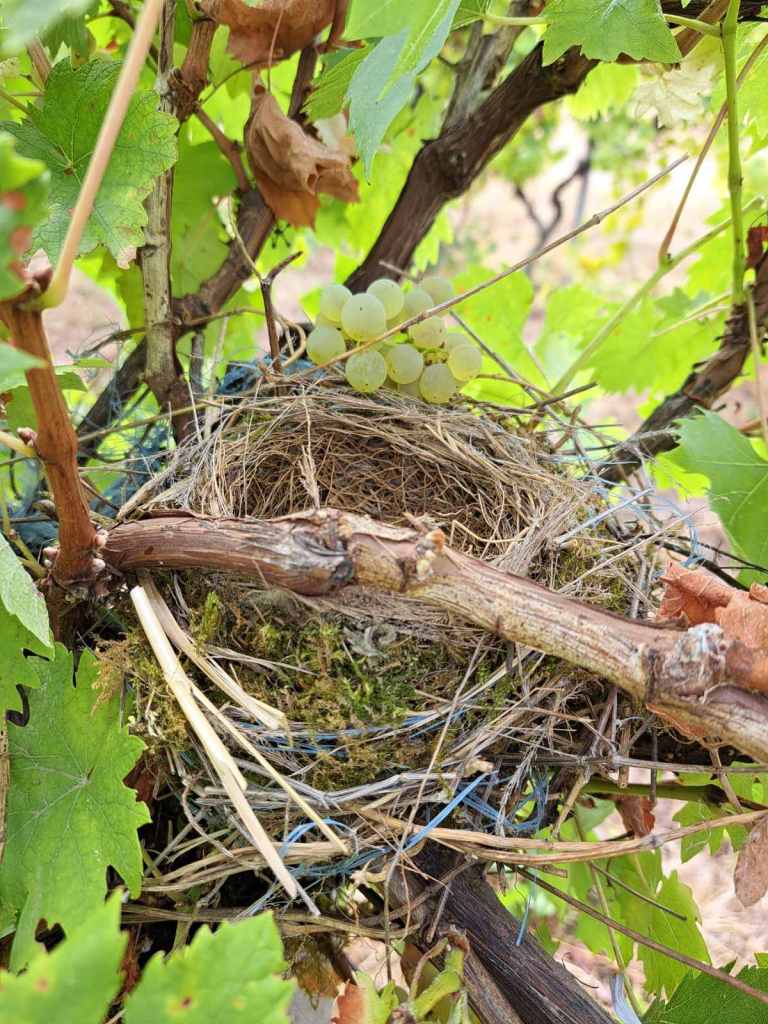
grandma’s old vineyard 
amid dense branches 
an abandoned chick

Martina Matijević (Croatia)

Commentary from Nicholas Klacsanzky:

The contrast between the chick and the old vineyard is striking. The word “abandoned,” though, can pertain to both the vineyard and the chick. From the first line, I assume the poet’s grandma has passed away and has essentially been abandoned. Looking at the second line, it is a pivot which connects to the first and third lines. If the first two lines are read as one whole, it could be saying that the grandma’s old vineyard is “hiding” or obscured amid dense branches. If the last two lines are read as one part, the chick appears amidst the branches. It’s always a plus when you can read a haiku in multiple ways.

A kigo or seasonal reference is not quite apparent. However, the mood of the haiku is at once bleak and hopeful. There is sadness in the deserted nature of the vineyard but an optimism in the new life that has inhabited a derelict space. It feels like the baby bird is a reincarnation of the grandma or a continuation of her life.

Looking at the format, it is interesting that each line is an equal five syllables each. I am not usually a syllable counter in haiku, but I noticed how each line was about the same length. Commonly, the haiku rhythm in English is a short line, a long line, and a short line. There is nothing wrong with changing up that rhythm, though. Each haiku is organic and requires a different pacing.

Sonically, the strongest letter in this haiku is perhaps “d.” In my opinion, it provides weight to the poem and the scene itself. The other letter that interests me in this haiku is “b,” which also creates accents of strength or gravity

To wrap up, this haiku connects the poet’s experience to the animal/natural world seamlessly. The haiku also features a fine sense of sound, a unique rhythm, and multilayered imagery.

Photo credit: Martina Matijević

Haiku by Anthony Lusardi, Douglas J. Lanzo, and Minh-Triêt Pham 

soft orange leaves—
how weightless she feels
in my arms

Anthony Lusardi (USA)
Dedicated to Remi June
Presence, issue #79, July 2024

Commentary from Hifsa Ashraf:

The open line allows me to pause for a while as it reflects a unique yet subtle side of autumn. Soft orange leaves make me think of not only the texture of leaves but also the time as well which raises some questions i.e. are the leaves soft because they are wet either due to dewdrops or raindrops? Are they on the ground or half-buried? Are they still hanging from the tree or stuck in the branches? What orange colour is it? The em dash makes the leaves significant in this poem but there is still a mystery about the details. 

The second line is a shift from nature to personal sentiments, where the poet creates a unique bond between the transformation of nature and personal thoughts and feelings. ‘How weightless she feels’ could reflect weakness, withdrawal, hopelessness, prolonged illness, near-death experiences, or a lack of interest. It seems the person is not feeling well and is ready to depart like soft orange leaves that are open to be annihilated or buried. The word ‘feels’ perhaps alludes to the poet not being sure about their feelings or the real state of mind of the person. The poet is sharing emotions or anticipating the future of this relationship that may be guessed from nature where orange leaves are destined to die. It is sheer hopelessness and readiness to accept the bitter reality of detachment and departure of a loved one. 

The last line shows the significance of the poet’s association with the person being mentioned where he tries to be protective and supportive, providing comfort to the person at this stage. 

This haiku is a beautiful example of a strong and subtle bond between nature and humanity. I liked the way the poet used a specific colour of leaf to project his thoughts and feelings and also left room for others to relate their life experiences with such examples from nature. 

call to prayers
the vastness
of domed desert

Douglas J. Lanzo (USA)

Commentary from Jacob D. Salzer:

An interesting juxtaposition between sound and silence, and between the limited body & mind and the vast desert. This haiku could perhaps have a kind of haunting quality. How many of our prayers are answered? Perhaps the deep silence of meditation is the highest form of prayer. From one editor’s view, my only suggestion would be to consider adding “a” before “domed.” An interesting haiku that leads us into contemplation and a deeper silence.

frosty dawn —
the metallic taste
of her lipstick

Minh-Triêt Pham (France)

Commentary from Nicholas Klacsanzky:

The first line sets the kigo in either winter or late autumn. Frost commonly looks lovely at dawn, with the sun slightly touching it and making it glitter in soft light. Yet, it can also be a reminder of a harsh reality.

This dual tone in the first line is juxtaposed with the irony of lipstick having a metallic taste. Though the last two lines are romantically inclined, there is also a touch of alarm. A lipstick with a metallic taste could indicate the presence of metal-based pigments that might not be healthy. The metallic taste could also be a sign of myriad medical issues, such as diabetes, liver issues, cancer, and more. So, the juxtaposition could be saying that a frosty dawn could be the same or similar to kissing your partner and having a metallic taste to something usually regarded as romantic. All this makes for an intriguing toriawase.

Looking at the more technical side of this haiku, the poet uses a dash as an approximation of a kireji. For me, it solidifies the seriousness and starkness of the moment. The euphony of this haiku is also important, in my opinion, with the letter “t” making a crackling sound and the letter “l” projecting strength. The haiku is also written in a rhythm corresponding to traditional Japanese standards with its short/long/short structure. Finally, the simplicity of language and brevity displayed matches the tradition of the genre.

Overall, I enjoy how the poet takes two “ordinary” events and compares them to create a “third part” of the haiku, where our imagination conjures myriad meanings that are personal yet connected to nature.

Royalty-free art without artist name


Haiku by Michael Shoemaker, Anthony Lusardi, and Richard L. Matta

morning campfire smoke
curls and rises above pines
meadowlark’s sing-song

Michael Shoemaker (USA)
Under the Bashō, June 24, 2024

Commentary from Hifsa Ashraf:

The first line of this 5/7/5 haiku tells us the time and space where one can directly imagine the whole scene before going into the details. A morning campfire can be used for warming the ambience, a get-together, cooking, etc. In any case, a campfire usually is a sign of lively activities. Adding smoke makes this haiku a bit more profound and mystical. Is it just smoke and no fire? Does it happen before or after the fire? 

The second line is more focused on the details of the smoke, curling and rising above the pines. This leaves our imagination to run wild and to think of the shape, structure, intensity, and smell of smoke. The second line could be about how smoke overshadows nature. It may be a sign of air pollution adding toxicity to the pines, which is a symbol of purity.

The meadowlark’s sing-song could be a sign of alertness depending on the pitch. For me, it may be more like a complaint or a reaction to smoke/pollution—probably in the form of a sad melody we commonly ignore. The other aspect to consider is how nature responds to our acts of toxicity with sweet melodies. The meadowlark’s song demonstrates resistance and determination in the form of music and voice.

This haiku, in its simplicity, describes a story of our actions to spread pollution and toxicants and nature’s response to it.

gloaming . . .
a spider clings to                
her egg sac

Anthony Lusardi (USA)
tsuri-doro, issue #19, Jan/Feb 2024

Commentary from Jacob D. Salzer

“Gloaming” means twilight or dusk, but it can also mean sullenness and melancholy. I appreciate how this haiku shows a mother’s love and protection with the verb “clings” and the egg sac. The mother spider is protecting her eggs from something or perhaps many things. We don’t know what dangers might be present for the spider and her eggs, which opens the door to our imagination. Dusk or twilight effectively sets the mood and atmosphere of the poem, as light fades into darkness. With that in mind, this haiku might have a somewhat haunting atmosphere as what is visible becomes invisible, yet there is still enough light for the poet to capture this moment. As the night deepens, we enter the Great Mystery. In short, this is an effective haiku that gives us a glimpse of a mother’s love for her soon-to-be children, which can apply to other creatures, insects, and mammals as well.

pinewood derby
still missing the weight 
of dad’s touch

Richard L. Matta (USA)
1st Place Senryu, Kaji Aso Studio, 35th International Haiku Contest 2024

Commentary from Nicholas Klacsanzky:

This senryu tapped into my memories, as I participated in pinewood derbies when I was a young lad with my father. More than that, this senryu uses the word “weight” effectively to have a double meaning of the physical weight of the cars and the emotional/spiritual weight of a father’s presence. “Missing” could imply that the poet’s father has either passed away or is out of contact—leaving that justly up to the reader to interpret.

I also enjoyed the sound in this senryu, with the letters “o” and “w” prominently featured. The instances of “o” contribute to the senryu being slowed down and savored, whereas “w” manifests an airy feeling to the poem. In my opinion, both of these attributes complement the context in which the senryu is written. Lastly, the senryu is efficiently written with only nine words, simple language, and excellent pacing in the line breaks. It is clear why this senryu won an award: it not only resonates with readers effortlessly but also demonstrates a keen understanding of the technical aspects of senryu.

Illustration by Louis Agassiz Fuertes of an Eastern Meadowlark (Sturnella magna), from The Burgess Bird Book for Children (1919)

Poems by Kelly Sargent, Marc Brimble, and Anthony Lusardi

fallen acorn renewing our vows

Kelly Sargent (USA) 
Frogpond, issue 47:1, winter 2024

Commentary from Nicholas Klacsanzky:

The way the word “renewing” works as a pivot to create different readings is spectacular. I think the monoku could be read in at least three ways: “fallen/acorn renewing our vows”; “fallen acorn/renewing our vows”; “fallen acorn renewing/our vows.”

The contrast between “fallen” and “renewing” creates a powerful link. Acorns are also often used as symbols of rebirth, and the monoku could be personifying it. In addition, I enjoy how the kind of vows that are being expressed is left up to the reader.

Finally, the train of “n,” “o,” and “w” sounds makes this haiku sonically pleasant. The poem begins with harder sounds and ends with softer tones. With only five words, the poem has much euphony and meaning.

waiting for confession
I notice
The Virgin’s thigh

Marc Brimble (Spain)

Commentary from Hifsa Ashraf:

The opening line of this haiku is personal and well thought out. It seems the person is going through the process of reflecting on what went wrong in their life. The mistakes bother the person but at the same time, there is no sort of hesitation, conflict, or confusion in obtaining a confession. The question is: “Is it a big confession?” “Is it someone’s first confession?” “Is it a self-motivated confession?” “Is it a forced confession?” In any case, the one who will confess is taking time to think about it.

In the second part of the poem, there is a surprising element of moving from spiritual to worldly desires. It may imply that the person will confess something about yearnings or an intimate relationship. Nonetheless, their thought process is oscillating between what is seen and what is not, what is more significant and what is less, what is right and what is wrong. It seems the person is being distracted from a symbolic meaning of life by worldly desires and is not yet ready for a deeply felt confession. 

within its web
within a hollow stump
a grass spider                      
feels the earth
and all its vibrations

Anthony Lusardi (USA)
Ribbons, Spring/Summer issue, 2022

Commentary from Jacob D. Salzer

The clear imagery and the perspective from the spider’s point of view make this a strong tanka. The web could be seen as a symbol for the web of life. I appreciate how this tanka reminds us of the interconnectedness of life and the impact we have on Earth and her creatures. The last line also opens up many possibilities as we imagine the different vibrations. When I read this tanka, I feel compassion for the spider. There could also be metaphorical interpretations in the first two lines. Ultimately, I think this tanka reminds us to be more mindful of our actions. I believe this is an important, ecologically-based tanka that inspires compassion.

Nefflier a gros Fruit. Original from the Minneapolis Institute of Art. Dated: 19th century ; Artist: Michel Bouquet ; Nationality: French ; Artist Life: 1807-1890.

Haiku by Anthony Lusardi, Charlotte Jung, and Marjolein Rotsteeg

green caterpillar
             carried by black ants
                                          to the colony

Anthony Lusardi (USA)
Seashores, issue #8, 2022

Commentary from Jacob D. Salzer:

I appreciate this haiku for a few different reasons. On first read, this haiku gives us a real glimpse of the remarkable social intelligence and physical strength of ants. They truly live and work as a community versus a focus on individuality, and by doing this, they accomplish far more tasks than any individual could do alone. Yet this haiku is also showing a stark and swift movement between two worlds. The presumably (and mysteriously) dead caterpillar died prematurely and did not reach metamorphosis to become a butterfly. As a result, the ants now claim it as their own. In parallel with the ant’s colony, it seems colonialism has hindered the spiritual development of our human potential, partly by seeing Nature through a very limited lens to maximize industrial and financial gain, which creates a blind psychological separation and destroys much of life on Earth in the process. When I read “colony” in this haiku, I think of the inherent dangers of pride and group conformity that ignores the critical importance of diversity. On the other hand, when I see a single dead caterpillar, I think of the dangers of extreme individuality. In the end, it seems finding a balance between group/community activities and individual endeavors is important.

While I understand the importance of an interdependent community, I also see this haiku as a warning to not conform to the superficial materialistic values of collective Capitalism because it ignores our spirit and obscures a true sense of belonging. In short, I think our human species is in dire need of a spiritual and cultural metamorphosis or transformation. Hopefully more people will be willing to change their views and lifestyles, embrace diversity, re-commune with the Earth, and align with our deeper Spirit of love and compassion before it’s too late. This is a powerful haiku with multiple interpretations and deep meaning.

on the pond
a film of ice
a leaf’s pirouette

Marjolein Rotsteeg (The Netherlands)
Japan Society ‘haiku of the week’, week 48, 2023

Commentary from Hifsa Ashraf:

This haiku suddenly captured my attention as I visualized the scene. It’s a wabi-sabi moment. I liked the way the poet blended two of nature’s elements and brought them close together like a juxtaposition. The pond looks like a stage where a film of ice (with a unique structure and position) made the poet see it beyond seeing. This presents creative imagery where a leaf pirouettes on patterns of ice. It must be a sudden frost or an unpredictable change in the weather where everything in nature is frozen and still. I see how certain changes in nature pause the ongoing movements of transformation.

During the pause, let us think creatively! It’s a challenge for our imagination to see things as they are or to take that transformation as something more beautiful, delicate, and subtle. At that time, one can use their energies positively and find solutions in a creative and unique way. 

The elevator and me

building

emptiness

Charlotte Jung (USA/Sweden)
Haikuniverse, 2020, and also in “Haiku 2020,” Modern Haiku Press

Commentary by Nicholas Klacsanzky:

There are several interpretations of this haiku that one could perceive, but first I want to appreciate the use of space between the lines to create a sense of emptiness. It’s a visual aspect that adds more to the haiku effortlessly.

This poem gets us thinking about what emptiness truly is. Thinking about emptiness being built is quite a philosophical exercise. But, I believe in various spiritual traditions, emptiness is not quite like the physical emptiness expressed in science. And, in this haiku, I lean towards the poet thinking along the lines of those spiritual traditions. With this context, an elevator, a part of the industrial world, building a sense of emptiness with a person is profound. Though the elevator isn’t sentient, it can inadvertently generate a spiritual emptiness for the person(s) inside it.

Another take is that the poet feels one with the elevator during the ride up or down and that the building feels or appears empty in this highly focused moment. It is an illustration of a Zen moment or being “in the zone,” where surroundings fade away and hyper-attentiveness ensues.

Though the haiku does not have a seasonal aspect, I believe the connection it shows between the natural (person) and artificial world (elevator) creates a haiku aesthetic. Emptiness is also a traditional Japanese artistic principle, which can relate to yohaku no bi or ma.

Finally, some notes on the sound and pacing. Most haiku in English do not begin with a capital letter but it does not distract too much in my eyes. The first line is longer than the last two lines, where the minimalism lends to more interpretations than if matters were spelled out in more verbose language. For the sound, the letter “e,” and its corresponding sounds in “i,” give the poem a greater feeling of lightness that connects with the theme of emptiness.

Brush drawing by Cornelius Markee, circa 1763

Haiku from Susan Yavaniski, Anthony Lusardi, and Jahnavi Gogoi

bitter cold
a streetlight shining
on his pillow

Susan Yavaniski (USA)
Polish International Haiku Competition 2022 Commendation 

Commentary from Jacob D. Salzer:

I appreciate the mystery (yugen) in this haiku. The pillow could belong to a homeless person who lives on the street. However, I think the streetlight is shining through the window onto his pillow. In the latter interpretation, the word “bitter” leads me to think the husband or the poet’s son is absent or has passed away. I appreciate how there is room for interpretation left to the reader. The coldness of this haiku comes through strongly with vivid imagery. This is a powerful haiku that I think many people can relate to.

for the next hiker
at the trail’s entrance
a walking stick

Anthony Lusardi (USA)
Acorn, Issue #49, Fall 2022

Commentary from Hifsa Ashraf:

I see here a deep and inevitable connection between humans and nature. “For the next hiker” may or may not indicate every hiker. I see it like every hiker needs some assistance when they explore nature, whether they have special needs or not. As the path to explore nature is not easy, one’s needs assistance to hike and climb difficult peaks and terrains. A walking stick may be from a tree which plays a supporting role for hikers. So, it’s more like a give and take relationship between humans and nature. 

I see another aspect of this haiku which is life itself. It may reflect old age where when you enter that path, you depend on others or things to support you. I see a walking stick as a support or assistance that one needs as a senior. The word “hiker” may indicate the difficult path one has to face due to the constraints or limitations of an advanced age. The use of articles in this haiku leaves some space for the readers to relate it to their own life experiences. 

under the aurora borealis 
each whisper 
a cloud

Jahnavi Gogoi (Canada)

Commentary from Nicholas Klacsanzky:

This haiku captures the wonder of the aurora borealis well. Haiku often promotes the sense of awe that keeps us childlike and enjoying life—even its smallest moments. In the scene of the poem, above is the spectacle of the aurora borealis, and below is the remarkable observation of each whisper of the witnesses of the aurora borealis becoming a cloud. It provides me with gratitude for each happening, as everything that unfolds can convey beauty in its own way. There is also the image of tiny clouds blanketing the view of the aurora borealis for a second, inferring that even a tiny action can have a potent effect.

Looking at the haiku more technically, the shortness of the third line manifests the quietness of the moment. The “r” sounds in the first two lines of the haiku also add to the quietude of the scene, in my opinion. The soft “o” in the last line continues this feeling. The season for this haiku is somewhat clear, as the aurora borealis appears usually in spring or autumn. However, with the breath clouds, I would suppose the season is autumn. In autumn, each living and non-living being is more noticeable and precious due to the sparseness of the environment. In this spirit, I think the poet made the observation about the breath clouds, which could be said to connect to the aesthetic of wabi-sabi. In turn, we witness as readers spectacles above and below, remembering that our world is indeed a wonderful place.

By Sephiroth