(previously published in Heliosparrow Haiku Journal, March 2021)
Commentary
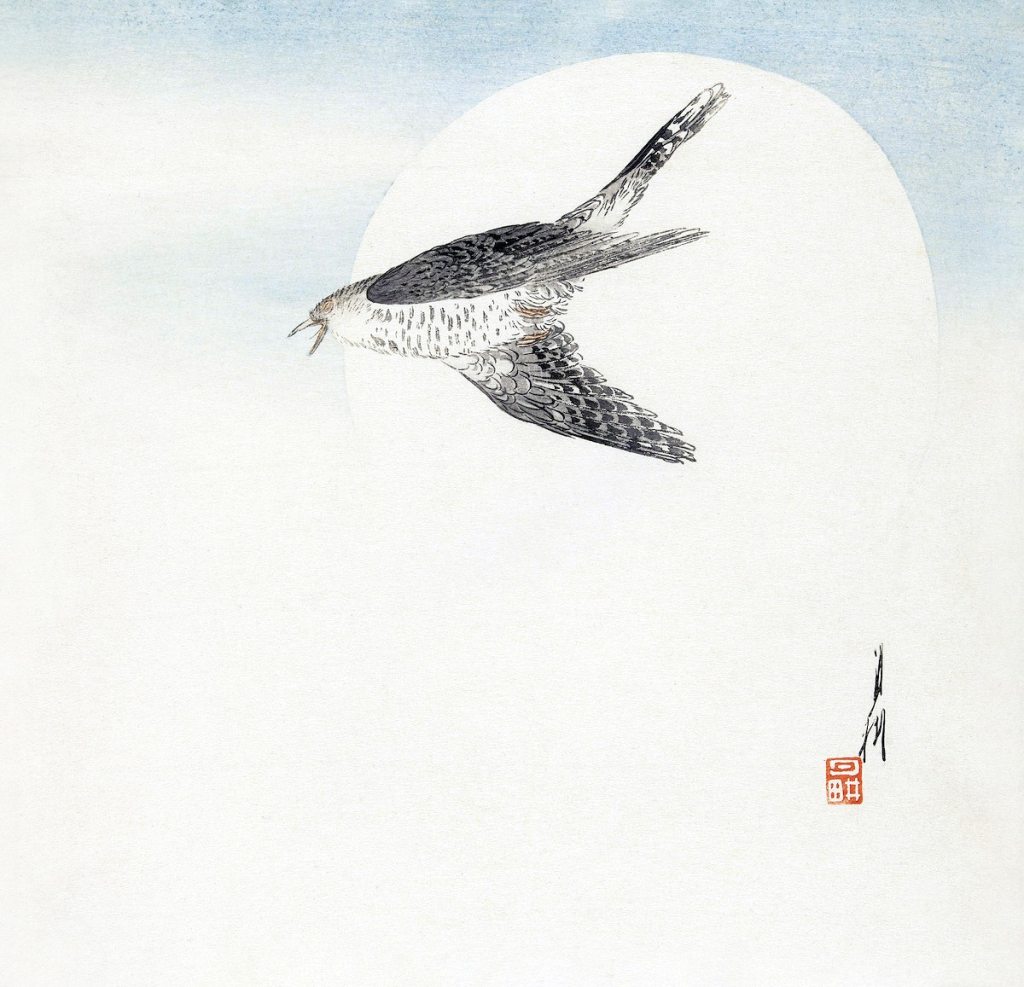
I appreciate the synesthesia between sound and imagery in this monoku. “wood-deep echo” harbors a deep silence that is beautiful, mysterious, and almost haunting. I also visualize the cuckoo’s song resonating with the rings hidden inside trees. This creates a sense of harmony where the cuckoo and the forest have become one. I can hear the cuckoo’s song and echoes resonating within the poet’s quiet presence as well. I experience this myself as I read this too. I am transported into the scene. I can imagine the cuckoo’s song creating ripples in consciousness itself and perhaps simultaneously extending into past lives and the future.
This is an excellent monoku with depth, meaning, and a strong atmosphere.
This monoku has a series of variations that make it dynamic and deep. I read it in many ways to get the layers of various themes that the poet tried to discuss.
It starts with ‘again’ which means there is a repetition of whatever is following it. It also shows the curiosity of the person who is passing through the same experience again and enjoying it fully.
The wood-deep echo may allude to memories, news, imagination, or illusions that a person feels or listens to due to deep silence, meditation, or wind. However, it seems the person has a deep connection where they want to hear what is pleasant to the ears or what is more distinctive than other voices. This also reflects a state of mind that is calm, still, and focused. A cuckoo’s song refers to something special—like in Indian mythology, a cuckoo’s song is related to the beginning of the monsoon season.
Overall, it is a deeply personal experience of a moment that connects the person with what is going on and what is coming after. It also signifies the relationship between nature and human nature that is tightly woven with the senses. I see it as meditative where a person tries to attune to the cuckoo’s song which brings joy in their life sooner or later.
As Hifsa mentioned, the cuckoo’s song is commonly a harbinger of the monsoon season. Since the poet is from India, this can be said to be a kigo (seasonal reference) local to this country. Traditionally, the cuckoo is a kigo for about every season in Japan and a beloved bird of that country. A famous haiku magazine in Japan is named Hototogisu (cuckoo), which started in 1897.
There is no kireji, or cutting word, in this haiku. However, there is a grammatical pause after “again” which makes the haiku either two parts or one. In the English language, kireji are not commonly used in one-line haiku.
Even though there is only one image at face value, there are two considering the word “again.” The depth and ethereal nature of the cuckoo’s echo is repeated with all of its richness. The echo is wood-deep perhaps because some cuckoos nest inside trees. This richness of sound, when repeated, can bring about a sense of bliss and spirituality. The song is also a union of tree and bird, which makes it even more robust.
Kala Ramesh’s haiku often showcase euphony, and this monoku is no exception. The soothing “o”s and soft “n”s create a melodic reading—as if the cuckoo was singing through the haiku.
This haiku has a timeless feel to it, as I feel it can be read in any era and can resonate. A classic, yet modern work.
notes trickle down a riverbed of sand … the memory of water
— Kala Ramesh (India) (Highly Commended, Santoka International Haiku and Haiga Contest)
Commentary
This is one of my favourite haiku. It is well crafted with all the necessary flavours of a great haiku that touches all the senses. I loved the way Kala used personification or a hint of surrealism, which lets our minds wander through this imagery and dig deeper into the theme of this haiku.
‘Notes trickle’ is rhythmic and musical to my ears. While reading, I paused for a moment and enjoyed the subtle and soothing sound of water. We all hear the sound of water daily but only a few of us truly listen to it and enjoy the sense of here and now where nothing else matters. It takes us further to the unseen part of this haiku where ‘trickle down’ allows the sound, message, or piece of music to be absorbed into the memory of a riverbed. This is how a haiku connects us to what is ‘beyond seeing’.
A riverbed of sand is the abode of many tiny creatures. It seems its water sings a song or a lullaby for the dwellers of the riverbed. It’s the sound of water that subtly captures the pulse of wind, rain, sunlight, moonlight, or the environment and transforms it into something that only active listeners can feel and hear.
The memory of water could mean a sort of live recording of the true essence of life, where even harsh weather or climate change can’t stop water from singing its songs. There is a lesson here for all of us to see how powerful the language of music is, which nature speaks every day to inspire us to sing along or at least appreciate. It’s a true blessing. Nature never ceases to connect with us through the language of its sound. With memories, we have sound, and it is important to recall the most positive of memories to transform our lives.
I can’t ignore the mystical or meditative side of this haiku. To me, it’s about mindfully focusing and observing every single moment of nature. This helps us to be crystal clear in our thoughts and soothe our minds with music—the most powerful language. If I were there, I would be like a whirling dervish who enjoys every single beat of water and synchronizes my feelings and thoughts with it to show the wholeness of the universe.
I appreciate how the first line of the haiku focuses on the sound of water, without saying water outright. The water could be rain, or it could be the slow resurgence of a river that was dried up during a drought. This haiku may be depicting challenges due to climate change or perhaps depict a scene in a desert. If this is a drought and/or in a desert, I feel a sense of desolation and a stark sadness at the sheer lack of water. However, the verb “trickle” has a gentle and natural quality that brings me hope and eases the mind. The first line also leaves room to imagine notes from a musical instrument or perhaps we can hear notes from a bird singing. Even though this is a more abstract interpretation, I appreciate how the musical notes can synchronize with the water’s sound in my mind’s eye.
The second line focuses on the bottom of a river, which we often don’t see, either because of the river’s depth or, unfortunately, due to water pollution. In this haiku, the sand made me visualize a riverbed by the ocean. The riverbed provides a channel for the rain to flow into the sea. As a river loses its shape and merges into the sea, similarly, it seems the individual soul (Jiva) is ultimately on a quest to reunite with universal Divinity (Shiva).
If this riverbed of sand is in a tropical forest by the ocean, I appreciate how the water in this haiku merges and dissolves into the sand and the unseen depths of the Earth, into unseen roots and fungi networks. There is an infinitely complex matrix that unites a forest and life underground that is nourished and powered by water. Here are two excellent interviews on this subject published in The Sun magazine: Hidden Worlds | By Mark Leviton | Issue 545 | The Sun Magazine and Going Underground | By Derrick Jensen | Issue 386 | The Sun Magazine.
The last line of this haiku has profound depth and universal power. All of life on Earth depends on water. Through the lens of biochemistry, our human bodies are 60-75% water. A person can survive one month without food but wouldn’t survive three days without water (Biological Roles of Water: Why is water necessary for life? – Science in the News). Unfortunately, over 600+ million people on this Earth don’t have access to clean water (Clean Water – Our World in Data). Focusing on the memory of water seems to relate to how water can change forms and disappear throughout eons of time, whether that’s mist evaporating or rain soaking into the Earth. Approximately 71% of the Earth is covered in water. According to one article, “Research funding partly by NASA has confirmed the existence of liquid water on the Earth’s surface more than 4 billion years ago” (NASA – NASA Scientist Confirm Liquid Water on Early Earth). With this in mind, the memory of water reaches far into the ancient past, into the history and birth of this Earth. At the same time, the memory of water in this haiku expresses just how precious and vital it is for our future.
A powerful haiku with musical overtones that revers and honors the miracle of water.
When I read this haiku, I saw two interpretations: the wind running through a dry riverbed and creating sounds similar to the trickling of water. The second interpretation was that the poet saw the riverbed of sand and projected the music of water onto the scene. This is quite interesting because it illustrates that through our memories, what we perceive is often filtered by our past. It brings a sense of sadness that the only music we hear from the riverbed is from our minds. But on the other hand, it can be positive because it means we can hear beauty through memory even when nature is desolate.
In looking at the pacing of the haiku, we have the standard English-language haiku format of a short first line, a longer second line, and a short last line. This pacing approximately matches the traditional rhythm of Japanese haiku.
The kigo or seasonal reference for this haiku is probably summer due to the dryness of the river. However, the poet resides in India, which has six seasons. It may be in summer (Grishma Ritu), but I am not so knowledgeable about India’s seasons. This haiku might be telling us that even in harsh conditions, our memories can sustain us.
The kire or cut in the haiku happens in the second line with a grammatical shift made in the third line. The poet employed an ellipsis as an approximation of kireji or “cutting word.” The ellipsis seems to show the music being played in the poet’s mind or through the wind. It also symbolizes the continuation of the water’s music being heard despite the dry riverbed.
Since this haiku is about music, it can be expected that the poet has weaved sonic elements into it. The Os, Ts, and Ds stand out the most to me. This creates an interplay of soft and hard sounds, and perhaps this lends to the feeling of the poem being both melancholy and optimistic. When I read the haiku aloud, I hear the softness of the water’s trickle.
Overall, this haiku is a fine example of layered moods and imagery, with musicality in its content and its reading.
Since Kala Ramesh is also a Hindustani classical singer, instead of artwork, here is a video of Hindustani classical music in Raag Puriya Dhanashree sung by Begum Parveen Sultana. I believe it encapsulates the mood of her haiku:
a thousand flutes
from the bamboo forest
summer’s end
– Kala Ramesh (India)
Published in Modern Haiku 48:1. Winter/spring 2017
This lovely haiku takes me back to the East where every single aspect of nature works rhythmically. I love the sound and sight of this haiku. It brought a smile on my face and pulled the strings of my heart.
A thousand flutes could mean a thousand folk stories, a thousand journeys, a thousand years, or a thousand seasons which unanimously take the writer back to those thousands of moments that she has spent throughout her life. These nostalgic feelings stir the current inertia where she is missing her past the most.
I can also feel the resonance of thoughts and feelings that are in great synchronization with nature and brings harmonious and peaceful waves of wind to sooth both the heart and mind. The flute is a great instrument for touching the core of the heart, especially when there is silence all around. So, I can feel the meditative mood of all aspects of nature, including the person that is connected through the rhythm of love and peace.
The summer’s end means, in my opinion, a transformation where one can relate to and reciprocate with the positive vibes that comes on the way. I feel as if the person has achieved the state of mind where she can listen to nature with its true colours and enjoy the songs of love and change.
What I noticed first in this haiku is the pivot line. “from the bamboo forest” connects with the first and second line, so that the poem can be read in two ways.
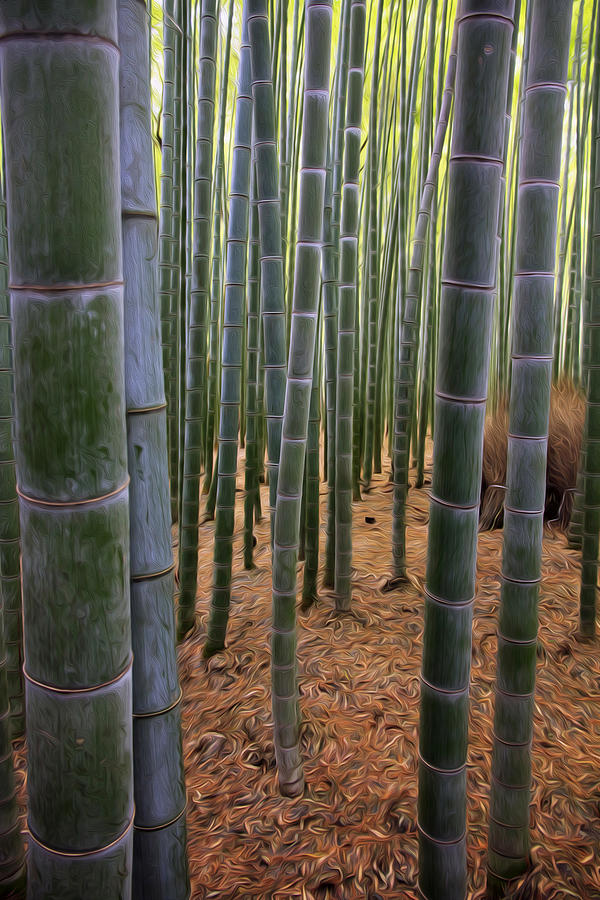
The next thing that came to mind while reading this haiku is the song of the bamboo forest as wind passes through it. It is a wonderful and fitting tribute for the end of summer. Bamboo is light and the music it occasionally makes when wind goes through is soothing, which associates well with the mood of summer. For bamboo to make that sound, it would have to have holes in it or be cut, or perhaps the poet is speaking about people who made flutes from a bamboo grove and are now performing a ceremony or concert. But, I like the idea of spontaneous music from the forest more, as it makes the song for the end of summer even more poignant.
Commonly, the kigo, or seasonal reference, will appear in the first or second line of a haiku. But in this case, having the kigo come in the third line works well, as having the poem finish with the word “end” is fitting.
In terms of sound, the most prominent letters are “o,” “s,” and “f.” Hearing the “o” sounds bring about what is akin to the song of bamboo in wind. Perhaps the “f” and “s” sounds can reflect the music of bamboo leaves flitting in the wind.
The pacing of the lines is similar to the traditional rhythm of haiku and the lack of punctuation allows the pivot line to work its magic.
Though this haiku can be seen as melancholic, the song of the bamboo flutes gives it a sense of joy. It is a fine haiku with a deep mood and strong technical elements. It teaches us that there are extraordinary moments in what seems ordinary and that we should pay attention to our surroundings carefully to witness these special moments.

 Haiku Commentary