Robert Kingston’s Afternoon Sun

afternoon sun
a fly ends the sentence
in the crime book

Robert Kingston (UK)
Bones Journal, 13, 2017

We got an interesting comparison (or contrast?). The fly, so intense and looming on the page of the crime book… and the afternoon sun, blazing and overwhelming. It could be a contrast with the black fly and the bright afternoon sun.

I don’t know if a “crime book” refers to a novel, a non-fiction book about crime, or something that the police use. But that’s part of the fun while reading this poem.

Back to the content: a fly usually comes to dead things, so a fly landing on the page is bringing something tangible to the reading experience of this book. It’s like the fictional and the real world collided at that moment. I think that is the “aha” moment the poet felt. The word “sentence” also has a double meaning: the literal one and the one referring to sentencing in courts.

Breaking down the sound, the long “oo” sounds give a leisurely pace and the “s” letters supply a sharp resonance–a good contrast.

The structure of the haiku/senryu is standard and does fine without any punctuation.

An overall playful and enjoyable haiku/senryu that has a deeper layer if you look close enough.

Nicholas Klacsanzky (USA)

This haiku takes me back to my teenage world where I used to read suspense novels and digests. I liked the way the writer conceived the idea of this haiku about a crime scene but also intrigues me to know more about the whole story.

“afternoon sun” is the time when our thoughts and feelings slow down due to the daytime activities and we want something that can make us relaxed and can rejuvenate our energies. I can feel the sense of getting involved in an activity that engages a person’s mind into something more complex and sophisticated like a crime story.

The fly could be a metaphor for something that bothers us or takes our attention away from what we are trying to focus on. It could be the thoughts of a person or any news or any distraction in the environment that lead us to reveal the mystery on our own or let our experience predict the next part of the story. It may be a point of haste where we don’t indulge in the step-wise process of mystery that is written in the crime book. It is the success of a crime book writer who plotted the story in a way where the curiosity of a person is distracted by the environment or surroundings, and it frequently happens these days.

I miss the reading environment these days where all my senses fully enjoy the book that I am holding in my hands.

Hifsa Ashraf (Pakistan)

If you enjoyed this haiku and commentary, please leave us a comment.
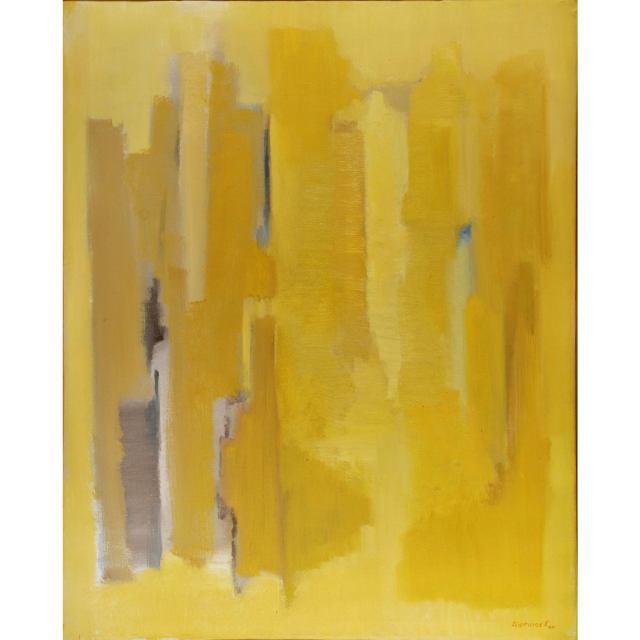
1980-abstract-painting-afternoon-sun-40x50-r-baranet-6740

– painting by Robert Baranet called “Afternoon Sun”
Vandana Parashar’s War Zone

war zone…
no one left to decide
who is right

Vandana Parashar (India)
Cattails, May, 2017

I see two ways readers can interpret this haiku.

1) Both sides of a conflict have sustained great casualties, and ideas of morality are left outside the realm of comprehension.

2) War always engages in violence and in that respect, neither side should be able to decide what is right or wrong.

Both interpretations contain a sense of irony. It is ironic that we try to be moralistic when it comes to killing other people for land, resources, domination, and more.

I feel the ellipsis conveys the tragedy of the circumstance and the silence after an intense battle. The structure is standard, but the chilling “o” sounds strung through the haiku provide a strong impact.

I think this haiku, or even senryu, makes for striking but subtle commentary on the irony and tragedy of war.

Nicholas Klacsanzky (USA)

This poignant haiku takes us not only to the actual battlefield but also to the daily grudges and rows that are mostly endless and bring harmful effects to our lives. I have observed such situations many times in my own life where fights based on egos don’t end just because everyone thinks he or she is right and the next person is wrong.

The first line of this haiku is about a war zone: a zone that is a territory full of danger and harmful effects. The war zone indicates our mindsets and our egos with negative thoughts and feelings that disturb us mentally, physically, and spiritually, that bound us to not see out of the box, that steal our positive energies and act as a slow poison.

When one is in that war zone, one is not able to think or act rationally or logically. This is the level where we don’t go beyond our limited perceptions of the world and relationships, which makes us judge our relationships without having set criteria. We hallucinate about our surroundings and defend ourselves, merely giving reasoning to what is delusional and not reality. We feel that we are right and we justify our point of view with arguments without logic. We live with such delusions all the time which takes us to the comfort level of not being rejected, defeated, or surrendered.

Overall, this haiku is all about our negative attitude towards relationships when we are having trouble handling issues and problems. We end our relationships without even reaching any conclusion about who is wrong and who is right. We have a false self-image and we live with it all our lives and get involved in an endless war that we pass on from generation to generation without reaching any finality.

Hifsa Ashraf (Pakistan)

If you enjoyed this poem and the commentary, leave us comment.

uUBtMiF

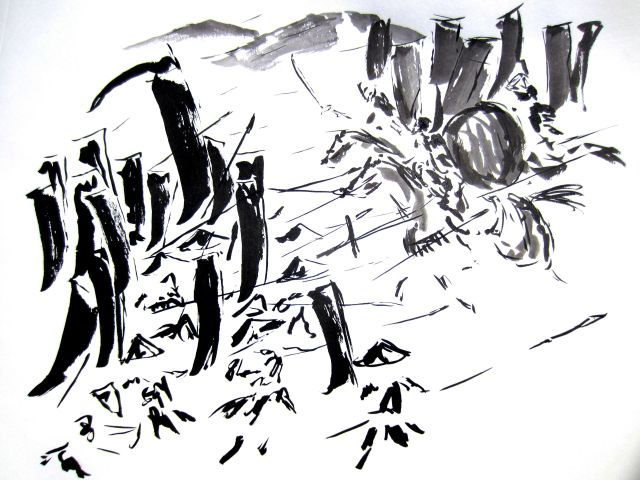
“The Battle of Sekigahara” by Kris Knapp

Helen Buckingham’s Wafer

church bells versus
the ice cream van
a wafer each way

© Helen Buckingham (UK)
(Presence, 54, 2016)

The image at first reading draws an amused smile, thinking of this van whose call is contrasted by church bells and which at the bottom presents its ice creams in wafers similar to the host. But, a reflection immediately arises. The ice cream van is so earthly, a bearer of carnal pleasure, compared to the bells that for centuries have been calling for moments of spirituality. It is, therefore, to be thought that the van is practically reduced to silence. It makes one think of the Middle Ages, of the centuries in which every frivolous pleasure was branded as a mirror of evil… and, in the present moment, to the heavy hand that every religion continues to have, openly or more subtly, towards its believers. This poem leaves a lot of food for thought, that delves deep into reality, and keeps a sense of lightness, which is the merit of a successful haiku.

Margherita Petriccione (Italy)

As I perceive this, there is an element of conflict between divine duty and human desires. The haijin is trying to keep both in balance but keeps humor alive. There are irony and humor in this and I feel this haiku has the Japanese aesthetic of karumi.

Pragya Vishnoi (India)

I can see both the materialistic and spiritual sides of life in this beautiful haiku.

Church bells are a call for prayer to gather the blessings of life and also indicate the awakening of the inner self by focusing on spiritual energy. This aspect takes us closer to the self that we usually ignore due to different activities of life. The bells repeatedly toll to remind us to take a break from worldly chaos and the fast pace of life. On the other hand, we always rush to complete our daily activities and to-do lists so that we can find ways to stay in competition or do work well.

The ice cream van indicates our cravings that build up from different flavours and tastes of life which pull us towards them. But, they melt down fast like ice cream and we strive for the next flavor or taste of life. This endless cycle goes on, where we share mixed feelings and collect precious memories as well.

The word ‘versus’ in the first line shows that we are oscillating between two ends, one that leads us deep inside–a sort of spiritual journey. The other one is worldly desires that pull us daily to enjoy the bounties and blessings of life that surround us. In both ways, there is a wafer that may come as blessings, happiness, joys, or self-fulfillment only if we keep a balance between both ends, which can bring harmony in our lives and give us real satisfaction in life. I love the simplicity and choice of words in this haiku that metaphorically hide the image of the entirety of life and give us a lesson about enjoying every aspect of life by keeping balance.

Hifsa Ashraf (Pakistan)

A lot is going on here. While an ice cream van can represent the season of summer as a kigo, to me this reads more of a senryu than a haiku.

I like the clash between the sound of church bells and the notorious melody an ice cream van makes at the same time.

I can picture people outside the church being tempted by a passing ice cream truck perhaps because of the outdoor heat while struggling to make it to church on time because that’s the purpose of church bells, which is to gather people of faith together, while an ice cream van gathers people for profit.

The struggle between what’s holy and the worldly is strong in this senryu. What makes it strong to me is the power of God over something trivial as ice cream or vice versa if you’re an atheist.

Then, the poet adds on the last line “a wafer each way” which makes me, the reader, wonder if it is a communion wafer or an ice cream wafer? Perhaps a person who’s taking a communion wafer is thinking of ice cream at the same time or it could be the other way around.

This poem is a great example of ‘show, don’t tell’ through sensory images. Mixing the images lets the reader visualize or interpret what is happening when two things happen at once.

Fractled (USA)

I enjoy the comedic nature of this haiku/senryu. “a wafer each way” instantly makes me chuckle. However, there is a deeper layer behind the comedy. The temptation of eating ice cream, something earthly, is summoned by the ice cream van’s music, while the church bells bring out a sense of faith and duty in us. This mix causes a person to choose between what is most important to him or her. In a way, life is about making choices, and those choices determine who we are.

I like the sound of “van” and “versus,” “wafer” and “way,” “church” and “cream.” It brings out the playful sense in which this poem was written. The lack of punctuation and the pacing of the poem also suggest that it leans more towards a senryu.

An enjoyably deep senryu.

Nicholas Klacsanzky (USA)

Did you enjoy this poem and the commentary? Let us know in the comments.

OLYMPUS DIGITAL CAMERA
– Saint Andrey’s Church in Kyiv, Ukraine