Haiku by Kala Ramesh, Joanna Ashwell, and Manasa Reddy Chichili

plucked jasmine
a funeral
        on my hands


Kala Ramesh (India)
The Heron’s Nest: Volume XXIV, Number 1: March 2022

Commentary from Nicholas Klacsanzky:

Jasmine not only has a powerful scent but also has far-reaching symbolism in rites and rituals. In India, jasmine is a common flower used as garlands for the deceased. The scent of the flower is so strong that it often can linger on the hands of the person handling it. In this haiku, the poet creates emotional resonance with the contrast of death and the continuance of scent (or life) after an offering. Interestingly, due to the phrasing, the funeral mentioned could refer to a person or the flower itself.

The word “plucked” connects well to the theme of death, as after a flower is plucked, it eventually withers. The poet may be saying that like plucked jasmine, when people die, our scent is left behind in the form of memories, passed on wisdom, and life work. The phrase “on my hands” has a dual meaning of physically being on one’s hands and also a sense of responsibility. With added space in the third line, I believe Kala is illustrating the weight the funeral is having on her and the responsibility she feels in taking care of this rite. It is also a unique concept to see one’s hands as a funeral, which leads readers much to mull over.

Traditionally, jasmine is a kigo or seasonal reference for spring. In India, jasmine can blossom from spring to autumn. Overall, I propose that in the context of this haiku, Kala may have been increasing the resonating contrast of spring with the end of life.

The poem is quite efficient with only seven words. This effectiveness doubles with the usage of multiple meanings with “plucked” and “on my hands,” plus the employment of physical space in the third line. In terms of sound, the most outstanding letter is “l,” where the reader can almost feel the action of being plucked.

There are many ways for readers to imagine the haiku in existence and that is one of the strengths of this poem. Kala allows the “white space” in the haiku to speak and the result is a multi-layered poem that connects to the deeper recesses of our spiritual self.

chaffinch call
a brief burst
of sunshine


Joanna Ashwell (UK)
Autumn Moon Haiku Journal, issue 3:2, Spring/Summer 2020

Commentary from Hifsa Ashraf:

Chaffinches call for many reasons, i.e. rain, warnings, mating, or interactions with each other. The chaffinch, a little bird, is a symbol of positivity, happiness, and good tidings. The call of a chaffinch is being heard by the poet or a keen observer, which shows how nature attracts our senses in different ways. Chaffinches have a soft tune when they chirp. When a person hears their call, it is in a calm and quiet place i.e. park, forest/jungle, garden, meadow, etc. The word ‘call’ instead of ‘chirp’ indicates that it is for a purpose. Having no ellipses at the end of line one allows us to interpret it in our own way. 

The rest of the haiku defines or specifies the chaffinch’s call which may be related to a pre-rain or post-rain situation. “A brief burst” is purely a seasonal expression here with some great analogies, i.e. a brief burst of joy, hope, laughter, or related feelings after a hopeless, cloudy, hazy day, or feelings. I see it as a sudden change in weather where the sun is playing hide and seek with clouds akin to the ups and downs in life where we need a call or news that can break gloomy feelings or thoughts. 

The third line of this haiku implies positive energy and life hidden in the sunshine which soothes our senses and changes our feelings/thoughts and ultimately our mood. If it is a pre-rain or post-rain circumstance, then ‘sunshine’ could mean brightness and light that makes us calm and positive after a rough patch or harsh weather.

I love this haiku because of its simplicity and expression. It shows how deeply our lives are connected with nature and how much we depend on it both internally and externally. 

Also, the sounds of ‘ch’, ‘s’, and ‘b’ make this haiku rhythmic and allow us to enjoy reading it while imagining the chaffinch’s call.

empty bowl
so many thoughts
singing in my heart

Manasa Reddy Chichili (India)
Autumn Moon Haiku Journal, Volume 8:1 Autumn/Winter 2024

Commentary from Jacob D. Salzer:

I appreciate this haiku because, in the empty bowl, the poet’s heart and mind are full and overflowing with thoughts and images. The notion of “so many thoughts singing in my heart” gives me clear feelings of gratitude, harmony, and abundance. I appreciate how the value of the empty bowl becomes apparent in this haiku without explaining it. When each of us looks into the empty bowl, what do we see? 

This haiku could also involve a lack of food. I can see the poet holding the empty bowl, perhaps asking for food on a street. Even in this interpretation, the poet seems to be fulfilled in their spirit, even if food is scarce. In turn, I think of how food is sacred and not something to be wasted. The poet (and perhaps others) could have also just finished eating a meal and all that remains are so many thoughts of loved ones who are living and those who have passed.

I can also see a singing bowl in this haiku. This special bowl sings precisely because it is empty. 

This haiku also resonates with the well-known Buddhist saying from the Heart Sutra, “All form is emptiness. All emptiness is form.” Thoughts rise and fall, but only in what could be called a sacred silence. In a way, we could be seen as images of the invisible.

What songs can we sing to those we love in this lifetime? 

This is a moving haiku we can contemplate and experience without overly analyzing it. It is personal yet universal at the same time and accessible. We can each experience the poem in our own way. A beautiful haiku.
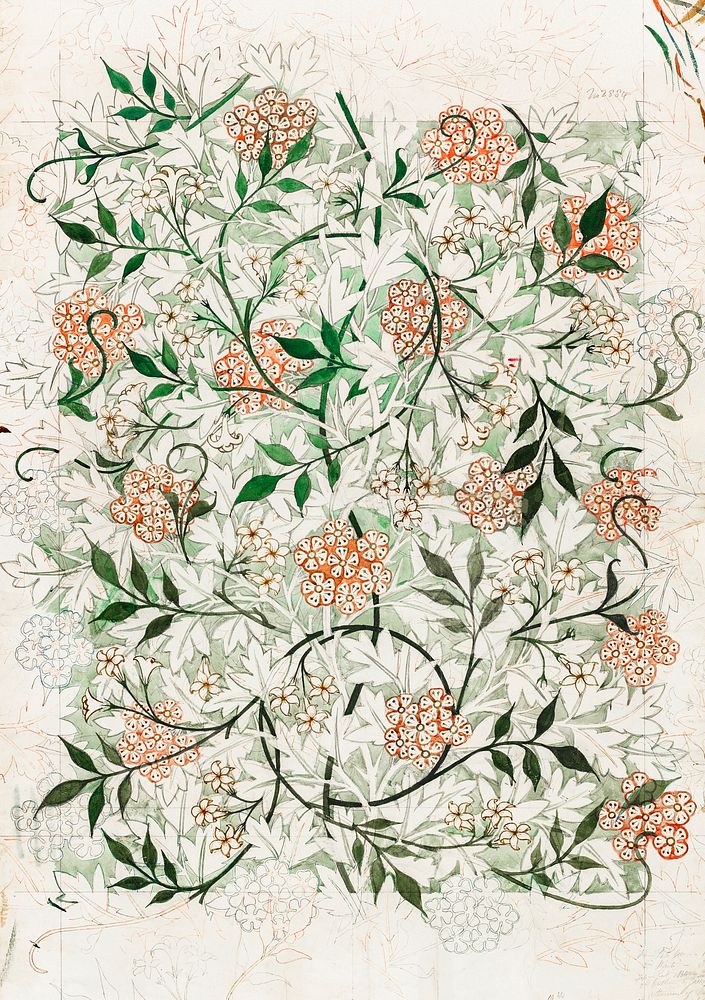
Painting by William Morris (1834-1896). Original from The Birmingham Museum.


Haiku by Goran Gatalica, Manoj Sharma, and Jennifer Gurney

between the hills
blown away like the seeds
a shepherd’s song


Goran Gatalica (Croatia)
Basho-an Award, The 6th Basho-an International English Haiku Competition, 2023

Commentary from Jacob D. Salzer:

A powerful haiku that includes multiple senses. There are four images in this haiku (the hills, the seeds, the shepherd, and the sheep). There are two sounds (the wind and the shepherd’s song), and there is a silence in the seeds, hills, and sheep, and in the shepherd, especially after the song is over.

In the first line, cemeteries are sometimes found on hills. This potential reference to death contrasts with the seeds symbolizing birth, although I actually see cycles of life and death vs. a stark contrast. 

In terms of sound, it’s interesting to note how the shepherd’s song travels farther between the hills. I can hear the song in the wind, which adds sonic depth. The sonic quality of “b” and “ee” seems to create an eerie feeling, while “away” and “song” seem to support a feeling of longing. I also usually see wind as a reference to a passing soul or souls. When we pass away, what seeds do we want to leave behind? The seeds could even be seen as seeds of karma, which implies the cycles of life and death and reincarnation.

The common definition of a shepherd is: (1) One who herds, guards, and tends sheep. However, a second definition is: (2) One who cares for and guides a group of people, as a minister or teacher. This second definition adds another layer to this haiku. Is the shepherd teaching a group of people through a song? What does the shepherd’s song sound like? Is it a spiritual song or a religious hymn? There is an inclination that this is an old song passed down through several generations. However, it could also be a new song. What are the lyrics? Where did this song come from? And what does it mean? The shepherd’s song could be one of hope, as seeds can be symbols of hope. However, the seeds may have been carried too far by the wind and perhaps didn’t land in healthy soil. In that case, perhaps this is a song of both hope and sorrow. Indeed, the words “blown away” seem to contain a clear sense of melancholy. There is also a sense of deep time in this haiku, as the hills are ancient.

In short, this is an interesting haiku that can be read from different perspectives. It is a deep and thoughtful haiku that asks us to consider our place on Earth, our ancestors, and Divinity. This haiku also asks us to contemplate our souls, our brief lives on Earth, and the afterlife.

looking back
at my younger self. . .
sun-kissed mangoes


Manoj Sharma (Nepal)
Modern Haiku 55.2 : Summer 2024

Commentary from Hifsa Ashraf:

We cherish and miss our youth the most because it is full of adventures. I can feel this kind of youth in this haiku. The person is reminiscing about being young—the phase of life where one usually has the energy and freedom to do the things one wants. The narrator seems to be old enough that he finds it difficult to move on and reminisce about a time in his life that was opposite to his current self. So, in line one, looking back is not simply the remembrance of youth but also wishing to have the same energies or seeking solace in youth.

The second line ‘at my younger self’ with ellipses makes us pause for a while by asking some questions i.e. is this a photo or portrait, is he looking at a reflection in a mirror or in the water? A vivid memory? It seems the person is going through a transformation i.e. from middle adulthood to late adulthood. It is the most difficult time especially when one feels it mentally, physically, emotionally, and psychologically. It seems as if one self is departing and replacing another one, which is probably feeble. 

The last line in this haiku is really interesting and makes it more dynamic. Sun-kissed mangoes are definitely a beautiful analogy to the time of youth when mangoes not only ripen in the sun but also have their best taste. It shows how a youthful life flows like pulpy and juicy mangoes, which are sweet and provide energy. Sun-kissed mangoes as a kigo also show the beauty, care, and connection of nature with different phases of our lives. On the other hand, I see it as a very romantic and loving expression where a person fully enjoys one’s youth being surrounded by loved ones and expresses their feelings fully. 

your ratty sneakers
hanging out in the garage
as if you’re still here


Jennifer Gurney (USA)
Five Fleas, March 17, 2025

Commentary from Nicholas Klacsanzky:

Having had several close members of my family pass away, this haiku resonates with me. It can connect with many readers, as the circumstance described is commonplace yet emotionally potent. The “ratty sneakers” become alive, serving in stead of the deceased (or possibly distant) important person. They transform into a representation of the mystery individual or even an independent entity that takes on a life of its own. There is also an irony in ratty sneakers becoming so poignant. It demonstrates that with emotional weight, any object can be of significance. This relates to the Japanese aesthetic concept of aware, which denotes how a physical object can trigger a personal or spiritual response.

The writing style of the haiku is extremely relaxed and natural. I believe this is what the great master Basho advocated for with his concept karumi. There is no particular kigo or seasonal reference. However, the poet may have been aiming more for a senryu or simply did not see the importance of adding a kigo. Either way, the poem does well with the subject matter and descriptions, giving us just enough for us to imagine and feel deeply.

The pace of the poem approximates the traditional Japanese haiku rhythm, which comes out to a short first line, a longer second line, and a short third line in English. The effectiveness of the haiku/senryu also is seen in its conciseness, with no word out of place. Finally, the sound of the poem propels its atmosphere further. I especially enjoy the “r” sounds, which provide weight, and the letter “s” which appears to slow down the reading so we can take in the poem better.

This is a poem that looks like it was written with the utmost ease yet it has several layers of meaning and feeling. Most importantly, it can easily connect to readers and move them to memories of loved ones and the power of objects that surround us.

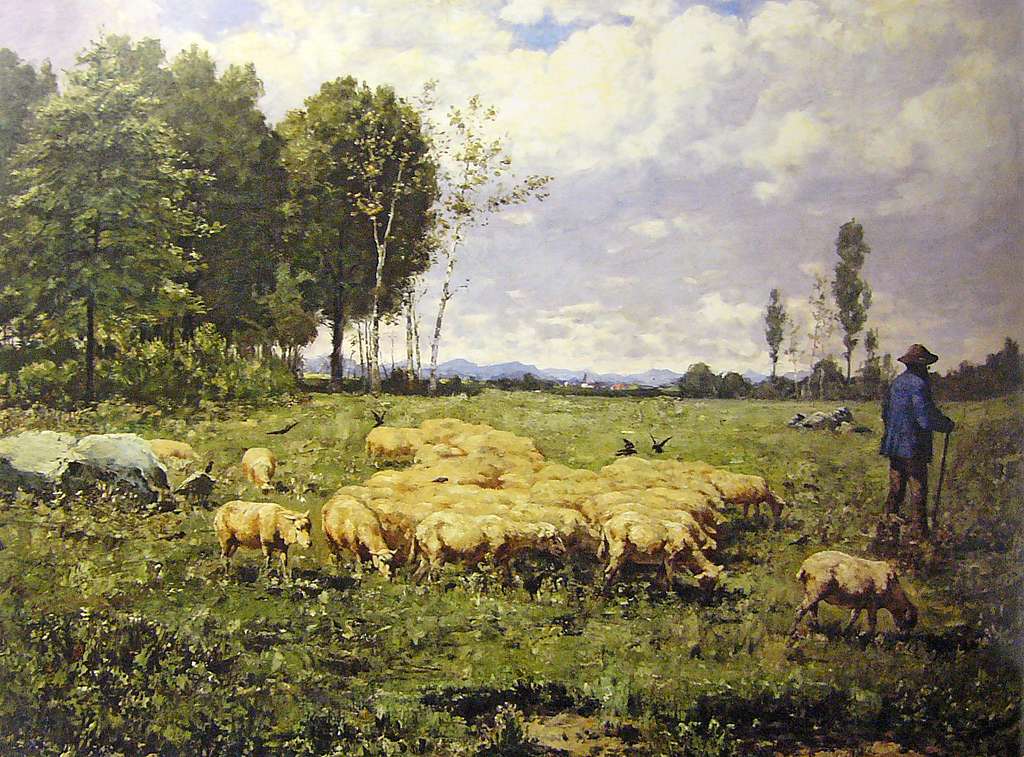
“The Shepard,” a painting by Alexander Roche (1861-1921)

Haiku and Senryu by Gordon Brown, Kelly Sargent, and Alexander Groth

winter morning
inside the gargoyle’s mouth
a bird’s nest

Gordon Brown (USA)
tsuri-doro, issue #14, March/April 2023

Commentary from Hifsa Ashraf:

The starting line with a kigo shows the cold weather when people mostly stay inside and enjoy the coziness of rooms and memories. A winter morning may indicate fog, snowflakes, snowfall, blizzard, or simply coldness. It may be a window view, a view from the balcony, a view from a vehicle’s window, etc. In any case, the person has captured something unusual—something that people don’t focus on in their daily routine. Perhaps, the poet is trying to relate his personal life with the imagery. 

The English article ‘the’ before ‘gargoyle’ allows us to ponder statues, stubs, waterspouts, fountains, etc. But, it seems whatever form the gargoyle’s mouth takes, it needs some maintenance. In religious terms, gargoyles are meant to be both good and bad. In architecture, they are used for the disposal of water. The placement and the purpose of a gargoyle in this haiku is significant. It seems like the gargoyle is no longer in use, or simply a statue where a bird nests. This may indicate that the gargoyle is meaningful even if no one cares. It’s a sign of adjustment where insignificant things become significant—especially in hard times. In this case, a bird nests in the gargoyle’s mouth to avoid harsh weather. For that bird, this creature is a great blessing, and for the place where it is situated, it may have become a curse. We never know when and where life turns upside down. But, we need to learn from nature about how to adjust to situations that are not useful to us. 

finding my adoption papers —
polished apples 
without a stem

Kelly Sargent (USA)
Mayfly, issue #77, July 2024

Commentary from Jacob D. Salzer:

This is a powerful haiku that uses detailed images in a two-part juxtaposition to communicate emotions and meaning. There is metaphorical power in this haiku as well. The discovery of the poet’s adoption papers likely creates a myriad of emotional responses, such as shock, melancholy, and perhaps relief, simultaneously. It could be that the person or people who adopted the poet kept the adoption a secret to prevent the poet from being exposed to past psychological trauma in their biological family. The word “polished” reminds us that sometimes things are not as they appear, and much can remain hidden beneath the surface. “Without a stem” points to the disconnection between the poet and their biological family and shows how hard it is to face the mystery of their family tree. This haiku also extends what a family can mean. I appreciate the poet’s vulnerability. This is a potent haiku with psychological depth and meaning.

fishing trip 
carefully I remove the hook
from my skin

Alexander Groth (Germany)
Failed Haiku, issue #100, July 2024

Commentary from Nicholas Klacsanzky:

Not only is the last line a surprise but it also can be taken in several poetic directions. Like many great haiku and senryu, the images in this poem can be perceived as both mundane and metaphorical. Perhaps the poet “catches” himself with a hook in an ironic twist, but “hook” could also pertain to attachments or hang-ups. The poet could be saying that before engaging in fishing, he needs to let go of a few burdens—psychological or otherwise.

Since this is classed as a senryu, no punctuation, seasonal reference, or avoidance of personal pronouns is needed. Still, the poet kept to the principles of brevity, casual language, and pacing the lines in a traditional short/long/short rhythm.

Looking at the aspect of sound, the sharp “i” in all the lines of the senryu connects to the hook. In addition, the “k” sounds in “carefully,” “hook,” and “skin” contribute to the feeling of sharpness. Ultimately, this haiku appears to be effortlessly written, but on looking deeper, demonstrates the technical prowess of the poet and layered depth.

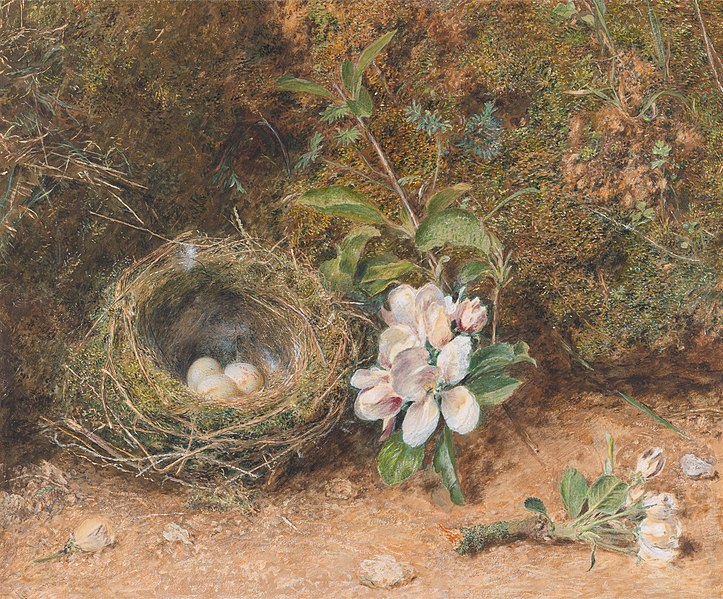
William Henry HuntBird’s Nest with Sprays of Apple Blossoms, circa 1847