Minh-Triêt Pham’s Shooting Stars

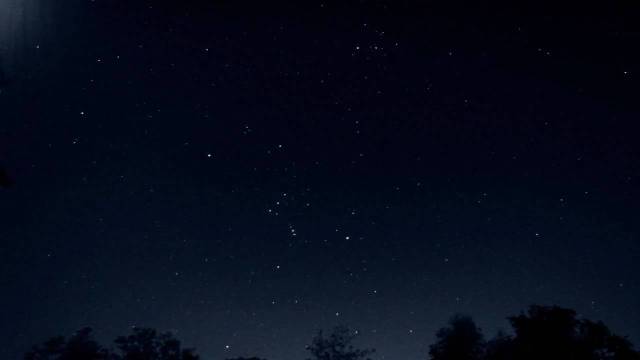
shooting stars —
in the canal’s waters
fish jumps

© Minh-Triêt Pham (France)

The Mainichi, Aug. 18, 2018

If the em dash at the end of the first line is deleted, the haiku would clearly benefit from the pivot and revolving interpretations: shooting stars reflected in the canal’s waters and the fish jumping in the canal’s waters. There is also the theme of two worlds separated and connected by water. The movement in line 1 and line 2 against the second line makes the haiku a visual delight. Though there is no explicit mention of kigo, the haiku evokes a summer-time feeling. The merging of two worlds is completely in line with the Zen aesthetic of onism, which has been alluded by many great Japanese writers, artists, and filmmakers. All in all, a memorable haiku.

Pragya Vishnoi (India)

As to the phrasal structure of the poem, I would consider the article “a” in front of “fish” for better flow—no pun intended.

Dennis Gobou (USA)

A great sense of serene unity emanates from this haiku (which I would see much better as a monoku) where for a moment the earth seems to blend into the sky. The fact that a kigo is not present, in my opinion, enhances the sense of universality that permeates it, making it a timeless moment. Once the boundaries of space and time are overcome, this haiku would be a small masterpiece if rightly there was an article in front of “fish.”

Margherita Petriccione (Italy)

This particular haiku to me has a few flaws but it’s interesting as well. About the errors, the first thing I asked myself was why is there an em dash on line 1 when it reads as a phrase with line 2. Because of the conjunction word “in,” the em dash should have been on line 2 after the word “waters.” Then, I wondered why the author repeated what is already said, which is between the words “canal’s” and “waters.” The author could have dropped the word “waters” or drop “canal’s for even more space, but there’s another problem, which is the plural on water which indicates to me that the author had superpowers to be at multiple places at once to see this particular moment. Also, I believe the word “waters” was added so that the author could keep the short/long/short form of a haiku, therefore forcing something that isn’t necessary in the poem.

Maybe the author should have written:

fish jumps
in the canal—
shooting stars

Or better yet to use the “technique of narrowing focus”:

shooting stars
lights the canal—
jumping fish

While I’m cringing with the use of two “ing” words, for now it’s the only way I could keep technique intact with a wide lens “shooting stars” to the medium “the canal” and finally a small lens focusing on the jumping fish.

That’s just my opinion on a published haiku that needs some surgery.

Fractled (USA)

I too would omit the em dash to achieve a pivot. “waters” I feel is redundant. Line 3 is not grammatically correct: “a fish jumps” or “fish jump”. Thus, I would suggest: shooting stars / in the canal / fish jump – with matching plurals. A pleasing poem with striking imagery but it has a “dodgy” final line.

Susan King (UK)

This presents an interesting juxtaposition: the movement of objects across the sky above and across the water below. From that one similarity, the images open up and veer off from one another. A shooting star is a dying object of dust and rock falling into the earth’s atmosphere that burns up. Fish jump out of the water for various reasons, including perceiving a threat from a predator, or acting as prey. This haiku makes me wonder if, like the shooting star that’s dying, the fish is on a hook and is about to be caught? Or is the fish’s jump temporary—a momentary arc where, unlike the star, it will go back to its habitat and continue its life in the water. Either way, I feel that the poem speaks to the impermanence of nature, or the nature of impermanence.

Michael Morell  (USA)

I like the ‘startle’ effect against the sky and the canal… the movement of a shooting star, the movement of a fish. It brings together, for this moment, the heavens and the earth.

Carole MacRury (USA)

There is an element of amusement in this haiku that makes it interesting in many ways. Shooting stars may indicate a sign of luck, happiness, and celebrations (fireworks) as well. One wishes upon shooting stars to get desired things in life. I see a shooting star as a kind of celebration where someone is enjoying the vastness of the universe, and taking it as the fulfillment of all wishes.

Canal water is usually used for irrigation, so there may be celebrations for having a good crop.

The third part of this haiku is the most interesting one, as fish jumps may again indicate prosperity, happiness, and the abundance of resources. Overall, the haiku shows the blessings and bounties of life, where a person is experiencing different elements as a whole and which are interrelated. In short, stars show luck, water shows a flow of life (prosperity), and fish jumps show happiness/celebrations. So, who would not want to have all this in life?

In addition, the letter ‘s’ at the end of each line may symbolize the twist and turns in life that bring great surprises for us.

Hifsa Ashraf (Pakistan)

If you enjoyed the poem and commentary, please let us know in the comments section.
night-sky

Ken Sawitri’s Laughter

spring shower
a toddler finds the laughter button
on her doll

© Ken Sawitri  (Indonesia)

Right Hand Pointing, Low Sky, Winter Haiku 2017

Wonderful haiku in the journal, as well as above.

The magic I see here is how those fun last two lines could be so changed by various first lines. I can read it as spring representing the growth of new things. Something known about the doll that wasn’t known before…. “this doll laughs like I do.” Imagine it with a darker line one… “funeral over.” The mood changes. The child, aware at some level, that something bad has happened, finds the laugh button to be a diversion. I like the line that was chosen.

Pris Campbell (USA)

This haiku reflects the early years of a carefree life, where a child finds and celebrates different moments of life in toys and other things around her. The haiku starts with ‘spring shower’ which means a light rain—full of hope, joy, and life. Usually, a spring shower leaves a good impact on one’s mood, especially when flowers are blooming and their fragrance mixes with rain. Spring is also a time to yearn for new dreams, explore ways to gain happiness, and enjoy the bounties of life.

The toddler who is curious about her toy has the same feelings. She explores her toy, which seems like a companion to her. It is a self-exploratory process where a child finds a way to seek pleasure in  surroundings. In this case, she finds a doll as her best friend with whom she wants to share her happy moments.

The other aspect of this haiku could be the irony hidden in superficial ways of getting happiness that may not be permanent, like a spring shower. Also, the letter ‘o’ shows the continuous cycle of curiosity that ends up as happiness after achieving or receiving something surprisingly great.

Hifsa Ashraf (Pakistan)

Spring is a time of avalanches (rain is one of the triggers of an avalanche) and rain, while this poem initially reads as something to go “aww, that’s cute.” On the other hand, I see disaster because of the starting line “spring shower” as well. I’m not sure if that’s what the author intended, which is to show the pleasant side of childhood, but if the intention was to show two extremes, then I applaud the poet for achieving that.

Fractled (USA)

There is a unifying theme of youth and innocence in ‘spring’ and ‘toddler’. The alliteration in ‘spring’ and ‘shower’ and ‘toddler’, ‘button’ and ‘doll’ add to the musicality. This is a haiku that is commendable both in terms of craft and content.

Pragya Vishnoi (India)

Spring rain sometimes brings an uneasiness that results in an inexplicable melancholy, but the child finds the button for laughing on a doll. The child is by nature beyond melancholy, and captures only a joyful aspect from that spring moment. I find this haiku so comforting… among other things, although I am not a native speaker of English, I appreciate its smoothness.

Margherita Petriccione (Italy)

Did you enjoy the commentary and the poem? If so, please let us know.

1280px-Vincent_Willem_van_Gogh,_Dutch_-_Rain_-_Google_Art_Project Enclosed Wheat Field in the Rain, by Vincent van Gogh

Brendon Kent’s Walk

mother’s walk
we wander through
each other

© Brendon Kent (UK)
Published in Moon on Water

This haiku shows deep feelings about attachment and detachment. ‘mother’s walk’ intrigues me with the purpose associated with it. Usually, a mother’s walk revolves around the daily activities of her home and children. On contrary, she may want a break from daily activities or a tough routine just to be by herself.

The second and third line suggests that she is not alone whilst walking. She may have the company of another person who has similar feelings or routines. The other person could be either a child or a spouse who is constantly trying to understand the deepest feelings of the mother. This situation also reflects the calm personality of a mother that is usually neglected due to daily activities. It seems the other person came to know about this side of hers rarely, so that’s why she/he enjoys to wander through the feelings and thoughts that are not expressed well in the daily routine.

I can also see empathic listening here, where both are sharing their estranged feelings for each other, most probably silently, as both are passing through similar experiences of life.

Hifsa Ashraf (Pakistan)

I like the many readings available for the phrase “mother’s walk.” It can mean a specific route the poet’s mother took, the way his mother walked, or a day or time the poet set aside for walking with his mother. The lack of punctuation in the first line also adds to the content of the last two lines.

The second line ends with suspense. It hangs on the edge of “through,” and we try to guess what is next. I think it is also good to have “through” at the end of the second line, as I think the poet would not like having a rhyme with “wander” and “other.”

The ending is at once simple and surprising. This poem is an example of the haiku aesthetic of brevity and common language. Haiku poets try not to be superfluous or fancy, and Mr. Kent embodies these principles in this haiku. How the act in the last line happens is a bit of a mystery but the reader can come up with several ideas: the poet is on the path where his mother used to walk and he is “wandering” though memories of her, in a way the poet’s mother left a part of herself there (metaphorically or maybe her ashes were spread there), or maybe the poet is expressing that on an atomic level, each being is connected, even after death.

In terms of sound, the first thing I noticed was the strong use of “r” in “mother,” “wander,” “through,” and “other.” It gives the haiku a serious tone. Also, there are plenty of “w” sounds, which lends a wispiness to the reading.  This gives a fine sonic balance to the haiku.

This haiku has a great mix of emotion, simplicity, and abstraction. With only seven words, it conveys the personal feelings of the poet powerfully.

Nicholas Klacsanzky (Ukraine)

Do you like this poem and commentary? Let us know in the comments.

5eef7567322767f1b4f5e4779e43a2df