Pere Risteski’s Zenith

zenith
a cloud in a cloud
rolls around

© Pere Risteski (Republic of Macedonia)

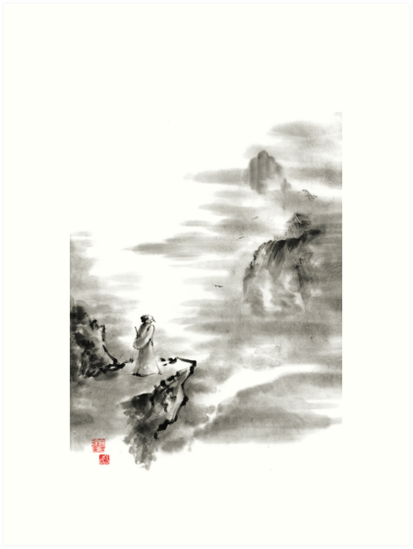
The repetition of ‘o’ in line 2 and line 3 makes this haiku a visual delight. There is a sense of being laid-back in this which makes the reading experience very serene. Though there is no mention of the season or time of day, I am imagining a quiet, blissful summer dusk. A lovely haiku, all in all.

Pragya Vishnoi (India)

The zenith—the nadir celestial axis is the vertical axis according to which one aligns oneself in the posture of zazen. So, the immediate image that this haiku suggests to me is a moment of meditation under a clear sky in which two clouds seem to follow a circular motion. Clouds attract interest and create a point of distraction, and can be compared to thoughts that entangle and return to disturb the serenity of the moment. But I feel deeper resonance in this haiku that appears to me almost like a koan. Maybe I followed the wrong key of reading, but I find it a remarkable haiku—simple and yet well-refined in form.

Margherita Petriccione (Italy)

The word ‘zenith’ makes this haiku interesting and multidimensional as well. The person is meditating under the open sky, which makes his unique experience worth sharing, as he must have found the zenith as a part of his inner peace and he feels as if he is at his zenith for a moment.

Overall, I can see the deepest desires of the person embedded in the meditative thoughts of the day, which could be daydreaming as well. A cloud in a cloud again could reflect the deep meaning of one’s dreams or wishes that are interconnected. But in the case of meditation, a person looks through these clouds for a clear sky. Yet, in this case, the person enjoyed the experience of clouds manifesting his dreams or desires, which brings more clarity to them. He might feel as if he is out of the confusion. It may also reflect him finding the purpose of life by capturing the intuitive moments that brings a person to a state of extreme happiness, which is in a sense recognizing one’s core potential, which can seem like a miracle.

Hifsa Ashraf (Pakistan)

If you enjoyed this poem and commentary, let us know in the comments.

ap,550x550,12x16,1,transparent,t.u3

© Mariusz Szmerdt

Antonietta Losito’s Childhood Home

childhood home
from a crack crawls
an icy wind

© Antonietta Losito (Italy)

So many horrendous events have taken place as of late, and this poem reflects such a blow to the heart. We are all used to seeing nurseries as a nest, a place of kindness and joy, of serene guidance towards balanced growth. Unfortunately, this is not the case and often a cold wind blows over them.

A haiku expressed with admirable simplicity and detachment, yet strong as an icy gust of wind in the face accentuated by the harsh repetition of the “cra” sound in line two that strikes sensitively after the fluidity of line one.

Margherita Petriccione (Italy)

It’s a strong haiku. Although there’s a subtle break on line 1 while reading it out loud because of the conjunction “from” followed after it on line 2, I also see this as a great one-liner due to the sound of the vowels “o” and “a” that’s more apparent in that form.

As for the content of the haiku, I picture poverty in very cold weather and a child possibly in a foster home, or even homeless, seeking shelter. It’s a poignant haiku that’s direct, which is not only a sketch of a particular scene as a sensory image, but one that can be felt physically and emotionally as well.

Fractled (USA)

There is a time in life when we look back into our past and reflect on deep experiences. These experiences leave a great impression on our lives, guide us in the later part of life, and help us to learn from them. Our childhood home is a very special place, where one collects a lot of memories that become a part of the subconscious. Irrespective of the type, childhood memories always remain close to one’s heart.

The author reflects very deeply on her childhood experiences that may sound traumatic but still fresh in her mind. The cracks are maybe those flaws of the past that influenced the life of the person profoundly and triggers unpleasant memories when she visits that place. Icy wind could be showing the sensitivity of childhood experiences that still haunt her mind. Metaphorically, perhaps a childhood home are memories, the crack is guilt conscious, and the icy wind represents broken thoughts.

Overall, I can see the conscious effort of the person to recall and understand the flaws that always take her back to the time when she faced a lot of pain. In terms of sound, the letter ‘c’ in this haiku shows the disturbance and interruption in one’s normal life cycle.

Hifsa Ashraf (Pakistan)

Did you enjoy this poem and commentary? Let us know in the comments section below.

wind

© Skip Allen

Indra Neil Mekala’s Pill

old age home —
a pill for everything
but loneliness

© Indra Neil Mekala (India)

Under the Basho, 2018

This is really a heartfelt haiku that shows the dilemma of our society. This is still a question mark for many of those who take relationships for granted.

The opening line looks very simple, indicating an ‘old age home’, but metaphorically it is not simply a place where old citizens take shelter and spend the rest of their lives. It is a place where one can find every comfort but still not feel like one is at home, still have something missing in their lives, still deprived of the connection with their loved ones.

In the second line, ‘pill’ symbolizes not only a medicine that is used for relief of any kind of pain but also indicates the intrinsic connection that one needs through a touch of genuine feelings that itself is healing. In old age, a person always needs a loved one to stay with them and listen to their stories of life or share great memories and spend some quality time with them so that he or she can mentally and psychologically feel healthy and satisfied.

The dilemma of old age and old age houses was cleverly described in the third line, where the poet depicted that there is a cure and medication for every type of pain but loneliness. Nothing can overcome loneliness except love and genuine feelings of close ones including children, siblings, friends, family members, etc. There is no substitute of a true relationship in one’s life, which a person needs the most in old age, but ironically senior citizens often don’t get them. It reminds me of a quote by the Dalai Lama that helps me to conclude my views. It says:
“The planet doesn’t need more successful people. The planet desperately needs more peacemakers, healers, restorers, storytellers, and lovers of all kinds.”

Hifsa Ashraf (Pakistan)

This haiku tackles one of the most dreadful things and that is loneliness. In line one, where I’m from, it’s called a “nursing home.” And I used to work in one, so I can definitely relate to what the poet wrote from the words of the patients themselves.

Although there’s no kigo, I can only assume that this is a gendai/modern haiku. With a sabi tone (loneliness or miserable) the haiku does a great job with a powerful third line, though it may be read as “matter of fact.” I see no other way to write about the subject matter ex. “a pill for every thing except old age/death/“ etc.

This haiku to me is also a stark reminder of the company people take for granted and other important meaningful things in life while in their youth. It’s a fine haiku as I see it. Congratulations Indra!

Fractled (USA)

This is a fine example of restraint in haiku. Without any wordplay, the writer effectively expresses the stark scene. When we see it from an Indian perspective, where the haijin resides, an old age home is a place for old people whom their children are unable to provide care for. This leads to feelings of abandonment which is a major contributing factor for depression among the old age home residents. Normally the children pay money to these homes but even though the money can buy medicines, it cannot guarantee the cure for loneliness. A powerful social comment which achieves what it intended.

Pragya Vishnoi (India)

A modern haiku, very strong in the sentiment that it emanates, yet very simple in its presentation like any work that respects the original spirit of this poetic genre. It does not leave much to the imagination but is vibrant and, according to the experience of those who read it, it can arouse reflections of personal, social, and cultural value.

I also find the shape impeccable; not being a native speaker, I cannot dwell on the choice of words, etc., but I find it fluid and harmonious.

Margherita Petriccione (Italy)

Indra’s poem speaks to me far beyond a nursing home when I think of all the medications people must take for various physical and/or mental illnesses and the simple act of getting old, all of which can result in isolation or invisibility. The couplet is a truism that can’t be denied. While the poem isn’t placed in a season, and isn’t isolated to a moment, or even a person, I found it works for me despite the generalization of the first line, and assumptions of the phrase because my own experiences with such homes involved seasons and senses, smells, taste, touch… and in a broad sense, this one speaks to me metaphorically as the ‘winter’ of our lives, or simply getting old.

Carole MacRury (USA)

Did you enjoy this haiku and the commentary? Let us know in the comments section below.
pechane-10

– By Pechane Sumie