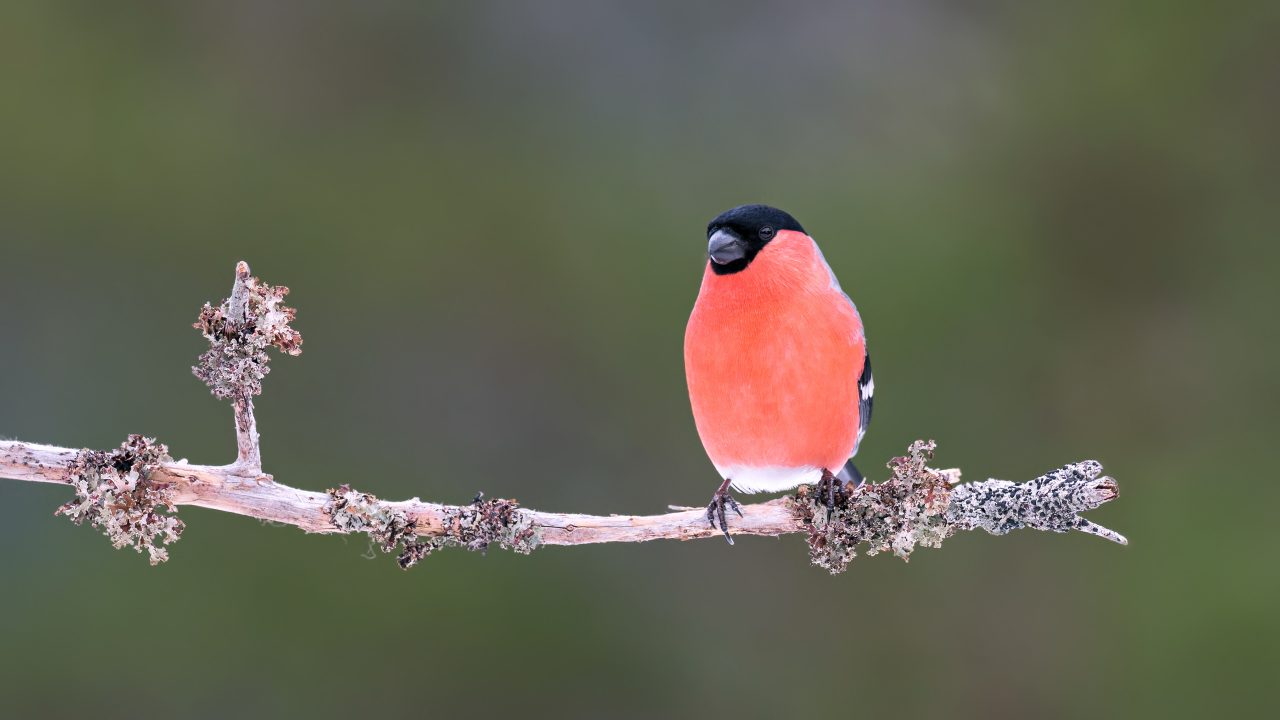
Charles B. Dickson’s Cabin

cajun cabin …
the aroma of hot gumbo
floats on the bayou

© Charles B. Dickson (USA) (1915-1991)

I sent out messages on social media to learn what poets thought or felt about this haiku. Here are some of their responses from different social media platforms:

Haiku Nook on Google Plus

At first look, I thought about why the word “hot” is used in line 2? Cold gumbo wouldn’t have a strong smell, but in English “hot” isn’t just temperature, it also can mean “spicy.” Cajun meals are famous for their heat and spice. Overall, thanks to line 1, and the word “bayou,” it creates a good visual. Here is my simple attempt at a revision:

the bayou
wraps around the Cajun cabin
spicy aroma of gumbo

– Laughing Waters (Italy)

There’s definitely a mysterious element to this haiku. What I can’t tell is whether this is a day or night event, but I’m leaning towards night. While there’s no juxtaposition, it’s quite a vivid capture that definitely lets the mind of the reader explore. Going back to the mystery, the “technique of mystery” was used to write this haiku, and is one of 59 techniques from Jane Reichhold’s teachings from AHA Poetry.

– Fractled (USA)

Pretty sure gumbo is a dinner dish, so I get an image of the quiet bayou with a spicy scent in the air. I agree with the use of the word “hot” seeming offspicy would be better. “Floats on” is awkward too. I would have liked to see it say:

Cajun cabin 
spicy aroma(s) of gumbo
floats across the bayou

– Clayton Beach (USA)

re:

cajun cabin …
the aroma of hot gumbo
floats on the bayou

A good point was made that you might not require ‘hot’ as gumbo aroma would happen as the dish is being prepared and hence it’s both hot in temperature, and also the spices would be strong across a breeze.

I wonder about just:

cajun cabin…
the aroma of gumbo
on the bayou

or

cajun cabin…
an aroma of gumbo
on the bayou

or
cajun cabin…
a gumbo dish cooking
across the bayou

Gumbo: en.wikipedia.org – Gumbo – Wikipedia

– Alan Summers (UK)

Facebook

Well, its images certainly transport me. I love Cajun food! Haiku wise, I’d say it’s a little obvious. Perhaps if I was made to think at first of something else floating on the bayou.

– Eric Lohman (USA)

Poets on Google Plus

Makes me want some gumbo! 😉 Very nice!

– Danielle Kennedy

I have no idea what gumbo is . . . and yet “Cajun” tells me it is hot with reds and oranges, maybe. It feels like yesteryear memories, warm and inviting, calm and peaceful. . . :)

– Karen Hayward

Food is always related to nostalgia and memories, 😊 especially comfort foods. I love how it mentions the aroma floating around the bayou. I love this haiku.

– Meekha

Frankly, I needed to google cajun and gumbo first to get the feel of this haiku better :-)

Using the words cabin, gumbo, and bayou, the writer effectively packed the typical scene in the Cajun’s life.

Combining multiple sense observations–sight, smell, and taste–I think he succeeded in brining the scene to life.

Love the repetition of the ‘o’ sound too. It gives a dreamy atmosphere to me. I can almost see myself standing there, by the bayou :-)

– Lucky Triana (Indonesia)

What do you think or feel about this haiku? Let us know in the comments.
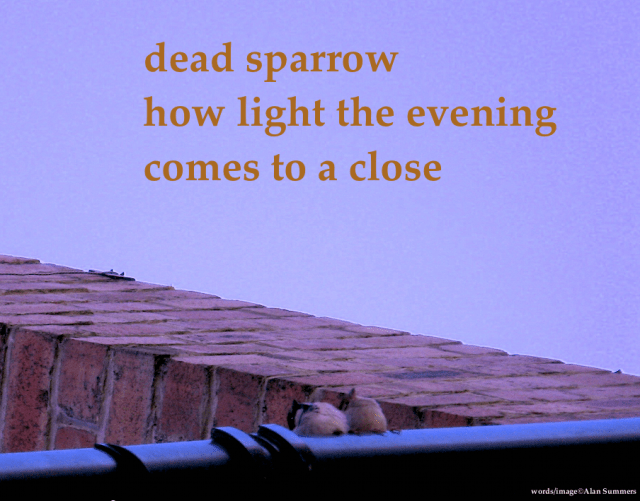
Andrea Cecon’s Carrots

the sound of a knife
cutting carrots . . .
cold morning

Acorn, Issue #38, Spring 2017

© Andrea Cecon (Italy)

This is a great instance when a haiku says something without saying it. Instead of writing, “A cold morning is like the sound of cutting a carrot,” the two parts are put side by side to suggest it. This opacity is the biggest difference between lyrical poetry and haiku, in my opinion.

Is there a meaning behind this comparison? Well, it shows several things to me: 1) that death or mutilation (of the carrot) happens even the morning, when everything is supposed to be peaceful 2) that our present actions have a direct correlation to our surroundings 3) and that possibly nature feels compassion for the carrot. I am sure readers can come up with other ideas as well.

But beyond seeing interpretations, there is also tone. While reading the poem out loud, you can feel the melancholy, especially associated with winter (“cold morning” suggests it). The poet has succeeded in giving us the same emotion he felt while writing the haiku, which is no small feat. That is one of the main goals of poetry: to hand off one’s experience to others.

In line with tone is the sound of the haiku. In the first line, the letter “n” gives the impression of cutting, and then in the last two lines, the letter “c” supplies the sound of chopping the carrots. The ellipsis shows that the chopping goes on for a while and that the cold morning is dragging on.

This haiku captures a moment and feeling distinctly, without any barriers for the reader. It reminds me of what Basho said: “The style I have in mind these days is a light one, one that gives the impression of looking at a shallow river with a sandy bed.”

– Nicholas Klacsanzky (Ukraine)

Vladimir Devidé’s Spring Shower

A spring shower:
and then, each drop turns into
a wild strawberry.

© Vladimir Devidé (Croatia) (1925-2010)

(from In Trenutak/The Moment, Ceres, Zagreb 1997)

Vladimir Devidé was a towering haiku personality, but I will try to do my best to examine this haiku of his. My first impression of this haiku was of awe. I love how the third line comes and makes the reader gasp. The imagery is spectacular, but grounded at the same time.

You can see that this was written when haiku was first coming into the West, as it uses a period and leaves the first letter of the first line capitalized. This is not bad, but rather something that was common when haiku was being first introduced in the West. Haiku poets at the time did not come to the consensus we have now in the English-language haiku community about capitalization and punctuation (though debates are still going on about these factors, though not in the same sense). Now, we don’t use capitalization much, as haiku are supposed to be incomplete sentences—fragments. Also, we avoid periods due to the aforementioned point. This does not make this haiku any less valuable, though. It only points to the time it was written in.

It starts with a common seasonal reference. Spring showers point towards something pleasant rather than a feeling of melancholy, usually. The use of the colon makes the reader read the next two lines as a consequence or equation of spring showers.

The second line gives the reader suspense, as he or she wonders what the raindrops turn into. Usually, we don’t think of raindrops transforming into anything, so we are expecting something surreal in the third line.

And the third line certainly delivers. From it, we can imagine raindrops transforming into wild strawberries. But in reality, the raindrops were probably being quickly absorbed into the wild strawberries, or the poet is referring to how the raindrops will aid in the growing of wild strawberries.

Spring is a time of the plentiful, and I believe the poet is expressing the optimism and energy this time brings. The poet displays an almost child-like sense of imagination. This is an important element of haiku: seeing life with a new sense of discovery and freshness. If we could look at each moment with fresh eyes, life would never be mundane. Only by being completely in pure awareness without thought can we be like this.

In terms of sound, the letter “s” features throughout, making the sound of falling rain. Also, the “r” is prominent, giving us a sense of whirring, or turning, which lends to the idea of transformation present in the poem. This might be overthinking it, and maybe these sounds were used simply for musicality.

A joyous haiku written with child-like perception, it allows us as readers to reach into our imagination and to feel the magic of spring.

– Nicholas Klacsanzky (Ukraine)

About the Poet

The history of haiku poetry in Croatia is inextricably tied to the name of the outstanding Croatian Japanologist, mathematician, academic, and writer Vladimir Devidé—a long-time member of the Croatian Academy of Sciences and Arts in Zagreb.

Vladimir Devidé was born in Zagreb in 1925. He graduated from the Technical University of Zagreb in 1951, and did a PhD in the field of mathematical sciences at the Faculty of Science. Since 1965, he was a professor of the Faculty of Mechanical Engineering at the University of Zagreb. He did post-doctoral studies in Israel (1960) and in Japan (1961-1963) and was a visiting professor at Monash University, Australia (1968) and Ohio State University in Columbus, USA (1971). He participated in numerous international mathematical congresses and symposiums.

In the field of mathematics, he published 40 scientific papers and about 200 essays and articles, and held some 60 public lectures about the results of his scientific work. He published 15 books on mathematics. In the field of Japanology and literature, he published more than 200 essays and articles in Croatian, American, Japanese, and German literary journals and magazines, as well as 16 books.

Vladimir Devidé was a full Member of the Croatian Academy of Sciences and Arts, member of the Union of Croatian Writers, the Croatian P.E.N. Club, etc.; honorary President of the Association of Croatian Haiku Poets, honorary member of the German Haiku Association, and advisor of the World Haiku Association.

Awards:

· Order of Labour with Golden Wreath, 1965.

· Republic Prize “Ruder Boskovic” Institute, 1969.

· International Le prix CIDALC, 1977.

· Award of the City of Zagreb for an entire mathematical work and literary work, 1982.

· Order of the Sacred Treasure of the Japanese Government, 1983.

· State prize of the Republic of Croatia for Life Work in Science, 2003.

· Special recognition of the Japanese Ministry of Culture for outstanding contributions to the international understanding between Japan and Eastern Europe (2004).

· Some twenty prizes for Japanese international haiku competitions.

Publications on Japanology:

· Japanese Haiku Poetry and Its Cultural Framework, 1970.

· Japan—Tradition and Modernity, 1978.

· Japan—Past and Future into the Present, 1978.

· From Japanese Literature, 1985.

· Japan—Poetry and Reality, 1987.

· Japan for Children, 1987.

· JapanPast and Future into the Present, 1988.

· Talks about Haiku Poetry, 1991.

· Zen, 1992.

· Renge, 1995.

· Anthology of Croatian Haiku, 1996.

· Japanese Haiku Poetry and Its Cultural Framework, Zagreb published, Zagreb, 2003.

· Japan, Monographs, School Books, Zagreb 2006.

Literary works:

· White Flower, 1994.

· Antidnevnik/Recall, 1995.

· In Trenutak/The Moment 1997.

· Haibun—Words and Pictures, 1997.

[From The Living Haiku Anthology, with edits]