meteor shower
her wish for
dialysis
— Alexander Groth (Germany)
published in tsuri-doro, issue #30, 2025
Commentary by Nicholas Klacsanzky:
This haiku takes the tradition of a “wish upon a shooting star” to very real emotional depths. As a life-saving treatment, dialysis being wished upon through a superstition highlights the desperation of the patient. Commonly, a wish made in this fashion is much lighter and whimsical. It is also associated with childhood, and the patient herself might be a child. The meteor shower mirrors that seriousness and overwhelming experience of needing dialysis, which is a mechanism for survival rather than a cure.
“Meteor shower” functions as a seasonal word (kigo), traditionally evoking images of wonder, transience, and celestial beauty. In Germany, meteor showers happen most in summer and winter. In looking at the mood of this haiku, I would suspect that the meteor shower would be happening in winter.
The poet deftly leaves some details out. We don’t know who “her” refers to: a mother, a daughter, a patient, or the speaker herself? We don’t know if the wish is granted. We don’t know if she can afford it or access it. This haiku is effectively spartan in information and wording.
The lines are written in descending order, from distant grandeur (meteor shower) to personal strife (her wish for) to the stark focus of dialysis. The lines becoming smaller and smaller could be reminiscent of many things: how a meteor falls to the Earth, the dimming of life for the patient, or the flow of liquids during dialysis itself.
In looking at the punctuation and sound, this haiku does not employ a dash or ellipsis to mark a cut. The haiku is so sparse and is phrased in such a way that adding punctuation might have looked clunky. The first two lines have euphony with the letters “o” and “r.” However, in the last line, the switch up in content is matched with a change in sound: “i” and “y” are focused upon, while “s” is still carrying some of the flavor from the first two lines.
In only six words, this haiku presents medical trauma, economic hardship, human longing, and cosmic indifference—and does not sentimentalize it. In this haiku, the wish upon a star, an innocent gesture, becomes a call for empathy and assistance for those who are less fortunate.
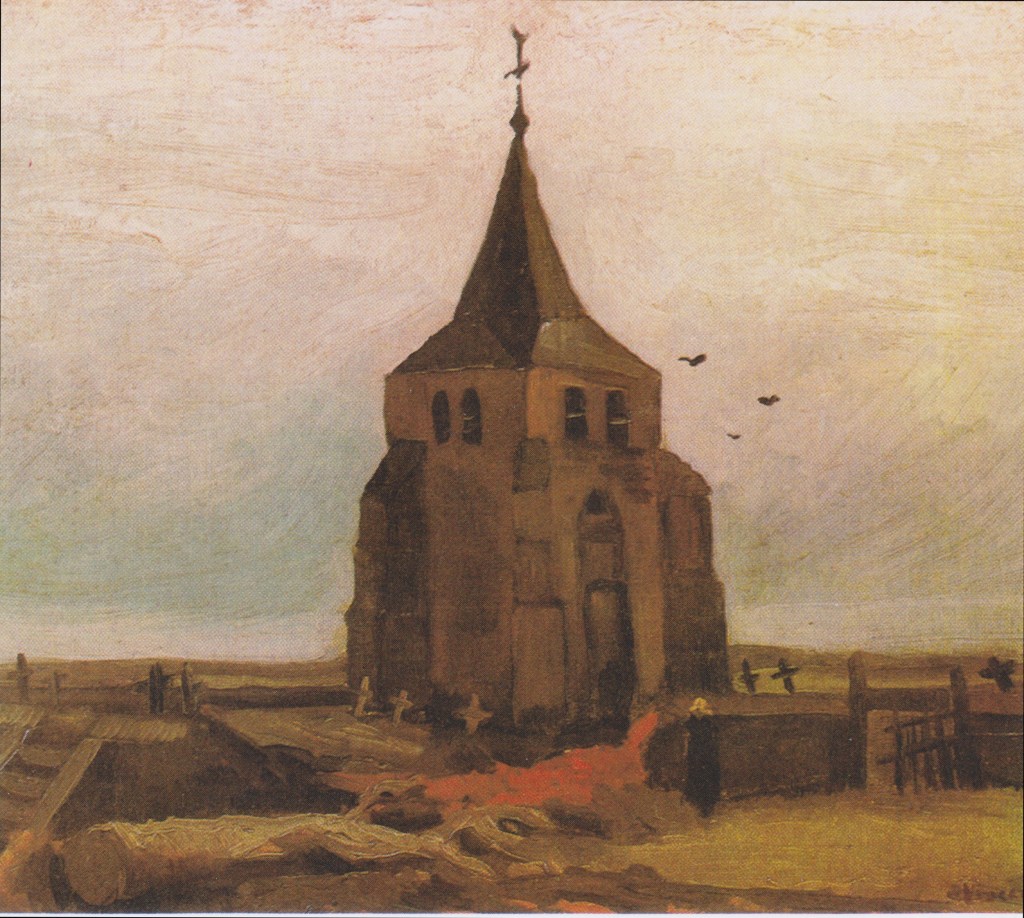
The crow lurking
In my parking bay
Learning to walk again
— Gareth Nurden (Wales)
Commentary by Jacob D. Salzer:
A powerful haiku that has at least two interpretations. The crow could be learning to walk again due to an injury or old age. The poet also could be learning to walk again for similar reasons and/or due to another medical condition. I appreciate how learning to walk again slows us down and lets us appreciate life and notice more in our surroundings.
Interestingly, there are three -ing verbs in this haiku, which is not commonly seen in English-language haiku, but it doesn’t come across as distracting. On the contrary, the -ing verbs seem to show connection and coherence.
In short, this is a haiku that inspires compassion for both the crow and the poet. In the end, a lot of people will learn to walk again as we grow older, and may become more like a child again as well. A beautiful haiku.
onion bulbs—
I peel another layer
of sorrow
— Ibrahim Nureni (Nigeria/USA)
published in Acorn, 2024
Commentary by Hifsa Ashraf:
The opening line, onion bulbs, establishes both a literal and symbolic foundation for the haiku. On one hand, it refers to a physical object associated with harvesting and storage; on the other, it suggests something layered and hidden. The image implies that beneath the surface of ordinary things lies something hidden within human experience. The em dash creates a pause, supplying a sense of hesitation and emotional weight.
The ending phrase, I peel another layer of sorrow, extends this metaphor into something very personal. The act of peeling becomes an inward process of confronting a long-time buried feeling. Each layer removed does not lead to clarity or resolution but instead reveals further sorrow, suggesting a therapeutic process. The word another depicts repetition, implying that this is an ongoing, possibly exhausting process of resurfacing something painful or difficult to face.
The haiku does not have a clear end. Rather than arriving at a core truth, it presents sorrow as something endlessly layered, where reaching to the core is either delayed or uncertain.
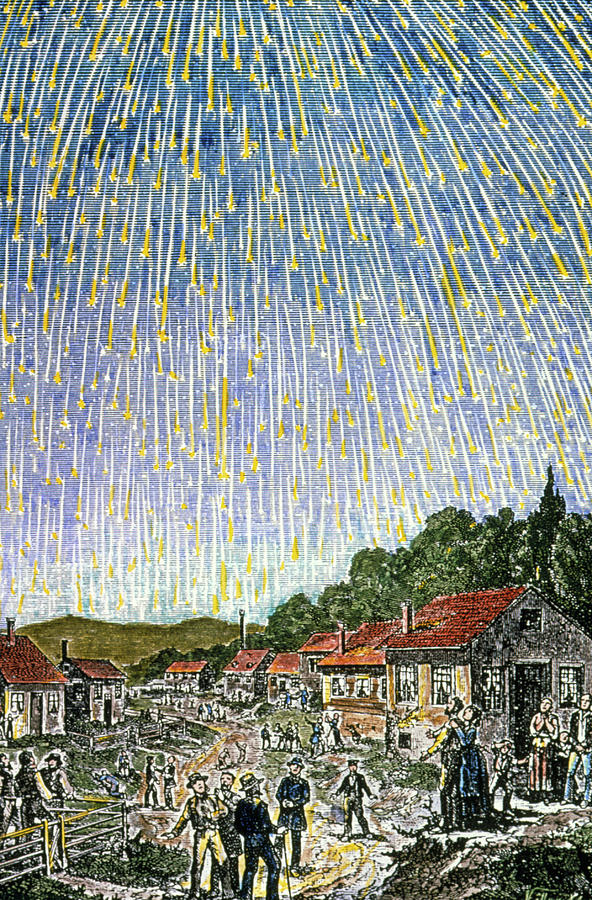
Coloured Artwork Of Leonid Meteor Shower Of 1833 is a photograph by the Science Photo Library