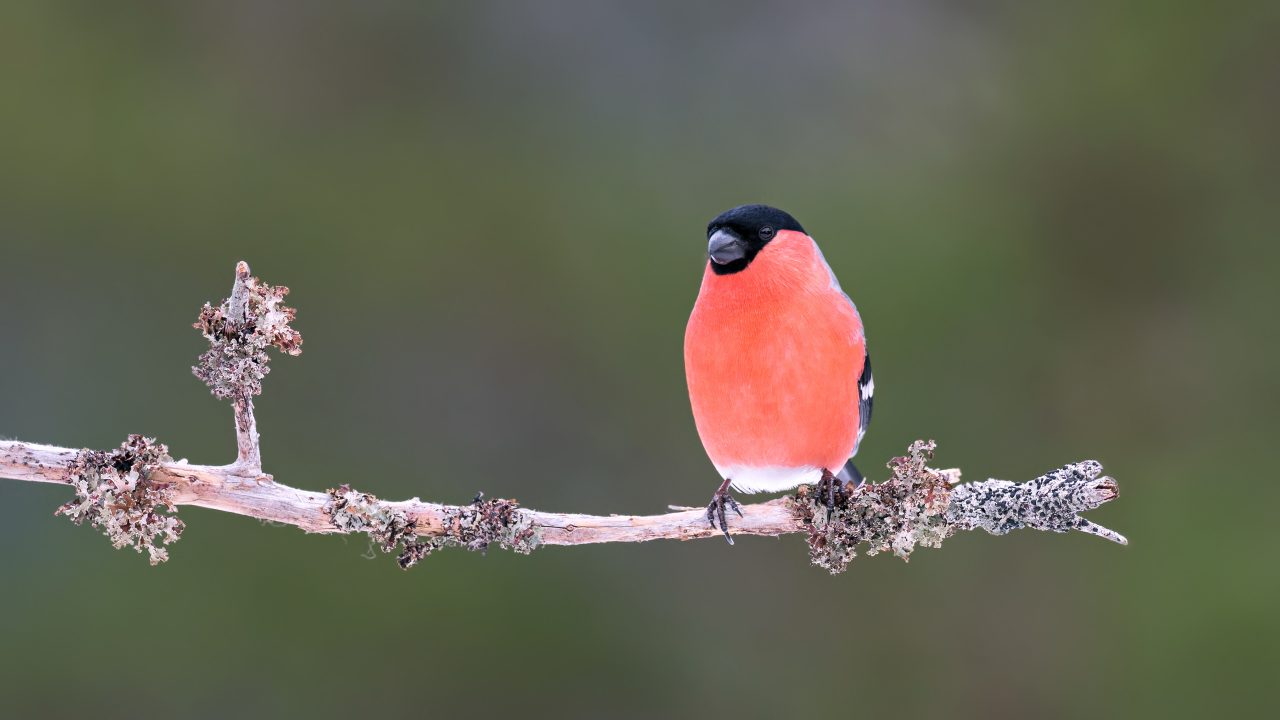
Hattori Ransetsu’s Plum Tree

on the plum tree
one blossom, one blossom worth
of warmth

– Hattori Ransetsu (Japan) (1654-1707)

Before I delve into the haiku, let me mention a bit about Ransetsu’s life. Born in 1654, his name first appeared in literary circles with the 1680 publication of two anthologies under Basho’s name, which included works by both Ransetsu and Kikaku. Obviously Basho thought highly of his student’s writing if he collaborated in a joint production when Ransetsu was only twenty-six.

In the winter of 1702, Ransetsu was obviously well established as a poet because he circulated a New Year Haikai Ichimazuri—the sort of poem that was not offered for sale but distributed on a single sheet of quality paper among fellow haijins (poets).

When Basho died, Ransetsu shaved his head and became a Buddhist monk, perhaps an indication that he closely shared Basho’s later life preoccupation with Buddhism and inclination towards monastic life. Certainly, retirement to a monastery ruled out any possibility of a Ransetsu school and of disciples in whose interests it would be to promote his life and works.

Nothing seems to be known of his death other than the year of its occurrence, 1707, just five years after his New Year Haikai’s circulation, when he was fifty-three. Like his contemporaries, Ransetsu was concerned with time passing, with the transience of beauty, with capturing the unity of humankind and the natural order in the experience of natural phenomena and universal processes.

A hallmark of Ransetsu’s work is his compassion for all living things and their condition. [adapted from the World Kigo Database]

Now onto looking at the haiku. Plum blossoms are an indication of early spring in Japan, and widely loved among Japanese people. They are a symbol of refinement, purity, nobility, and also a reminder of past love. In addition, Japanese tradition holds that the plum blossom functions as a protective charm against evil. The plum tree is traditionally planted in the northeast of a garden, the direction from which evil is believed to come. Also, the eating of its pickled fruit for breakfast is supposed to stave off misfortune.

So, there is a lot behind the reference to a plum tree and its blossoms, especially in Japan. But more importantly, even in translation, this haiku carries strong emotion. It is a special feeling that is difficult to describe, but the best I can do is say it gives an emotion of the beauty of the moment and preciousness of life.

Warmth is such a wide word, especially in the context of this haiku (Ransetsu was known to be quite an austere person as well). Warmth could mean a shielding from the winds of winter, could mean feeling warm from the beauty of the blossom, or the warmth of blossom against one’s nose when smelling it, or it touching the skin, and so on. But after reading this haiku, the reader may get the impression, intuitively, that though it is one blossom, its impact is more than it looks. Its impact is as strong on a viewer as a whole plum tree full of blossoms, and maybe more.

This play of the singular and plural makes up a classic haiku aesthetic. It is kind of like blurring the lines between quantity, and possibly the lines between infinity and emptiness.

In this sense, the single plum blossom is priceless and fathomless, and can only be understood in awe. This may correlate to Ransetsu’s Zen affiliation, where infinity and emptiness eventually lose meaning, and only the moment matters. Enlightenment, suffering, mere concepts compared to the awareness of the moment.

– Nicholas Klacsanzky (Ukraine)

Gabriel Bates’ Clouds

a lone   seagull dipping into the clouds

© Gabriel Bates (USA)

This is a monoku, or a one-line haiku. Though traditionally haiku are written as one vertical line in Japanese, in the English language we usually use a three-line format to show the different parts and to have a western pacing. However, sometimes haiku in English are written into one line for various reasons:

1) The lines don’t look good as three or two lines.

2) There only a few words and it would feel and look better as one line.

3) Having a haiku in one line can make phrases bleed more together and thus create more layers and meaning.

4) And some personal reasons of the poet….

The three-line version might look like this:

dipping
into the clouds
a lone seagull

… with the syntax switched to create two clear parts. But it is my belief that the writer wanted to create more of an effect with the word “lone” and to make readers read each word with a stronger emphasis.

In monoku, punctuation is not usually used. But we see that the writer has left a space after “lone” to create a more poignant effect of the feeling of “lone.” In a sense, it is a type of punctuation, but just more creative.

Reflections in haiku are common, but this reflection gets an added boost with color. The seagull is white (commonly) and clouds are white (usually). The act of the seagull dipping into the reflection of the cloud, in a sea or ocean, creates an effect of something philosophical.

It could be a sign of losing one’s identity, or becoming one with something greater (the “heavens”). Making an emphasis on “lone” could be signifying that an individual has to eventually go alone in his or her journey to become one with a higher power or to lose one’s identity. A seagull is sometimes referred to as an autumn kigo, or seasonal reference. Shedding one’s ego correlates well with autumn.

Also of note is the continuity of the word “dipping.” I think the writer chose this instead of “dips” to show a continuous happening, and to make the haiku more meditative.

I enjoy the use of singularity and plurality, e.g. the lone seagull and the many clouds. Using the plural “clouds” creates an image of something massive and epic… kind of like a part becoming the whole. Many haiku operate on contrasting different elements: time, size, age, and so on.

In terms of sound, the “o” and “l” sounds run strongly through it. To me, the “o” sound adds to the awe of the imagery, and the “l” sound adds to the elegance of the happening.

Though this monoku seems simple on the first reading, it is creative in its format, has spiritual symbolism, and brings us into the starkness of the moment described.

– Nicholas Klacsanzky (Ukraine)

Eufemia Griffo’s Summer

enclosed
in a soap bubble
summer

© Eufemia Griffo (Italy)

A respected haiku aesthetic is the beauty in transience. I believe this haiku wonderfully demonstrates this aesthetic.

Soap bubbles definitely do not last long, if not for a few seconds. This speaks of the attentiveness of the poet and sharpness with which she was in the moment while writing this haiku. Even though the soap bubble is short-lived, it presents summer in all its glory. Being spherical and clear, a soap bubble can mirror the surrounding world in a comprehensive way.

Philosophically, this can speak volumes. It could mean that even if we have lived one moment in complete understanding, our life has been fulfilled. Another perspective could be that even the most momentary of things can have a deep significance in the lives of others. And yet another take on this imagery is that it represents ourselves: our lives are short, though the joy and bliss of life should be fully viewed.

Beyond philosophy, haiku are just what they are. This haiku could be simply about a bubble reflecting the summer day around it. Nothing more, nothing less.

Usually, if we overthink haiku, we are not seeing its truth. The deepest truth of any haiku is that it is, and that isness brings us into a state of pure awareness without thought.

Looking at sound, I enjoy how the letters “o” and “u” are used to create a sensation of roundness, like the bubble. The “s” sound makes it more musical and perhaps could be the sound of the water running in the bathtub.

Soap bubbles correctly add to the atmosphere of summer: playful, comforting, warm, though temporary. The two parts seem to work well together not only as imagery, but also as an atmosphere.

Though our lives are transient, let’s enjoy each moment of it. This is the essential message that seems to stem from this haiku.

– Nicholas Klacsanzky (Ukraine)