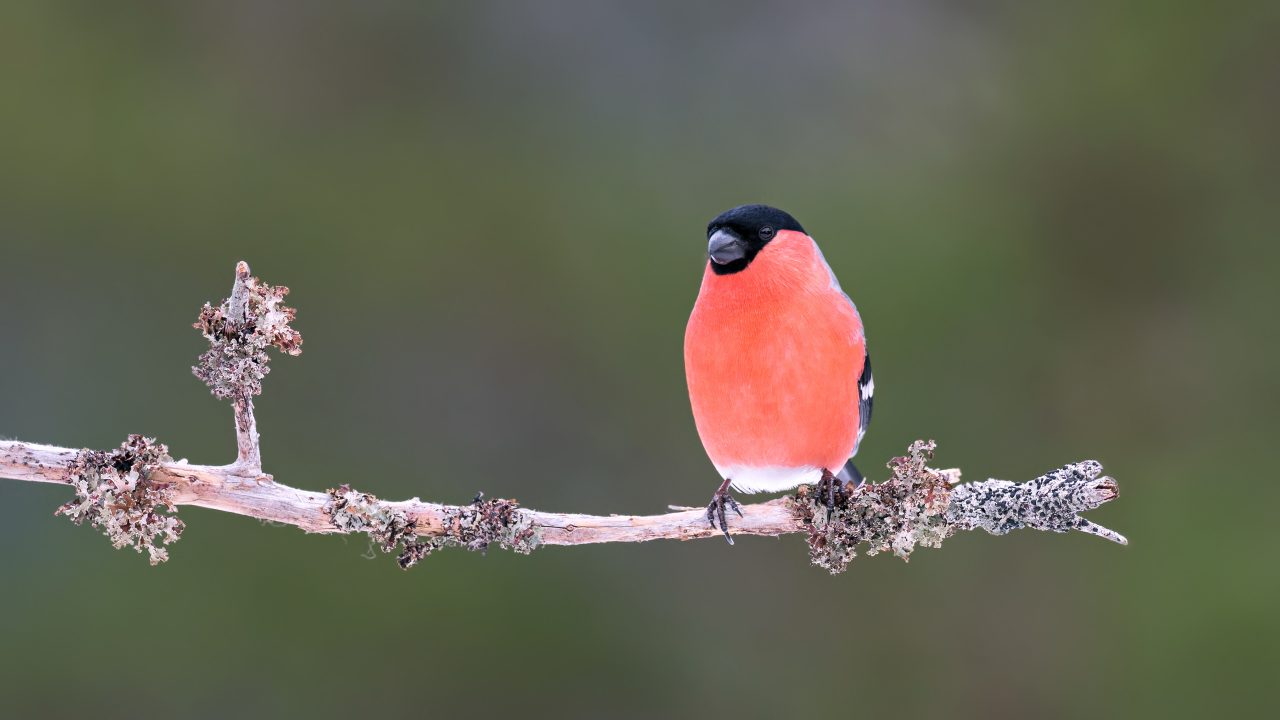
mountain peaks
inside my shoe
a pebble
by Kavita Ratna (India)
published in Cold Moon Journal, August 2024
Commentary by Hifsa Ashraf:
The opening image, mountain peaks, presents a vast and expansive landscape, suggesting a range of mountains viewed together rather than a single peak. It also leaves the exact nature of the mountains open to interpretation—whether they are high, steep, snow-capped, distant, or being viewed from the summit. The second image, inside my shoe, creates a striking shift in perspective. The vastness of the mountain range is suddenly replaced by something intimate, immediate, and almost unnoticed.
A pebble, once an insignificant fragment of the mountain landscape, becomes a source of discomfort when it enters the narrator’s shoe. In this sense, this haiku may suggest that even something small can become significant when it is close to us.
The pebble can be read metaphorically as a small obstacle or problem in life. Just as a tiny stone inside a shoe can make walking difficult, seemingly minor difficulties can disturb our progress when we fail to acknowledge them. At the same time, the pebble may represent a limitation or hurdle that prevents us from moving comfortably toward larger goals. The contrast between the grandeur of the mountain peaks and the inconvenience of the pebble ultimately draws attention to the power of perspective: something insignificant in the vastness of the world can become enormous when it is experienced personally. The haiku thus moves from the grandeur of the external landscape to the intimate experience of the individual, suggesting that the scale of a problem is not always determined by its physical size, but by how closely it affects us.
The absence of punctuation in this haiku can be important because it leaves the three images open and connected without imposing a fixed interpretation or stopping point.
valentine’s day
the only text he gets
grocery list
by Quamrul Hassan (USA)
published in Failed Haiku, April 2024
Commentary by Jacob D. Salzer:
I appreciate the humor in this haiku, though it could also have a more serious interpretation. Perhaps the other person (presumably the partner) in this haiku has a physical disability or can’t get to the grocery store for other reasons. While flowers, chocolate, and maybe a date are nice, I also appreciate the practicality of a grocery list. Still, on first read, my first interpretation was humor. The man in this haiku may not have expected a grocery list text on a romantic holiday. Regardless if we read this haiku as funny or potentially more serious, this poem is infused with care and attention. Well done!
lost community . . .
I gather my rusty arms
for the crucible
by Mikō (Netherlands)
Remembering ten years of My Haiku Pond
Commentary by Nicholas Klacsanzky:
The first line resonates strongly with me, as I have lost communities in the many iterations of “Nick.” Moving, changing scenes, war, and many other factors can contribute to us losing communities. In the case of the poet, Mikō might be referring to the My Haiku Pond online community. The use of ellipsis is appropriate, as it demonstrates the time it takes for a community to unravel or change. It also allows us to ponder the communities we have lost.
Rusty arms is perhaps the haiku’s central image. On one level, it evokes old tools or weapons that are disused and corroded. On another, arms suggests limbs, stiffened or worn. The rust implies the passing of time, and perhaps the erosion that comes with isolation.
The final line reframes everything that came before. A crucible is a vessel for enduring extreme heat. It is for testing, purifying, or transforming materials into something else. By ending with this image, it is implied that the poet is not gathering rusty arms to mourn them, but to submit them to a test or to purify them. There is a narrative arc in these three lines: loss – recovery of old resources – the willingness to face a test or transformation. The third line could be a nod to the famous 1953 play The Crucible by Arthur Miller, which uses a figurative meaning to describe the mass hysteria of the Salem witch trials. Finally, in the Bible, a crucible serves as a powerful metaphor for spiritual testing, suffering, and character refinement.
This haiku relies on suggestion rather than explanation. We don’t know what exact community was lost, or what the crucible represents (a trial, a war, an inner reckoning), and that ambiguity generates resonance.
The word rusty can be seen as an autumn seasonal reference, or kigo. This is a poignant reference, as this is a time when leaves are falling, and the world is becoming sparse, much like the process of losing a community.
The pacing is equivalent to the standard English-language haiku, with a short first line, a longer second line, and a short last line. This approximates the traditional Japanese haiku rhythm of go-shichi-go.
Looking at the diction, the poet could have easily made this haiku verbose but chose to be brief and efficient in wording. Furthermore, the heaviness of “l” sounds in the first and last lines expresses grief. Additional weight is added to the haiku with k/g sounds in “community,” “gather,” and “crucible.”
This haiku can be interpreted in many ways and has several allusions. It is an intriguing and unique work from a poet who has engaged widely in the haiku community for many years.


I feel humbled and honoured that you selected my haiku to be featured in this edition of the Haiku Commentary blog. I truly enjoyed your extensive analysis and comments, dear Nicholas. Fondly, Mikō 🐸
Ps. I also want to congratulate fellow poets Kavita Ratna and Quamrul Hassan on their co-feature.
LikeLiked by 2 people
You’re most welcome. Your haiku got more interesting and layered as I read it, which is always a good sign. Cheers!
LikeLiked by 2 people