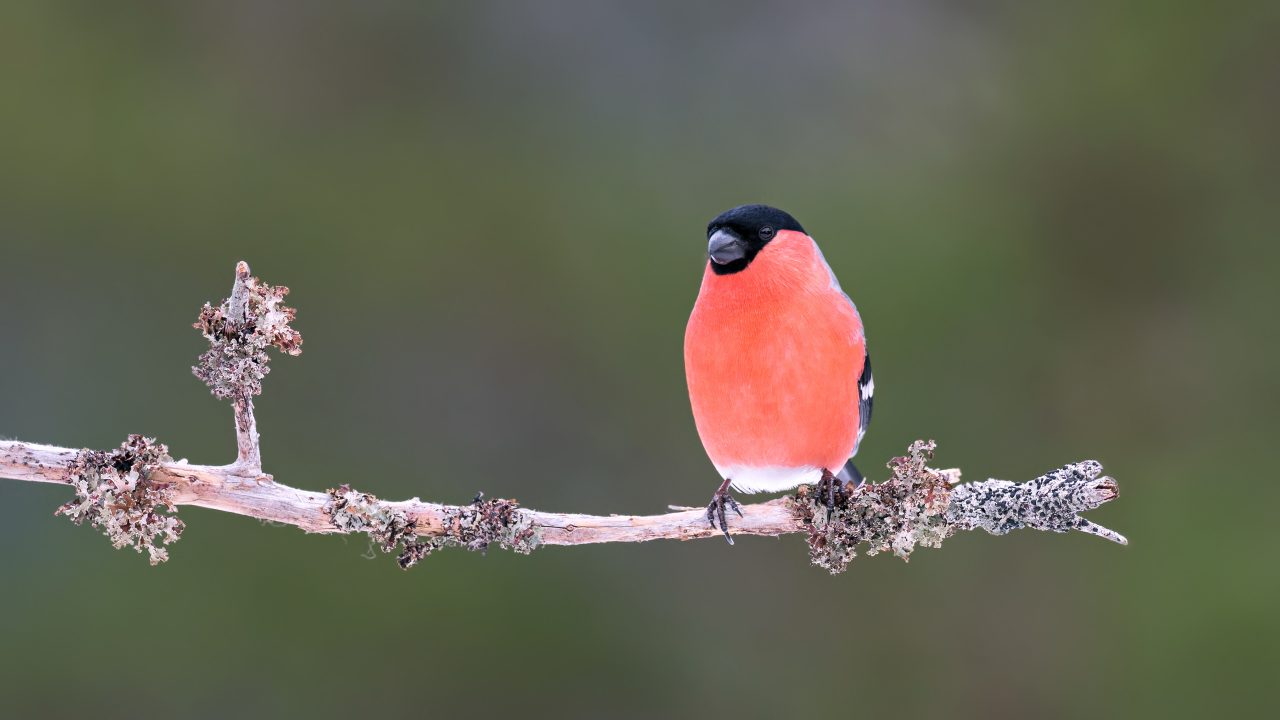
Vladimir Devidé’s Spring Shower

A spring shower:
and then, each drop turns into
a wild strawberry.

© Vladimir Devidé (Croatia) (1925-2010)

(from In Trenutak/The Moment, Ceres, Zagreb 1997)

Vladimir Devidé was a towering haiku personality, but I will try to do my best to examine this haiku of his. My first impression of this haiku was of awe. I love how the third line comes and makes the reader gasp. The imagery is spectacular, but grounded at the same time.

You can see that this was written when haiku was first coming into the West, as it uses a period and leaves the first letter of the first line capitalized. This is not bad, but rather something that was common when haiku was being first introduced in the West. Haiku poets at the time did not come to the consensus we have now in the English-language haiku community about capitalization and punctuation (though debates are still going on about these factors, though not in the same sense). Now, we don’t use capitalization much, as haiku are supposed to be incomplete sentences—fragments. Also, we avoid periods due to the aforementioned point. This does not make this haiku any less valuable, though. It only points to the time it was written in.

It starts with a common seasonal reference. Spring showers point towards something pleasant rather than a feeling of melancholy, usually. The use of the colon makes the reader read the next two lines as a consequence or equation of spring showers.

The second line gives the reader suspense, as he or she wonders what the raindrops turn into. Usually, we don’t think of raindrops transforming into anything, so we are expecting something surreal in the third line.

And the third line certainly delivers. From it, we can imagine raindrops transforming into wild strawberries. But in reality, the raindrops were probably being quickly absorbed into the wild strawberries, or the poet is referring to how the raindrops will aid in the growing of wild strawberries.

Spring is a time of the plentiful, and I believe the poet is expressing the optimism and energy this time brings. The poet displays an almost child-like sense of imagination. This is an important element of haiku: seeing life with a new sense of discovery and freshness. If we could look at each moment with fresh eyes, life would never be mundane. Only by being completely in pure awareness without thought can we be like this.

In terms of sound, the letter “s” features throughout, making the sound of falling rain. Also, the “r” is prominent, giving us a sense of whirring, or turning, which lends to the idea of transformation present in the poem. This might be overthinking it, and maybe these sounds were used simply for musicality.

A joyous haiku written with child-like perception, it allows us as readers to reach into our imagination and to feel the magic of spring.

– Nicholas Klacsanzky (Ukraine)

About the Poet

The history of haiku poetry in Croatia is inextricably tied to the name of the outstanding Croatian Japanologist, mathematician, academic, and writer Vladimir Devidé—a long-time member of the Croatian Academy of Sciences and Arts in Zagreb.

Vladimir Devidé was born in Zagreb in 1925. He graduated from the Technical University of Zagreb in 1951, and did a PhD in the field of mathematical sciences at the Faculty of Science. Since 1965, he was a professor of the Faculty of Mechanical Engineering at the University of Zagreb. He did post-doctoral studies in Israel (1960) and in Japan (1961-1963) and was a visiting professor at Monash University, Australia (1968) and Ohio State University in Columbus, USA (1971). He participated in numerous international mathematical congresses and symposiums.

In the field of mathematics, he published 40 scientific papers and about 200 essays and articles, and held some 60 public lectures about the results of his scientific work. He published 15 books on mathematics. In the field of Japanology and literature, he published more than 200 essays and articles in Croatian, American, Japanese, and German literary journals and magazines, as well as 16 books.

Vladimir Devidé was a full Member of the Croatian Academy of Sciences and Arts, member of the Union of Croatian Writers, the Croatian P.E.N. Club, etc.; honorary President of the Association of Croatian Haiku Poets, honorary member of the German Haiku Association, and advisor of the World Haiku Association.

Awards:

· Order of Labour with Golden Wreath, 1965.

· Republic Prize “Ruder Boskovic” Institute, 1969.

· International Le prix CIDALC, 1977.

· Award of the City of Zagreb for an entire mathematical work and literary work, 1982.

· Order of the Sacred Treasure of the Japanese Government, 1983.

· State prize of the Republic of Croatia for Life Work in Science, 2003.

· Special recognition of the Japanese Ministry of Culture for outstanding contributions to the international understanding between Japan and Eastern Europe (2004).

· Some twenty prizes for Japanese international haiku competitions.

Publications on Japanology:

· Japanese Haiku Poetry and Its Cultural Framework, 1970.

· Japan—Tradition and Modernity, 1978.

· Japan—Past and Future into the Present, 1978.

· From Japanese Literature, 1985.

· Japan—Poetry and Reality, 1987.

· Japan for Children, 1987.

· JapanPast and Future into the Present, 1988.

· Talks about Haiku Poetry, 1991.

· Zen, 1992.

· Renge, 1995.

· Anthology of Croatian Haiku, 1996.

· Japanese Haiku Poetry and Its Cultural Framework, Zagreb published, Zagreb, 2003.

· Japan, Monographs, School Books, Zagreb 2006.

Literary works:

· White Flower, 1994.

· Antidnevnik/Recall, 1995.

· In Trenutak/The Moment 1997.

· Haibun—Words and Pictures, 1997.

[From The Living Haiku Anthology, with edits]

Christina Sng’s Secrets

winter nights
telling the walls
all my secrets

Chrysanthemum, Issue 21, April, 2016

© Christina Sng (Singapore)

This haiku charges the reader’s imagination with many ideas and images. The scene in which the haiku takes places implies that the poet feels lonely or is alone, or that she feels the people around her are not able to truly listen to her.

Winter nights are often times to introspect about one’s life and also to be together with family. However, in this haiku, the poet shows that perhaps she does not have her family around, and takes the walls as her sounding board to express her emotional weight.

Without using personification, the poet shows it. The walls become animate in the reader’s mind, as if they are capable of listening to the poet’s secrets, and possibly comfort her. The chill of a winter night might represent the coldness of the walls, in that they do not respond to her as a human would. But, they seem to be all she has at the moment. However, maybe the mere speaking of the secrets out loud helped the poet overcome some issues she was having.

There is a common question: “What if the walls could listen?” In this haiku, the poet does not ask this question, but puts it to the test. In evaluating the mood of the haiku, it seems the act was not successful, and the poet went deeper into her melancholy.

The sound in the haiku adds much to its mood. The “w” sounds in “winter” and “walls” accentuate the cold environment, in both weather and the temperament of the walls. The letter “t” also features strongly, with it being within five words. Besides giving the haiku a more musical sound, it lends to the power of a secret.

A haiku about loneliness, and about the relationship between the animate and inanimate, it leaves reader’s with an impression that is at once relatable and distant.

– Nicholas Klacsanzky (Ukraine)

L. A. Davidson’s Winter Storm

in winter storm
his own deep footprints
closing behind him

© L. A. Davidson (USA) (1917-2007)

Sometimes, what we do seems to make little difference, even though we push hard to be of significance. I think this is one of the main messages of this haiku. The “winter storm” could be our modern life, or it could be the harsh environment of our family life or personal life.

Though this haiku could be seen as cynical, I believe there is a sense of acceptance in it as well. It is an acceptance that our lives are insignificant compared to the vastness of the universe. This acceptance is freeing, as we often put too much weight on our actions and our inactions, and do not see the play of existence for what it is.

This haiku could also be pointing to the fact that human existence is not as powerful as nature itself. Though we like to think we own land, that we can master nature, our actions are unlikely to be more powerful than nature itself. We can change and mold nature to our benefit, but we cannot create something entirely new without its help and substance.

Another take on this haiku is that when there is too much happening at one time, our memory will not be clear. Instead, if we live life simply, we will remember the moments of our lives with more clarity.

There are many more things that this haiku implies, but I will leave that to the imagination of the reader.

Sonically, the letter “o” is the most important sound in the haiku, and brings a sense of elongation of the journey of life, and the dragging feeling that no matter what we do, our actions are not that important.

A poignant image, a beautiful moment, or a cynical look at our existence–all can be correct. This haiku brings a lot to the reader’s mind, and allows for an introspective mood.

– Nicholas Klacsanzky (Ukraine)

About the Poet

L. A. (Laura Agnes) Davidson was one of the most honored and respected American haiku poets of her time. She was born on 31 July, 1917, and grew up in the wide open spaces of Montana. She enjoyed learning and reciting poetry and ballads from a very early age. She gained scholarships towards higher education and college and later graduated with a B.A. in Journalism from the University of Minnesota.

Agnes enjoyed writing short stories and poetry, and during her extensive travels through Europe and Africa, she proved to be an excellent correspondent communicating with other poets from far and wide who wished to learn more about the ancient poetry of haiku. Agnes was first acquainted with haiku in 1966, when a friend gave her a copy of Harold G. Henderson’s Haiku in English and shortly thereafter, Agnes began experimenting with the form. Three years later, she had her first haiku published in Haiku Headlights. She considered her haiku to be “a personal journal” written from observations and specific moments of her life.

Agnes was an active member of the Haiku Society of America since its founding in 1968 and she had promoted haiku for many years. She served as a vice president in 1976, a Membership/Subscription Secretary in 1979 and 1981-82, a treasurer for 1989-90, and was also a long-time unofficial historian for the society. Agnes died just two weeks before her 90th birthday on 18 July, 2007, from a massive stroke and heart attack.

L. A. Davidson’s publications include hundreds of haiku in magazines, journals, and anthologies, and she is the author of three books:

The Shape of the Tree: a first collection of haiku and senryu moments of New York City life, New York (Wind Chimes, Glen Burnie MD, 1982; rpt DLT Assoc. 1992, 1996)

Jamaica Moments (DLT Associates, Miami FL, 2002)

Bird song more and more (Swamp Press, Northfield MA, 2003, rpt 2007)

[From The Living Haiku Anthology, with edits]