
still playing
the anti-war song
air raid alert
— Lucas Weissenborn (Norway)
published in Tsuri-dōrō, issue #31, January, 2026
Commentary by Hifsa Ashraf:
The opening line is written in a continuous form, suggesting that something is still ongoing. Adding the word “still” before “playing” makes it more expressive in several ways, as it may convey feelings of sadness, hope, emptiness, or persistence.
The reference to an anti-war song in the second line makes the scene more specific, while also raising questions. Is this song personal to the speaker? Is it being played by the person themselves or someone from their past or family? Does the song trigger memories, or does it soothe them? The phrase anti-war suggests themes of peace and reflection, possibly indicating a reminder to oneself or to the world about positivity and resistance to conflict.
The setting in which the song is being played is also significant. Is it in a vehicle, a shop, a home, ruins, or a public space? Each possibility changes the emotional context of the haiku.
The air raid alert, typically represented by a siren, is associated with fear, urgency, and distress. The contrast between the anti-war song and the air raid alert creates striking tension, making the haiku open to multiple interpretations. Is the anti-war song playing during the air raid alert, or is it being used to counteract its psychological impact?
The absence of punctuation further enhances the sense of silence, fear, and uncertainty underlying the poem.
quaking aspens
spinning leaves
into daydreams
— Michael Shoemaker (USA)
published in the Autumn Moon Haiku Journal, May 10, 2025
Commentary by Jacob D. Salzer:
I appreciate the message in this haiku that even in autumn, when some things and people are aging and passing away, there is room to daydream. The word “quaking” is unique and means shivering or trembling but also defines the unique tree beings with the same name: quaking aspens.
According to The National Wildlife Federation, “Quaking aspens, also called trembling aspens, are named for their leaves. Flat leaves attach to branches with lengthy stalks called petioles, which quake or tremble in light breezes. Quaking aspens regularly grow in dense, pure stands, creating a stunning golden vista when their leaves change color in the fall. The white bark is one identifying characteristic of this tree, but the bark is special for more than just its unique appearance. The bark layer of quaking aspens carries out photosynthesis, a task usually reserved for tree leaves. In winter, when other deciduous trees are mostly dormant, quaking aspens are able to keep producing sugar for energy. Deer, moose, and elk seek shade from aspen groves in summer. These same animals consume bark, leaves, buds, and twigs of quaking aspens throughout the year. Ruffed grouse are especially dependent on quaking aspens for food and nesting habitat. People use quaking aspens for fuel and to make paper, particle board, furniture, and hamster bedding. In terms of height, quaking aspens are relatively small. They are usually less than 50 feet (15 meters) tall.”
Quaking aspens are native to North America and have heart-shaped leaves.
The sonic effect of “quaking,” “spinning,” and the “s” sounds (and the wind through the trees) throughout gives this haiku a dreamlike, lullaby effect. In a culture that praises a fast-paced life, speed, productivity, efficiency, and a “more is better” mindset and attitude, this haiku offers another mode of being, to slow down and be one with Nature. Quaking aspens and their beauty can quiet the mind and give us a quiet space to dream and to daydream. A beautiful haiku.
tuning my guitar
outside the study
yellow leaves shivering
— Tuyet Van Do (Australia)
published in Lothlorien Poetry Journal, December 17, 2025
Commentary by Nicholas Klacsanzky:
Starting with the kigo, or seasonal reference, we notice that it is autumn due to the yellow leaves. The action of shivering allows us to conclude that it is the colder part of autumn, heading towards the beginning of winter. This connects well with the word “tuning,” as nature and humans alike have to adjust to the changing of seasons.
Also, when someone tunes a guitar, they are shifting strings, which can be perceived as shivering. So, in this haiku, the leaves trembling can be seen as a direct correspondence of the poet tuning her guitar. It is a comparison I have not seen in other haiku before yet highly relatable.
In the second line, the haiku is placed within a study, or a place to focus on work or projects. From the comfort of the study, the poet sees the helpless leaves “shivering” in the cold weather. The diction personifies the leaves, allowing readers to sympathize with them during this harsh time of year. For many haiku masters, old and new, the focus of the art form is to create empathy and connection between humanity and nature. This haiku leans into that facet.
The pacing of the lines is interesting. The first two lines are of equal length, while the third is long. Most commonly, haiku are written in a short/long/short format in English. The prolonged third line, in a way, emphasizes the leaves’ suffering. The unusual focus on “u” sounds in the first two lines could be a representation of what tuning sounds like. The “l” sounds in the third line make it light for a bit, but the letter “v” in “shivering” creates heaviness.
Finally, the lack of punctuation creates a chance for a pivot line. The haiku can be read two ways: tuning my guitar/ outside the study, yellow leaves shivering” or “tuning my guitar outside of the study/ yellow leaves shivering.” The second reading could mean the poet is outside tuning her guitar, and the leaves could be “shivering” to the music instead of the cold. An enjoyable haiku that provides readers with empathy and a sense of oneness with the natural world.
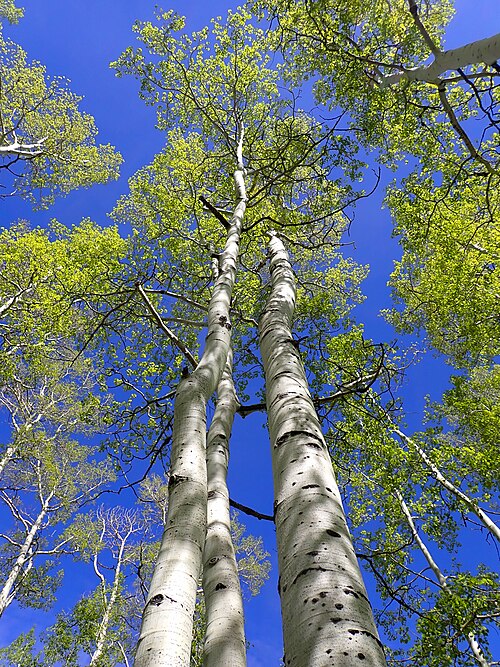
Photograph by Matt Lavin, Creative Commons

