beach stone
some of the worry
already gone
— Pat Davis (USA)
The Heron’s Nest, #44, December 2024
Commentary from Jacob D. Salzer:
I appreciate how the image of a beach stone can be a metaphor for letting go. In this haiku, we don’t know what the poet is worried about, but the beach is a place where worries seem to disappear and fade into the background. I can feel the weight of the beach stone and hear the pulse of ocean waves. Along these lines, the beach and the vast ocean can create a relaxing atmosphere where we can embrace the space between thoughts. At the same time, the ocean can allow us to see “the big picture” where our worries can be seen from a deeper and different perspective. I think this is very important to do because we can step outside our small sense of ego and see our place on Earth and within the larger cosmos. I also appreciate how this haiku is relatable from reader to reader. It seems most people have their own worries that come and go. I deeply appreciate how the Earth herself can calm the mind and help us reflect. This haiku shows us this power.
In short, this haiku shows the inherent healing power of Nature without overly explaining it. It includes a balance between concrete imagery and mystery. While this haiku is personal, it is also relatable to many readers with different backgrounds and circumstances. In the end, I think we can all benefit from learning how to let go. A powerful haiku.
dry summer
a spider web full
of fireweed seeds
— Anthony Lusardi (USA)
Frogpond, 48:1, winter 2025
Commentary from Hifsa Ashraf:
The haiku speaks for itself in terms of its theme and imagery. Climate change is a topic that should be highlighted time and again through any platform or medium as a reminder to the world that it is a serious issue.
The kigo in the first line ‘dry summer’ gives a vivid image of both time and season. I see it as if there is a drought with a drastic impact on nature. It seems the poet talks about a rainless time when the rain is needed the most. But, it still doesn’t give us a clue of the time period i.e. is it rainless for long or short? But, I like the way the poet uses an aesthetic sense to observe the beauty of nature even in hard times.
A spider web can represent mystery, confusion, hopelessness, or abandonment where probably no access is given to any being. I wonder if the spider web is inside or outside a building, in an open field, or in a garden/farm, etc. There is no such clue of the location which makes this haiku open for interpretation.
Fireweed seeds in the last line add to the interest in this haiku as seeds may stick to the spider web as a result of pollination, wind, storm, or any other source. But, in any case, these seeds have no chance to germinate as they may not be on the ground or in a favourable condition. At first look, the spider web full of fireweed seeds may sound like a period of hopelessness, drought, or lifelessness. However, fireweed can symbolize rebirth, resilience, and hope. But, the word ‘full’ instead of ‘stuck’ or ‘cling’ gives me some hope that maybe, one day these seeds may survive and fall on the ground or a suitable place to grow. The article ‘a’ and the word ‘full’ make it simple to interpret without digging more into the various aspects of this imagery. So, I see both hopelessness and hopefulness in this haiku. I see the resilience of nature in extreme or unfavourable seasons. I see life in a lifeless situation. I see the impact of climate change on nature and the way nature responds to it by trying to survive and preserve its elements.
grandma’s old vineyard
amid dense branches
an abandoned chick
— Martina Matijević (Croatia)
Commentary from Nicholas Klacsanzky:
The contrast between the chick and the old vineyard is striking. The word “abandoned,” though, can pertain to both the vineyard and the chick. From the first line, I assume the poet’s grandma has passed away and has essentially been abandoned. Looking at the second line, it is a pivot which connects to the first and third lines. If the first two lines are read as one whole, it could be saying that the grandma’s old vineyard is “hiding” or obscured amid dense branches. If the last two lines are read as one part, the chick appears amidst the branches. It’s always a plus when you can read a haiku in multiple ways.
A kigo or seasonal reference is not quite apparent. However, the mood of the haiku is at once bleak and hopeful. There is sadness in the deserted nature of the vineyard but an optimism in the new life that has inhabited a derelict space. It feels like the baby bird is a reincarnation of the grandma or a continuation of her life.
Looking at the format, it is interesting that each line is an equal five syllables each. I am not usually a syllable counter in haiku, but I noticed how each line was about the same length. Commonly, the haiku rhythm in English is a short line, a long line, and a short line. There is nothing wrong with changing up that rhythm, though. Each haiku is organic and requires a different pacing.
Sonically, the strongest letter in this haiku is perhaps “d.” In my opinion, it provides weight to the poem and the scene itself. The other letter that interests me in this haiku is “b,” which also creates accents of strength or gravity
To wrap up, this haiku connects the poet’s experience to the animal/natural world seamlessly. The haiku also features a fine sense of sound, a unique rhythm, and multilayered imagery.
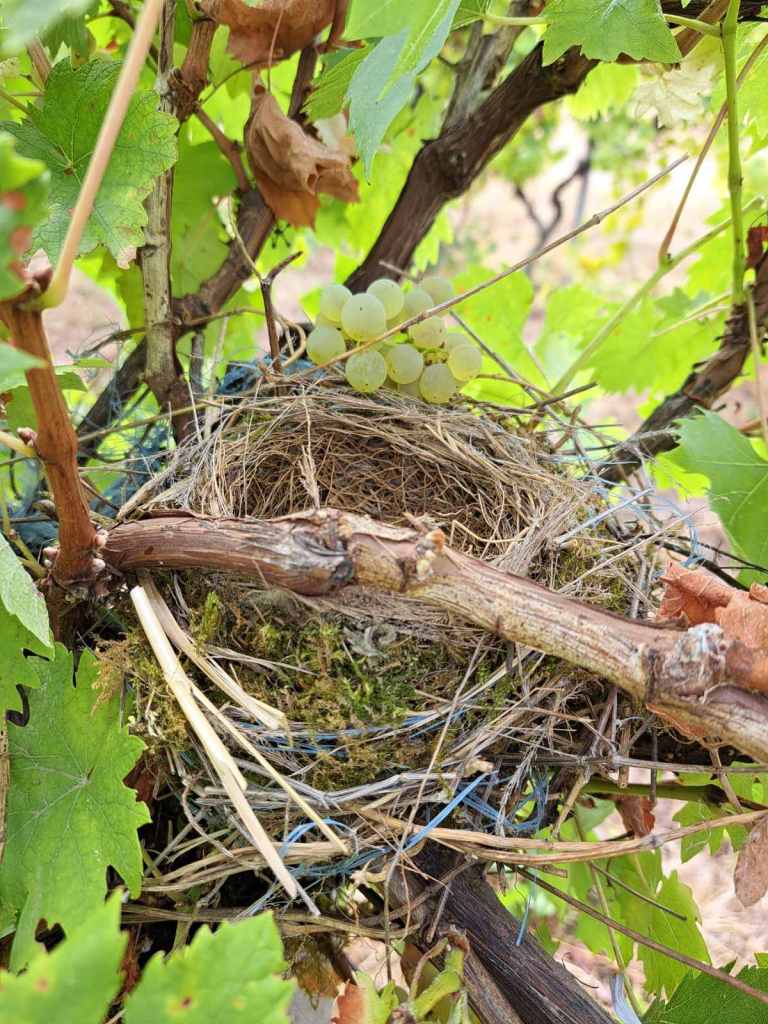
Photo credit: Martina Matijević
 Haiku Commentary
These are fantastic!!
LikeLike
I’m glad to hear you appreciate them :)
LikeLike