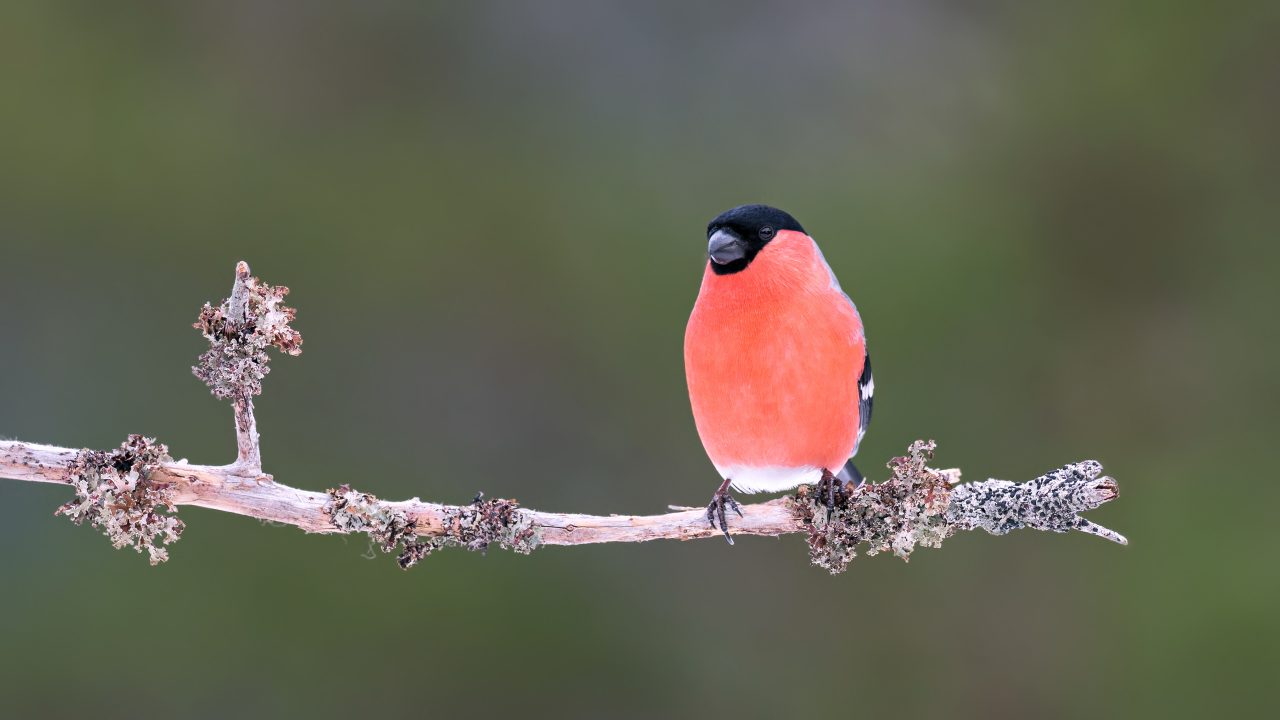
Haiku by Kavita Ratna, Quamrul Hassan, and Mikō

mountain peaks
inside my shoe
a pebble


by Kavita Ratna (India)
published in Cold Moon Journal, August 2024

Commentary by Hifsa Ashraf:

The opening image, mountain peaks, presents a vast and expansive landscape, suggesting a range of mountains viewed together rather than a single peak. It also leaves the exact nature of the mountains open to interpretation—whether they are high, steep, snow-capped, distant, or being viewed from the summit. The second image, inside my shoe, creates a striking shift in perspective. The vastness of the mountain range is suddenly replaced by something intimate, immediate, and almost unnoticed.

A pebble, once an insignificant fragment of the mountain landscape, becomes a source of discomfort when it enters the narrator’s shoe. In this sense, this haiku may suggest that even something small can become significant when it is close to us.

The pebble can be read metaphorically as a small obstacle or problem in life. Just as a tiny stone inside a shoe can make walking difficult, seemingly minor difficulties can disturb our progress when we fail to acknowledge them. At the same time, the pebble may represent a limitation or hurdle that prevents us from moving comfortably toward larger goals. The contrast between the grandeur of the mountain peaks and the inconvenience of the pebble ultimately draws attention to the power of perspective: something insignificant in the vastness of the world can become enormous when it is experienced personally. The haiku thus moves from the grandeur of the external landscape to the intimate experience of the individual, suggesting that the scale of a problem is not always determined by its physical size, but by how closely it affects us.

The absence of punctuation in this haiku can be important because it leaves the three images open and connected without imposing a fixed interpretation or stopping point.

valentine’s day   
the only text he gets   
grocery list    

by Quamrul Hassan (USA)
published in Failed Haiku, April 2024

Commentary by Jacob D. Salzer​:

I appreciate the humor in this haiku, though it could also have a more serious interpretation.  Perhaps the other person (presumably the partner) in this haiku has a physical disability or can’t get to the grocery store for other reasons. While flowers, chocolate, and maybe a date are nice, I also appreciate the practicality of a grocery list. Still, on first read, my first interpretation was humor. The man in this haiku may not have expected a grocery list text on a romantic holiday.  Regardless if we read this haiku as funny or potentially more serious, this poem is infused with care and attention. Well done!

lost community . . .
I gather my rusty arms
for the crucible


by Mikō (Netherlands)
Remembering ten years of My Haiku Pond

Commentary by Nicholas Klacsanzky:

The first line resonates strongly with me, as I have lost communities in the many iterations of “Nick.” Moving, changing scenes, war, and many other factors can contribute to us losing communities. In the case of the poet, Mikō might be referring to the My Haiku Pond online community. The use of ellipsis is appropriate, as it demonstrates the time it takes for a community to unravel or change. It also allows us to ponder the communities we have lost.

Rusty arms is perhaps the haiku’s central image. On one level, it evokes old tools or weapons that are disused and corroded. On another, arms suggests limbs, stiffened or worn. The rust implies the passing of time, and perhaps the erosion that comes with isolation.

The final line reframes everything that came before. A crucible is a vessel for enduring extreme heat. It is for testing, purifying, or transforming materials into something else. By ending with this image, it is implied that the poet is not gathering rusty arms to mourn them, but to submit them to a test or to purify them. There is a narrative arc in these three lines: loss – recovery of old resources – the willingness to face a test or transformation. The third line could be a nod to the famous 1953 play The Crucible by Arthur Miller, which uses a figurative meaning to describe the mass hysteria of the Salem witch trials. Finally, in the Bible, a crucible serves as a powerful metaphor for spiritual testing, suffering, and character refinement.

This haiku relies on suggestion rather than explanation. We don’t know what exact community was lost, or what the crucible represents (a trial, a war, an inner reckoning), and that ambiguity generates resonance.

The word rusty can be seen as an autumn seasonal reference, or kigo. This is a poignant reference, as this is a time when leaves are falling, and the world is becoming sparse, much like the process of losing a community.

The pacing is equivalent to the standard English-language haiku, with a short first line, a longer second line, and a short last line. This approximates the traditional Japanese haiku rhythm of go-shichi-go.

Looking at the diction, the poet could have easily made this haiku verbose but chose to be brief and efficient in wording. Furthermore, the heaviness of “l” sounds in the first and last lines expresses grief. Additional weight is added to the haiku with k/g sounds in “community,” “gather,” and “crucible.”

This haiku can be interpreted in many ways and has several allusions. It is an intriguing and unique work from a poet who has engaged widely in the haiku community for many years.
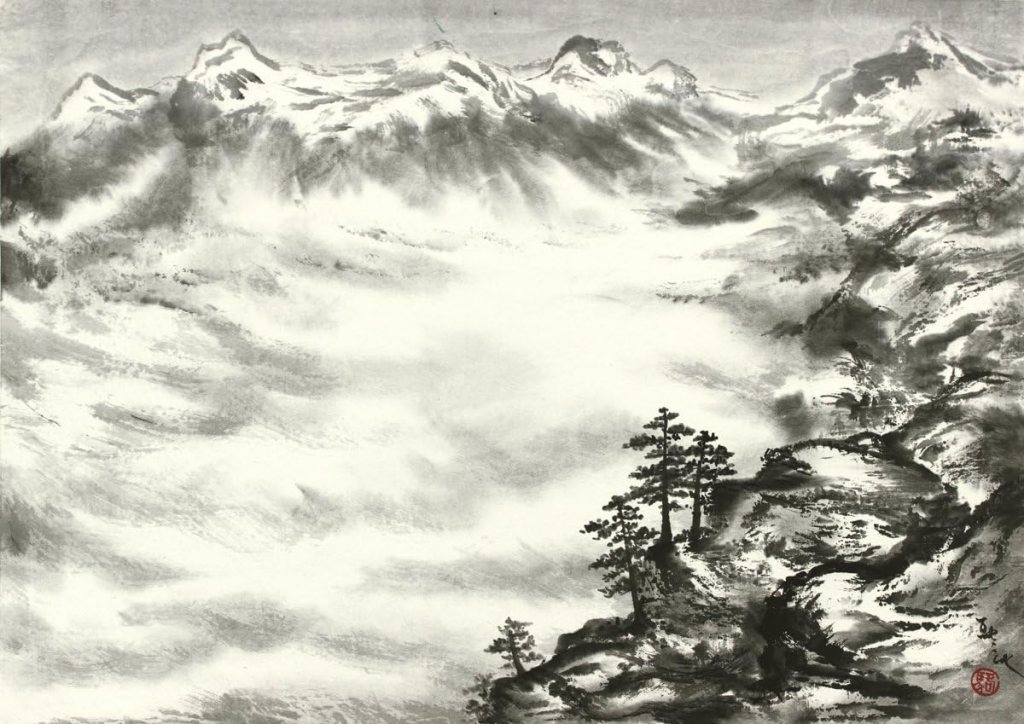
Sumi-e painting

Haiku by Kavita Ratna, Tuyet Van Do, and Katherine E Winnick

in the margins
of a funeral
a message pings


— Kavita Ratna (India)
LEAF, June 2023

Commentary from Jacob D. Salzer:

An important haiku that sparks a conversation about our views of death, funerals, and technology in modernity. The first line is unique because it has literal and potentially metaphorical interpretations. Was the person with the cellphone living at the psychological margins of the deceased person’s life when they were alive? Was the person with the cellphone a friend or acquaintance who didn’t know most of the people at the funeral? This can create an awkward social situation. At the same time, it can be humbling to see how one person touched so many people’s lives. The word “margins” seems to imply there are a lot of people attending the funeral. Perhaps this person doesn’t truly feel they can celebrate the deceased person’s life among the crowd of people. Does the modern-day ritual of funerals truly celebrate the deceased person in a unique way that they would actually want? 

According to Elizabeth Fournier in her book, “The Green Burial Guide: Everything You Need to Plan an Affordable, Environmentally Friendly Burial”: “Funeral expenses in the United States average more than $10,000. And every year conventional funerals bury millions of tons of wood, concrete, and metals, as well as millions of gallons of carcinogenic embalming fluid. There is a better way.”

Here is The Green Burial Guide on Bookshop.org, which I recommend:
https://bookshop.org/p/books/the-green-burial-guidebook-everything-you-need-to-plan-an-affordable-environmentally-friendly-burial-elizabeth-fournier/10952712?ean=9781608685233&next=t

Even though the person in this haiku is not noticeable at the funeral, their cellphone ping briefly interrupts the service and has a ripple effect. This makes me wonder about the ways we communicate in our culture and the quality of our communication methods. Text messages can be useful, but they can also be overly used. Since the English Language and technology are both tools, I think they need to be used carefully and wisely. Silencing our cellphones is also a clear gesture of respect, which this person in the haiku clearly forgot to do. The ping notification could mean an important message came through, or it could be something more superficial. It reminds me that we are constantly communicating with each other, both verbally and non-verbally, all the time. But do we use cellphones too much? What are the consequences of spending too much time on our cellphones and other devices?

I think the social norms of funerals in the U.S. need to be psychologically interrupted in light of how costly they are, both environmentally and financially. I sincerely hope that more people could plan ahead for how they want to be remembered and celebrated in modest ways through a living will. I also sincerely hope more people would choose an eco-friendly burial option. This truly benefits everyone and saves a significant amount of money, too.

In short, this is an important haiku that starts a larger conversation about funerals, how we remember and celebrate someone, and the role of technology in our lives. It could also spark conversations about the afterlife and reincarnation. How do we want to be remembered? What are we leaving behind? How can death remind us of how we truly want to live within this limited lifetime, moment by moment? As a community, I hope that compassion and wisdom can be our guiding light.

spoon by spoon 
feeding my patient …
a setting sun


— Tuyet Van Do (Australia)
Poetry Pea Journal 2:25, 2025

Commentary from Hifsa Ashraf:

I can sense pain, endurance, caring, and departure in this subtle poem where the patient is either dying or getting relief from suffering. I see both hope and despair. The patient being taken care of by a nurse or paramedic staff is all alone and helpless. ‘Spoon by spoon’ is a deep expression, showing bits and pieces of healing by nourishing the patient. It could be food, medicine, or something more energetic, but it also depicts old age, where a person depends on others for their well-being.  

The use of ellipses in the second line after ‘feeding my patient’ stresses the depth of feelings of the person who is nursing the patient. Do they have any association with the patient? Do they empathise with the patient? Do they feel bad about the patient? Who is the patient? What’s the age of the patient? Is the patient alone or have a family? All these details remain open for interpretation. 

The last part of this haiku reveals something unfortunate and helpless. The dying sun symbolizes the end of life, when day transforms into night. In other words, the transformation of life into death or from an uncomfortable condition to a comfortable condition, where the patient sleeps well after getting some care. I see another aspect here: ‘sun’ may also be symbolic of the gender of the patient by creating an analogy of the sun with ‘son’. The beauty of this poem is that you can interpret it in as many ways as you can, and each aspect may lead to the harsh reality of life, which is death. 

Sakura Jishidi 
shadows of sparrows 
amongst the pink 


— Katherine E Winnick (UK) 
Presence #79, 2024 

Commentary from Nicholas Klacsanzky:

“Sakura Jishidi” is the name of the Japanese tree peony. They commonly bloom in spring, and are used in haiku to signify this season. Employing the Japanese word for the flower instead of the English version is an intriguing choice. I believe it increases the sound quality of the haiku, as “Japanese tree peony” doesn’t mesh with the “s” and “i” sounds in the rest of the poem as much.

The keyword in this haiku, in my opinion, is “shadows.” I feel it has two meanings: the physical presence of shadows and the memory of sparrows. It could also be a reference to something fleeting, ominous, or gloomy. The mood of this haiku centers around this word, as even though the sakura blossoms display their pink, the memory, absence, or distance of sparrows decorates the flowers. Ultimately, this brings about a melancholy mood amidst spring. I resonate with these types of moods in haiku, as they mirror our nuanced lives. Within joy, there is oftentimes a touch of sadness or loss. This does not diminish joy, in my opinion, but allows us to be more grateful when it occurs and to experience it with a mature lens.

Copyright 2022, Tsun Ming Chmielinski

Haiku by Kavita Ratna, Elliot Diamond, and Jeremy Haworth

river view
a salmon floats
on a cloud of oil

— Kavita Ratna (India)
Cold Moon Journal, October 2024

Commentary from Jacob D. Salzer:

An important haiku that shows not only environmental harm but also our human dependency on oil in modern culture. In turn, this haiku shows the negative consequences of modern, industrialized culture without overly explaining it, and contributes to a much larger conversation. What kind of lives do we want to lead? Are we aware that when we damage the Earth, we also damage ourselves? The depiction of death in the second line also has a haunting effect. It seems the word “floats” suspends the moment in time, showing how events like oil spills disrupt the natural cycles of the Earth and complex ecosystems. I think we should turn to Indigenous wisdom for guidance to heal the many wounds we have created on Earth and to live better lives.

This haiku also reminds me of an important poetry anthology, I Sing the Salmon Home, edited by Rena Priest.

I hope this haiku will inspire people to support the salmon population and reflect on how we can live better, and take better care of each other and the Earth.

the rush of hail                                                            
to a distant iceblink
compass to home
 

— Elliot Diamond (USA)
Time, #61 2024

Commentary from Nicholas Klacsanzky:

The imagery, diction, and sense of sound drew me to this haiku. An absorbing image is described in the first two lines, which is epic to imagine as a reader. I’ve never seen the word “iceblink” before, but I had fun learning that “it is a white light seen near the horizon, especially on the underside of low clouds, resulting from [the] reflection of light off an ice field immediately beyond” (Wikipedia). The hail seems to merge with the iceblink, and this intuitively relates to having a compass to home. The integration of elements brings a sense of enlightenment, which is akin to finding one’s home. In a more practical sense, “the iceblink was used by both Inuit and explorers looking for the Northwest Passage to help them navigate safely as it indicates ice beyond the horizon” (Wikipedia).

Thinking about the kigo, or seasonal reference, it is mostly placed in winter. Hail and ice are commonly associated with winter but could appear in autumn or even spring at times. Anyway, the cold could be associated with the calculation of a compass, though it points to something as personal as a home.

The lack of punctuation or cut (kireji) makes the second line act as a pivot. So, it can be read as the rush of hail/ to a distant iceblink compass to home or the rush of hail to a distant iceblink/ compass to home. The latter is probably the most common reading of it.

Finally, looking at the sound, the letters “h” and “l” in rush, hail, iceblink, and home give me the impression of subtlety yet emotional weight. With 11 words in a short/long/short structure using common language (except the surprising “iceblink,” which is a pleasant artistic touch), this haiku follows the haiku tradition well. Beyond that, the compelling overall package of the haiku manifests a spiritual feeling that is also somehow personal.

sun haze 
what’s left of the stream 
rock shadows


— Jeremy Haworth (Ireland)
Presence, issue #81, 2025

Commentary from Hifsa Ashraf:

sun haze is a kigo that refers to seeing things clearly due to environmental conditions, i.e., smoke, smog, dust particles, fog, etc. Starting with this kigo allows us to pause and imagine the condition we unfortunately often pass through. It may indicate climate change, blurred vision, oblivion, a lack of awareness or clarity, etc. In any case, the poet lets us see an image that is significant in our lives in terms of survival and quality of life. In two kigo words, there can be a lot to explain, and that’s the beauty of haiku. You can let your imagination go wild and think of all possible but relevant aspects that can link to the kigo. The poet set a ground for us through this kigo so that we can feel the severity of issues related to climate and environment. 

In the second line, the stream may be either dried or near dry due to drought, infrastructure, expansion of cities, modern life, a lack of rain, or other reasons. My impression is that the stream may never come back, which is quite alarming. The poet didn’t end the poem with the death of the stream, but he focused on what’s left behind. The word ‘of’ is used cleverly in this haiku along with ‘what’s’, which may or may not be a question one can ask themselves.

The third line, ‘rock shadows’, indicates there is still water in the stream with a low level where one can see the shadows of rocks. It seems the rock shadows are symbols of annihilation, where one can not see them clearly in water, or they are imaginary, which tells us the stories of the stream’s origin. In any case, it’s a dreadful picture of nature in danger due to our actions. The beauty of this haiku is that there is no human experience or condition mentioned in it, but it still makes us ponder environmental conditions. 

I can see an analogy between this haiku and human experience i.e. the sun haze may be the blurred vision or oblivion we are in; the stream may be a thought process that is not in a great flow; and rock shadows are speculations or doubts about critical thinking about the environment/climate that needs our attention. 

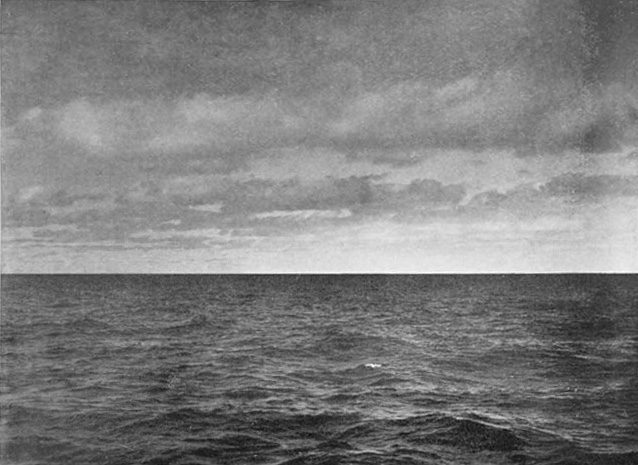
Ice blink captured by Herbert Ponting in 1913