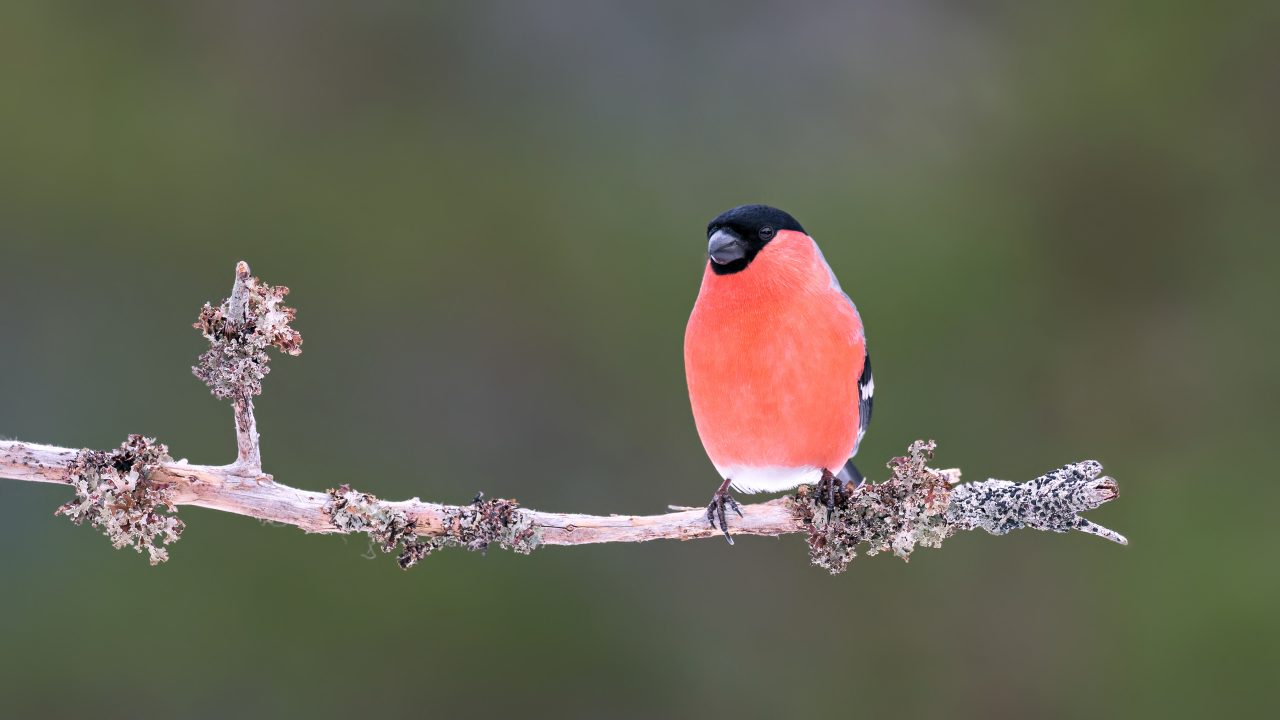
winter morning
inside the gargoyle’s mouth
a bird’s nest
— Gordon Brown (USA)
tsuri-doro, issue #14, March/April 2023
Commentary from Hifsa Ashraf:
The starting line with a kigo shows the cold weather when people mostly stay inside and enjoy the coziness of rooms and memories. A winter morning may indicate fog, snowflakes, snowfall, blizzard, or simply coldness. It may be a window view, a view from the balcony, a view from a vehicle’s window, etc. In any case, the person has captured something unusual—something that people don’t focus on in their daily routine. Perhaps, the poet is trying to relate his personal life with the imagery.
The English article ‘the’ before ‘gargoyle’ allows us to ponder statues, stubs, waterspouts, fountains, etc. But, it seems whatever form the gargoyle’s mouth takes, it needs some maintenance. In religious terms, gargoyles are meant to be both good and bad. In architecture, they are used for the disposal of water. The placement and the purpose of a gargoyle in this haiku is significant. It seems like the gargoyle is no longer in use, or simply a statue where a bird nests. This may indicate that the gargoyle is meaningful even if no one cares. It’s a sign of adjustment where insignificant things become significant—especially in hard times. In this case, a bird nests in the gargoyle’s mouth to avoid harsh weather. For that bird, this creature is a great blessing, and for the place where it is situated, it may have become a curse. We never know when and where life turns upside down. But, we need to learn from nature about how to adjust to situations that are not useful to us.
finding my adoption papers —
polished apples
without a stem
— Kelly Sargent (USA)
Mayfly, issue #77, July 2024
Commentary from Jacob D. Salzer:
This is a powerful haiku that uses detailed images in a two-part juxtaposition to communicate emotions and meaning. There is metaphorical power in this haiku as well. The discovery of the poet’s adoption papers likely creates a myriad of emotional responses, such as shock, melancholy, and perhaps relief, simultaneously. It could be that the person or people who adopted the poet kept the adoption a secret to prevent the poet from being exposed to past psychological trauma in their biological family. The word “polished” reminds us that sometimes things are not as they appear, and much can remain hidden beneath the surface. “Without a stem” points to the disconnection between the poet and their biological family and shows how hard it is to face the mystery of their family tree. This haiku also extends what a family can mean. I appreciate the poet’s vulnerability. This is a potent haiku with psychological depth and meaning.
fishing trip
carefully I remove the hook
from my skin
— Alexander Groth (Germany)
Failed Haiku, issue #100, July 2024
Commentary from Nicholas Klacsanzky:
Not only is the last line a surprise but it also can be taken in several poetic directions. Like many great haiku and senryu, the images in this poem can be perceived as both mundane and metaphorical. Perhaps the poet “catches” himself with a hook in an ironic twist, but “hook” could also pertain to attachments or hang-ups. The poet could be saying that before engaging in fishing, he needs to let go of a few burdens—psychological or otherwise.
Since this is classed as a senryu, no punctuation, seasonal reference, or avoidance of personal pronouns is needed. Still, the poet kept to the principles of brevity, casual language, and pacing the lines in a traditional short/long/short rhythm.
Looking at the aspect of sound, the sharp “i” in all the lines of the senryu connects to the hook. In addition, the “k” sounds in “carefully,” “hook,” and “skin” contribute to the feeling of sharpness. Ultimately, this haiku appears to be effortlessly written, but on looking deeper, demonstrates the technical prowess of the poet and layered depth.
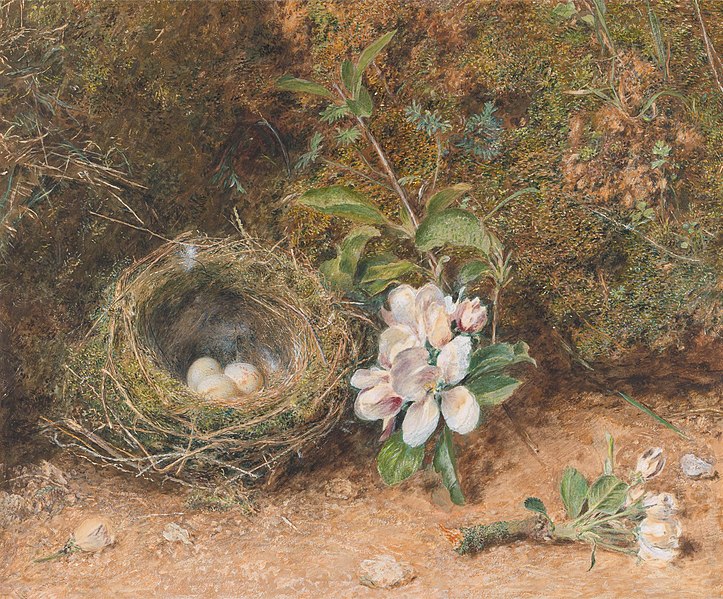
William Henry Hunt, Bird’s Nest with Sprays of Apple Blossoms, circa 1847