Haiku by Michael Dylan Welch, Elliot Diamond, and Joshua St. Claire

letting the moon
into your lung
the bullet hole


by Michael Dylan Welch (USA)
2026 Editor’s Choice Confluence Award

Commentary by Hifsa Ashraf:

When I read the opening line, letting the moon, I paused and tried to consider the different possibilities contained in this multifaceted phrase. Letting suggests an intentional act, something allowed to happen rather than something forced. The moon here can be read both literally and metaphorically. Why let the moon in? Is it an act of surrender, acceptance, exhaustion, or simply an unconscious response to something beyond one’s control? The line leaves these possibilities open. The moon also carries a long history of association with solitude, longing, beauty, silence, and the inner self. Yet the poet does not tell us what kind of moon it is. Is it full, half, waxing, waning, eclipsed, or barely visible? This uncertainty adds to the poem’s mystery and allows the reader to bring their own moon into the scene.

Then comes the striking second line, into your lung. The movement from moon to lung creates an unexpected connection between the external world and the body. The moon is no longer simply something seen in the night sky—it somehow enters the body. The line can suggest breathing, inhalation, or the absorption of a scene through the senses. I also read the lung metaphorically, as a place where something is taken deeply inside, retained, and perhaps left unspoken. What enters the lung is not necessarily expressed through words. It may remain suspended in silence.

The final line, the bullet hole, radically changes my understanding of the first two lines. Suddenly, the moon may be visible through a bullet hole, perhaps in a wall, a door, a window, or some other structure marked by violence. At the same time, it may suggest a person being shot in the chest, with the bullet piercing the lung. I find myself visualizing a war scene where the bullet has left a hole in the body, creating a haunting opening through which moonlight seems to enter. The image brings together violence, death, and the quiet beauty of the moon in a deeply unsettling way. The hole could even frame the moon, creating an unsettling juxtaposition between beauty and destruction. The reader is left wondering where the bullet was fired, what it struck, and what happened before this moment.

This is where I find the haiku particularly powerful. The poet does not explain the violence or resolve the image. Instead, the three lines allow the moon, the lung, and the bullet hole to exist together in a space of silence and uncertainty. The juxtaposition preserves yūgen, leaving enough mystery for the reader to wander through different emotional and visual interpretations.

There is also an interesting sonic quality in the poem. The repeated long oo sound in moon and your, followed by the harder sounds in lung and bullet, creates a subtle movement from softness to impact. The closing hole returns us to the open vowel sound, leaving the poem with an almost hollow resonance. Rather than directly expressing sadness or remorse, these sounds may contribute to the poem’s quiet, lingering sense of grief and aftermath.

last frost–
the mailbox lid
comes free


by Elliot Diamond (USA)
Honorable Mention, Robert Spiess Memorial Contest 2026

Brad Bennett wrote the commentary below, which was printed in the recent Modern Haiku Journal, Summer 2026:

By using a traditional kigo, this poet is participating in a centuries-old haiku community conversation and exploration of the natural, cultural, and emotional meanings of “last frost.” It’s a kigo of transition, winter into spring. The poet delightfully juxtaposes that last frost with a mailbox lid coming free. They could have used “falls off.” That would imply that the mailbox has broken, leading to feelings of frustration—now it’s gotta be fixed. “Comes free” is a much more exciting and hopeful way to end this haiku and even, dare I say, gives the mailbox lid some agency. The lid has chosen to free itself. This feels like an act of hope and freedom. And the mailbox in this haiku has great metaphoric potential. We no longer need to hide ourselves inside a metal box. We are free from the constraints of winter.

Additional commentary by Nicholas Klacsanzky:

To add to Brad Bennett’s great commentary, I would like to mention the punctuation, sound, and pacing of this haiku. The em dash in the first line not only gives the reader time to pause and feel first frost, but it also provides a sense of finality to the haiku. The “o” sounds in each line make “comes free” feel tangible and reinforce the haiku’s imagery. Finally, the short line/longer line/short line format excellently approximates the traditional Japanese haiku rhythm. The brevity of the haiku (7 words total) corresponds well with haiku tradition, as most traditional haiku are written in 6-9 words or characters. This haiku has a lovely aesthetic and feel. It’s easy to see why this placed in the Robert Spiess Memorial Contest 2026.

scintillating scotoma
a glimpse
beyond the wall

Joshua St. Claire (USA)

Commentary by Jacob D. Salzer: 

An intriguing haiku. If the eyes are, indeed, the windows of the soul, here we have a haiku that involves vision and the medical diagnosis of a scintillating scotoma.  

An online search reveals that a scintillating scotoma is a type of visual abnormality, typically a blind spot that often appears jagged or wavy. It can result in light or darkness due to a disruption of electrical signals. People can experience this when they have a migraine with aura, but scintillating scotomas usually don’t last long.

In terms of human anatomy, the retina is a layer at the back of the eye that converts light into electrical signals. The optic nerve sends those signals to the brain. A scotoma is often a spot on the retina where the nerves don’t work and therefore can’t send signals to the brain, resulting in a visual impairment or blind spot. Unsurprisingly, the word scotoma is the Greek word for darkness. We also don’t know what wall is being referred to in this haiku, which gives room for readers to imagine different scenarios. There is also the simultaneous possibility of a metaphorical wall, or an internal, mental, or imaginary wall that is being referred to in this haiku, which inspires the question: how do our internal thought processes, beliefs, or mental programs affect the way we visually see the world? What walls are created by thoughts we attach to? Do we sometimes blindly believe a thought without questioning it?

In short, this is an intriguing haiku that sheds light on the anatomy of vision. It gives us a glimpse of what it’s like to live with a visual impairment. Clear vision is a gift that many people seem to take for granted. This haiku also perhaps gives us a glimpse into the poet’s soul or someone else’s soul. An important and interesting haiku.

Sources: 

https://www.merriam-webster.com/dictionary/scintillate

https://my.clevelandclinic.org/health/diseases/24687-scotoma
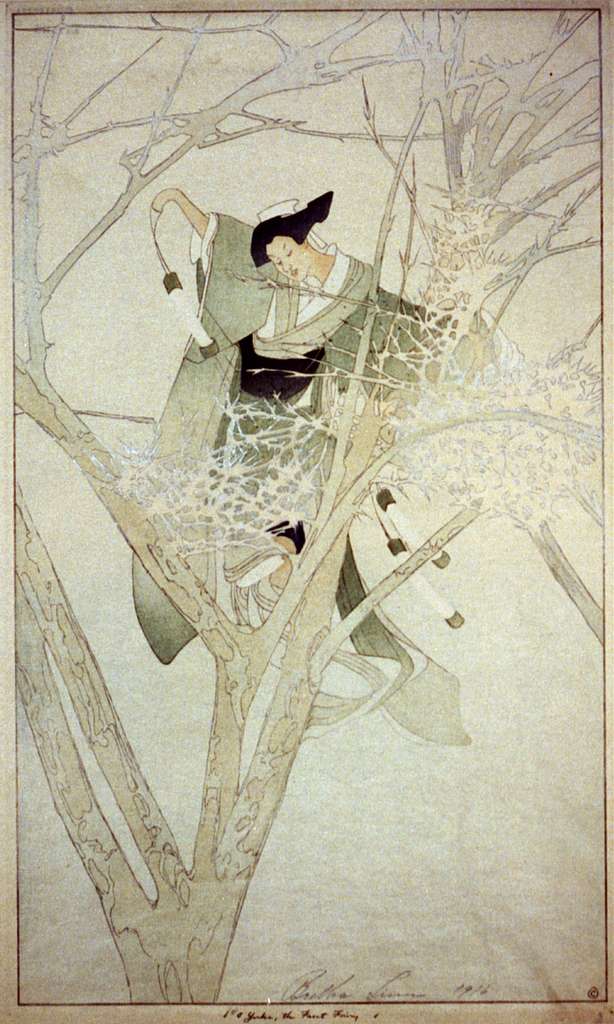
Woodblock print by Bertha Lum
Haiku by Anne Kulou, Elliot Diamond, and Małgorzata Formanowska

morning fog—
a crow’s cry piercing
the layers of light


— Anne Kulou (Germany)

Commentary by Nicholas Klacsanzky:

I have a soft spot for morning fogs and crows, so this haiku gravitated towards me. The ellipsis in the beginning grounds us in the scene, allowing the reader to imagine a beautiful, yet mysterious fog. “Fog” is a double entendre, lending to interpretations about the fuzziness of the mind and other psychological disturbances, such as the “fog of war.”

No matter if the fog is literal or figurative, the crow’s cry cuts through it, even in the calmness of the morning. The word “cry” is intriguing, as it humanizes the crow. We usually associate this magnificent bird with “caw” and something abrasive. But “cry” prompts us to feel sympathy, if not empathy, for the crow.

Morning fogs and crows point towards autumn. It is a time of sparseness, with just a little light coming through. Even that minuscule amount of brightness is sliced through by the cry of the crow, which highlights or intensifies the sense of autumn.

The power of this haiku centers around its vivid imagery, the play between sound and light, and the embodiment of the season. It also reads well, with open sounds in “o” and “i” strung throughout. These pleasant letters are contrasted with the stronger letters in “r” and “g,” which connect with the juxtaposition of fog and the cry of a crow that runs through it. The pacing of the lines is also measured and weighty, like walking through a fog.

This haiku brings back awe to common themes, which is a mark of knowing tradition well and utilizing our creative spirit.

siren song                                                                  
as a fire station                                                         
empty boots

— Elliot Diamond (USA)
first published in The Pan Haiku Review Issue 2 (Winter 2023), Kigo Lab Special, ed. Alan Summers

Commentary by Jacob D. Salzer: 

This is an important haiku that gives us a glimpse into the life of firefighters. This haiku seems to have a haunting quality, as the siren song could be the silence of the fire station itself. Even in the silence, we can hear the echoes of the siren. The siren song could also be exemplified by the red color of the fire station. It is interesting to include the word song in this haiku. This seems to give the siren added dimensions. It is no longer merely a siren, but a kind of song that seems to honor those who have left the occupation or passed away. It is a sound that marks the urgency of fighting a fire. There is no time to waste.

We also don’t know why the boots are empty. A firefighter could have retired, he/she/they could have left the job for another occupation, or the firefighter could have passed away. In all three scenarios, the darkness of the empty boots allows us to step into the shoes/boots of the firefighter, even for a moment. Regardless of our interpretations, this haiku shows the inherent dangers of being a firefighter, the sheer courage and strength it takes to be on the front lines of several fires, and the consequences. Indeed, firefighters sometimes risk their lives to save others. Additionally, this haiku may inspire readers to learn more about how to prevent fires, fire safety, and what to do during wildfires.

Interestingly, Indigenous Peoples have long known the importance of controlled fires to prevent wildfires. These controlled fires also allow ashes and nutrients to supplement the soil. I think we should take the time to learn from Indigenous Peoples who are excellent caretakers of the Earth.

This haiku first appeared in The Pan Haiku Review Issue 2 (Winter 2023), edited by Alan Summers. One unique aspect of this journal is Alan’s inclusion of additional context around certain poems. For this particular haiku by Elliot Diamond, Alan adds:

“What is the life expectancy of a firefighter in the United States? Life expectancy for firefighters is 10 years less than for individuals with other occupations. The frequency of leaving the job due to health problems was 60% higher among firefighters than among individuals working in other industries.

Seasonality and Coronary Heart Disease Deaths in United States Firefighters: https://www.ncbi.nlm.nih.gov/pmc/articles/PMC3756551/

The September 11 attacks (New York City 2001) 9/11 by the numbers: 8:46 a.m. and 9:02 a.m. Time the burning towers stood: 56 minutes and 102 minutes. Time they took to fall: 12 seconds. From there, they ripple out. Number of firefighters and paramedics killed: 343 September 11 by Numbers New York Magazine Despite advancements in DNA technology, roughly 40% of the victims (1,100 people) thought to have died in the disaster, remain unidentified. CNN September 2023″

In summary, this is an important haiku that provides a window into the life of firefighters. I sincerely thank all firefighters who put their lives on the line. They have a heart of compassion and will attempt to save anyone, regardless of their race, ethnicity, gender identity, or background.

winter air
the fleeting shapes
of our breaths  

— Małgorzata Formanowska (Poland)
22nd Annual UKIAH Haiku Festival: Honorable Mention for the Jane Reichhold International Award

Commentary by Hifsa Ashraf:

This haiku captures a quiet moment in cold winter, phrased in a way that makes us feel it to our core. “Winter air” may be referring to the extreme cold that may occur before or after rain or snowfall. It is something invisible but still shows its existence in mysterious ways, i.e., breath clouds. The poet showcases the moment of visibility of the air in an imaginative way, where it suddenly takes shape briefly before it disappears. The yugen and ephemeral elements of this poem make it interesting, while also being easily relatable.

“The fleeting shapes” show the transience of life. Things come and go quickly, leaving a deep impact on our lives. Fleeting shapes may allude to the possibility that there are two persons in close proximity who are not only enjoying the warmth of their breath but also the shapes that it creates in dense air, which can intermingle and overlap with each other. It may also reflect melancholic feelings, with the person being alone and enjoying the shapes of breath even in chilly weather, or being so focused on something, and then the poet gets distracted by the shapes of breath. In any case, it is a subtle awareness where breath is a symbol of life, and seeing it appear and disappear in winter air evokes the fragility and temporary nature of existence.

Looking at the sound, the frequent use of vowels in this haiku emphasizes the subtle connectivity that exists in moments but leaves strong effects behind.

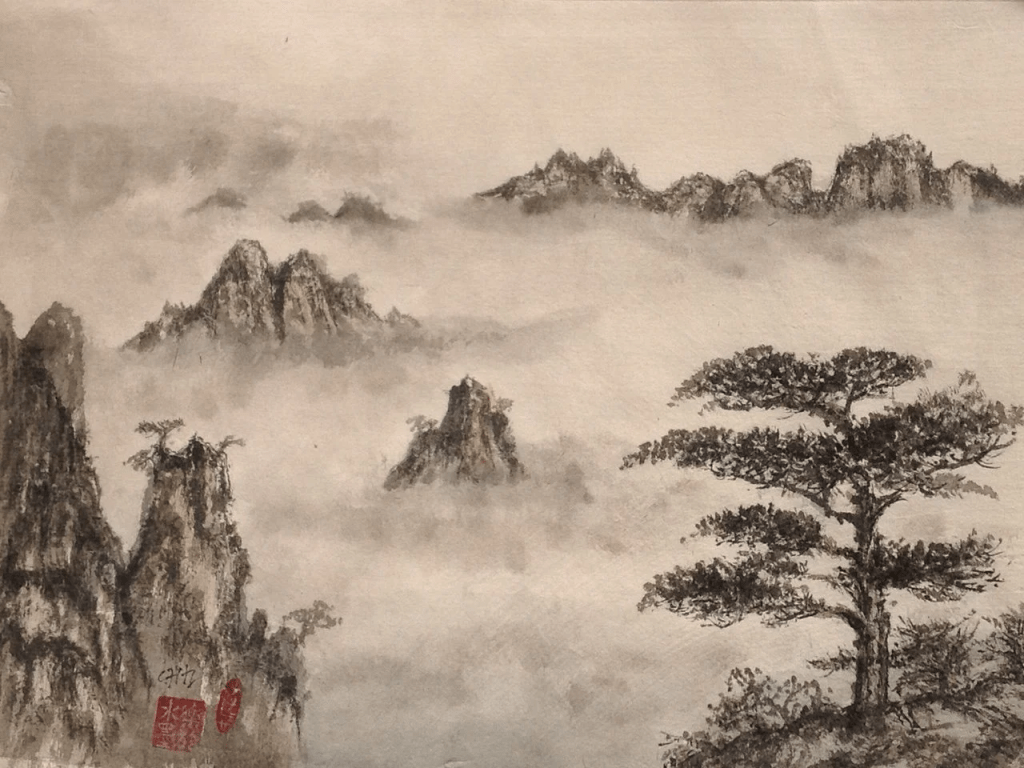
Sumi-e by Carolyn Fitz

Haiku by Elliot Diamond, Hifsa Ashraf, and R.C. Thomas

oil spill fish blowing bazooka bubbles

— Elliot Diamond (USA)
Failed Haiku, issue 98.1, 2024

Commentary from Jacob D. Salzer:

I appreciate this one-line haiku for revealing one of the severe consequences of oil spills. In a broader sense, this haiku is also showing the inherent economical and environmental dangers of oil dependency in modern civilization.

The word “bazooka” can refer to chewing Bazooka gum. The bazooka bubbles could visually resemble the bubbles created by fish. However, a bazooka is also a military weapon. In this monoku, the bazooka seems to signify not only a war between humans, but a war between humans and the Earth. More specifically, limited human viewpoints and ideologies (that see Nature as only resources to be extracted) leads to harm and war, which also harms ourselves, in many ways. If we want to lead healthier lives, I think we need to protect the Earth and call on Indigenous wisdom.

The strong “b” sound echoes in this monoku with the sonic impact of the oil spill and the bazooka. Even so, because sound is muffled underwater, I also feel a kind of deathly quiet in this poem.

In short, this is an important monoku that shows the dangers of oil. However, it is more than a poem as it can also inspire a social call to action.

old snow
unfolding mom’s
bridal gown


— Hifsa Ashraf (Pakistan)
ESUJ-H, September, 2025

Commentary from Nicholas Klacsanzky:

The contrast between “old snow” and “bridal gown” jumped out at me. Both are white, but with “old” and “mom’s,” we understand that both the bridal gown and snow are tainted in some way. From the poem, I get the feeling that either the poet’s mother has passed away, or is simply passing on her bridal gown as a form of heritage. Both images point to transience and create a sense of harmony between nature and human life (toriawase).

With the mention of “old snow,” I feel the seasonal reference, or kigo, is late winter. With the time being on the cusp of spring, it relates to a new beginning, such as a wedding—especially with the reference to being “mom’s bridal gown,” showing the passage of time leading to a new future.

The act of unfolding suggests a form of reverence. It also makes readers ponder questions about the haiku: why is the gown being unfolded now? Is this an act of remembrance or preparation? Finally, “unfolding” also mirrors the melting of now.

Though there is no punctuation in this haiku besides the possessive marker, the kireji, or cut, is felt in the line break in line one. However, with the lack of punctuation, the haiku can be read either as two parts or as one flowing part. Both readings are valid, and perhaps the poet wanted to leave more interpretations open for the reader through the lack of punctuation.

The pacing, however, is quite traditional. With a short first line, longer second line, and shorter third line, this haiku aligns with the traditional Japanese haiku rhythm of 5-7-5 sound units (not syllables). Following this rhythm usually allows the poet to make the haiku brief and colloquial in language.

Overall, this haiku embodies the qualities of seasons, subtle emotion, and the revelation that arises from an unforced contrast/comparison that lends to multi-layered reading.

hard-boiled summer
a busboy’s smile
begins to crack


— R.C. Thomas (UK)
Frogpond, 46.1, Winter 2023

Commentary from Hifsa Ashraf:

The opening line, “hard-boiled summer,” presents a rich, multi-layered metaphor. At one level, it conveys the intensity of extreme heat—affecting both mind and body. On another level, it could be describing a person who is emotionally hardened or indifferent. There is also a clever allusion to hard-boiled eggs—thoroughly cooked, contained, and under pressure—suggesting both physical heat and psychological tension. The poet skillfully invites the reader to navigate these interpretations without losing the poem’s emotional depth.

The second line, “a busboy’s smile,” operates both literally and symbolically. It may express a fleeting moment of joy, perhaps the result of brisk business during the summer heat, or act as a mask worn over exhaustion. Extending the egg metaphor, the smile becomes the uncracked surface of a hard-boiled egg—calm, polished, but under pressure. One might also associate egg yolk with the golden light of summer.

The concluding line, “begins to crack,” conveys a subtle shift. It suggests the gradual collapse of composure, whether the smile breaking under heat and fatigue, or the beginning of an emotional unraveling. The metaphor completes itself with the image of an egg’s shell cracking, revealing vulnerability beneath the surface.

This haiku masterfully intertwines climate, emotion, hardship, and human resilience, using layered imagery to reflect on the strain of daily labor in harsh conditions. Finally, the repetition of the letter ‘b’ in this haiku evokes a gentle, calming rhythm, subtly reflecting the sense of ease that follows the unfolding of a mystery.

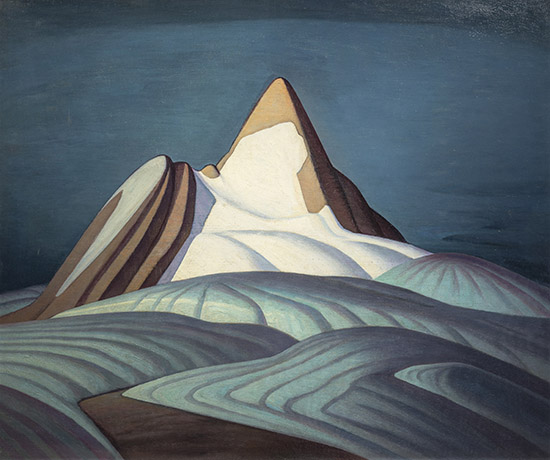
Isolation Peak, Lawren Harris (Canadian, 1885–1970), oil on canvas, © Family of Lawren S. Harris