Joshua Gage’s distant stars

distant stars
a crow’s shadow
sweeps the fresh snow

Joshua Gage (USA)
(previously published in Presence 63, 2019)

“Distant stars” is a subtle expression that provides a lot of resonance. It’s something you can see as a mere dot but still reflects its own light in the dark sky.

‘Distant stars’ here may indicate less visibility due to fog or dense air. It also seems to show the longings and desires that are more visible during a silent winter.

Moving on to ‘a crow’s shadow’, it may be the persona an individual holds onto while being a guardian, protector, or dreamer. A crow never fails to bring out various emotions in us through its cawing and unique attributes.

The word ‘sweeps’ is used efficiently to perhaps show how dreams or hopes end over a period of time. I take fresh snow as a representation of our vivid memories that stay for a short while but leave a huge impact.

I can relate distant stars to ‘longings’, a crow’s shadow to ‘maturity, wisdom’, and fresh show to ‘vivid or temporary memories’. Together, it’s a fantastic combination of sight where light, shadow, and snow beautifully relate to our longings that are not fulfilled but still come to mind to remind us that there is still some hope in life.

Hifsa Ashraf (Pakistan)

What I enjoyed right away about this haiku is the connection between far and near. Distant stars are viewed and in the next moment, the poet notices a crow’s shadow pass over fresh snow, probably in the moonlight.

This connection contrasts and compares. The sparkling of stars is akin to the glittering of fresh snow. The contrast is with the darkness of the crow’s shadow against the twinkling of stars.

The word “distant” plays well in this poem, as a shadow is a type of representation of the distance between ourselves and what we cast.

The word “sweeps” works wonders to liven the readers’ imagination. It also presents a great string of “s” sounds in nearly every word of the haiku. It gives the reader the sound of a broom sweeping a floor as if the crow’s shadow is really sweeping the fresh snow.

A unique image, a great sense of sound, and myriad connections give this haiku power and resonance.

Nicholas Klacsanzky (USA)

 “Konjikido in Snow, Hiraizumi” by Kawase Hasui, woodblock print reproduction

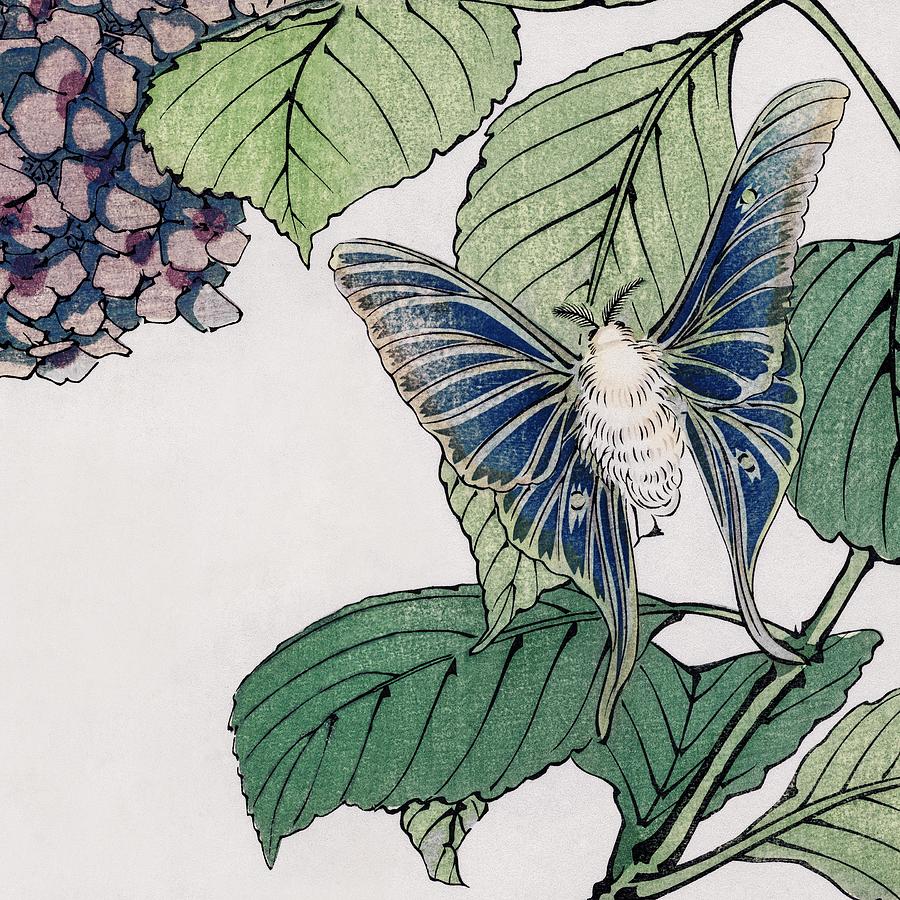
Marilyn Ward’s monarch

meadow grass…
the Monarch butterfly
lends its colour   

Marilyn Ward (UK)

Grass in a meadow is the ultimate attribute of this feature of land, which distinguishes it from other fields and highlights its beauty. Meadow grass is also abundant with a variety of flowers, herbs, and small seasonal plants, adding more colours to it, and enticing beautiful insects to visit it not only for sustenance but also for whispering the secrets of nature through pollination.

The ellipses after ‘meadow grass’ holds our imagination for a while to imagine and enjoy being there, and feel and absorb the colours, and the site of an enchanting and lush green meadow.

This haiku reflects a profound relationship between nature and its creatures where the concept of compassion and kindness is beautifully presented without losing the essence of a great haiku.

The Monarch butterfly shows longevity, peace, and positivity with its radiant yellowish-orange colour like morning hues. The word ‘lends’ is wonderfully added in this haiku. It displays the symbiotic relationship between insects and the meadow. The meadow is abundant with colours and beauty that any small insect can go and enjoy fully. It appears to be a spring meadow where insects usually get involved in pollination and cross-pollination, and as a result, retrieve fresh juices to drink from the freshly bloomed flowers.

It can also be related to our mood that needs deep inspiration from nature by living close to it. The colours may also symbolize the ‘aura’ of a person with a deficiency of colours, energy, and enthusiasm, and the mere sight of a wide meadow boosts their aura and fading energy.
It may also show the blessings of a spring meditation that enriches our body and soul with the true colours of nature.

Hifsa Ashraf (Pakistan)

Sometimes we forget about the power of small things. A monarch butterfly is one of the most celebrated butterflies for its magnificent wings with an orange and black pattern. Even though it is minuscule in comparison to a meadow, it lights it up (from the perspective of the poet) to a great effect.

I imagine a meadow of green grass stretching as far as the eye can see and a single monarch butterfly flying around it, giving it color here and there. It is moments like these that bring happiness and awe while we are in nature. One cannot help but be enchanted.

As Hifsa noted, I think this is a spring haiku. The flourishing of colors surely comes in spring. Another aspect to note is the use of the ellipsis as a kireji. Through it, we can imagine the flitting of the butterfly and its carefree ways. The format is also standard for English-language haiku, with a short first line, a longer second line, and a short third line.

The sound of the haiku is melodic as well. With two powerful “m”s, you can feel the weight the butterfly has on the scene. There is also a string of “o”s, which provides a lilting feeling to the reader.

A joyful haiku that reminds us how the simple things in life can give us solace and awe.

Nicholas Klacsanzky (USA)

an’ya’s snowflake

palm up
a snowflake lands
on my life line

an’ya (USA)
(previously published in Ardea)

The opening line presents a sweet gesture. It shows the simplicity of our connection with nature. I feel this is a soothing scene where a person feels the depth of their relationship with winter.

I can see the element of loneliness here, as deep winter may bring shades of depression and anxiety. So, snowflakes may act as a source of entertainment or a change that can divert one’s thoughts and feelings from dull and freezing weather. A snowflake sways like a falling leaf before it settles on a surface. It is a delicate element of nature that brings subtlety in our mood and feelings.

It may symbolize the life of a person who has passed through ‘cold’ realities, and faced harshness and rejection. A snowflake’s life is anonymous because it has no sound, no set pattern of falling, and irregularities or weaknesses. 

The life line on one’s hand indicates the time of death, departure, or the ending of old patterns of life that are fragile, insignificant, or useless. 

I see this haiku in two ways: both nature and human nature stand parallel in the universe and share common characteristics that connect them deeply and which makes them learn lessons or gain inspiration from each other.

Hifsa Ashraf (Pakistan)

With this winter haiku, the poet allows us to ponder whether or not fate is real, in my opinion. A life line on our hands usually is said to tell us how long we will live and how we feel about our lives. I like that the poet leaves it up to the readers to see what symbolism they want in the haiku, though.

It could reflect the “cold” or “fragile” life that the poet has lived. It could also show how something as delicate and small as a snowflake can be a thing of beauty in one’s life or how nature enters into our lives unexpectedly with something wonderful.

The poem is written in a simple style without punctuation. This is a common way to write haiku now in English and in many other languages. I like that the haiku seems like a journal entry that allows readers to come to their own conclusions. It also has a pleasant sound with many lilting “l”s and two calming “s”s on the second line.

The poet captured a moment that stirs wonder, melancholy, and philosophical thoughts within us through seemingly simple yet well-crafted language.

Nicholas Klacsanzky (USA)

“Lumberyards at Fukagawa, 100 Famous Views of Edo” by Hiroshige Utagawa, woodblock print reproduction