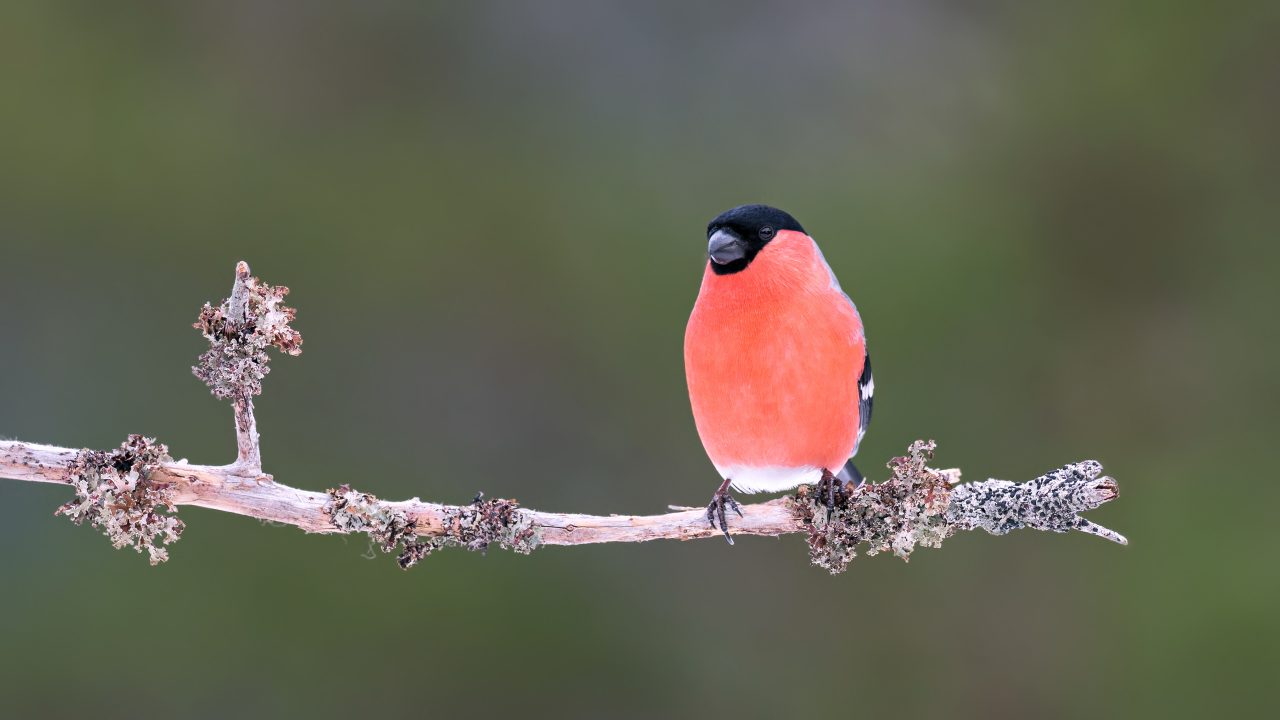
This haiku brings about a feeling of wabi-sabi to me. The sky is clear to view through a leafless vantage point. However, there is one swallow—a swift, small bird, seemingly splitting the sky with the sharp edges of its structure. The word “last” is interesting here, as it could refer to an autumn migration, and this being a swallow that lagged behind. It could also mean that there were a bunch of swallows in the sky, yet now there is only one, and as its final act, it splits the sky (metaphorically, but seemingly real in the poet’s perception).
At first, I thought “leafless” was not necessary, as “autumn” was mentioned. However, without “leafless” we could not know if it was deep or late autumn and could not visualize the scene as well without it. The “swallow” is connected to many seasons, and in autumn, swallows migrate, as mentioned before. So, there is also no conflict with “swallow.”
If I was writing this haiku, I might have added a dash after line one but not adding it does not hurt it. In fact, a dash or any punctuation is not called for in this haiku. In terms of sound, this is a melodious poem. The first line exploits the “t” letter judiciously, giving a sense of quietness and solemnness. The last two lines’ use of “l” expresses the circling and diving movements of swallows to me, and the many “s” letters throughout the haiku brings about a feeling of starkness.
Ultimately, since Rachel had an incurable immune disorder, and often she used her poetry as a form of therapy, I believe she employed symbolism to refer to herself in her poems. Perhaps this haiku is about her impending death (autumn sunset), there not being much of life left within her, (leafless sky), and her making a final act (splitting the sky). It denotes a sadness but also a power from something seemingly small and delicate.
– Nicholas Klacsanzky (Ukraine)
Everything in this ku recalls the idea of an end, as Nicholas wonderfully has explained in his keen analysis. A late autumn, with a leafless sky, and the last swallow, which makes us definitely think about a forthcoming winter, is pointing to a motionless future.
The swallow, in its loneliness, is belated in leaving, although all the signs of winter are clearly pushing the bird to do it… As if something didn’t let the cute bird follow the others who have already gone…
The invisible line traced by the bird seems to separate who stays from who goes. As in physics, space and time are variables of the same function. It seams also that time is drawn by the swallow’s flight while crossing the space of the sky, and telling on Earth of an ended time for who has to go away, forever.
But, surprisingly, not confirming all this, the poet, who has written this haiku just one year before leaving this world so early, still can fly in the space of the sky inside our hearts and never leave us with her poetry, in a never ending time to tell…
Rest in peace, dear Rachel, and thank you for your poems, for what you have been and still are for us.
We have a special edition this time around, as we have an interview with Alan Summers: founder of the organization Call of the Page, President of the United Haiku and Tanka Society, Japan Times award-winning writer, and Pushcart Prize nominated poet. We are honored to have him for our first interview on Haiku Commentary.
NK: So, to begin the interview, I would like to ask you about what first attracted you to haiku, and what continues to inspire you to write haiku and related forms of poetry?
AS: I believe I heard a haiku being read in my old home town of Bristol (England) but it didn’t register. A year later I moved to Queensland, Australia, and I was reading a lot of poetry books, trying to grasp all the forms.
I was in the Queensland State Library, which has a huge collection of Asian literature, and I must have slipped a copy or two of something amongst all the ‘Western’ forms of poetry. When I opened the next book from a huge pile (I was a fast reader) it was short poems, and they started to click with me, and I saw they were called haiku. Within half a minute, I realised I would stay with haiku for years to come. I stopped trying to accomplish and conquer poetry, and just enjoyed it for its own sake.
I’m never sure of inspiration, and there’s been some great quotes about it barely being about inspiration.
So, what makes me keep reading (very important) and writing haiku and its related genres is the drive, not to conquer, but to search, both myself, and attempt to know some answers, and haiku is a very good medium for that.
NK: “I stopped trying to accomplish and conquer poetry, and just enjoyed it for its own sake.” It seems that this comes with more maturity as a poet. What do you enjoy most about haiku? Also, along the lines of searching for answers, what is a recent answer you have been seeking for through haiku?
AS: It was the ‘release’ as there was a great pressure to perform well with the other poetry. I was released just to be able to write and submit, mostly to Azami journal ed. Ikkoku Santo (Osaka, Japan). No judgements, no peer pressure or politics—just submit the poetry. I even started up a monthly column showing the wonder of the haiku by different writers each time.
The most enjoyable thing about haiku is its stages, from first ‘write’ at or immediately after I’ve experienced something, to the editing where I try to capture both experience (on both sides of the coin) and that something special called ‘else’ which is an essence we try to catch in poetry.
Every single year, I do what is called “Going back to Zero” and pulling back to that first time I read, then wrote, or attempted to write haiku. It’s that ultimate simplicity born out of wisdom, and I believe that the pre-haiku writer Matsuo Basho was forever searching for the lodestone, or that alchemical answer, of turning base things to ‘gold’.
My recent answer? I’ve only just started this year, and I’m hoping a few new projects might find some kind of ‘lead’, or if not, something will happen, and sometimes it’s not good, and sometimes that’s the best stimulus and incentive.
NK: You mentioned the pressure associated with performing well in other forms of poetry. Do you feel submitting haiku to journals in English now is still without that pressure? AS: There was a certain poetry group, very early on, that was often destructive, which I couldn’t understand. Thankfully an opportunity came up to move to Australia, and I found my home at Brisbane’s Metro Arts Centre. I also got my very first paid poem! I struggled with writing formal poetry, and perhaps it was simply that my heart wasn’t really into it. Haiku isn’t really as easy as it looks, but we can fall into writing some good ones from time to time. I think there’s always pressure when a batch of haiku or related genres are sent off, which we can’t escape. Even when I’ve had editors that have headhunted my work, it’s still pressure, as you want the best for them, and their journal. Pressure has to come hand in hand with writing and then submitting haiku—at least for me. Anyone who has met me knows I love a sense of humour, but when I work out a batch of poems to send to an editor, even if they are for a friend, it’s deadly serious for me: I put myself under immense pressure.
During my time in Australia, I had to perform—not just write poetry—and I remember the first big public event was a complete disaster for me. I’m basically an introvert, although it won’t seem like that to many who know me now. The second performance, for the Fellowship of Writers in Queensland, was a success. Coming back to Bristol, in England, I regularly went to open mics, once, twice, three times a week, and was awful to start with, but it’s so important to read or perform our poetry in public, and then one day, I remember it was a haibun, it all clicked, and the large audience loved it.
I now get nervous if I’m not nervous, whether it’s writing, and then submitting work, or being interviewed on the radio, or doing a live guest slot. Running live workshops is a mix of nerves, humour, intenseness, and fun, all rolled into one, with a time pressure, as the clock is always ticking. But it’s so rewarding, whether it’s top poets, or those new—both are equally exciting. There has to be pressure, and ‘good’ stress, and my past mistakes are a bonus that I can teach and mentor from, and watch people grow in front of my eyes.
NK: I couldn’t agree more that there is a power in reading poetry to the public that cannot be found on a page. Could you share that haibun that really clicked with the audience and yourself? If you have trouble finding it, I would like to talk about one of your monoku: I once was this stone home for another Bones – journal for contemporary haiku no. 7 (2015) What was your inspiration behind this haiku, and for a larger question, how do you feel the monoku in English connects to the original vertical line of Japanese haiku? AS: The haibun that connected with that large audience including poets is one that has been published multiple times, with slight revisions each time, including a slightly different title. It’s currently known as The Crow Star: http://area17.blogspot.com/2014/03/rooster-moans-and-land-of-rising-haibun.html …
It’s unique in that a number of journals have happily published this work knowing it was already published, and enjoyed its tweak each time. It was first published in Australia, which is as it should be for a number of reasons. Firstly, it was all about Australia and a melding of two places—one in Queensland, namely Fraser Island (that’s the camp fire I helped build)—and secondly the 4000 klick journey to Uluru, which are both iconic places. It really was a violet sky, and I’ve seen green sunsets too in Australia! The other reason is that ‘paper wasp’, before it became international, was a Brisbane-based haiku group, and they invited both myself (just outside) and Janice Bostok (New South Wales) which was a double honour. The opening haiku was also a friendly argument with Janice (we often exchanged long letters via snail-mail) and I was right this time, although Janice was a real wildlife expert, and it was a Torresian crow! I was surrounded by various crows at a rented farmhouse, where the farmer owner was embarrassed when I found out it was also called Faraway Farm. You can imagine as a younger poet how much I loved that name! Well, I was right—the crow, although usually only found in New South Wales, was on the farmland. I’ve written about crows in various countries for almost a quarter of a century and they always come back to me in my work. This was my first haibun, and oddly it did do well in performances from then on.
After that, I wrote two haibun purely for performance, one for various festivals, and never put up for publication, and the second one was commissioned by Bristol Old Vic Theatre, and takes at least twenty minutes to read or perform, and far too long to be published. Each haibun has been a breakthrough moment for me. Haibun became a breakthrough again, years later, when then Blithe Spirit editor Dave Serjeant told me that my haibun submission (I hadn’t submitted haibun for a few years) was the best he’d read recently, and that started a long relationship with haibun with the British Haiku Society journal, which years later again culminated in becoming their haibun editor for three issues in 2018. I also regularly help run online haibun courses, and it’s exciting to see so many from the courses become some of the strongest and most original practitioners of this genre in both haikai and non-haikai publications and anthologies.
Regarding the monoku from Bones 7 [http://www.bonesjournal.com/no7/bones7-1.pdf …], it’s an interesting story in that it’s the first submission to Bones under my own name! I’m one of the original founding editors, and occasionally we’d slip one haiku each into the journal, but we’d each choose a pseudonym, and I believe, so far, no one has been able to guess which ones, as we didn’t make it that easy for our wonderful readers! I left Bones journal after issue 6 to pursue more of my writing projects and for Call of the Page, and felt compelled to submit to Bones in my own right. It was a tall order as the quality is so very high, and I didn’t just want to write something good just to get into the journal. The acceptance process is quite intense, and each editor has very high standards, and all three editors are very different. I couldn’t believe it, but several monoku and a sequence were taken! If anything, being known as a former editor, who has just left, and been a colleague, would have made it even more difficult to have so many accepted, which I knew, so they were accepted purely on merit alone. Each piece for that submission to Bones journal had to justify itself to be added to the submission that I was compiling, and of course to be eventually and hopefully accepted.
One thing I learnt, or had confirmed, during my master’s degree at Bath Spa University, was that poets can go into some separate almost dream state in order to write. Sometimes when we come out of that state, with the paper ‘still dripping ink’, we can’t always recognise it as ours, that we have just written it: I call it ‘Writer’s Fugue’. It’s the opposite of ‘writer’s block’ and can compel us to write in various states, from unconsciously writing (without knowing), to an almost Red Shoes state (HC Andersen). When I had written the pieces for Bones journal, and come back to them, I realised a lot of them were about home, having one or not having one, or of a major disruption to personal security such as political actions that do not benefit society, or just plain outright war.
My Ticking Moon sequence, in the same issue of Bones journal, is inspired by WWI, and the wrongs committed by politicians and generals which meant millions upon millions of marvellous human beings vanished from our society, across the various killing fields, over power and territory. The monoku you ask about, which is published as a standalone poem, brings in home, and that I was “once”, and by that I mean it’s a strong theme for me, and possibly for any of us: that we were “once” one kind of person, and evolved, whether via the usual routes of childhood, teenage years, and early adulthood, as we mature, and become more nuanced in life’s experience; or through great occasions of sadness; of trauma; or displacement. I have always felt displaced. Am I an outlier? I’m not sure. Perhaps I’m neither one thing or another, not even “once”. There have been times I have risked my life for society—a treatment in haibun is due to be published later this year—and perhaps it’s as an outsider that I have my own unique gifts and insight to share.
Although unconsciously or subconsciously written, that monoku, and the rest of the submission to Bones journal, in that ‘writer’s fugue’, had a part of me that also “parallel wrote it” consciously; just one of those curious partnerships with ourselves as writers maybe! Perhaps, because I was adopted, and left my mother after 11-12 months, there was an unconscious trauma, and an inwardness and extreme numbness and introvertedness. I had no real help to develop as a functioning human other than by and with myself until I fell into enough fortunate incidents to make me realise my humanness and being a valid ‘component’ of society. I’d always been motivated to serve society so much I often forgot myself in the process, but I began to feel finally validated: great experiences for a writer’s source material!
So, one way to break it down is that I was ‘once a stone’ and being locked in emotionally, and that I am not this ‘another’ any more. So, ‘I once was this stone’ and ‘I once was…” and not being or living in a ‘stone home’ as now I have a home, which is myself, basically. Does the reader need to know all of this? I don’t think so, but just to pick up a tone, a nuance, and that many of us might feel like stone at times, for whatever reason, for a while, and now that we’ve left this behind, it might be some comfort. As much as I enjoy plain open haiku, which are just one or two of Shiki’s later stages of shasei technique, there is an occasional pull for me of cryptic haiku, almost as if I am in two minds to reveal too much of my vulnerabilities. And for the joy of writing something different, and using language in other ways. Well, it’s been a long journey developing my first ever submission to Bones journal, because it had to be more than just good, it had to be really me and going deeply into and under myself.
re: “…for a larger question, how do you feel the monoku in English connects to the original vertical line of Japanese haiku?”
As the complex Japanese language systems (plural) are so different from the single and simpler Western method of language and communication, I do feel the broken syntax method of many English-language monoku can closely resemble Japanese haikai verses, which are traditionally one-line poems.
Take for example the classic haikai (pre-haiku) verse of Matsuo Bashō (1644–1694) which would normally be vertical of course:
夏草や兵どもが夢の跡.
So let’s transliterate it! First into Romanised Japanese, and then into English in its original order of ‘words/phrases/grammar’ in the haikai verse:
natsu-gusa ya / tsuwamono-domo-ga / yume no ato
summer grasses (:!) / strong ones’ / dreams’ site
(Presented by University of Oregon, USA).
Should we smooth out the verse so much when it’s “poetically translated?” I’ve attempted a few translations, but can they pack the same punch as the original Japanese?
summer grasses:
the remains of warriors
with their dreams
(English-language translation version by Alan Summers).
I deliberately kept the colon (and suggesting it as an “equals” sign) as I’m suggesting that an incredible amount of grassland does “equal” battlefields at one time or another; that maybe summer grass is warriors/soldiers sleeping, and this is a strong folklore expectation of King Arthur and the Knights of the Round Table fable too, that they will rise again, either to save us or return as haunted casualties of the manipulation done by governments and corporations. The verse has influenced me for decades, in all of its shades.
As a one-line monoku in English, how might we approach it? Not to everyone’s taste, but I prefer the literal presentation version by the University of Oregon (web page now gone sadly). I can’t replicate that roughness that says more than a polished version. But here’s one I created for this interview:
summer grass the warriors site dreaming
(version by Alan Summers)
This next one of mine is of night grass, and of iconic British nocturnal animals that used to trundle around my previous home.
after rain midnight dreams a hedgehog
Alan Summers brass bell: a haiku journal feature: One-Line Haiku curated by Zee Zahava (September, 2014)
At first it appears to be smooth syntax, with one or even no pause or cut. This one went through numerous versions and revisions over a year or more and then it came together, and I feel it comes close to the actual experience which was dreamlike. Here we can read different pauses:
after rain / midnight dreams a hedgehog
after rain / midnight dreams / a hedgehog
after rain / midnight / dreams / a hedgehog
And using the Oregon transliteration,
even: after rain (:!) / midnight dreams / a hedgehog
I think we, outside of Japan, do connect with a lot of their haiku, and the pre-haiku verses of the classic times too. Sometimes we are like children, but I’ve heard that many Japanese haikai writers who are aware and can find haiku in other languages are influenced in return. Reading through Fay Aoyagi’s immensely fine blog of Japanese-language haiku translated into English where the Japanese and Romanised versions are one line, you could make each English version into a monoku, and see that we are not all that distantly placed from each other: https://fayaoyagi.wordpress.com/haiku/ .
We are at least cousins, perhaps close cousins, to Japanese haiku, and also have our own genre at the same time. There is something about haiku that rejuvenates us, and gets us to look in the right and correct ‘other’ way in this world of human turmoil. As much as I need to look into the face of the world created by big government and business, I can also look ‘the other way’ and see magic that might otherwise be ignored, overlooked, or at worst dislocated and uprooted, or be transient.
NK: Thank you for the detailed response. I especially resonate with your idea of “writer’s fugue,” and how English monoku, and haiku in general, are cousins with Japanese haiku, that both cultures can inspire each other. Now we have a question or two from our other editors: Lucia Fontana and Hifsa Ashraf.
LF: What do you enjoy writing about, and what would you like to write about in the future? AS: I write from various perspectives, mostly from direct actual experience, and bringing that to a poem, both as it “was”, and as close to it being “as it happened”, with sometimes a tiny tweak, but as close to the experience as to a hairsbreadth. It’s more of a challenge to make a direct experience into a poem, then simply using it as a base for a work of fiction, or a mix of fact and fiction. We see too much filtering of facts all too often on the news. So, a news report is diluted, and altered. Not just in recent years, but as far as I can remember, there’s been a struggle to tell it as it, no slant or bias, with direct reporting as absolutely truthful and accurate as possible, and contain the necessary kernels of creativity, to convey it to every reader, but without usurping the facts “that happened.”
When we are not dominated by the ‘glint of gun’ then it’s the glint of a knife. This haiku is from direct experience, in London, where more and more police carry semi or fully automatic weapons, and not just handguns. This was in a Royal Borough where one of the Princes resides, right off a large public park, and was from a writing haiku walk called a ‘ginko’ that I led for the British Haiku Society:
dappled light the glint of gun
Publication credit: Human/Kind Journal of Topical & Contemporary Japanese Short-forms & Art Issue 1.1 January 2019
The hard sounds of the opening line in this monoku is deliberate, despite its actual meaning. The light and sounds were late afternoon in heatwave London, and it’s a subconscious play on the sound of saying “Doppler effect” as well an aspect of its meaning, and ‘dappled’ could also be the sound of the blip blip blip of expended ammunition if it ever came to that. The alliteration is a device I use more and more and aids and abets a number of haiku, by myself, and elsewhere, rather than distracts.
Ever since appearing in a book about British birds in haiku, and encouraging Gene Murtha (USA) on a similar project in America, I’ve found myself dominated by birdlife in my haiku, whether harsh reality: https://haikucommentary.wordpress.com/2017/10/14/alan-summers-sparrow/ … or amplifying the joy of a new birth of birds:
baby robins
the world is reset
for a moment
Publication credit: Presence issue #61 2018 Anthology: a hole in the light: The Red Moon Anthology of English-Language Haiku 2018
Adult robins are a symbol of Christmas in particular in the U.K. and baby robins are early-to-late summer.
So, what do I enjoy about writing and writing about? I need to, have to, write about both the light and shade of the world, and its tones within each spectrum. I can’t ignore tough topics, and I can’t ignore happy situations that dangerously veer close to sentimentality. It’s a world of all colours after all. I can enjoy writing, when it’s not an uncomfortable compulsion, and can be deeply relaxing and fulfilling, and also when the editing brain side of things kicks in, it’s another kind of rewarding physical and mental experience.
What would I like to write about in the future? I would like to write about things that are occurring in that future when it arrives. There are a lot of very current writers again, talking about mental health issues, various serious forms of abuse, and self-harming, as well as protests against injustice. Marlene Mountain has her heirs, and I give a deep bow to her, and those inspired by her. I am already seeing things I thought would never happen again, such as the rise of the far/extreme right in mainstream politics, society, and actual government again. My parents were active in their different ways against Nazi Germany, and I saw the Berlin Wall come down, and now another one is going up, despite the fact that walls don’t fully function. China’s Great Wall was an exception but what it did was drive tribes away that became the scourge of many parts of the world. I’ll continue to include empathy in all its guises, as there is always a great need. So, whatever topic I’ll write about when the future arrives, and it’s constantly arriving, there has to be embedded empathy.
HA: What do you think will change in haiku in the future in terms of its features and aesthetics?
AS: The future happens every second, and we often lag behind, in our technology, and social issues. What will haiku be like in the ‘further’ future? We’ve already seen how haiku (around since the 1890s) picked up on Basho’s innovative ideas of mass communication in the pre-haiku days of hokku and other haikai verses. When we no longer have to carry physical tech devices, haiku will be there too.
Just as haiku can carry a hundred different meanings, when all other communication is controlled, we will tell our future selves about freedom, and how life was before we killed off most of our animal and plant co-species.
On a literary level where will, or rather, where could haiku go?
That’s for whoever or whatever comes after us. I do know for sure that when we inhabit planet Earth’s moon, and Mars, and the moons of some of our galaxy companion planets, haiku will find its way there too. It is much more than just being brief. It can carry our cry of being alive, and reporting what is still alive, despite our mistakes.
If Basho had not died so young, if Shiki had not died so young, we can guess they would have taken their ideas so much further. Can we second-guess the future features and aesthetics? If I knew, I might still keep it quiet so that future generations can be free of any risk of control from the haiku writers before them.
The key element to any writing is communication, let’s keep it genuine, and keep hold of empathy. That’s what Basho, Shiki, and those between those timelines, strived to keep going. Let’s respect that, and the already-new pioneers of haiku and associated genres, who hold that dear.
Closing statement:
AS: When I asked Nick if he’d like me to close with something more, one suggestion was to offer “some advice for those who are having a difficult time finding their way through haiku” which I thought was a great question, as I’m about to launch a second Call of the Page introduction to the haiku course at the end of January. And because when I came to haiku, back in the early 1990s, I instantly connected to the genre, as a reader, but struggled with writing it myself. Though it seemed to be “so easy” I failed more often than I succeeded, at first: this has stood me in good stead, personally to good advantage, as I now regularly give feedback sessions, remembering many of my own mistakes, before breaking through to writing better haiku, and being able to write in so many different approaches.
So, what are our obstacles and pitfalls when we start writing haiku?
Whether we come from a longer poetry tradition/background as writers or readers, or both, one thing to bear in mind is to cut back on explanation. We are people who often want to explain, sometimes too much, and with haiku, we need to step back from doing that.
The next thing is to select our two images (which haiku is often about, and quite literally just two things side by side). When we select our images, then our next step could be to build bridges, to or over those images, in order to start connecting them for our readers. We need to judge how to build the framework of a haiku and ensure we don’t sacrifice grammar, syntax, clarity, and add the steps for feet to be placed onto that bridge, to help the reader travel back and forth, over and into, that framework called a haiku. One of the basic methods of haiku is something called juxtaposition.
Don’t ditch your articles (a, an, the) as they can be invaluable, not only for clarity of meaning, but a nuanced focus, and emphasis, so that the haiku has direction for the reader to travel.
Articles (a, an, the) are small things but can make all the difference to both your haiku and to your reader.
Putting images together: Either two concrete images or one concrete and one abstract. And always pull back from the precipice of over-telling, and making strong personal statements in your haiku.
Adjust the nature of the images, and decide which choices to make for the effect of combining them. They can be strongly related to each other, although if there’s a slight gap, or distance, in the logic of their pairing, you might create a haiku much larger and compelling. When you select the right pair, it could send your haiku beyond just the accumulation of two images. Just as different kinds of drinks or food can be a combination of two things that transcend being just a pair of basic flavours.
Avoid the temptation to crowd or cram more than two images into your haiku. Three images are possible, as long as two images are the main feature, so there will always be exceptions to every suggestion. But back to two images, and how we let those them interact, by bumping up against each other, without injecting ideas or concepts, or ‘leading’ the reader to ‘our own conclusions” and opinions.
Relax and have fun deciding which two images, without embellishment, so that they can resonate, and really buzz like bees. Make plans to pair images for each haiku that you begin to create, and push yourself, now and then, to experiment, and even swap and change one image from one haiku, for one in another haiku, until you feel you’ve got the magic formula for at least one haiku.
Building blocks: Once you have your “chosen couple” (be they plain, ordinary, everyday, for at least one image) create a few variations with different syntax, different articles (a, an, the), and prepositions, from the simple ones such as: at, by, in, of, up, with. There’s a few other common prepositions: after, before, behind, below, beneath, beside, between, down, for, from, into, near, off, outside, through, toward, under, and underneath. Articles and prepositions are or look like humble bits of grammar but they really improve on communication, which is a major aim of most poetry, and other genres of writing. And often vital are the ‘prepositions of place’ (at, in, on) and these little devices help to further clarify where something or someone needs to be located. Think of all these little components as vital pieces of evidence in a court of law, where the most important decision of our lives is being made. We need judge, jury, and public to completely understand our intent, and accuracy of an event or experience. These ‘prepositions of place’ help you to be specific when writing about where the action takes place, giving important details for our communication to the reader. Often details stand or fall on a single word, sometimes that word could even be that article or a preposition as mentioned above.
Now we’ve talked about the two images and their dynamics for haiku, but not about the common three-line shape of haiku, and how that’s made. With the three-line haiku, it’s often the case that there is a combination of a one-line segment with a two-line section. The segment can come first, or it can be the section. If the one-line segment is the last (third) line, we need to check that it isn’t dropped into that line position too abruptly, so fine-tuning might be called upon. Yet, often, if the one-line segment becomes the opening (first) line, we can drop it into that position without too much worry about articles and prepositions. Phew!
Read out your early draft versions for any distracting skips and bumps that don’t aid the preferred sound (and intent) of your haiku. Read them out, and loud! You can even record them to play back to yourself. Reading out loud can pick up some things to be ironed smooth, and playing back a recording can certainly highlight even more aspects to improve, or to keep, that might or might not look good on paper. Remember, haiku (and not just tanka) were meant to be read out to fellow poets, and thus they are sound poems as much as they are poems on a page or screen.
Don’t be too anxious to post or publish your haiku out into the public’s eye within seconds or minutes (so easy with email and social media). Let the poem rest, if only for a few days. Your fresh eyes, and time that has passed by, can give you invaluable insight into any overlooked or missed opportunities for adjustments and correcting. Think of it in this way: you only have one shot—make it as good as you can. Part of haikai practice, from Matsuo Bashō (1644–1694) onwards, was to hone, edit, revise, and refine so many times until it shone. Make that polish bright!
The first elemental capturing of haiku is just one half of the magic, and of a good healthy brain work out. That’s because the revision process is the other half of a good brain workout— particularly important in modern times. The full write up and eventual presentation of a haiku is a left/right brain exercise that can pay dividends for our overall mental health. Attention to the initial spark, an actual experience, also heightens our observational skills. However observant we already are, or not, haiku can really increase what we can notice, enriching our daily lives.
Be excited! Even about the editorial process, and enjoy going over a number of versions, each getting closer to the diamond-sharp haiku we strive for, and want to shine further than our own computer screen. And enjoy reading and commenting on haiku by other people, even those we have never heard of before, or didn’t realise we could enjoy their particular style. Now pull all these various aspects together and you will regularly build up stronger work for posting, or for submissions and publication that can also provide a foundation for your first or next haiku collection, if you so desire.
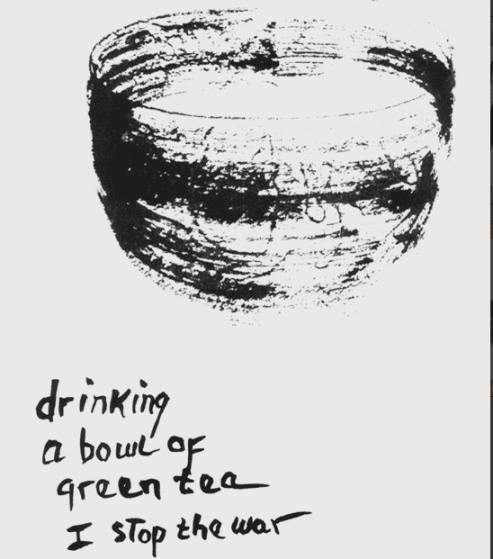
“In the early ‘50s, Reps, who was in his forties, had traveled to Japan en route to visit a respected Zen master in Korea. He went to the passport office to apply for his visa and was politely informed that his request was denied due to the conflict that had just broken out. Reps walked away, and sat down quietly in the waiting area. He reached into his bag, pulled out his thermos and poured a cup of tea. Finishing his tea, he pulled out a brush and paper upon which he wrote a picture poem. The clerk read the poem and it brought tears to his eyes. He smiled, bowed with respect, and stamped Reps’ passport for passage to Korea.”
This short, intense poem has two aspects that make it interesting and deep in many ways. One aspect is related to our desire to calm our head after fatigue or mental stress. The green tea acts as a pacifier that brings the poet’s chaotic mind to peace. I believe in “tea meditation,” as it helps us to change our intense feelings that are usually a result of our shallow thoughts.
Keeping the background of this poem in mind, I think it is about fatigue due to the person feeling irritated or frustrated. It may be due to his long journey to another country, where he is not getting proper assistance. The tea brought soothing effects to his mind and he started thinking rationally about the situation.
Another deep aspect of this poem is spiritual, where a drink is the central part of the meditation practice. It is said that drinking green/herbal tea not only changes our biochemistry, but also helps us to filter/purify certain thoughts/feelings that are toxic in our nature. Every single sip of a drink works to simmer down our intense emotions and eventually facilitates us to clear our mind.
Besides these two aspects, I also see a deep connection between the person and nature, where green tea acts as fresh air in the chaotic life of a person, and helps him to get rid of the war that usually takes place in his mind.
From the time we are little babies, we learn to simmer down by drinking milk. To drink is a way to get in touch with our mother, and in the beginning, our mother is all of our world, so we begin to make experiences of the world by sipping. Soon, we learn also that tensions can be released by sipping milk from our mother’s breasts, and the link is that we need to sip to settle down mental or physical pain.
Later on, we can lose this habit. Usually, we find a substitute with our favorite drink and take a pause from the world, and quite often from its bitterness, by drinking it… many people unfortunately make use of alcohol, trying to relax themselves … in Italy we have the “coffee break,” which i would rather call the “tea break”… Seriously talking, a tea, even if we focus only on the water by which it is made, it has electrolytes which help the nervous system to calm down and to work in its best way.
The “cha no yu” or tea ceremony in Japanese culture has its sovereignty in the green powder melted in hot water with elegance, calm gestures, and clean movements, which add magic to the rite. There’s no doubt the monks can meditate at their best after a cup of it.
The poet uses a four-line structure, reproducing the interruptions caused by sipping, opening the second line with “of” as if he is talking and suddenly he has to stop and sip before going ahead with the poem…
To accept a conflict and not to let it steal our energies means to have the third chakra, in the area of the stomach, well balanced. People who practice meditation know that wars are probably started by people with problems with the third chakra…. Furthermore, we can move on from bad experiences if we can “digest” them, and a hot cup of tea in our hands, or better, a bowl, can really make the difference for this chakra, helping to relieve any difficulty in the process of metabolism of difficult feelings we need to cross, accept, and also let go of …
I’m amazed by the spirituality very well conveyed by Reps in his ink drawing. The perfection of the lines recalls an ensō in my mind, and reminds me of how important it is to stop and look inside, in the circle of our inner world, to find a clean, simple but powerful thought of purity and peace. The meditation of the author sounds like it is activated by the green tea’s molecules, which could set forth a chemical change soon perceived by his neurons, and felt as the strong inner movement of stopping something dangerous, a war. If only we could all do this, and together, there would be no more wars in the world… A very touching poem, with a wise and powerful message.
This Zenku is beloved for its simplicity. The pacing of the poem, the starkness of the painting, and the surprising last line creates many feelings and interpretations. We often forget that the commonplace can solve world problems. Moments of peace can add up to world peace.
The sense of sound works effectively too. The “o”s in “bowl,” “of,” and “stop” give a sense of vastness, in my opinion. Also, the “r”s in “drinking,” “green,” and “war” provide a feeling of roundness, like a whirring.
Sometimes things are inexplicable, but not, at the same time. I think this applies to this haiga.