Haiku by Martina Matijević, Anthony Lusardi, and Thomas L. Vaultonburg

her suitcase
on the stair —
wilted sakura


by Martina Matijević (Croatia) 

Commentary by Jacob D. Salzer: 

A striking haiku that has a good balance of imagery and mystery (yugen). We don’t know who the female is in this haiku. We also don’t know if she is leaving or arriving. And where is she leaving or arriving at?  The imagery of a wilted sakura (cherry blossom) makes me think the female in this haiku is leaving; however, as the word “wilted” seems to point to the end of the sakura‘s life, the female could very well be the poet’s grandmother. I especially appreciate the image of her suitcase, as it leads my mind to wonder where she has traveled from or imagine where she is going. She may have traveled quite some distance, and this shows she has a great interest in the poet or whoever she is visiting.

The sakura festivals (cherry blossom viewing) in Japan are quite popular, as the cherry blossoms show a brief moment of vivid color and beauty, but their impermanence is what is believed to make them even more beautiful.  Still, the cherry blossoms always return, so it is both an annual tradition and has a long history in Japan. In the end, are we not all visitors here? Are our souls also on a long journey? Will we be reincarnated like the cherry blossoms and return once again after physical death?

A beautiful haiku that leads us to contemplate travel, impermanence, the importance of place, relationships, and ultimately, the potential of reincarnation and the journey of the soul. A powerful haiku.

november rainfall—
dad cooks dinner
for the first time


by Anthony Lusardi (USA)
published in Modern Haiku, issue #57.2, 2026

Commentary by Nicholas Klacsanzky:

“november rainfall” shows the seasonal reference (kigo), but November also carries a specific emotional tone. Late autumn is often associated with melancholy and/or transitions. In addition, November rain creates an atmosphere of grayness and quietude.

This somber feel at the beginning of the haiku is contrasted and compared in the last two lines. The poet’s dad cooking for the first time could be either a joyous or sad moment. The haiku never states why this is his first time cooking, but it could be due to an illness in the family, a divorce, the mother’s absence, or other reasons unknown.

The use of punctuation (as an approximation of kireji) allows us to pause and imagine the rain and all its sounds. The sound of the rain is similar to the crackle of oil in a cooking pan.

The haiku’s compression adds to its ambiguity. With nine words total, this poem is the usual length of a classical haiku in Japanese (in literal English translations).

When I read this haiku aloud, the letter “r” sticks out the most. In my opinion, it provides the haiku with a sense of heaviness or weight. Also, the letters “m” and “n” interchange, creating a musical quality.

Overall, I enjoy the mystery of this haiku and how it allows readers to uncover different emotions connected to themselves and their family history.

wind through bamboo—
I too
am hollow


by Thomas L. Vaultonburg (USA)
published in The Heron’s Nest, March 2026

Commentary by Hifsa Ashraf:

I find this haiku intriguing in its simplicity. The opening line immediately creates a vivid scene, while the em dash invites us to pause and wonder about the wind: does the wind pass through the bamboo? Does it create a rhythmic sound? Does it pass silently? Is it moving through a single bamboo plant, a group of bamboo, or an entire bamboo grove? Does it affect the person observing it? All these questions arise when we read the first line and pause at the em dash. The short second line shifts the poem from the external world to the speaker’s inner state. The word ‘too’ seems to connect the person with the bamboo, suggesting that, like the hollow bamboo, the person also feels empty.

The wind can also be read as a metaphor for time or difficult forces that pass through us and leave their mark. I particularly like the sound pattern of ‘through’, ‘bamboo’, and ‘too’. The recurring ‘oo’ sound creates a lingering, resonant quality that reinforces the feeling of emptiness and solitude, while the softer ‘m’ and ‘w’ sounds add to the poem’s quiet, melancholic mood. Together, these sounds create an atmosphere of sadness, solitude, and quiet introspection.

What begins as a simple image of wind through bamboo ultimately becomes a reflection on loneliness and the human condition. The simplicity of the language leaves much unsaid, allowing the reader to enter that silence and complete the meaning for themselves.
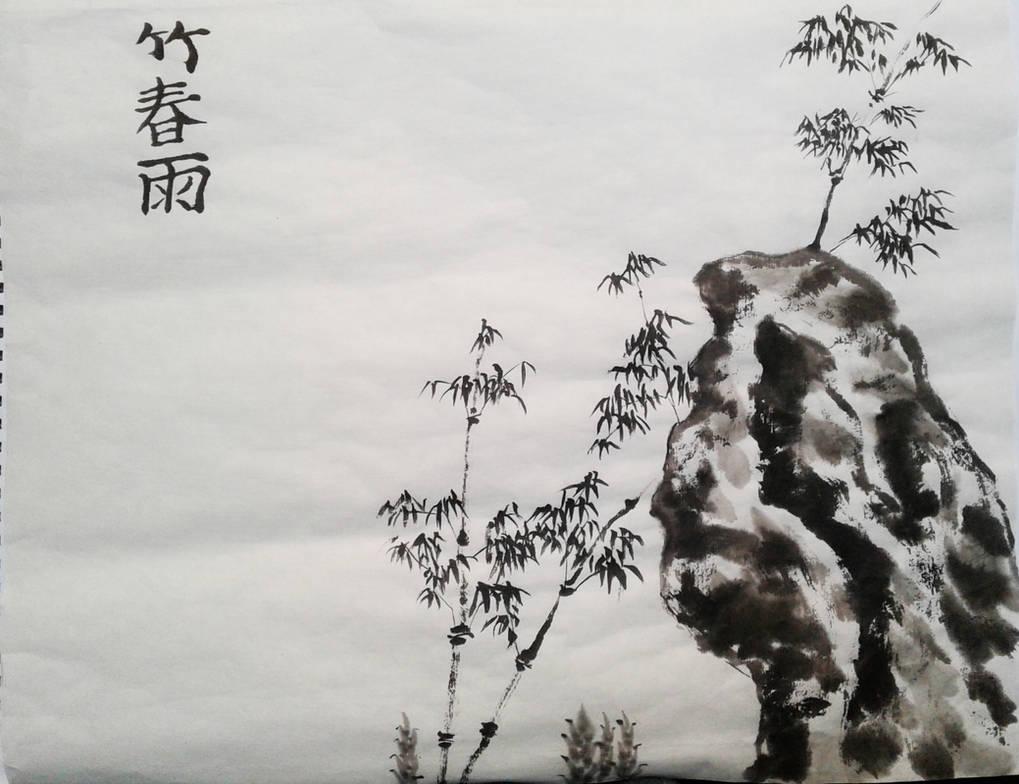

Sumi-e painting by yupanqui87
Haiku by Kavita Ratna, Quamrul Hassan, and Mikō

mountain peaks
inside my shoe
a pebble


by Kavita Ratna (India)
published in Cold Moon Journal, August 2024

Commentary by Hifsa Ashraf:

The opening image, mountain peaks, presents a vast and expansive landscape, suggesting a range of mountains viewed together rather than a single peak. It also leaves the exact nature of the mountains open to interpretation—whether they are high, steep, snow-capped, distant, or being viewed from the summit. The second image, inside my shoe, creates a striking shift in perspective. The vastness of the mountain range is suddenly replaced by something intimate, immediate, and almost unnoticed.

A pebble, once an insignificant fragment of the mountain landscape, becomes a source of discomfort when it enters the narrator’s shoe. In this sense, this haiku may suggest that even something small can become significant when it is close to us.

The pebble can be read metaphorically as a small obstacle or problem in life. Just as a tiny stone inside a shoe can make walking difficult, seemingly minor difficulties can disturb our progress when we fail to acknowledge them. At the same time, the pebble may represent a limitation or hurdle that prevents us from moving comfortably toward larger goals. The contrast between the grandeur of the mountain peaks and the inconvenience of the pebble ultimately draws attention to the power of perspective: something insignificant in the vastness of the world can become enormous when it is experienced personally. The haiku thus moves from the grandeur of the external landscape to the intimate experience of the individual, suggesting that the scale of a problem is not always determined by its physical size, but by how closely it affects us.

The absence of punctuation in this haiku can be important because it leaves the three images open and connected without imposing a fixed interpretation or stopping point.

valentine’s day   
the only text he gets   
grocery list    

by Quamrul Hassan (USA)
published in Failed Haiku, April 2024

Commentary by Jacob D. Salzer​:

I appreciate the humor in this haiku, though it could also have a more serious interpretation.  Perhaps the other person (presumably the partner) in this haiku has a physical disability or can’t get to the grocery store for other reasons. While flowers, chocolate, and maybe a date are nice, I also appreciate the practicality of a grocery list. Still, on first read, my first interpretation was humor. The man in this haiku may not have expected a grocery list text on a romantic holiday.  Regardless if we read this haiku as funny or potentially more serious, this poem is infused with care and attention. Well done!

lost community . . .
I gather my rusty arms
for the crucible


by Mikō (Netherlands)
Remembering ten years of My Haiku Pond

Commentary by Nicholas Klacsanzky:

The first line resonates strongly with me, as I have lost communities in the many iterations of “Nick.” Moving, changing scenes, war, and many other factors can contribute to us losing communities. In the case of the poet, Mikō might be referring to the My Haiku Pond online community. The use of ellipsis is appropriate, as it demonstrates the time it takes for a community to unravel or change. It also allows us to ponder the communities we have lost.

Rusty arms is perhaps the haiku’s central image. On one level, it evokes old tools or weapons that are disused and corroded. On another, arms suggests limbs, stiffened or worn. The rust implies the passing of time, and perhaps the erosion that comes with isolation.

The final line reframes everything that came before. A crucible is a vessel for enduring extreme heat. It is for testing, purifying, or transforming materials into something else. By ending with this image, it is implied that the poet is not gathering rusty arms to mourn them, but to submit them to a test or to purify them. There is a narrative arc in these three lines: loss – recovery of old resources – the willingness to face a test or transformation. The third line could be a nod to the famous 1953 play The Crucible by Arthur Miller, which uses a figurative meaning to describe the mass hysteria of the Salem witch trials. Finally, in the Bible, a crucible serves as a powerful metaphor for spiritual testing, suffering, and character refinement.

This haiku relies on suggestion rather than explanation. We don’t know what exact community was lost, or what the crucible represents (a trial, a war, an inner reckoning), and that ambiguity generates resonance.

The word rusty can be seen as an autumn seasonal reference, or kigo. This is a poignant reference, as this is a time when leaves are falling, and the world is becoming sparse, much like the process of losing a community.

The pacing is equivalent to the standard English-language haiku, with a short first line, a longer second line, and a short last line. This approximates the traditional Japanese haiku rhythm of go-shichi-go.

Looking at the diction, the poet could have easily made this haiku verbose but chose to be brief and efficient in wording. Furthermore, the heaviness of “l” sounds in the first and last lines expresses grief. Additional weight is added to the haiku with k/g sounds in “community,” “gather,” and “crucible.”

This haiku can be interpreted in many ways and has several allusions. It is an intriguing and unique work from a poet who has engaged widely in the haiku community for many years.

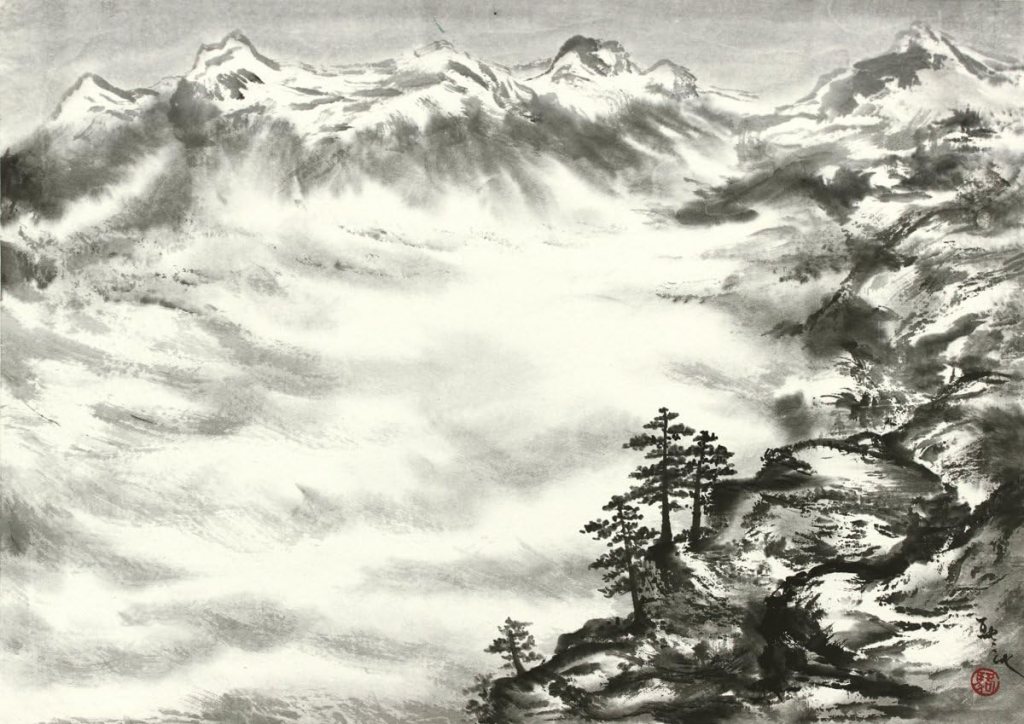
Sumi-e painting

Haiku by Kala Ramesh, Jas Asencio Ramirez, and Royal Baysinger

milky way …
the city’s debris choking
what is left of its river

— Kala Ramesh (India)
first published in Acorn, fall issue, 2025

Commentary by Jacob D. Salzer: 

This is a revealing haiku that speaks volumes about the amount of waste produced in cities. This haiku also shows how poorly waste is often managed, leading to polluted water, soil, and air. The first line provides a much broader perspective on the Milky Way galaxy that shows how ignorant much of humanity is, creating a narrow-minded economic system based on scarcity, supply-and-demand, competition, and a refusal to take care of the Earth. The Milky Way and the Earth have been revered for thousands of years, especially by Indigenous Peoples, environmentalists, and spiritual people. Indigenous Peoples also often live near rivers, lakes, and oceans. Indeed, where there is water, there is life. If a city’s debris is choking a river, that’s a clear sign that we have built too much, too fast, and now we are all taking the consequences. In the end, we all share our brief human lives on this small Earth, and we are all temporary visitors here. What will we do with our limited time here?

This haiku sparks conversations about ways we can protect the Earth and reduce the sheer amount of waste we produce on a daily basis. This haiku also inspires questions about where products come from, and how they are sourced and created. Hopefully, this will lead to more mindful and informed consumers who are not fooled by clever or misleading marketing campaigns.

Finally, in a much broader sense, this haiku urges us to think about our values and how we want to live on Earth with our limited time here.

According to the Global Waste Index 2025 by Sensoneo, “After a comprehensive analysis of waste management in 38 countries, Israel has emerged as the country with the highest per capita waste generation, producing up to 650 kg of municipal waste per person annually. Of this amount, 524 kg is landfilled, representing 80% of the country’s total waste  – the highest landfill share among all analyzed nations. Consistent with data from 2019 and 2022, Chile and the United States continue to rank among the world’s most significant waste polluters.

On the other end of the spectrum are two Asian countries. Japan jumped to first place from seventh in 2022, thanks to low rates of waste generation and landfilling. South Korea secured second place with the highest recycling rate among all nations – 54%. Surprisingly, Estonia joined the top three with almost no waste sent to landfills. Positive rankings were also achieved by Scandinavian countries such as Sweden and Finland, as well as by DACH region countries, Germany and Austria.”

Source: https://www.sensoneo.com/global-waste-index/2025/

An important haiku.

winter breath 
floats through chilled air-
child tries to catch it 

— Jas Asencio Ramirez (USA)
first published in Brussels Sprout, Volume XII:3, 1995

Commentary by Nicholas Klacsanzky:

The season the haiku is placed in is shown in the first line with “winter.” It is reinforced with “chilled.” The cold and sparseness of winter is contrasted by the third line. A child tries, in its innocence and playfulness, to catch the visible, floating breath. But, like the breath, a child’s carefree nature eventually dissipates. Sometimes, it seems to parents that their children grow up too fast. Classic haiku often focus on a fleeting moment, and this one is built around impermanence. The attempt by the child to catch the breath is doomed from the start. The imagery is hopeful at the same time, capturing a child’s innocent belief that something visible must also be graspable.

In the second line, there is an approximation of kireji, or a cut marker, to delineate the two parts of the haiku, with the introduction of the dash. The line break after “floats through chilled air—” creates a small pause, mirroring the way breath hangs in cold air before scattering.

The letter “r” in this haiku seems the most prominent to me, which brings a sense of heaviness. This provides more weight to the visible breath. Light letters like “t” and “i” also provide tenderness to the musicality of the haiku.

In terms of pacing, the haiku follows the short/long/short line lengths. This reflects the traditional Japanese haiku rhythm. Though this haiku is not so focused on absolute brevity, the word choice by the poet unfolds an emotional response from the reader. The poet captures a poignant moment with clarity to allow readers to ponder the relationship between innocence and experience, transience and staying power, and hope and realism.

as the heatwave settles a swell of cicada songs

— Royal Baysinger (Canada)
first published in Frogpond, 46.3, 2023

Commentary by Hifsa Ashraf:

This monoku reflects a moment of seasonal transition, where one phase of summer gradually transforms into another. The opening phrase, as the heatwave settles, suggests that the speaker has been enduring and observing an extended period of oppressive heat, waiting for the moment when its intensity finally begins to ease. The word settles becomes the hinge of the poem, marking not only a shift in the weather but also a quiet change in the speaker’s emotional state. As the heat subsides, so too does the inner tension, creating a sense of relief and anticipation.

The phrase a swell of cicada songs evokes both a rising chorus and a wave of renewed life. The word swell carries a double meaning: it suggests an increase in sound while also recalling the movement of a wave, reinforcing the poem’s sense of transformation. The cicadas seem to celebrate this subtle change in the season, their chorus becoming a natural announcement of renewal. Their songs may also foreshadow the coming rains, or express the instinctive joy of a landscape awakening after oppressive heat.

Beyond the seasonal scene, the haiku resonates as a metaphor for human experience. Just as the heatwave eventually settles, periods of hardship also come to an end. The swelling chorus of cicadas becomes a symbol of hope, resilience, and inner renewal—a reminder that difficult times can give way to fresh understanding, joy, and transformation.

The poem’s music further deepens its effect. The repeated s sounds in as, settles, swell, songs, and cicada create a soft, whispering rhythm that mirrors the gradual easing of the heat, while the w sound in heatwave and swell suggests the motion of a wave carrying the poem from stillness toward renewal.

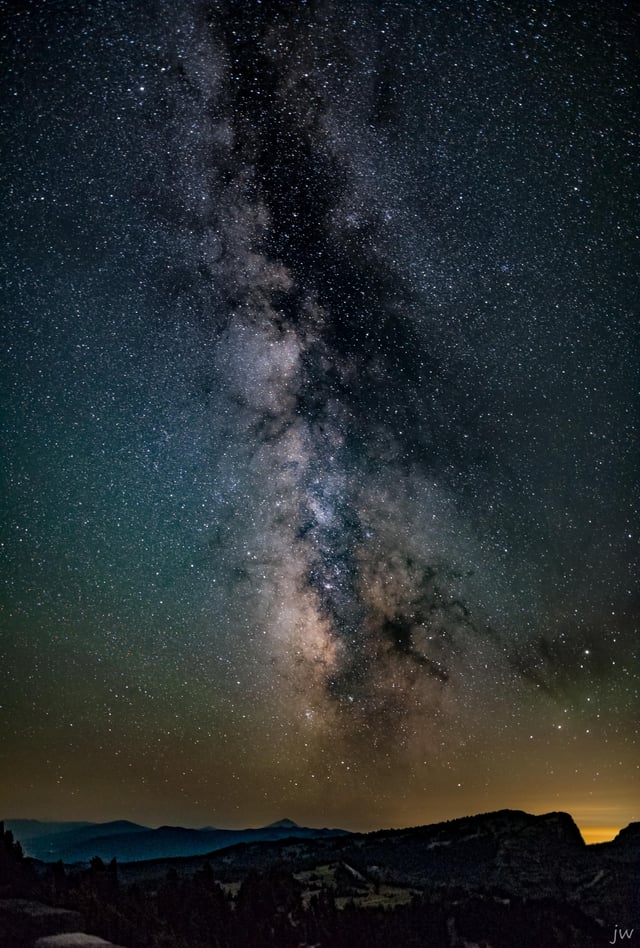
Photo by Jon Washburne