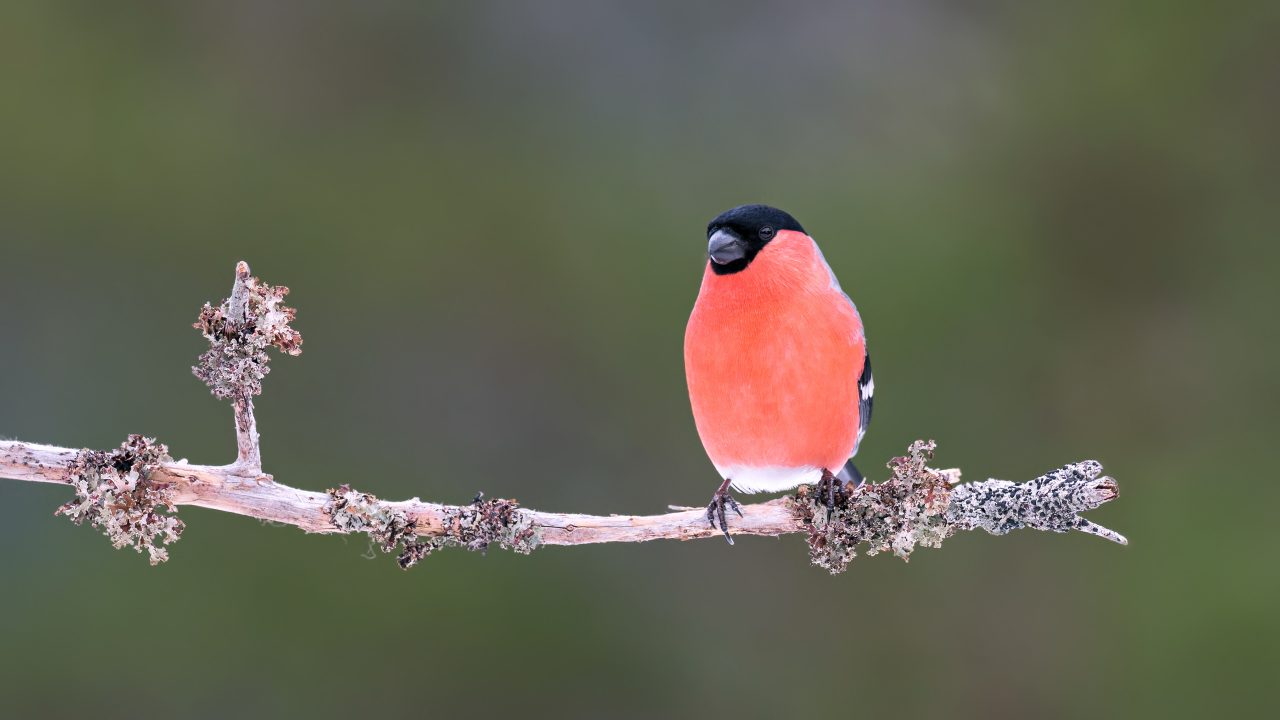
Lucia Fontana’s Barley Expanse

barley expanse . . .
like incense smoke
the poppy waves

The Mainichi, 17th August, 2016

© Lucia Fontana (Italy)

One of the things that drew me towards this haiku is that it has a simile. Usually in haiku, we try to stay away from metaphors, personification, simile, and other poetic devices that do not present subject matter in an objective sense.

However, it is also a tradition in haiku to use simile as a kind of a trick of the mind, or to bring attention to a deeper truth. Though it is used sparingly for effect, when it is done right, it works well. It is like when you are playing music in a certain mode and introduce a note not in the mode. It surprises the audience and can sometimes make a performance special. In any art, we cross boundaries to reveal new emotions or to express something needed to be expressed.

Though the first line is straightforward, especially with a classical kireji (or “cutting word” or punctuation in English), the following lines start with “like,” enacting a simile that has overtones of spirituality. Many people who write haiku have a Buddhist background, as Basho, the “godfather” of modern haiku (or hokku, as it was back then) was a Zen practitioner. Haiku is not a Zen art form, but Zen has greatly influenced haiku in its journey from being a part of a linked verse named renga and becoming its own poetic form that has grown more serious, philosophical, and powerful in showcasing people’s connection with nature, and vice versa.

With “incense smoke,” the reader is guided to see the poppy’s petals in their turning in the wind, like the curl of incense. This image is even more stark with colors in mind: barley being golden yellow and poppies usually being a luscious red. Red can be said to be a color of passion and devotion. In a sense, I think the writer is saying she sees something ethereal in the way the poppy’s petals wave. Poppy’s petals are light and feathery, and are layered on top of each other. I believe the comparison of these petals with incense smoke is apt, and their color can definitely bring about a feeling of something innocent, spiritual, and awe-inspiring.

Though the ellipsis seems to clearly cut the haiku into two portions, we can also read the haiku as: barley expanse . . . like incense smoke/the poppies wave. This gives a new sense to the haiku, suggesting the poppies are interacting with the barley field in a natural way, but there is an underlying spirituality to it as well.

However, both ways of reading the haiku brings about the sense of the magic of nature. As children, we feel the mystery and power behind nature on our explorations through forests, plains, deserts, and the like. As adults, we can lose this feeling of the magic of nature. I think the feeling behind this haiku is that the spirituality and mystery of nature should be seen in our eyes again.

It is interesting to note the use of the word “expanse” and “incense” which rhyme and both refer to spirituality. Also of importance is the connection between “smoke” and “poppy” with the “o” sound, which gives off a sense of something prolonged (the traveling of incense, for instance). The ellipsis, in addition, emphasizes the sense of continuation.

Lucia Fontana has written a unique haiku, using a simile, colors, and motion in a poignant and meaningful way. Hopefully more modern haiku poets will venture to use similes like this and put their attention to spiritual subjects more often.

– Nicholas Klacsanzky (Ukraine)

Maria Laura Valente’s First Snowflakes

road to home—
first snowflakes fall
on my memories

Italian original:

strada di casa
sui ricordi d’infanzia
la prima neve

© Maria Laura Valente (Italy)

(previously appeared in “My mandala – Haiku Anthology”, Cascina Macondo, 2015.; also appeared in “Inchiostri d’Autore”, Accademia Barbanera Edizioni, 2016; “La couleur d’un poème”, Milan, 9 July 2016 (1st prize))

I am not conversant in Italian, but I enjoy the sound of the English translation of this haiku. The “o” sound in “road,” “to,” “home,” “snowflakes,” “on,” and “memories” gives a sense of something drawn out, as in a journey home. Also, the alliteration of “first” and “fall” works well to give emphasis.

Though this haiku seems nostalgic, it mixes with the present moment with “first snowflakes.” I think this mixture gives a sense of introspection or a sense of an ever-changing life.

Though the first line indicates a road home and then a personal reference is made in the third line, the “road” could be the journey of the snowflakes as well. There is also a connection with memories of home and first snowflakes, in that memories of home are usually childhood memories. The first snowflakes one sees or the first snowflakes of the year can be a symbol of our childhood: beautiful but extremely transient.

Another side of this haiku is that the snowflakes is in a sense burying the memories of the poet by covering what she can see from the train window. All of her familiar sights are clothed in the ubiquitous form of snowflakes.

This blankness connects well to spiritual philosophies. At the end of our spiritual journey, as expounded by many spiritual teachings, we will be blank—simply a vessel for a higher power to work through us. It is an elimination of the ego and a passing into collective consciousness. I do not know if the author wanted to imply this meaning or reference it, but as a reader of spiritual books and follower of spiritual traditions, it seems this spiritual meaning could be within this haiku.

The snowflakes cannot talk, but in a sense, it seems nature is telling the author: forget the past, and be in the present. Is the author’s home still her real home? Where is our home in actuality? Home is often an abstract concept, though we may live in one place all of our lives.

Getting back to the technical side of the haiku, the use of a kireji, or cutting word (punctuation for English) works well to separate the two parts of the haiku. It is interesting that she did not use an ellipsis (…) to show the continuous motion of the journey. I believe she used an em dash to show the “isness” of the present moment being portrayed.

There is also a certain rhythm to having three words per line that lends itself to showing a journey, which is also reflected in the original Italian version.

There are several pathways of reading this haiku, but it can be said clearly that this haiku gives a sense of awe of the moment, especially in relation to our most poignant memories.

– Nicholas Klacsanzky (Ukraine)


Christina Sng’s Summer Rain


summer rain
finally I am all
cried out

©
Christina Sng (Singapore)
(previously published in hedgerow, issue #86, 2016)

I think this haiku is a fine example of Matsuo Basho’s karumi or “lightness.” Basho did not enjoy pretentiousness or elaboration. He told his disciples, “in my view, a good poem is one in which the form of the verse, and the joining of its two parts, seem light as a shallow river flowing over its sandy bed.”

Why is this important in haiku? Well, haiku now is about mostly everyday life and the small things that happen to us that are actually quite big in a subtle way. I believe Basho also wanted haiku to be like reality: simple at first sight, but with so much irony, contradiction, joy, and melancholy.

We start with a seasonal reference, or a kigo. When rain comes in summer, it is much needed and much appreciated, as people want some respite from the heat and plants want nourishment.

The second line has a spiritual overtone. It implies a oneness, or a reaching of potential. The use of enjambment is interesting, as in haiku, we rarely use enjambment. Enjambment is more of a western poetic device, but in haiku it can be used occasionally to imply more meaning.

The third line seems naturally a carry through of the second line, as “finally I am all cried out.” Yet, what if the author is saying instead that she has become “all,” and that “all” is cried out? It is quite imaginative, but one can see a pure nothingness from “all” being cried out.

It is also intriguing to note that haiku are usually written in the present tense, yet we have the past tense “cried.” Well, writing in the present tense is only a guideline, as some experiences just seem to have be written in past tense:

in the shade of a willow tree
i paused for what i thought
would be just a moment

– Saigyo

a whole field of
rice seedlings planted—I part
from the willow
– Basho

and many more.

But let’s get back to the interpretations. Another way to look at the last two lines is that even though she has finally cried herself out, the summer rain is still there or comes after she has finished crying. This presents an aesthetic of continuity, which is a classic haiku theme.

Another way to see the lines is that the author is talking to the summer rain, and telling that she has cried herself out. It is not easy to know how to read the lines exactly without the punctuation, but that is one of the benefits of leaving out punctuation. In haiku, you can imply much more, usually, by having less or no punctuation.

The late Jane Reichhold noted that if a haiku feels like it needs punctuation, it probably is not phrased properly. While there are definite exceptions to this principle, it is a good thing to keep in mind while writing haiku and trying to form your lines.

Yet another take at the lines is that the summer rain is speaking “finally I am all cried out.” The personification is not explicit, but it is there with enough imagination and stretching of the mind.

To close, I would like to pay attention to the sound of the haiku. The “i” in “rain,” “finally,””I,” and “cried” seem to lend to the intensity of the haiku’s tone. The “r” in “rain” and “cried” bring more power to the juxtaposition.

Christina has written a multi-faceted and memorable haiku. It is an example we can remember when we want to write in a light way, use enjambment, or use the past tense.

– Nicholas Klacsanzky (Ukraine)