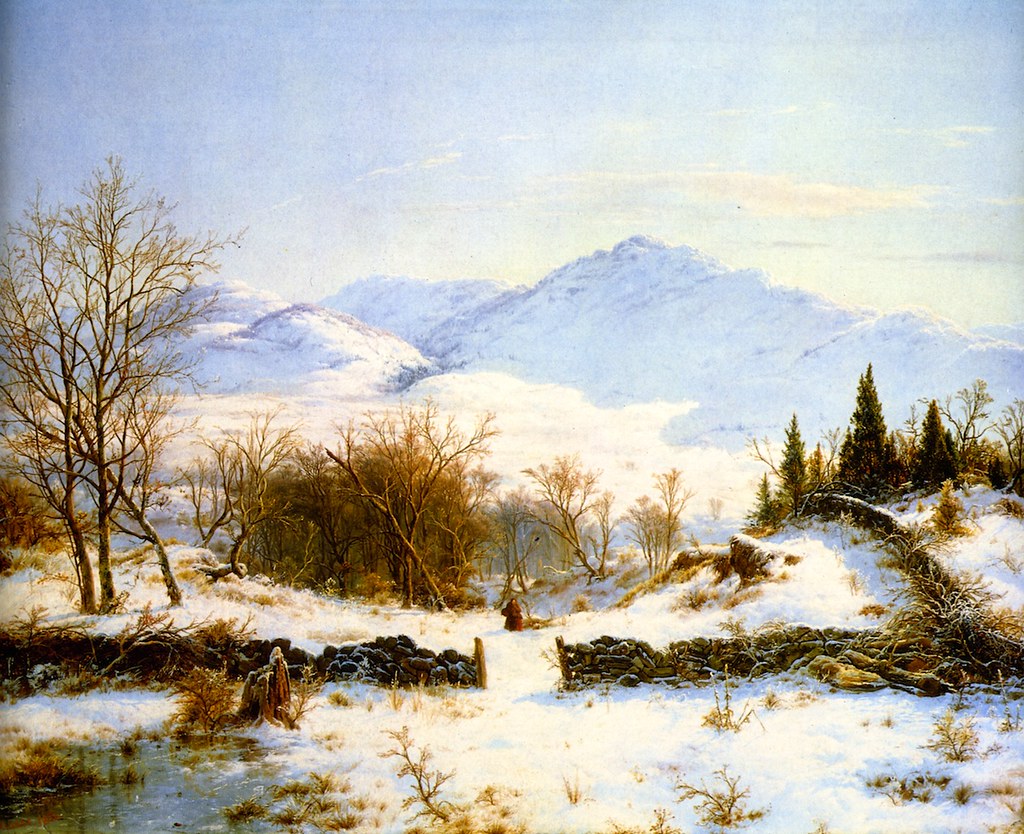
Anna Goluba’s dreamcatcher

Abandoned house
The dreamcatcher still hangs
In the children’s room

Anna Goluba (Poland)
Published in Haikuniverse, March 7, 2019

Commentary

I appreciate the mystery (yūgen) of why the house is abandoned. Was it because of physical damage to the house itself that forced the family to move? Or, was it due to other socio-economic factors that the family relocated? The mystery (yūgen) of the abandoned house provides some space for the reader. The dreamcatcher also provides space for the reader’s imagination.

I always appreciate the symbolic importance of the dreamcatcher. According to Indigenous Peoples, the circular shape of the dreamcatcher represents the circle of life and symbolizes that there is no beginning or end. Dreamcatchers are also made of natural materials that reflect the close bond Indigenous Peoples have with the Earth. The web of the dreamcatcher is meant to catch the bad dreams and allow the good dreams to pass through to the person sleeping. In this way, the dreamcatcher is like a spider’s web that filters out negativity. Some dreamcatchers are also decorated with beads, gems, and/or stones, which give them positive energy. Lastly, feathers are also sacred to Indigenous Peoples and are found in dreamcatchers. Feathers symbolize protection, healing, and a connection with the divine.

I appreciate how this haiku transports readers back into childhood. I think a child’s imagination paired with the realm of dreams is very effective. I also feel compassion for the child who was forced to move from the house, for unknown reasons. I think of the dreams the child had when they lived in the house.

In short, this is a haunting and mysterious haiku that serves as an effective portal into the reader’s childhood, their first home, and their dreams. An excellent haiku.

— Jacob D. Salzer

The kigo or seasonal reference in this haiku is not obvious or is nonexistent. However, there is a melancholy feel to the poem; so, I would probably place this haiku in autumn. It’s fine if a haiku does not have an explicit kigo; in Japan, haiku without a seasonal reference (muki haiku) have been popular for about 100 years now.

There is no punctuation in this haiku (an approximation of kireji), yet there is a clear grammatical shift after line one. In English-language haiku, the capitalization of words is not common, though. However, the poet is from Poland, and the haiku community there might have different ideas about the capitalization of words. There is nothing wrong with it and is understandable due to many poets thinking each line of a poem should begin with a capital letter.

The combination or association of parts in the haiku works in stark fashion. The pull between emptiness and the energy/action of the dreamcatcher creates a poignant mood and scene. The ending line enhances the poignancy of the imagery even further.

Looking at the sound of the haiku, I admire the usage of the letter “h.” It’s an uncommon letter to use in succession in poetry, I believe. “h” gives an emphasis at the end of the first and second lines. It also gives strength to the third line as well.

In terms of pacing, this poem follows the conventional short/long/short rhythm in English-language haiku that approximates the rhythm of Japanese haiku. Looking closer at the words used, “the” employed for both subjects “dreamcatcher” and “children’s room” was a smart choice, as both subjects deserve proper respect.

Overall, this haiku combines elements of melancholy, hope, spirituality, and more. Without a word out of place, the poem is effective and touching.

Nicholas Klacsanzky

Rebel Rose Artistry

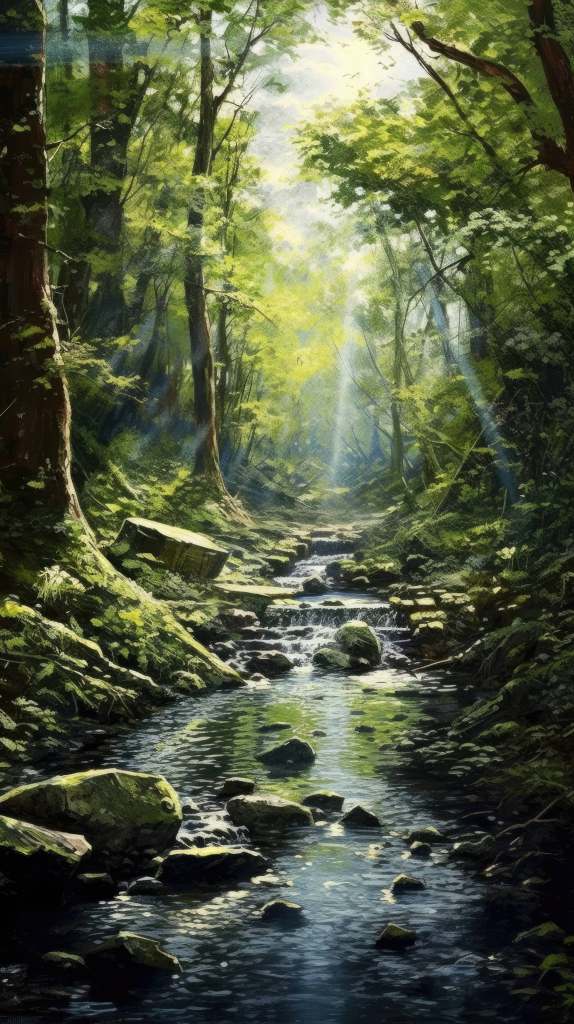
Kat Lehmann’s forest stream

an answer without end quotes the forest stream

Kat Lehmann (USA)
Published in Frogpond 46:2, 2023

Commentary

I greatly appreciate how the answer in this monoku is open-ended and ongoing vs. definitive. I think sometimes the best answer is not-knowing and living in the mystery. 

Another interpretation is that even if there is an answer, there is space to be more flexible and open-minded (i.e. the answer itself is changing or capable of changing). This also shows that, despite our knowledge, there is a lot we don’t know.

I also appreciate how we don’t know the question in this monoku. This makes the poem very versatile and applies to many different questions and situations. It seems asking questions in general is often a sign of humility. Byron Katie once said: “I don’t know is my favorite position.”

The vitality of a forest stream could be a metaphor for the flow of consciousness when we are not stuck or attached to rigid thoughts, living in the constant flow of “now.” In addition, biologically, we are mostly water. It seems if more people lived like a forest stream, we would live in a much more beautiful world. “Without end quotes” also seems to speak to the continuity of life and could speak of reincarnation or a spiritual river that flows on into the afterlife. A beautiful haiku.

Jacob D. Salzer

Thinking about the kigo or seasonal reference, it is not exactly clear, as forest streams could be present during many times of the year. However, spring and fall are common times for flowing forest streams in the poet’s part of the world. The poem flows homogeneously like a stream represented as one line. I would vie for spring, as “an answer without end” illustrates the abundance of that season.

There is no punctuation in the haiku, but there are definite ways to section the parts:
1. an answer/without end quotes, the forest stream
2. an answer without end quotes/the forest stream
3. an answer without end/quotes the forest stream

…and possibly more.

This makes it a task to choose just one interpretation, but it also gives it more breadth. The association between the words creates interesting readings, such as between “without end” and “stream”; “quotes” and “steam” (both small but integral), etc. A reader can easily sit and investigate this haiku for a good while without feeling the need to move on.

An important part of this haiku is its sound. The standout letters are “o” and “t.” The flowing “o” matches well with the subject of a stream, and “t” provides a sense of the stream’s power, in my opinion.

I like that the poet did not shy away from the possibility of surrealism. Often, westerners have the false idea that haiku needs to be written with objective realism or as an objective sketch. Subjectivity has been a cornerstone of Japanese poetics, and haiku, since its inception. Sometimes, westerners confuse the “sketch from life” approach that Shiki proposed with strict objectivity when he rather focused on writing from one’s life experiences and occurrences (including individual feelings).

This is a haiku to make you ponder and perhaps create your own meaning with. Original, imaginative, and verging on the surreal, this poem has a lot to offer.

Nicholas Klacsanzky

Painting done by AI.

Jacob D. Salzer’s long journey

a long journey . . .
in mother’s clothing
the scent of snow

Jacob D. Salzer (USA)
(published in Autumn Moon Haiku Journal 7:1, Autumn/Winter 2023)

Commentary by the poet

In this haiku, I primarily wanted to honor my mother and her long Earth journey (and her soul’s journey, if readers are open-minded to past lives and reincarnation). I am also writing about my mother going for a long walk in the snow and carrying the “outside” into the house. The scent of snow in her coat lingers. I’m also recognizing the long journey of falling snow, as snow falls from miles above us to reach the Earth. I hope this haiku can act as a portal for the reader to reflect on their own mother and her unique journey.

Commentary by the other editors

This haiku sounds simple but carries many stories of life’s journey. A long journey describes a period that may last more than a year or a lifetime. But, it signifies the essence of a trip that has ups and downs, and deep personal experiences. The ellipses stop us for a while and let us ponder the various aspects or types of journeys. I see it as a life’s journey that has myriad phases and stages where the person continuously passes through experiences within the self and with other people.

The second line tells us about the traveller but it still doesn’t show whether she is the one who carries the clothing or is having a long journey. It may have two interpretations. One is that she passes through rigorous experiences i.e. departure, separation, illness, loneliness, etc. The second interpretation would be that someone close to her carries her clothes as a possession.

The last line depicts deep feelings, as the smell of snow can mean something went as cold as snow and leaves painful memories. Another aspect can be the smell of a person that comes from the clothes and the poet may take it as the smell of snow, akin to the lingering memories of a loved one. In both cases, the person remains discreet in expressing their feelings and tries to relate those emotions with the scent of snow, which does not make a sound.

Hifsa Ashraf

Thinking about the seasonal reference in this haiku, “the scent of snow” is clearly directed at winter. However, a residue of snow could mean that winter has passed and that spring has come. So, the poet could be reexperiencing winter in the time of spring. This could symbolize how the poet feels about his mother’s life or even his life reflected by the one that brought him existence.

The two parts of the haiku combine well in that duration is present in each section. “Long” and “scent” both work to illustrate time passing by. “Journey” relates well to the implied cycle of seasons. With our phases as personalities, they can be representative of seasons—though one season can carry remnants of another season in it. The poet could be referring to how memory sticks to our personalities and in direct connection to his mother, it could mean that his mother has memories “too cold” to burn away.

With the punctuation, which delineates the two-part structure of the haiku, the ellipsis illustrates the duration of the journey. It also makes certain that the reader does not inadvertently read the second line as flowing from the first line.

The pacing emulates the traditional rhythm of Japanese haiku without the restriction of the syllabic count, which is often cited as an erroneous method of matching the format of Japanese haiku. The short/long/short practice is closer to the original haiku rhythm.

Looking at the sound, the letter that jumps out at the reader is “o.” Strewn throughout the poem, it gives a sense of elongation with the long syllables. In my opinion, it also heightens the emotional resonance of the subject of the haiku.

The way human life intermixes with nature in this haiku makes it special. It creates pathos and perhaps something verging on the surreal. A relatable, yet transcendent haiku.

Nicholas Klacsanzky

Winter Scene by Louis Remy Mignot, 1856