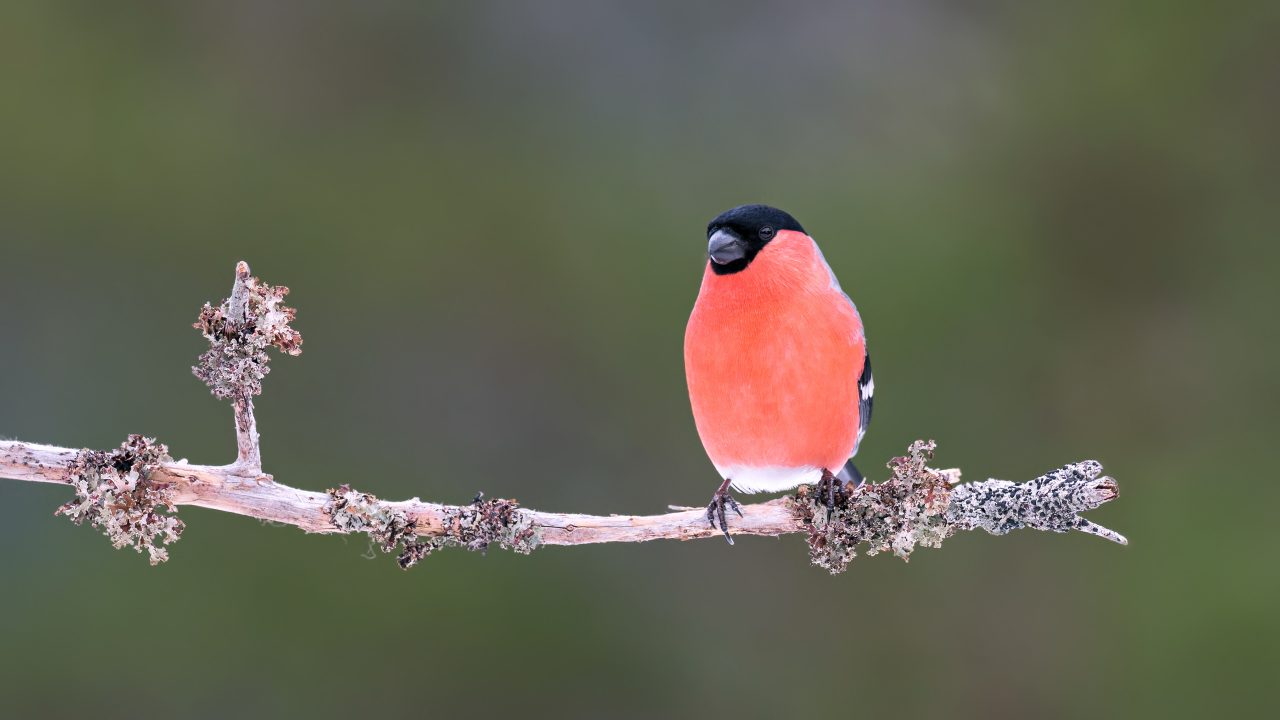
Haiku by Kala Ramesh, Jas Asencio Ramirez, and Royal Baysinger

milky way …
the city’s debris choking
what is left of its river

Kala Ramesh (India)
first published in Acorn, fall issue, 2025

Commentary by Jacob D. Salzer

This is a revealing haiku that speaks volumes about the amount of waste produced in cities. This haiku also shows how poorly waste is often managed, leading to polluted water, soil, and air. The first line provides a much broader perspective on the Milky Way galaxy that shows how ignorant much of humanity is, creating a narrow-minded economic system based on scarcity, supply-and-demand, competition, and a refusal to take care of the Earth. The Milky Way and the Earth have been revered for thousands of years, especially by Indigenous Peoples, environmentalists, and spiritual people. Indigenous Peoples also often live near rivers, lakes, and oceans. Indeed, where there is water, there is life. If a city’s debris is choking a river, that’s a clear sign that we have built too much, too fast, and now we are all taking the consequences. In the end, we all share our brief human lives on this small Earth, and we are all temporary visitors here. What will we do with our limited time here?

This haiku sparks conversations about ways we can protect the Earth and reduce the sheer amount of waste we produce on a daily basis. This haiku also inspires questions about where products come from, and how they are sourced and created. Hopefully, this will lead to more mindful and informed consumers who are not fooled by clever or misleading marketing campaigns.

Finally, in a much broader sense, this haiku urges us to think about our values and how we want to live on Earth with our limited time here.

According to the Global Waste Index 2025 by Sensoneo, “After a comprehensive analysis of waste management in 38 countries, Israel has emerged as the country with the highest per capita waste generation, producing up to 650 kg of municipal waste per person annually. Of this amount, 524 kg is landfilled, representing 80% of the country’s total waste  – the highest landfill share among all analyzed nations. Consistent with data from 2019 and 2022, Chile and the United States continue to rank among the world’s most significant waste polluters.

On the other end of the spectrum are two Asian countries. Japan jumped to first place from seventh in 2022, thanks to low rates of waste generation and landfilling. South Korea secured second place with the highest recycling rate among all nations – 54%. Surprisingly, Estonia joined the top three with almost no waste sent to landfills. Positive rankings were also achieved by Scandinavian countries such as Sweden and Finland, as well as by DACH region countries, Germany and Austria.”

Source: https://www.sensoneo.com/global-waste-index/2025/

An important haiku.

winter breath 
floats through chilled air-
child tries to catch it 

Jas Asencio Ramirez (USA)
first published in Brussels Sprout, Volume XII:3, 1995

Commentary by Nicholas Klacsanzky:

The season the haiku is placed in is shown in the first line with “winter.” It is reinforced with “chilled.” The cold and sparseness of winter is contrasted by the third line. A child tries, in its innocence and playfulness, to catch the visible, floating breath. But, like the breath, a child’s carefree nature eventually dissipates. Sometimes, it seems to parents that their children grow up too fast. Classic haiku often focus on a fleeting moment, and this one is built around impermanence. The attempt by the child to catch the breath is doomed from the start. The imagery is hopeful at the same time, capturing a child’s innocent belief that something visible must also be graspable.

In the second line, there is an approximation of kireji, or a cut marker, to delineate the two parts of the haiku, with the introduction of the dash. The line break after “floats through chilled air—” creates a small pause, mirroring the way breath hangs in cold air before scattering.

The letter “r” in this haiku seems the most prominent to me, which brings a sense of heaviness. This provides more weight to the visible breath. Light letters like “t” and “i” also provide tenderness to the musicality of the haiku.

In terms of pacing, the haiku follows the short/long/short line lengths. This reflects the traditional Japanese haiku rhythm. Though this haiku is not so focused on absolute brevity, the word choice by the poet unfolds an emotional response from the reader. The poet captures a poignant moment with clarity to allow readers to ponder the relationship between innocence and experience, transience and staying power, and hope and realism.

as the heatwave settles a swell of cicada songs

Royal Baysinger (Canada)
first published in Frogpond, 46.3, 2023

Commentary by Hifsa Ashraf:

This monoku reflects a moment of seasonal transition, where one phase of summer gradually transforms into another. The opening phrase, as the heatwave settles, suggests that the speaker has been enduring and observing an extended period of oppressive heat, waiting for the moment when its intensity finally begins to ease. The word settles becomes the hinge of the poem, marking not only a shift in the weather but also a quiet change in the speaker’s emotional state. As the heat subsides, so too does the inner tension, creating a sense of relief and anticipation.

The phrase a swell of cicada songs evokes both a rising chorus and a wave of renewed life. The word swell carries a double meaning: it suggests an increase in sound while also recalling the movement of a wave, reinforcing the poem’s sense of transformation. The cicadas seem to celebrate this subtle change in the season, their chorus becoming a natural announcement of renewal. Their songs may also foreshadow the coming rains, or express the instinctive joy of a landscape awakening after oppressive heat.

Beyond the seasonal scene, the haiku resonates as a metaphor for human experience. Just as the heatwave eventually settles, periods of hardship also come to an end. The swelling chorus of cicadas becomes a symbol of hope, resilience, and inner renewal—a reminder that difficult times can give way to fresh understanding, joy, and transformation.

The poem’s music further deepens its effect. The repeated s sounds in assettlesswellsongs, and cicada create a soft, whispering rhythm that mirrors the gradual easing of the heat, while the w sound in heatwave and swell suggests the motion of a wave carrying the poem from stillness toward renewal.

Photo by Jon Washburne
Haiku by Alan Summers, Royal Baysinger, and Nisha Raviprasad

the last one melting
in the snow-jerk’s grip 
cola float 

Alan Summers (UK)
The Pan Haiku Review Issue 2, New Year’s Eve/Winter 2023 
A Kigo Lab, Special ed. Alan Summers

Commentary from Nicholas Klacsanzky:

What initially drove my interest in this haiku is its unique kigo, or seasonal reference. In the poet’s own words: “After “Soda jerk” a term used for a person who operated the soda fountain in a drugstore, preparing/serving soda drinks & ice cream sodas. A snowjerk is a snow chaser, as the snow decreases in some geographical areas, and increases in other areas. Snow will soon be like diamond dust.” This reflects the effects of climate change.

The first two lines could be interpreted in at least two ways. It may connect to the cola float mentioned in the third line, or an unnamed iceberg or ball of snow. I believe this haiku points to the irony or sadness of a snowjerk melting ice, snow, or a float with their hands. This melancholy is contrasted with the sweetness of the cola float.

There is a fine euphony occurring in the haiku with the “l” and “o” sounds. Also, the pacing of the haiku aligns well with the original Japanese rhythm of this art form. Lastly, though the kigo is unique, the language itself is accessible. Overall, it’s a haiku you have definitely never seen before with pressing topics built in, which makes us pause and ponder.

a dog
gnawing its bone
— re-reading her letter

Royal Baysinger (Canada)
Modern Haiku, 54.2 (Summer 2023)

Commentary from Jacob D. Salzer:

As with many powerful haiku, complex emotions are implied in the first two lines through the “show not tell” method. In addition to re-reading the letter, there is repetition in the act of gnawing. The em-dash also provides a weighted pause, which adds emotional weight. The fact that the poet is re-reading this letter also tells us that it has heavy emotions within it. As readers, we can likely relate to this experience or enter our imagination in this haiku in our own way. 

Using simple words, this haiku has a powerful juxtaposition that balances concrete imagery with mystery. It has room for the reader and is relatable. In short, this is an effective haiku that focuses on the layered complexity of relationships.

ragwort sprouts…
mother pats her wrinkles
with a gentle sigh

Nisha Raviprasad (India)
Under the Basho, June 1, 2024

Commentary from Hifsa Ashraf:

We all try to compare and contrast many things in our surroundings to justify or satisfy ourselves. In this haiku, the poet relates ageing with the leaf structure of ragwort sprouts which are wavy and wrinkled.

Mother, who is patting her wrinkles with a gentle sigh, is perhaps indicating her feelings of satisfaction that she is not alone. Though her skin is changing, other things in nature pass through similar transformations right from the beginning. The words ‘pat’ and ‘sigh’, though, perhaps show signs of satisfaction and motivation that she gets after seeing ragwort sprouts. There may also be a comparison between the poisonous nature of ragwort and changes in mood, thoughts, and feelings due to ageing that become more cynical or bitter. As ragwort causes skin allergies, I can see an element of fear here where the mother makes herself content by assuring herself that her skin is still healthy despite dangerous risks in her vicinity. She may be trying to accept ageing and adjust to it positively. 

Looking at the sound, the letter ‘w’ could indicate the continuous thought process of ageing that can be satisfactory or dissatisfactory.

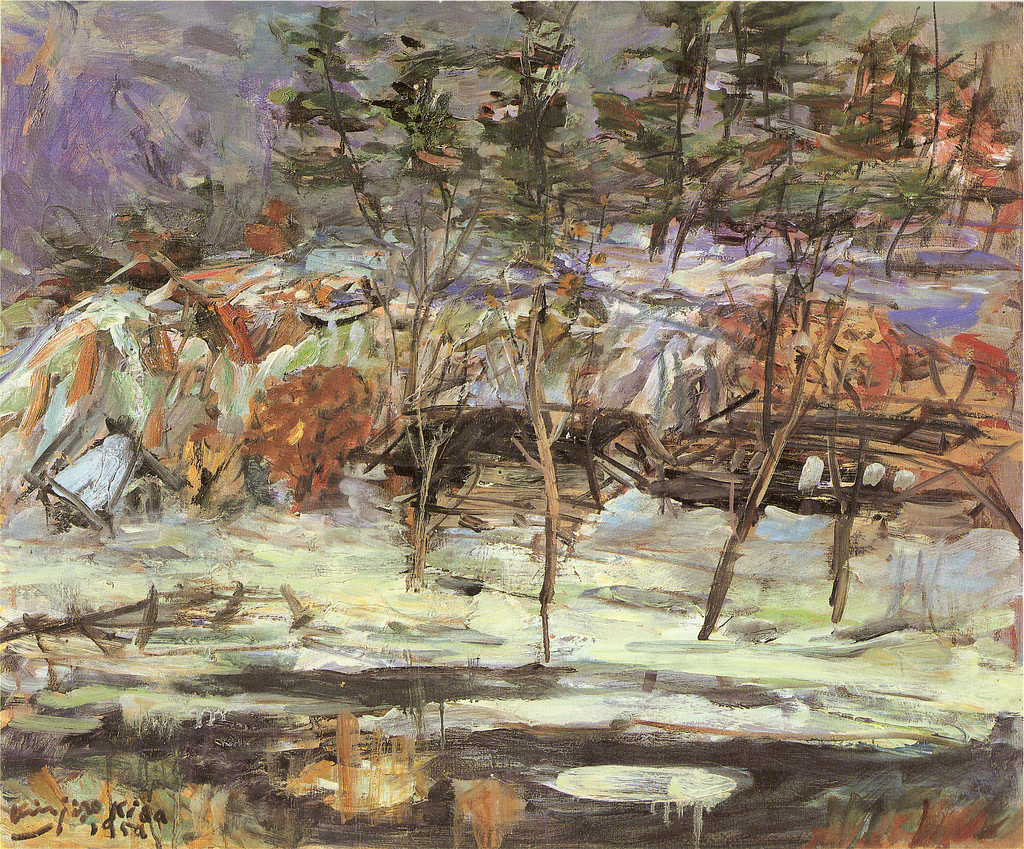
Kida Kinjiro, 1959, “Melting of Snow in Thinned Copse”

Royal Baysinger’s who 

not there
to remind me who’s who
— your funeral

Royal Baysinger (Canada)

(previously published in Frogpond 45.2 & skipping stones: The Red Moon Anthology of English-Language Haiku 2022)

Commentary

The structure of this haiku is different from the usual haiku but it provides enough room to think about the message the poet wants to share with us. At first glance, I feel it’s simply a flow of ongoing thoughts about a sad reality. The thoughts don’t need to be rearranged to make them perfect for readers. We can easily comprehend what is being said without focusing more on the style of this haiku.

The opening line ‘not there’ without ellipses lets our thoughts wander until we relate it to our personal experiences or observations. I paused for a while to think about the deep meaning of these two words that may sound meaningless if there is nothing after them. But, when I read them in the context they are given, they make a lot of sense—especially when I see them in physical and mental contexts. Who is not there? Myself? Others? Or, the person who is no more? In simple words, it’s a void that has been left after the death of a person where the person who is mourning is trying to relate it to their thoughts and/or feelings.

The second line gives meaning to the first line yet it is a mystery who is reminding that person. And, who’s who? The poet has beautifully left room for us to find answers to these questions by relating our personal experiences to them. We all pass through grief and mourn over the death of our dear ones and we all somehow pass through the same feelings where certain questions are left unanswerable. Within the context of this haiku, it illustrates the feelings of a mourner who is all alone and facing difficulties in dealing with people who are in a close circle. In other words, it’s about handling social relationships which were previously handled by the deceased one. It shows a lot of dependence of one person on another which has ended now. Also, it demonstrates how we are related to each other in a wide social network and how we need each other to strengthen our sense of belonging.

Looking at the punctuation, the em dash in the third line provides a long pause to the third line which allows us to see the whole poem from different angles. ‘Your’ may address one person or every person in society. In both cases, it projects the significance of a funeral as an event that reveals who belongs to whom and how life becomes different after the departure of a person from one’s life. 

Hifsa Ashraf

I feel this haiku speaks to the value of one person in our families and communities. I like the humbling reminder of the interconnectedness of life. I also appreciate the subjects of identity and memory. 

This haiku reminds me of my mother and her social connections. Throughout her life, she has connected so many people in mysterious and meaningful ways.

Also, this haiku brings me an overwhelming sense of sadness, love, and gratitude for the person who passed away. I get the sense that many people came to their funeral. Because of this, I feel the poet is moved by not only all the people he recognizes (even without remembering their names) but also by all the people he has never seen before. The life of each person has a ripple effect with wide rings echoing in the cosmos in ways the limited mind cannot fully understand.

I feel this haiku is a humbling reminder that one person is never truly alone and that life is connected in mysterious, subtle, and meaningful ways.

This is a beautiful and powerful haiku that speaks to love, gratitude, and our limited time here in human bodies.

Jacob D. Salzer

This could be classified as a senryu. It is written about human life in a poignant way. Senryu need not be humorous or silly. Many senryu, traditional and modern, portray the melancholy of being a person due to our flaws. This poem can fit into that category.

There is no kigo, or seasonal reference, present. This points even more towards my senryu hypothesis.

However, there is punctuation, which senryu are commonly devoid of. Traditionally, senryu do not have kireji, or cut markers. In the end, though, I am leaning towards it being a senryu. Ultimately, its label is not of serious consequence, since the poem connects well with readers no matter what we call it.

The em dash on the third line, for me, conveys the emotion of loss and feeling lost in the face of a loved one’s passing. I believe it’s a brilliant use of punctuation.

Thinking about the sonics of the poem, the elongated syllables of “o” make the mood even more somber. The strong “f” in the last line ending with the soft “l” additionally creates an emotional effect.

A senryu that expresses loss with brevity and directness but also irony.

Nicholas Klacsanzky

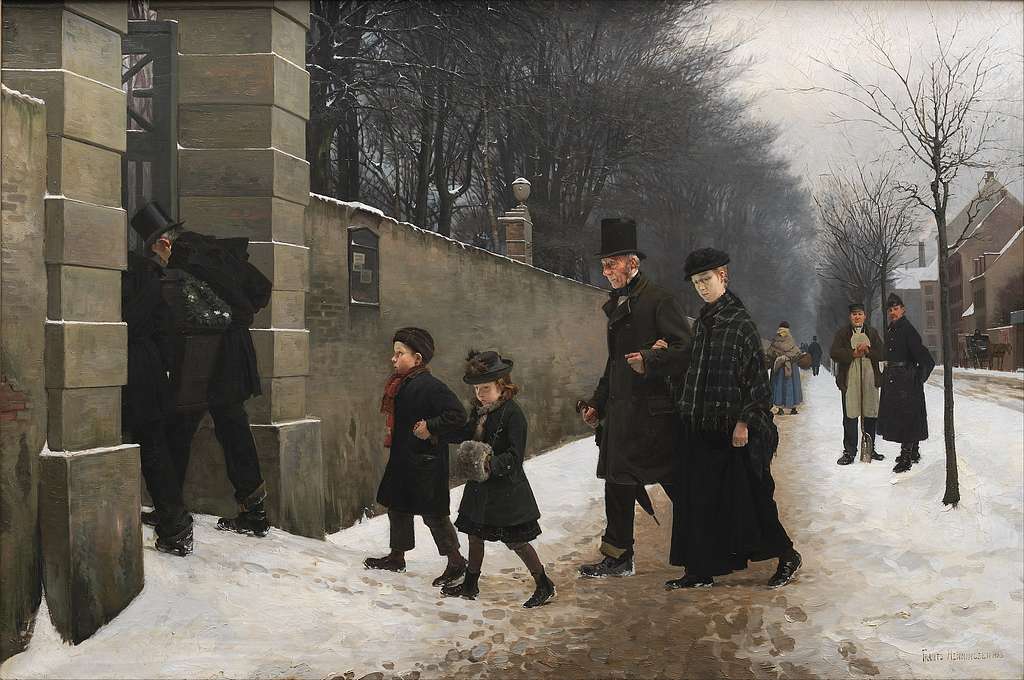
Frants Henningsen – A Funeral