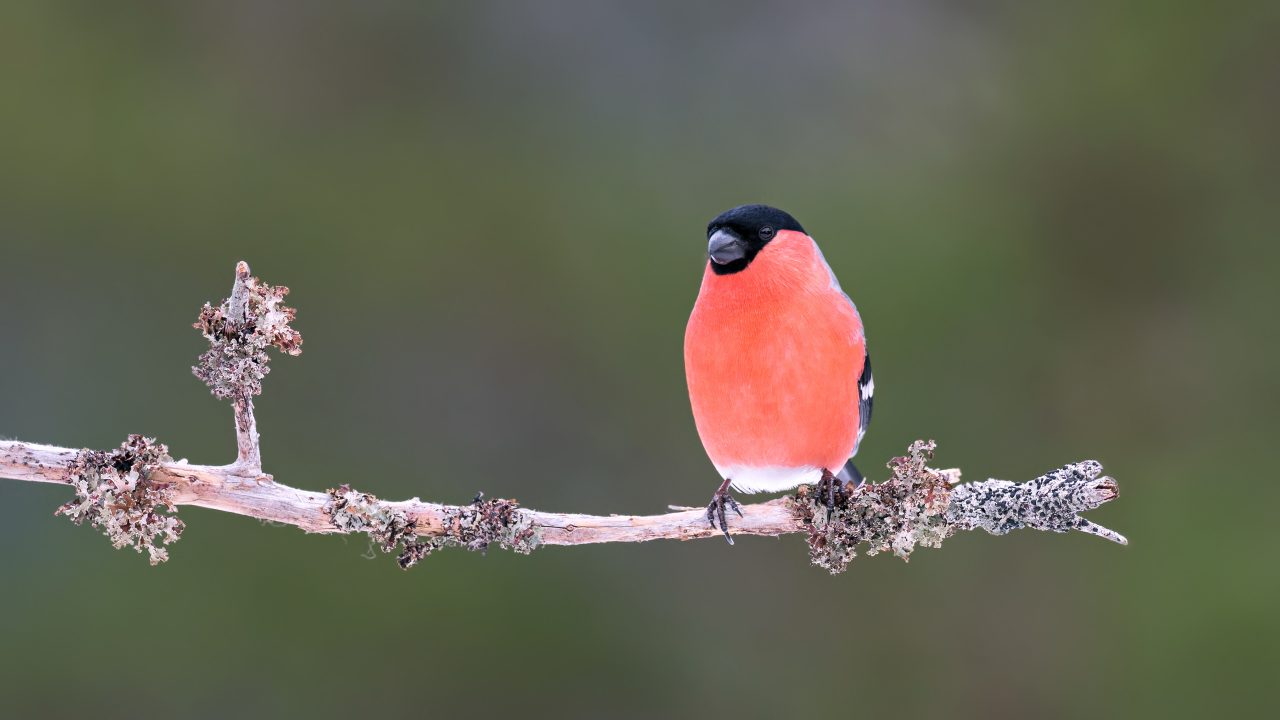
Haiku by Martina Matijević, Anthony Lusardi, and Thomas L. Vaultonburg

her suitcase
on the stair —
wilted sakura


by Martina Matijević (Croatia) 

Commentary by Jacob D. Salzer: 

A striking haiku that has a good balance of imagery and mystery (yugen). We don’t know who the female is in this haiku. We also don’t know if she is leaving or arriving. And where is she leaving or arriving at?  The imagery of a wilted sakura (cherry blossom) makes me think the female in this haiku is leaving; however, as the word “wilted” seems to point to the end of the sakura‘s life, the female could very well be the poet’s grandmother. I especially appreciate the image of her suitcase, as it leads my mind to wonder where she has traveled from or imagine where she is going. She may have traveled quite some distance, and this shows she has a great interest in the poet or whoever she is visiting.

The sakura festivals (cherry blossom viewing) in Japan are quite popular, as the cherry blossoms show a brief moment of vivid color and beauty, but their impermanence is what is believed to make them even more beautiful.  Still, the cherry blossoms always return, so it is both an annual tradition and has a long history in Japan. In the end, are we not all visitors here? Are our souls also on a long journey? Will we be reincarnated like the cherry blossoms and return once again after physical death?

A beautiful haiku that leads us to contemplate travel, impermanence, the importance of place, relationships, and ultimately, the potential of reincarnation and the journey of the soul. A powerful haiku.

november rainfall—
dad cooks dinner
for the first time


by Anthony Lusardi (USA)
published in Modern Haiku, issue #57.2, 2026

Commentary by Nicholas Klacsanzky:

“november rainfall” shows the seasonal reference (kigo), but November also carries a specific emotional tone. Late autumn is often associated with melancholy and/or transitions. In addition, November rain creates an atmosphere of grayness and quietude.

This somber feel at the beginning of the haiku is contrasted and compared in the last two lines. The poet’s dad cooking for the first time could be either a joyous or sad moment. The haiku never states why this is his first time cooking, but it could be due to an illness in the family, a divorce, the mother’s absence, or other reasons unknown.

The use of punctuation (as an approximation of kireji) allows us to pause and imagine the rain and all its sounds. The sound of the rain is similar to the crackle of oil in a cooking pan.

The haiku’s compression adds to its ambiguity. With nine words total, this poem is the usual length of a classical haiku in Japanese (in literal English translations).

When I read this haiku aloud, the letter “r” sticks out the most. In my opinion, it provides the haiku with a sense of heaviness or weight. Also, the letters “m” and “n” interchange, creating a musical quality.

Overall, I enjoy the mystery of this haiku and how it allows readers to uncover different emotions connected to themselves and their family history.

wind through bamboo—
I too
am hollow


by Thomas L. Vaultonburg (USA)
published in The Heron’s Nest, March 2026

Commentary by Hifsa Ashraf:

I find this haiku intriguing in its simplicity. The opening line immediately creates a vivid scene, while the em dash invites us to pause and wonder about the wind: does the wind pass through the bamboo? Does it create a rhythmic sound? Does it pass silently? Is it moving through a single bamboo plant, a group of bamboo, or an entire bamboo grove? Does it affect the person observing it? All these questions arise when we read the first line and pause at the em dash. The short second line shifts the poem from the external world to the speaker’s inner state. The word ‘too’ seems to connect the person with the bamboo, suggesting that, like the hollow bamboo, the person also feels empty.

The wind can also be read as a metaphor for time or difficult forces that pass through us and leave their mark. I particularly like the sound pattern of ‘through’, ‘bamboo’, and ‘too’. The recurring ‘oo’ sound creates a lingering, resonant quality that reinforces the feeling of emptiness and solitude, while the softer ‘m’ and ‘w’ sounds add to the poem’s quiet, melancholic mood. Together, these sounds create an atmosphere of sadness, solitude, and quiet introspection.

What begins as a simple image of wind through bamboo ultimately becomes a reflection on loneliness and the human condition. The simplicity of the language leaves much unsaid, allowing the reader to enter that silence and complete the meaning for themselves.
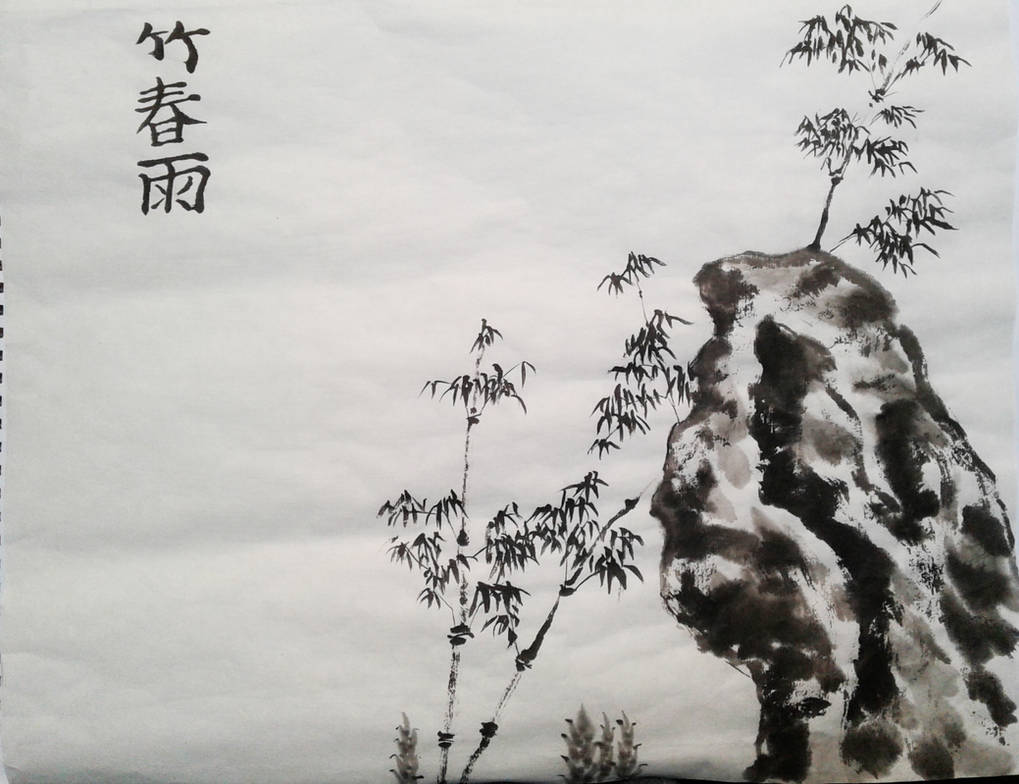

Sumi-e painting by yupanqui87
Haiku by Thomas L. Vaultonburg, Tuyet Van Do, and Alexander Groth

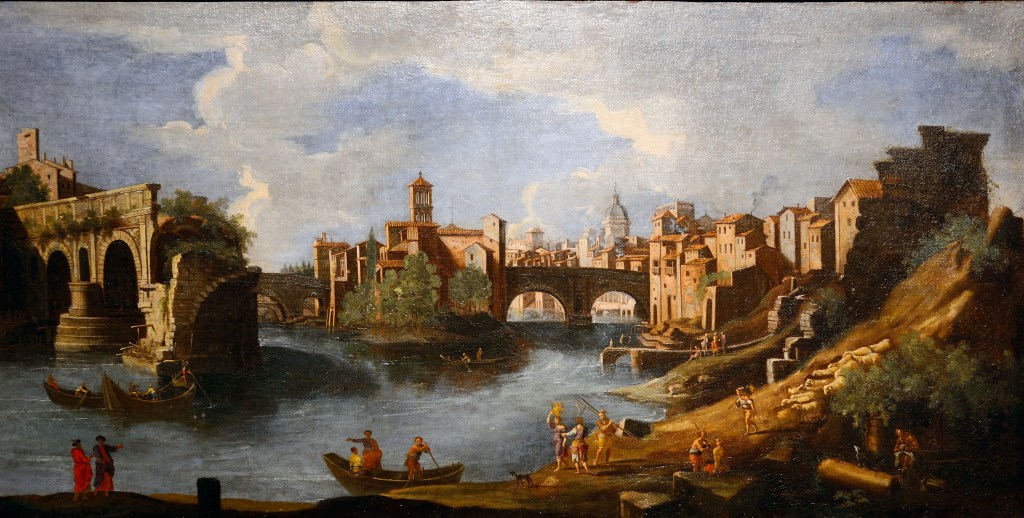
broken bridge—
the river teaches me
its alphabet

— Thomas L. Vaultonburg (USA)

Commentary from Hifsa Ashraf:

This haiku reflects wreckage, destruction, and loss—possibly due to war, natural erosion, or catastrophe. The opening line, “broken bridge,” immediately conveys a sense of disruption—be it in relationships, communication, or continuity. A bridge often symbolizes connection, transition, or passage from one state to another. Here, its brokenness suggests a severed link, a collapse in understanding or unity. The em dash after the first line pauses the reader, allowing them to fully absorb the scene and connect with it in their own personal way.

The second line shows how, in the absence of that constructed path, the observer begins to engage directly with the river. The destruction of the bridge uncovers a hidden relationship with the river—something previously ignored as people simply crossed over it, never truly noticing its flow, sound, or resilience. Now, with nothing in between, the river demands presence. It becomes a metaphor for uninterrupted thought—fluid, spontaneous, and reflective—offering insight and wisdom in the aftermath of loss.

The final line, “its alphabet,” is especially evocative. It suggests the river has its own language—one that the observer is now learning to read. This could represent poetry, expression, or a deeper understanding of the self and nature. The word “alphabet” also points to musicality, rhythm, and perhaps even healing, as if the river’s sounds become a kind of song or meditation.

Overall, it is a haiku that displays humility, and that when the human-made world breaks down, nature is there with its voice and language.

vacation at grandma’s
cicada’s symphony
singing me to sleep


— Tuyet Van Do (Australia)
Haiku Girl Summer, 25 August 2025

Commentary from Nicholas Klacsanzky:

“Cicada” is a classic summer kigo (seasonal reference) in the Japanese haiku tradition, and in most countries. The poet could be implying that she was on summer vacation while visiting her grandma’s house. I got the feeling, though, that perhaps her grandma was no longer there, and the cicadas were a substitute for the lullabies that her grandma used to sing. The loudness and fullness of cicada song fill the gap left behind by a loved one to some degree.

In the second line, there is a shift to the natural world, connecting humanity with the cicadas. Oftentimes, cicadas are thought to have harsh calls, but the word “symphony” characterizes their sound as pleasant and even awe-inspiring. Perhaps at a place as so nostalgia-infused as grandma’s house, even cicadas can sound melodious and sweet.

The third line returns to the human, showing the effect of nature on the poet. It displays a clear juxtaposition of human experience and nature. Additionally, it also manifests the connection between sound and the memory of an emotion. Music, or certain sonics of nature, can often open the floodgates of memory.

Looking at the sense of sound within the words themselves, the repetition of the soft s sounds mimics the hiss and hum of the cicadas in the first line. In the last line, the s dominates again, this time softened by ng and sl, creating a lulling effect.

It is a simple haiku at first glance, but with a second look or more, one can easily see and feel layers of meaning that are poignant and resonant.

school bathroom—
the scent of fresh deodorizer
lingers in my hair

— Alexander Groth (Germany)

Commentary from Jacob D. Salzer:

Many activities can happen in school bathrooms. They can be a kind of hiding place for some students, where they talk and share secrets, though more unfortunate things can happen in school bathrooms as well. The scent of the fresh deodorizer could be covering up another scent, though this is left open to the reader. In a broader sense, this haiku makes me think about the psychological, physical, and emotional effect that various scents have in our daily lives. It also makes me think about the chemicals in various deodorizers/deodorants that some people are exposed to on a daily basis. In college, I learned certain deodorants have harmful chemicals that can enter the lymph nodes and can cause various medical problems over time, including cancer. In short, this is an important haiku that sparks conversations about school safety, the sense of smell, chemicals, and the social lives of students. 

Panorama of the Tiber with a broken bridge. Caspar van Wittel (1653–1736)