Barnabas I. Adeleke’s muezzin’s call

muezzin’s call . . .
Santa Claus steps aside
to make ablutions

— Barnabas I. Adeleke (Nigeria)
(previously published in Frogpond, 43.2) 

There are a few haiku that beautifully reflect interfaith harmony and show reverence and respect for every faith. This haiku is one of them.

The muezzin’s call to prayer is not only the call for prayer but also a message of peace for all those who are on the right path. The path that leads to serve humanity and make this world a better place. The writer beautifully blends two faiths based on the common grounds that are reflected in this haiku.

Santa Claus stepping aside is a gesture of reverence and respect not for other faiths but his own. It seems the Santa Claus in this case is a Muslim who took a break for offering a prayer, or it is a metaphor based on the actions a Santa Claus performs that brings happiness to others’ lives during the time of Christmas by distributing presents.

Ablution depicts the purification of the body before one offers a prayer. It is another way to clean one’s self and then serve others. The blend of beliefs and actions are interwoven beautifully in this haiku. It displays religious harmony in a true sense.

The muezzin’s call makes a person purify their body and soul before serving others. It’s an awakening call for all those who believe in peace, prosperity, and happiness.

— Hifsa Ashraf (Pakistan)

Most haiku are based on a season. The mention of Santa Claus sets this haiku firmly in winter and specifically at the time of Christmas. This could be said to be a senryu as well, which usually examines human life and cuts into it with satire, commentary, and societal backlash. 

In the spirit of giving, it seems like the Muslim man who is dressed up as Santa Claus for an event takes a moment out of his work to pray. I feel this is symbolic of how Christmas has turned into less of a Christian tradition and more of a universal holiday that focuses on giving and receiving gifts generously. In the moment described, the man who pretends to be Santa Claus gives a gift to himself: a moment of peace. He also surrenders himself to God, which can be seen as a gift as well. 

There is nothing hypocritical with a Muslim man portraying Santa Claus, by the way. Though Saint Nicholas was a Christian and is the inspiration for the myth of Santa, Islam and Christianity both puts importance on charity. As a side note, Jesus is discussed over 100 times in the Quran. And surprisingly, Mother Mary is mentioned more in the Quran than in both of the Christian testaments.

One way to look at this haiku is that despite acting a part for work, we should never forget who we are and our foundation. The act in the haiku also calls to mind the humbleness and faith one should have as a religious or spiritual person.

In terms of technical aspects, we can see that this was written in the standard format for English-language haiku. In addition, the sound of this poem can be noted in the use of the letters “u,” “s,” and “c.” In each line, “u” is employed, which slows down the reading of this haiku. This allows the reader to imagine the scene better and to feel the calm of prayer.

It is a haiku or senryu that is at once humorous and profound, speaking to interfaith beliefs and the weaving of cultures.

— Nicholas Klacsanzky (USA)

egypt3_1650223c

Hemapriya Chellappan’s Monsoon Yoga

monsoon yoga
here and there
a housefly

Hemapriya Chellappan (India)
Failed Haiku, journal of senryu, issue 45, Sept 2019

I’ve been in India during the monsoon season, and I can say how exciting and intense it is to see the rain crash down on the streets. All the commotion is compared to a housefly buzzing around here and there. Something epic and something small in aesthetic unison. Also, it contrasts the calmness of doing yoga. So, you can say we got a strong juxtaposition in this senryu/haiku–and a touch of humor.

Technically, it’s easy to spot the string of “o”s in the poem. It stretches the pace of the reading, slowing us down like yoga. Plus, we got some “r”s and “h”s to make it more musical. In terms of the structure and wording, it’s an efficient senryu/haiku–not wasting a word.

Great imagery, a fine juxtaposition, and a keen sense of sound make this poem an enjoyable read.

– Nicholas Klacsanzky  (USA)

The monsoon season is a time of yearning and transformation where many views outside and inside get refreshed and soil absorbs a lot of stories of the mourning sky. The sound of rain, petrichor, and new views bring original perspectives to life–and if we shift our focus from our world to the inner world, as in yoga and meditation, we find it very soothing, as there is a direct and deep connection between a monsoon and yoga. The spirit of this haiku revolves around the aspects that make our lives toxic due to a lot of reasons and activities that affect us mentally, spiritually, physically, and emotionally.

In terms of the housefly, I believe it is a metaphor that describes the dirt and filth around us. So, when it comes to a monsoon, all that filth comes to the surface and makes the environment more chaotic and toxic. A housefly can also represent the disturbing thoughts that keep us restless and dissatisfied daily. So, it is a monsoon that makes things obvious for us so that we can concentrate on our inner world and find out the best possible solutions to the chaos around and inside us.

– Hifsa Ashraf (Pakistan)

If you enjoyed the haiku and commentary, please leave us a comment. 

1e09dd3b6f20ab333c17b671873ccaf6
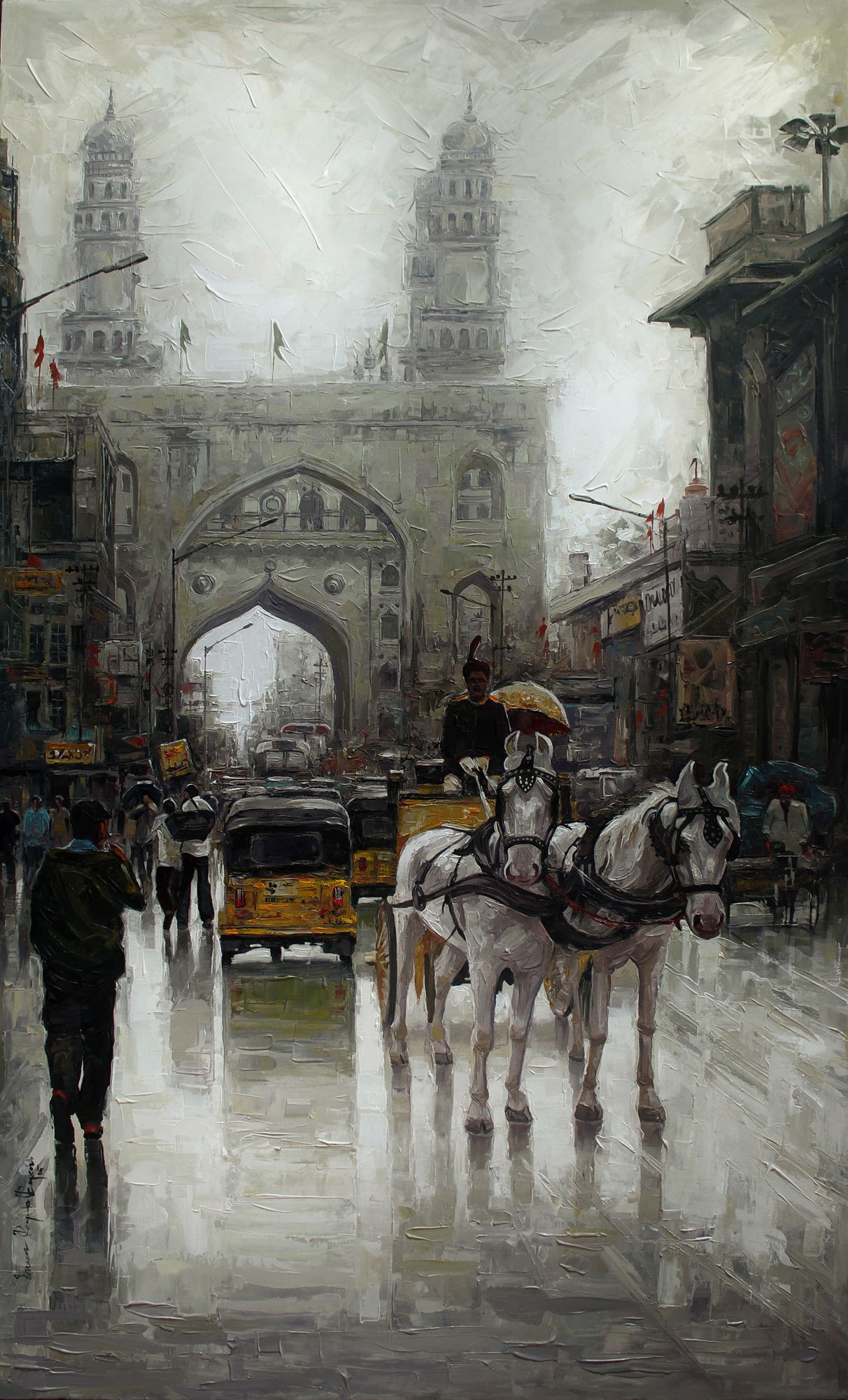
Painting by Iruvan Karunakaran called Charminar Wet

Robert Kingston’s Afternoon Sun

afternoon sun
a fly ends the sentence
in the crime book

– Robert Kingston (UK)
Bones Journal, 13, 2017

We got an interesting comparison (or contrast?). The fly, so intense and looming on the page of the crime book… and the afternoon sun, blazing and overwhelming. It could be a contrast with the black fly and the bright afternoon sun.

I don’t know if a “crime book” refers to a novel, a non-fiction book about crime, or something that the police use. But that’s part of the fun while reading this poem.

Back to the content: a fly usually comes to dead things, so a fly landing on the page is bringing something tangible to the reading experience of this book. It’s like the fictional and the real world collided at that moment. I think that is the “aha” moment the poet felt. The word “sentence” also has a double meaning: the literal one and the one referring to sentencing in courts.

Breaking down the sound, the long “oo” sounds give a leisurely pace and the “s” letters supply a sharp resonance–a good contrast.

The structure of the haiku/senryu is standard and does fine without any punctuation.

An overall playful and enjoyable haiku/senryu that has a deeper layer if you look close enough.

– Nicholas Klacsanzky (USA)

This haiku takes me back to my teenage world where I used to read suspense novels and digests. I liked the way the writer conceived the idea of this haiku about a crime scene but also intrigues me to know more about the whole story.

“afternoon sun” is the time when our thoughts and feelings slow down due to the daytime activities and we want something that can make us relaxed and can rejuvenate our energies. I can feel the sense of getting involved in an activity that engages a person’s mind into something more complex and sophisticated like a crime story.

The fly could be a metaphor for something that bothers us or takes our attention away from what we are trying to focus on. It could be the thoughts of a person or any news or any distraction in the environment that lead us to reveal the mystery on our own or let our experience predict the next part of the story. It may be a point of haste where we don’t indulge in the step-wise process of mystery that is written in the crime book. It is the success of a crime book writer who plotted the story in a way where the curiosity of a person is distracted by the environment or surroundings, and it frequently happens these days.

I miss the reading environment these days where all my senses fully enjoy the book that I am holding in my hands.

– Hifsa Ashraf (Pakistan)

If you enjoyed this haiku and commentary, please leave us a comment.

1980-abstract-painting-afternoon-sun-40x50-r-baranet-6740

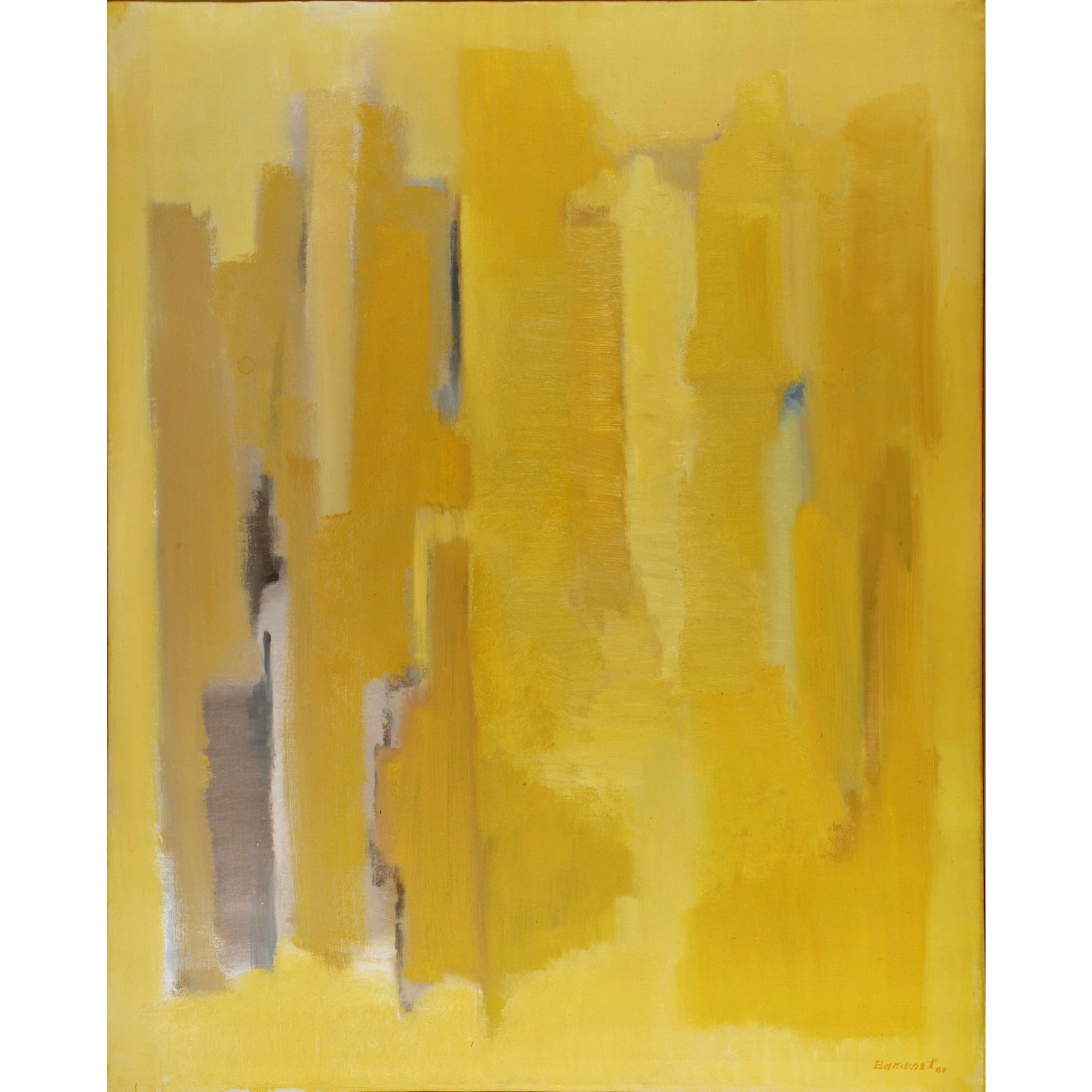
– painting by Robert Baranet called “Afternoon Sun”